
Archive
August 17, 2026

▾ Hover for summary ▾ Tap for summary
A curated list of 20 leading angel investment networks operating across Asia. Relevant for Thai startups and SMEs seeking early-stage funding, though the actual network details and Thailand-specific opportunities are not visible in this preview.

▾ Hover for summary ▾ Tap for summary
Thailand's Commerce and Customs Departments are stepping up anti-transshipment enforcement by expanding their CBP watchlist from 194 to 274 tariff codes (67 product categories) effective June 1, 2026. The move includes AI-powered risk screening via ROVERs Plus system and stricter origin verification audits. Officials will meet US Trade Representative (USTR) August 28–31 to demonstrate commitment to preventing fraudulent origin claims while maintaining legitimate supply-chain activity and not overburdening compliant businesses. The government emphasizes that trade volume increases alone don't prove evasion—evidence and fact-based assessment are required.

▾ Hover for summary ▾ Tap for summary
Thailand's Chamber of Commerce led a delegation to Russia proposing a roadmap to expand bilateral trade from ~$2.2B (projected 2026) to $5B within 5 years, focusing on canned tuna, pet food, and agricultural products. The private sector is pushing fast-track registration of 58 Thai food processing factories and accelerated Thai-EAEU FTA negotiations to access 185M consumer market while securing Russian fertilizer imports (1-2M tons annually). Key wins: reciprocal market access and long-term fertilizer supply contracts.

▾ Hover for summary ▾ Tap for summary
Thailand's trade office alerts exporters to major EU regulatory overhauls effective in 2026–2027, covering carbon pricing (CBAM), deforestation (EUDR), e-commerce tariffs (€3 flat fee from July 2026), and packaging rules (recyclability, PFAS bans from August 2026). EU is Thailand's 4th trade partner (H1 2026: $15.5B exports, +20% YoY); businesses must upgrade systems, traceability, and compliance across supply chains or risk market access loss.

 Empower businesses to thrive in the digital age.

▾ Hover for summary ▾ Tap for summary
Krungsri Finnovate, the CVC arm of Thailand's largest financial conglomerate, has invested in three international startups spanning AI, InsurTech, and FinTech sectors—Alpaca (wealth management platform, US), Qoala (Southeast Asia-focused insurance tech, Singapore), and Whale (enterprise AI analytics). With a total portfolio of 5 billion baht (~$150M) across 30+ companies including 4 unicorns, this signals Thai financial institutions' strategic shift toward global tech partnerships and digital transformation.

▾ Hover for summary ▾ Tap for summary
Thailand's National Water Resources Office issued a warning on 17 August for heavy rainfall and flash floods across 17 provinces from 19–21 August, driven by a monsoon trough over the North and Northeast combined with a strong southwest monsoon. At-risk areas span the North, Northeast, East, and West, with particular concern for urban flood-prone zones and areas vulnerable to landslides and riverbank overflow. National reservoir levels stand at 60% capacity (48,320 million cubic meters), varying by region from 34% (Central) to 69% (West).

▾ Hover for summary ▾ Tap for summary
Stripe has acquired OpenRouter, an AI model aggregation platform, for over $700 million—a major strategic shift as Stripe expands from payments infrastructure into AI infrastructure. OpenRouter's technology enables developers to easily switch between different AI models and consolidate billing, addressing cost and complexity pain points. This signals that competitive advantage in AI will increasingly depend on efficient infrastructure that manages costs and model complexity, not just building the smartest models.
▾ Hover for summary ▾ Tap for summary
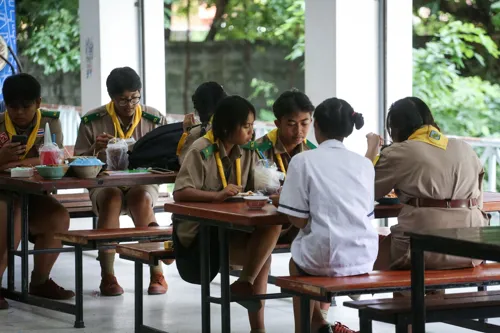
UNICEF Thailand released a 2567–2568 school safety assessment (Safe To Learn framework) showing Thailand has good foundational policies and measures but implementation remains inconsistent and unequal. The assessment, based on 100+ policy documents and consultations with 54 educators and 90 students across the country, found gaps in consistent execution and coverage. Key recommendations include clear reporting channels for students, early risk identification with mental health support, trained personnel for child protection, and emergency preparedness—requiring cross-sector coordination beyond schools alone.
 Your real translator for LINE and Discord.
▾ Hover for summary ▾ Tap for summary
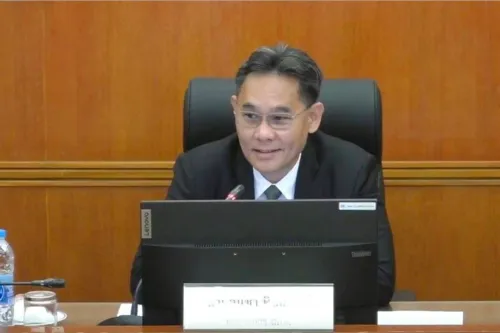
Thailand's National Economic and Social Development Council (NESDC) believes Japanese automakers like Toyota will remain committed to Thailand despite Indonesia's competitive lures, citing the 30-year-mature supply chain ecosystem as a critical retention factor. The council notes government fiscal incentives for local investment, coupled with structural barriers to relocation, will help offset declining ICE vehicle exports due to carbon regulations and EV competition. Key policy moves include requiring EV manufacturers to establish local factories and gradual localization of EV components like motors and powertrains.
▾ Hover for summary ▾ Tap for summary
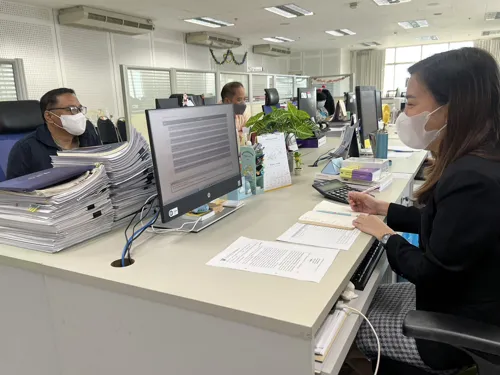
Thailand's new business registrations hit 7,512 in July 2025, down slightly MoM and YoY, but registered capital surged 252% to 53.6 billion baht—largely driven by one major energy company (Baan Poo) with 40.5 billion baht. Over 7 months, 52,285 new businesses registered (up 1.43% YoY) with 164.8 billion baht total capital (down 3.69% YoY). Foreign investors approved for 736 projects worth 219.2 billion baht (up 37% YoY), with China leading by headcount (133 projects) and Singapore by investment value (61.1 billion baht). Growing sectors include online retail (+53% YoY), restaurants (+18%), and clothing retail (+93%).

▾ Hover for summary ▾ Tap for summary
The Stock Exchange of Thailand (SET) has suspended trading (SP flag) for 12 listed companies effective August 17, 2026, for failing to submit financial statements on time. The companies affected include CV, ECF, EMPIRE, GRAND, HPT, KWI, META, MILL, MVP, PF, ROH, and SAM. This is a compliance issue with direct impact on shareholders and traders who cannot trade these stocks until the companies submit their financial statements.

▾ Hover for summary ▾ Tap for summary
Thailand's Department of Business Development discovered 35 irregular company registrations in Nakhon Ratchasima involving 100% Chinese shareholders using Thai nationals as nominees. A female broker was found recruiting residents to provide home registrations and ID copies for 500-1,000 baht (later sold for 1,500 baht each to Chinese capital operators), then falsely registering companies at residential addresses. Field inspections found no actual offices or business operations at any registered locations, and most homeowners were unaware their addresses had been used. The case reveals a potential nominee (นอมินี) scheme to circumvent foreign investment restrictions—authorities are now investigating links and conducting nationwide sweeps of irregular registrations.

 Want to buy or sell a business?

▾ Hover for summary ▾ Tap for summary
BBLAM successfully completed the business transfer from BCAP on July 20, 2025, consolidating fund management, pension, and personal funds operations. The merger increased BBLAM's AUM to 1.01 trillion baht. The combined entity aims to expand product offerings (bonds, equities, ETFs, alternatives) and strengthen Bangkok Bank partnership for broader investor reach. BBLAM also launched the B-WEALTH Series (5 funds with 20+ billion baht in sales) through global multi-manager partnerships, targeting comprehensive wealth management across investor lifecycles.

▾ Hover for summary ▾ Tap for summary
Thailand's Q2 2026 GDP growth slowed to 1.9% YoY from 2.8% in Q1, making it the weakest performer in ASEAN—trailing Vietnam (8.4%), Malaysia (6.0%), Singapore (5.9%), Indonesia (5.3%), and Philippines (2.3%). Weakness stemmed from declining private consumption, reduced government spending, contracting public investment, and broad production slowdowns. However, the National Economic and Social Development Council revised full-year 2026 growth forecast upward to 2.0–2.5% (midpoint 2.2%), citing recovery in exports, tourism, and private investment.
▾ Hover for summary ▾ Tap for summary
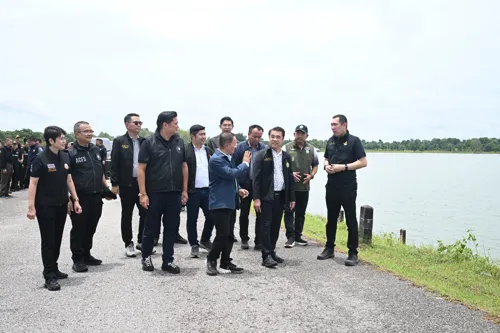
Thailand's Agriculture Minister Suriya announced a 10-year water development strategy for Nakhon Sakhon (2027–2037) comprising 295 projects. The plan targets adding 280,000 rai of irrigated farmland to raise irrigation coverage from 20% to 30% across the region's 3 million rai of agricultural land. This addresses a critical bottleneck: despite 5,050 million cubic meters of annual water flow, only 24% is currently captured. Specific projects include canal upgrades, concrete-lined channels, and natural water source restoration. While the timeline is long-term, this signals sustained government commitment to agricultural water security and drought/flood resilience in a key farming region.
▾ Hover for summary ▾ Tap for summary
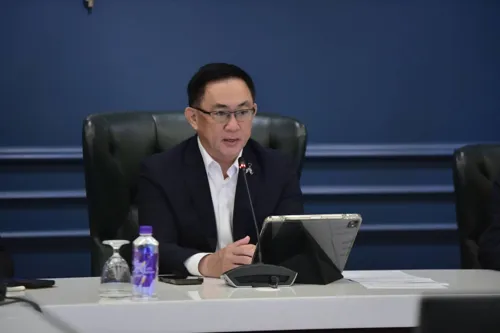
Thailand's Ministry of Commerce has linked Land Department records with its corporate database, identifying 36,277 Thai entities with foreign investment holding land titles nationwide—31,516 where foreigners hold ≤49% stakes. The government will screen these entities for "nominee" arrangements (Thai nationals holding shares on behalf of foreigners) across Bangkok, six surrounding provinces, and ten tourism hotspots. Officials emphasized that foreign ownership under 49% is legal per se, but scrutiny will focus on cases where Thai shareholders are nominally listed while funding and operations are entirely foreign-controlled. Priority zones include Chachoengsao (11,215 cases), Surat Thani (5,752), and Bangkok (4,437).
 Together GoWeGo! Ferry tickets in Thailand.

▾ Hover for summary ▾ Tap for summary
UOB FinLab and CEED launched the 3rd Womenpreneur Programme featuring insights from three leading female entrepreneurs (Jubilee Diamond, Bar B Q Plaza, Kiss of Beauty) on modernizing family businesses. Key themes: leverage Data and AI for customer insights and operational efficiency; prioritize people and culture as the core of success; and build networks and ecosystems. The programme will select 30 female entrepreneurs for a Bootcamp covering family business management, growth strategy, and equity structuring.
▾ Hover for summary ▾ Tap for summary
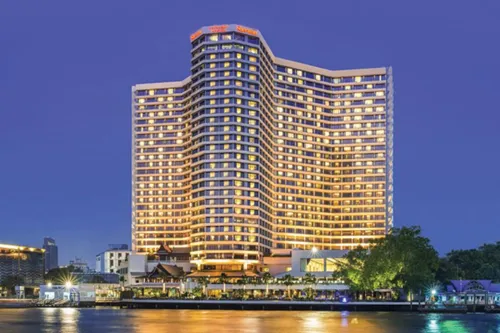
ROH (Royal Orchid Hotel) announced it will repurchase the Royal Orchid Sheraton Riverside Bangkok hotel from GROREIT for 4,873 million baht, claiming financial capability and partner support. The hotel continues normal operations and cash flow remains adequate, though the SET flagged SP status due to late financial statement filing. Timeline for completion not yet specified.
▾ Hover for summary ▾ Tap for summary
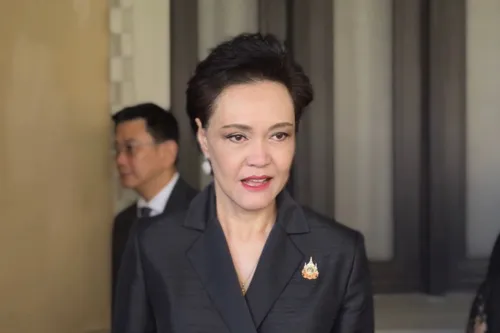
Deputy PM Supattanapong will travel to the US Aug 30–Sep 1 to finalize the Thai–US trade agreement (ART), following PM Srettha's framework to resolve stalled agricultural and health issues. Thailand maintains three non-negotiable red lines: pork imports with growth promoters, national security, and unrestricted US investment in certain sectors like telecom. The government expects ~72% of Thai exports to the US to receive a 12.5% tariff exemption under Section 301, and is negotiating additional exemptions for 78 tariff codes across seven product groups.

▾ Hover for summary ▾ Tap for summary
Thailand's Q2 GDP grew 1.9%, reflecting "correct course" economic management despite headwinds from Middle East conflict, energy import dependency (current account deficit 1.76 billion USD), and slowing private consumption (1.9% vs 3.3% Q1). Finance Minister highlights strong private investment (13.4%, 11-year high) driven by BOI's Thailand Fast Pass, S-Curve industries, and electronics exports (12.5%). Plans for 200-billion-baht energy transition projects and potential "Thai Help Thai Plus" Phase 2 stimulus to restore consumption growth and reduce energy vulnerability.

 Stop running your company on Excel.