
Archive
August 17, 2026
▾ Hover for summary ▾ Tap for summary
Alipay has launched an agentic commerce platform designed to help merchants automate and streamline transactions. This represents a broader shift toward AI-driven payment solutions in major fintech ecosystems. For Thai SMEs, particularly those with cross-border or e-commerce operations, understanding how autonomous agent payments work could become increasingly relevant as regional payment providers adopt similar capabilities.

▾ Hover for summary ▾ Tap for summary
AIS Academy is launching "AIS Academy For THAIs 2026" (Sept 11-12, 2026) partnering with 5 government agencies (NIA, OKMD, and ministries of Social Development, Higher Education, and Education) to build AI capability—not just access—among Thai SME owners, students, vulnerable populations, and the elderly. The initiative aims to shift Thailand's focus from "Access to AI" toward "AI Capability," framing AI as a tool to enhance human potential rather than replace workers. The event will feature hands-on experience-sharing and support pathways from learning to innovation, targeting underserved groups lacking organizational tech support.
▾ Hover for summary ▾ Tap for summary
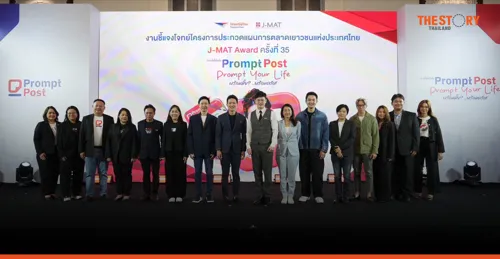
Thailand Post and the Thai Marketing Association launched the 35th J-MAT Award, inviting undergraduates nationwide to develop full marketing plans for "Prompt Post," a digital logistics service. The competition features over 500,000 baht in prizes and runs through November 2026, targeting student-led insights into Gen-Z consumer behavior to help the company transition toward a Lifestyle Logistics Brand. Selected finalists participate in training with experts before pitching to judges.
▾ Hover for summary ▾ Tap for summary
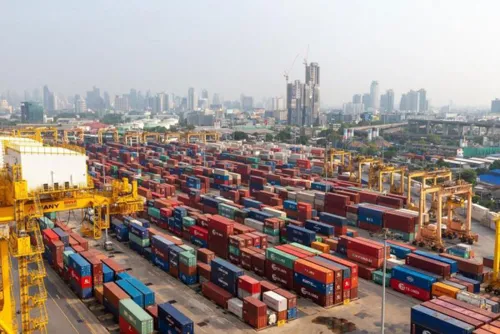
Thailand's economy is under pressure from a widening current account deficit, constrained fiscal space, and uncertain US trade negotiations. NESDC chairman Supavud warns of potential GDP growth slowdown and higher borrowing costs, noting the country faces reduced monetary policy flexibility due to inflation risks and external pressures. Fiscal discipline is critical; without it, Thailand risks a weaker growth cycle, higher debt servicing, and potential credit rating downgrade—threatening SME access to capital and investment momentum.

 Empower businesses to thrive in the digital age.

▾ Hover for summary ▾ Tap for summary
Thailand's Q2 GDP growth slowed to 1.9% (down from 2.8% in Q1), tracking the Finance Ministry's expectations. The slowdown reflects impacts from the Middle East conflict, elevated energy costs reducing purchasing power, and weakened domestic consumption. The government is deploying emergency borrowing and a 200-billion-baht energy transition program to stabilize the economy and ease the cost-of-living burden on households and SMEs.
▾ Hover for summary ▾ Tap for summary
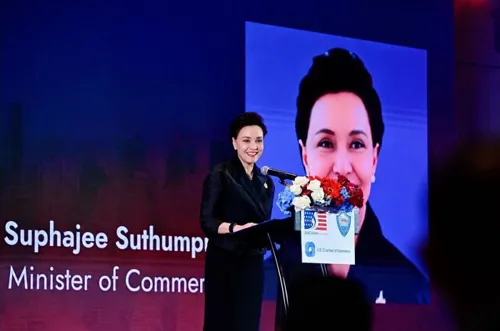
Thailand and the US are negotiating a reciprocal trade agreement (RTA) to rebalance bilateral trade, with significant focus on expanding investment in advanced technologies (AI, robotics, semiconductors, biotech, clean energy) and increasing imports of US machinery, energy, and agricultural goods. The deal aims to position Thailand as a resilient manufacturing hub and attract US investors to participate in the next phase of economic development, with negotiations expected to advance between August 30 and September 1.
▾ Hover for summary ▾ Tap for summary
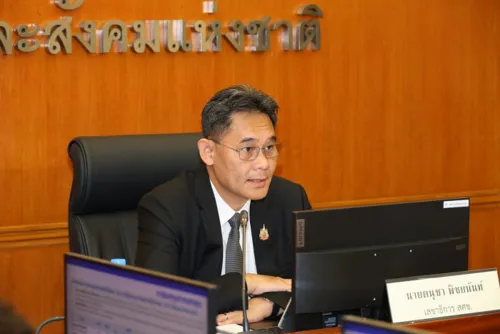
Thailand's economic growth forecast has been raised to 2.0–2.5% for the year (up from 1.5–2.5%), driven by strong private investment, rising exports, and improved tourism prospects. Q2 growth came in at 1.9%, with Q3 expected to improve further. Key headwinds include a current account deficit and Middle East supply-chain disruptions, but the government is backing Japanese automakers' continued Thailand production commitment.
▾ Hover for summary ▾ Tap for summary
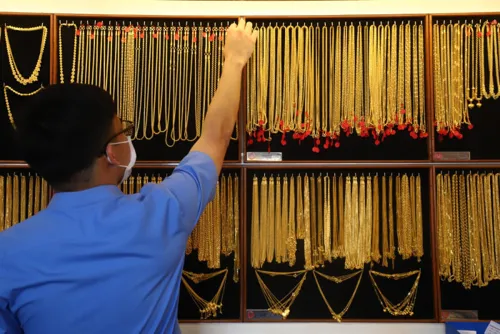
Thailand's Gold Traders Association is meeting with the Finance Ministry to oppose a proposed tax on gold trading. The government aims to curb volatility against the US dollar and improve transaction transparency, but traders argue the sector contributes significantly to exports, liquidity, and economic activity. SCB Bank has launched a digital gold trading platform (EasyBuy) to promote transparent, accessible gold investment for retail investors, supporting industry growth and transparency initiatives without new taxation.
 Your real translator for LINE and Discord.

▾ Hover for summary ▾ Tap for summary
GitHub experienced a major platform outage affecting web access, APIs, Actions, Pull Requests, and critical services (SAML, OIDC, SCIM, Copilot) starting 20:40 on August 17, 2026 (Thailand time). At reporting time, ~20% of API calls and ~50% of repository downloads remained impaired. This directly impacts Thai developers and tech SMEs relying on GitHub for continuous deployment, version control, and collaborative development workflows.

▾ Hover for summary ▾ Tap for summary
Krungsri Finnovate, the corporate venture arm of Krungsri Financial Group, announced three new investments in global startups—Alpaca (BaaS brokerage platform), Qoala (Southeast Asian InsurTech), and Whale (Enterprise AI for customer experience). The moves expand its ~5B THB portfolio across 30+ startups including 4 unicorns, signaling Thailand's major financial institution's strategic pivot toward AI, digital infrastructure, and regional FinTech ecosystems. Notably, these investments aim to bridge startups with Krungsri's domestic and regional operations for co-development opportunities.

▾ Hover for summary ▾ Tap for summary
Article explores whether communication infrastructure is prepared to handle enterprise-scale AI deployments. Relevant to Thai tech SMEs evaluating cloud readiness, network capacity, and system architecture to support AI workloads. Implementation timing is important as AI adoption accelerates.
▾ Hover for summary ▾ Tap for summary
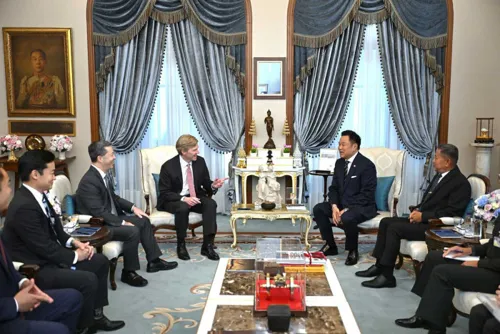
Thailand's PM Anutin declared the country will maintain neutrality in the US-China AI competition, resisting pressure to choose sides on AI frameworks. The government plans to focus on building independent AI capabilities through partnerships with France, Japan, and South Korea rather than depending on a single superpower. This neutrality stance may have trade and tech implications for Thai SMEs seeking US or Chinese partnerships, though officials deny linkage to separate security or trade negotiations.

 Want to buy or sell a business?

▾ Hover for summary ▾ Tap for summary
True Corporation, Mahidol University of Technology, and GalaxySpace have launched ASTRA, a Space Talent Framework initiative to develop skilled professionals for Thailand's space economy. The program integrates satellite technology, AI, communications, and data science through education, research, prototyping, and real-world applications. Key initiatives include establishing a Joint Space Intelligence Lab and applying space data to critical national challenges (disaster management, smart agriculture, infrastructure). This collaboration bridges academia, industry, and global tech partners to position Thailand as a creator—not merely a consumer—of space technology innovation.
▾ Hover for summary ▾ Tap for summary
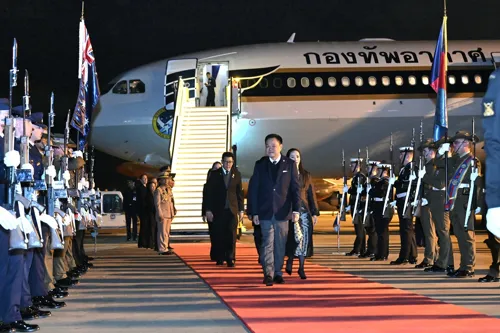
Thai PM Anupthon Chanyaveerachai is on an official visit to Australia (Aug 17–20) to advance the Thailand–Australia strategic partnership. Key initiatives include meetings with tech companies like Canva, business networking in Sydney, and discussions on digital economy, clean energy, and investment opportunities. The visit aims to translate strategic partnership into concrete economic and innovation collaboration.
▾ Hover for summary ▾ Tap for summary
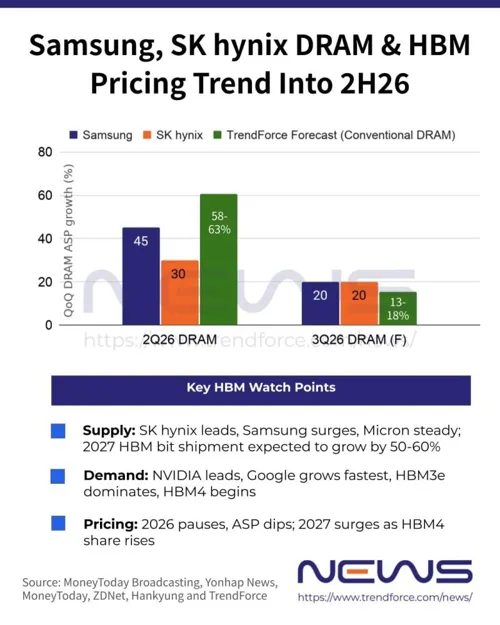
TrendForce forecasts DRAM prices will rise 13-18% in Q3 2026, a notable slowdown from the previous quarter's 30-45% increase. Major manufacturers Samsung and SK hynix are expected to command premium prices (up to 20%), while shifting focus to higher-margin HBM4 chips (priced at $31-32/GB vs. HBM3e at $17-18/GB). This signals easing commodity pressure but sustained pricing power in premium memory segments, particularly for AI-focused applications.
▾ Hover for summary ▾ Tap for summary
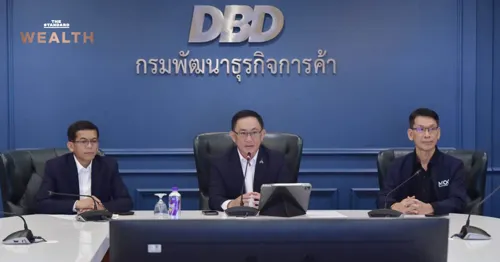
Thailand's Department of Business Development has identified 36,277 juristic persons with foreign investment holding Thai land titles, concentrated in Bangkok, tourist zones (Chonburi leading), and EEC areas. Of these, 31,516 entities (with foreign stake ≤49%) are flagged as high-risk for "nominee" schemes—where Thais nominally own shares but foreigners provide capital. Enforcement includes forced sale within 180 days and penalties up to 3 years imprisonment or 1 million baht fines under the Foreign Business Act.
 Together GoWeGo! Ferry tickets in Thailand.
▾ Hover for summary ▾ Tap for summary
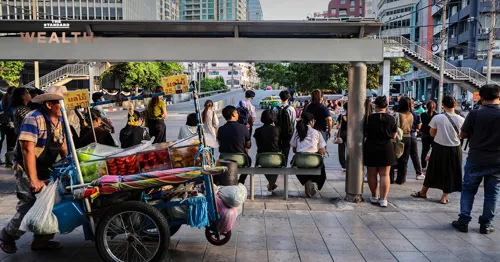
Thailand's economic recovery in H1 2026 remains uneven, with export and tourism gains not reaching grassroots, SMEs, and 13.8 million freelancers who face cash-flow pressure. Pawn loan volumes hit 23.9 billion baht (+32.8% YoY), with gold as the top collateral, but a very low 0.75% default rate suggests users view modern pawn shops as a cash-flow management tool rather than a last resort. This shift highlights the growing role of asset-backed financing for informal workers and small businesses struggling with inconsistent income and lingering debt burdens.

▾ Hover for summary ▾ Tap for summary
Community networks in Prachuap Khiri Khan province held a peaceful demonstration on August 17 demanding the government reconsider the expansion of the Eastern Economic Corridor (EEC) into their province. After 45 days with no clear response following a June 30 meeting with Deputy PM Pipat, activists and 11,207 residents are escalating pressure, citing the province's agricultural, tourism, and forest conservation strengths as reasons to halt the expansion. The movement reflects growing SME and community concern that rapid industrialization under EEC could undermine local livelihoods and environmental management.
▾ Hover for summary ▾ Tap for summary
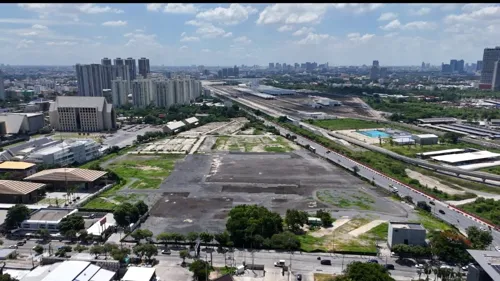
MCOT (Thai public broadcaster) is auctioning long-term leases (30 years) on three land plots worth approximately ฿10 billion—chiefly a 50-rai prime Ratchadamri-Rama 9 site valued at ฿9 billion—to fund digital and new media ventures under its "MCOT Next" plan. Bidding closes 26 August with developer interest strong; the Ratchadamri site benefits from two upcoming BTS extensions and zoning favorable to mixed-use retail/office. MCOT expects winning bidders to invest ฿20 billion or more and targets ฿100 million annual revenue from shorter-term leases if needed. This asset-monetization move reflects MCOT's pivot toward content and technology (including AI-driven formats with Chinese partners) while managing losses in traditional broadcasting.

▾ Hover for summary ▾ Tap for summary
SCB Bank has launched SCB Gold Marketplace on its SCB EASY app in partnership with three major gold retailers (Huo Sheng Heng, MTS Gold, YLG) commanding ~80% market share. The service enables real-time gold trading in USD via SCB's foreign currency deposit account (e-FCD) with zero trading fees, minimum investment of 0.05 baht/ounce, and global price indexing. This targets Thailand's surging gold investment demand—daily trading volume now averages 65 billion baht (exceeding the stock market's 42 billion), reflecting a shift from ornamental holding to institutional wealth management, especially among sub-40 demographic.

 Stop running your company on Excel.