
Archive
August 21, 2026
▾ Hover for summary ▾ Tap for summary
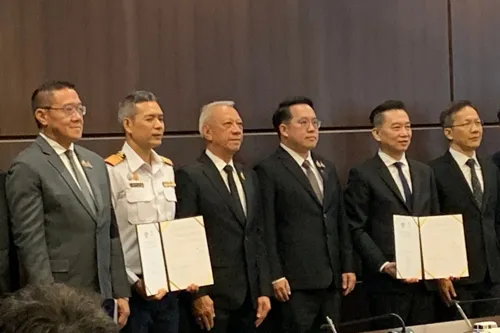
Thailand's Transport and Public Health Ministries signed an agreement to establish the "NCI Wellness & Cancer Prevention Center @MRT" at an Orange Line station near Rama 9 Road. The 400-million-baht facility will provide cancer screening and health promotion services to 60,000 patients annually using advanced medical technology including AI-equipped digital mammography and CT scanners. Construction begins late 2026 with service launch targeted for late 2027/early 2028, representing a cross-ministry model to decentralize healthcare access via public transit infrastructure.

▾ Hover for summary ▾ Tap for summary
YLG reports that Gen Z and millennials (68% under 40) are rapidly entering gold investment through digital channels with smaller, recurring amounts rather than lump-sum purchases. The trend reflects a shift toward mobile-first, accessible investment platforms (fractional gold, digital gold), with similar patterns emerging across China, India, and Singapore. This democratization of gold investment through low entry points (as low as 100 baht) and smartphone-based trading opens new market opportunities for fintech platforms.

▾ Hover for summary ▾ Tap for summary
Google has launched a global student programme offering 1 year of free Google AI Plus (Gemini) access to university and college students, including in Thailand, effective immediately. Benefits include 2x AI usage quota, 400GB cloud storage, AI-powered study tools (Study Notebooks, quiz generation, progress tracking), voice-enabled Gemini Live, and integration with Google Workspace. Thai students aged 18+ with valid university status can register at gemini.google/students using institutional email or official student documents.

▾ Hover for summary ▾ Tap for summary
SMEs are interested in AI adoption but face barriers with Big Tech's AI solutions—likely due to cost, complexity, or misalignment with small business needs. The gap suggests opportunity for more accessible, SME-tailored AI tools and vendors in the market.

 Empower businesses to thrive in the digital age.

▾ Hover for summary ▾ Tap for summary
TEDA (part of Samart Corp) won a 2.08 billion baht EGAT contract to build a new 500 kV power station and upgrade two existing stations in northern Thailand (Nan, Phrae, Uttaradit) to handle imports from Laos. Partnering with SinoHydro at 52%, TEDA captures 1.1 billion baht of the value. This pushes Samart Group's backlog to nearly 16 billion baht, to be recognized over 2–3 years. Construction timeline: 24 months.

▾ Hover for summary ▾ Tap for summary
Morgan Stanley significantly raised price targets on six Thai energy and refining stocks, with SPRC surging nearly 53%, PTTGC up 37%, and TOP gaining 24%. The upgrades reflect a positive outlook on the global refining cycle's "Golden Age"—Morgan Stanley expects global oil demand to outpace new refining capacity through 2571, sustaining elevated refining margins. SPRC achieved $23.7/barrel refining margins in Q2/2569 and benefits from strong diesel/gasoline demand. This is material for Thai energy SMEs and investors tracking downstream petrochemicals exposure.

▾ Hover for summary ▾ Tap for summary
Thailand's specialty coffee market is growing at 15% annually, with premium coffee commanding 48% of the ฿28,000–30,000 billion market despite only 16% of volume. Thailand Coffee Fest 2026 (Sept 10–13, Bangkok) showcases this ecosystem, featuring 8 Thai coffee samples scoring 90+ cupping points. New-generation farmers are driving quality through scientific methods and premium cultivars (Geisha, Java, Typica, Bourbon). The event supports Thailand's hosting of World of Coffee Bangkok 2026—a key platform for SMEs and farmers to scale globally.
▾ Hover for summary ▾ Tap for summary
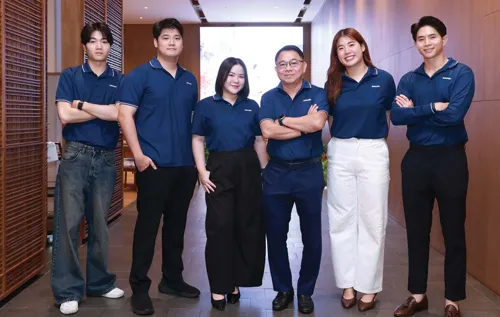
SAMART, a 72-year-old Thai telecom and tech conglomerate, is executing a major digital transformation strategy termed "New Growth Engine." After 8 consecutive quarters of profitability, the company is pivoting from legacy telecom and state contracts (80% of current revenue) toward AI, green energy, and humanoid robotics. Concrete initiatives include deploying Private AI internally (cutting financial reporting time from 35 hours to 30 minutes), launching EV charging and smart energy solutions with Chinese carmakers in September, and expanding cybersecurity and enterprise cloud services to private-sector clients. The strategy aims to reduce dependence on government contracts and build recurring revenue streams—a significant shift for Thai SMEs seeking tech-driven growth models.
 Your real translator for LINE and Discord.

▾ Hover for summary ▾ Tap for summary
A government survey of 5,465 Thais shows 71.77% participation in the Thai-Help-Thai Plus (60/40) subsidy program, with strong uptake in ready-to-eat food (48.22%) and fresh produce (38.87%). The program boosted consumer spending (36.96% increased consumption), encouraged local community shopping (+23%), and 31.58% of users committed to returning to the same shops post-program. Government plans to extend impact through a new "Thai-Help-Thai x Local Low Cost" initiative offering up to 60% discounts. Key implementation barrier: digital access issues (smartphones, app compatibility) especially for elderly users.

▾ Hover for summary ▾ Tap for summary
Kasikornbank partnered with Hueng Seng Heng to launch USD-denominated gold trading directly through its K PLUS mobile app, allowing customers to buy/sell gold (99.99% and 96.5% purity) starting at just $10 with zero fees. The service integrates foreign currency savings accounts earning 2.25% annual interest, enabling seamless portfolio management and physical gold delivery nationwide via postal service or in-store pickup—a competitive fintech move targeting retail investors seeking foreign asset diversification.
▾ Hover for summary ▾ Tap for summary
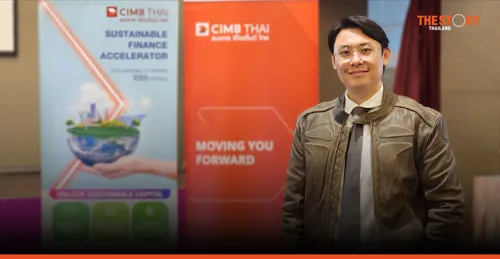
Thailand's sustainable finance market is shifting from labeling "green projects" to assessing business readiness for transition—requiring organizations to demonstrate concrete decarbonization plans, technology maturity, and climate resilience. CIMB identifies three mega-trends: (1) Transition Finance growth, with Thailand Taxonomy-aligned bonds opening ~230bn baht funding over 10 years for qualifying projects; (2) AI and Data Center expansion driving investment but triggering stricter BOI screening on energy, water, and climate risk management; (3) Capital reallocation favoring projects with proven commercial readiness (CRI index). This reshapes credit criteria and access to funding for Thai SMEs and corporates—those with robust transition plans will compete better for financing.
▾ Hover for summary ▾ Tap for summary
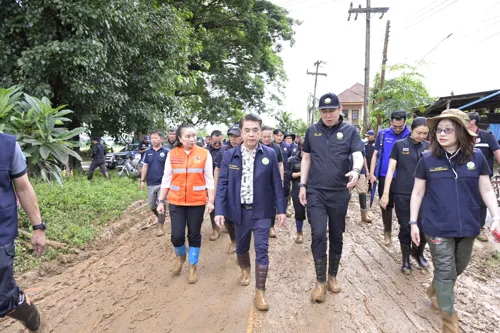
Severe flooding in Nan province has receded after reaching peak water levels of ~9 meters, but agricultural damage is substantial: 733 aquaculture farmers across 6 districts suffered losses exceeding ฿1.66 million. The Agriculture Minister has activated immediate recovery efforts—6 water trucks for silt cleanup, 20+ tons of animal feed distribution, 51 livestock evacuation centers, and coordination with transport ministry for bridge and road repairs. While regional and immediate, this illustrates climate/infrastructure vulnerabilities affecting Thailand's agricultural supply chains.

 Want to buy or sell a business?

▾ Hover for summary ▾ Tap for summary
Thailand's Trade Competition Commission (กขค.) is tightening regulatory oversight of major digital platforms, with over 20 complaints now under investigation covering fees, forced promotions, shipping requirements, and anti-competitive conduct. Officials signaled a shift from focusing solely on GMV/commission rates to scrutinizing entire business models—including algorithms, search ranking, seller visibility controls, market structure, and trader power dynamics. A new regulation will publicize enforcement decisions and rulings to create deterrent effect across the platform economy.
▾ Hover for summary ▾ Tap for summary
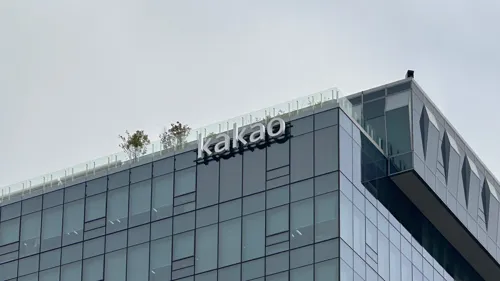
Kakao, a major Korean tech platform, is undergoing a corporate restructuring to separate into AI-focused and investment-focused entities. This reflects broader industry consolidation and strategic pivoting toward AI capabilities, relevant to Thai tech entrepreneurs tracking regional tech giant strategies and investment flows.

▾ Hover for summary ▾ Tap for summary
Brent and WTI crude prices rose for the fifth consecutive day following US President Trump's threat of severe economic sanctions on Iran and related entities. The moves directly impact Thailand's energy costs—Brent reached $93.78/bbl and WTI $87.83/bbl. Analysts expect sustained geopolitical risk premiums given unresolved Middle East tensions and Iran's control of the Strait of Hormuz, which handles roughly 1 in 5 of global oil shipments. UAE has suspended all financial dealings with Iran, signaling heightened regional stress.
▾ Hover for summary ▾ Tap for summary
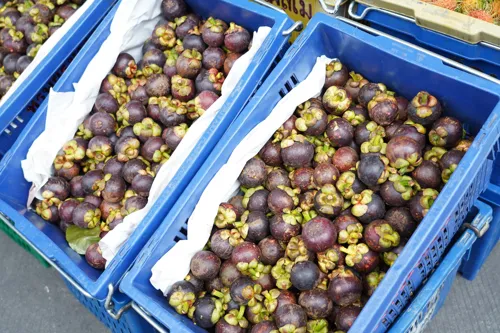
Thailand's Commerce Ministry is mobilizing to distribute a 75% surge in southern mangosteen production (139,000 tonnes in 2025). Key initiatives include: partnering with influencer "Suphachai" for consumer awareness, distributing 500+ tonnes via pop-up markets and central retail events, establishing 3 auction yards to consolidate 10,000 tonnes and improve farmer pricing transparency, and coordinating with 6 Modern Trade chains (200+ branches nationwide) plus central markets to absorb the increased supply. The effort combines direct-to-consumer sales, B2B distribution, and consumption marketing to help southern farmers cope with the bumper harvest.
 Together GoWeGo! Ferry tickets in Thailand.
▾ Hover for summary ▾ Tap for summary
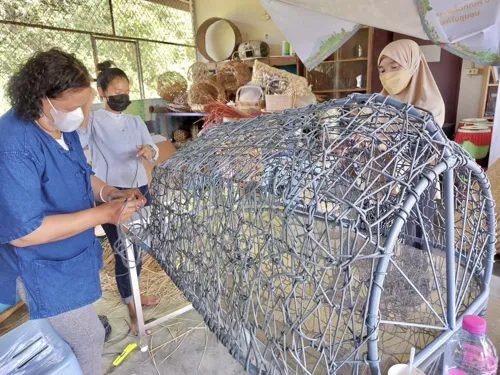
ARDA has scaled research converting rubber cup lump waste into high-quality synthetic rattan fibre, raising farmer prices from 15–25 to 30–50 baht/kg and enabling community enterprises to produce furniture and decor items worth 100s–1000s baht per piece. The synthetic rattan withstands mold, bacteria, UV and sunlight for 10+ years (vs. 1–2 years for natural rattan), is being commercialized under the PARASAN brand across three southern provinces (Pattani, Yala, Narathiwat), and has already created 150+ jobs and ~1.5M baht annual economic circulation in participating communities.
▾ Hover for summary ▾ Tap for summary
SGC (a finance company in the JMART Group, 75% owned by Singer Thailand) is selling its auto loan portfolio valued at 1,300 million baht to clear accumulated losses. The company plans to transfer 209 million baht from reserves and capital surplus to offset 856 million baht in accumulated deficits as of June 30, 2026. An extraordinary shareholder meeting is scheduled for September 29, 2026 to approve the restructuring, which will eliminate all accumulated losses from SGC's standalone financial statements.

▾ Hover for summary ▾ Tap for summary
TikTok Thailand's #ThaisPavedTheWay Season 3 campaign expands a major digital safety initiative with 13 government and civil society partners to combat online fraud, AI deepfakes, and e-commerce scams. Previous seasons saw 17 billion video views and 5+ million user-created warning clips. The campaign now focuses on cybersecurity awareness, securing TikTok Shop transactions, and protecting against financial fraud—addressing how scammers exploit human emotions (greed, anger, attachment) to bypass platform protections. With Thailand showing strong public engagement on digital safety, officials report online fraud cases dropped 50% in six months through coordinated enforcement.
▾ Hover for summary ▾ Tap for summary
Krung Thai Bank and Sansiri launched a digital bond offering through the Pao Tang app—Thailand's first retail bond wallet integration. Investors can subscribe with as little as 1,000 baht for 5-year bonds at 3.70% fixed annual yield, starting August 27, 2026. This bridges fintech innovation and real-estate financing, targeting retail investors seeking fixed-income products via mobile channels. Sansiri's H1 2026 results (net profit 1.87B baht, sales 25.5B baht) underscore issuer strength.

 Stop running your company on Excel.