
Archive
August 26, 2026

▾ Hover for summary ▾ Tap for summary
Thailand's Deputy Transport Minister presented a national EV conversion initiative targeting 7 categories of public and commercial vehicles—taxis, buses, motorcycles, tuk-tuks, trucks, and school vans—to reduce oil dependence and stabilize fares. The programme addresses aging fleets (some 30+ years old) through government-backed financing, projecting 244,000 tonnes of annual CO₂ reduction at 50% uptake and savings of 212 million litres of fuel yearly. This signals a major shift in Thailand's transport policy with direct implications for SMEs in logistics, public transport, and emerging EV supply chains.
▾ Hover for summary ▾ Tap for summary
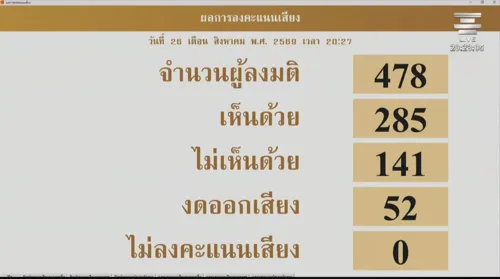
Thailand's parliament approved a 400 billion baht borrowing decree (Emergency Decree 2569) with a 285-141 vote to address energy crisis impacts and fund energy transition. PM Anutin acknowledged debate points and committed to maximizing benefits for the nation. This is significant fiscal and energy policy action affecting SME operations and market conditions.
▾ Hover for summary ▾ Tap for summary
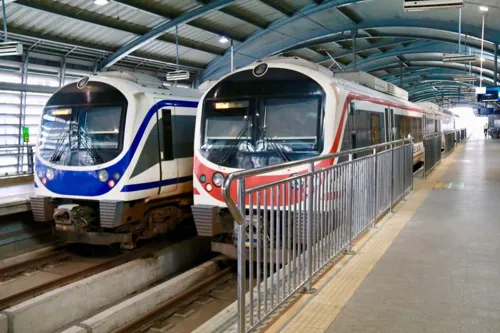
CP Group's Asia Era One subsidiary has formally requested termination of the 3-airport high-speed rail project concession, asserting contractual rights, though Thai government legal counsel states unilateral private cancellation remains incomplete under contract terms. Deputy Transport Minister Siripongse announced urgent negotiations on Aug 27 to: (1) persuade CP to continue operating Airport Link continuously until Sept 30; and (2) negotiate scope reduction on overlapping Thailand-China high-speed rail segment (Bang Sue–Don Muang). If negotiations fail, the State Railway of Thailand must identify alternative operators to prevent service disruption. The dispute centers on CP's demand to shift from build-then-pay to pay-as-you-go financing, which government deems legally and fiscally risky.

▾ Hover for summary ▾ Tap for summary
AWS is shutting down Amazon Mechanical Turk on September 30, 2026, after 21 years of operation. The platform once supported over 500,000 workers doing microtasks like data labeling and transcription, but has declined as AI tools now handle these tasks more efficiently. This signals a broader industry shift toward automation and reflects reduced demand for human crowdsourcing work as AI capabilities mature.

 Empower businesses to thrive in the digital age.
▾ Hover for summary ▾ Tap for summary
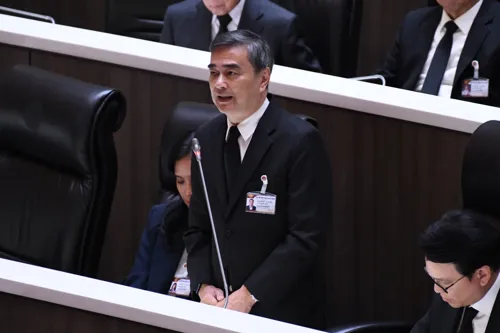
Former PM Abhisit Veтchachiva and the Democrat Party oppose parliament's approval of a 400-billion-baht emergency loan decree, arguing it lacks sound legal foundation, won't address root economic causes (energy crisis, inflation), and represents an attempt to circumvent legislative oversight. He contends the government has not properly prepared project details for the second 200-billion tranche and criticizes the logic behind borrowing instead of fixing structural issues like energy pricing. The decree risks pushing Thailand's debt ceiling without delivering meaningful economic growth or relief to ordinary citizens.

▾ Hover for summary ▾ Tap for summary
Thailand's Ministry of Tourism and Sports has partnered with public broadcasters (NBT, MCOT, Thai PBS, etc.) and AIS PLAY to provide comprehensive live coverage of the 2026 Asian Games (Sept 10–Oct 4) and Asian Paralympics (Oct 16–24) in Nagoya, Japan. The initiative aims to unite Thai citizens in supporting the national team while ensuring wide public access to the events. The Sports Authority of Thailand, Paralympic Committee, and National Sports Development Fund have coordinated support for athlete preparation and infrastructure.
▾ Hover for summary ▾ Tap for summary
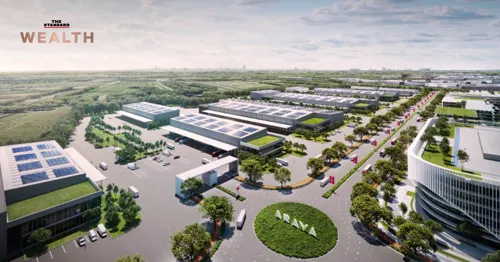
ARAYA The Eastern Gateway, a 4,600-rai industrial and logistics hub developed by three major Thai property firms and the Industrial Estate Authority, has achieved 100% lease occupancy on Phase 1 (21,091 sqm) with anchor tenant TerraCool Technology setting up a high-density AI data center. Phase 2 (20,000 sqm) is launching to capture growing demand from semiconductor, advanced electronics, logistics, and medical device sectors. Key tenants already include global players Infineon, Nestlé, and Mr.D.I.Y. This reflects a strategic shift: multinational corporations now seek integrated "Business Campus" models combining manufacturing, R&D, employee facilities, and logistics in one location, driving a new growth corridor in eastern Bangkok.

▾ Hover for summary ▾ Tap for summary
Former Thai revenue and finance regulator Dr. Kulyaa Tanthitimit, after 25 years in government managing four major departments, has transitioned to lead TS Cell & Marketing (part of TSTE group) as chairman. He brings data-driven management skills from government digital projects (notably the "Paotang" app) to private sector marketing and distribution operations, offering fresh perspective on Thai SME challenges in brand-building and competing globally while adapting to the faster decision-making pace required in commercial business.
 Your real translator for LINE and Discord.
▾ Hover for summary ▾ Tap for summary
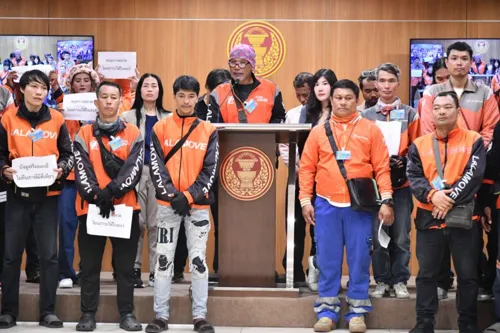
Thailand's Digital Economy Ministry (DE) will mediate formal negotiations on August 27 between Lalamove delivery workers (car and motorcycle riders) and the platform over compensation disputes. Workers are demanding per-km rate increases (12฿/km for cars, 10฿/km for bikes), reduced commission fees (14.55% and 15% respectively, down from current rates), and clearer stacking/cancellation policies. This represents a significant gig-platform labor conflict in Thailand's growing delivery economy, with state involvement signaling potential regulatory implications for digital services.

▾ Hover for summary ▾ Tap for summary
Thailand's ready-to-eat rice market is valued at 36.2 billion baht with steady 4–5% annual growth, driven by rising living costs and consumer demand for convenience and value. CP Ram is capitalizing on this opportunity by launching 'Jade Dragon' to capture the mass market segment while repositioning 'Jade Dragon' (existing brand) upmarket. The company addresses cost pressures through supply-chain efficiency and selective cost-cutting that preserves product quality rather than raising retail prices—a strategic move relevant to food entrepreneurs navigating inflationary pressure.

▾ Hover for summary ▾ Tap for summary
Rockstar Games issued an apology statement acknowledging the leaked GTA 6 gameplay footage that surfaced ahead of the exclusive Netflix reveal scheduled for August 28, 2026. The company urged fans to follow official channels for the intended experience and asked for patience as the game's November 19, 2026 launch date approaches. This confirms the authenticity of the leaked material and demonstrates the company's damage-control response to a significant pre-launch publicity incident.
▾ Hover for summary ▾ Tap for summary
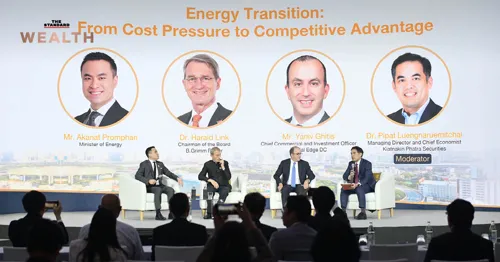
Digital Edge's Chief Commercial Officer publicly backed Thailand's new energy pricing policy for data centers at Thailand Focus 2026, committing to bear the marginal cost of additional LNG imports (estimated 5-6 baht/unit) rather than passing costs to residential consumers. The company will partner with B.Grimm Power on renewable IPP investments. However, Digital Edge emphasized that electricity price is not the reason for investing in Thailand—regulatory clarity and long-term partnership framework matter more. The government plans to open Direct PPA market access beyond the 2,000 MW data center cap to all clean energy buyers, creating parallel electricity markets alongside the enhanced single buyer system.

 Want to buy or sell a business?
▾ Hover for summary ▾ Tap for summary
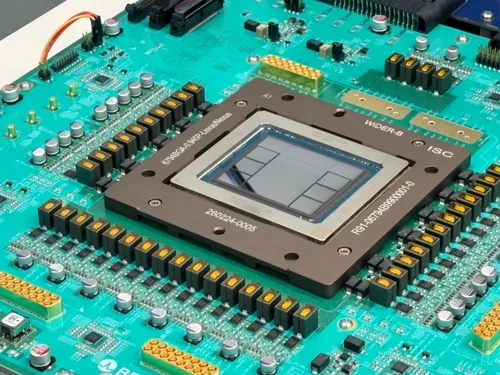
OpenAI has disclosed benchmark results for its Jalapeño AI chip (co-designed with Broadcom and Celestica, launched June 2026) showing significant performance advantages. Testing on inference workloads with three open-source models (GPT-OSS 120B, DeepSeek R1, Kimi K2.5 1T) demonstrated 1.5–1.9× higher throughput per watt and 1.7–3.6× lower latency compared to alternatives—breaking the typical trade-off between capacity and speed. Jalapeño deployment will be modest by year-end 2026, scaling up in 2027, though OpenAI will not replace existing chips entirely.
▾ Hover for summary ▾ Tap for summary
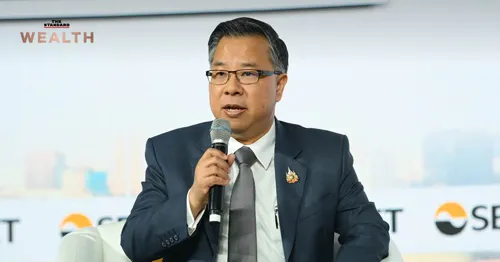
Thailand is positioning itself as a potential semiconductor and electronics hub for ASEAN, with BOI identifying three critical drivers: workforce development, supply-chain strengthening, and business facilitation improvements. AI-related semiconductor and component supply chains are expected to drive FDI over the next 3–5 years. BOI is preparing a national semiconductor strategy and implementing visa schemes (BOI Visa, SMART Visa, LTR Visa) to attract high-skilled talent. Thailand's advantages include political stability, adequate power infrastructure, and strategic location, though power quality and grid stability remain critical differentiators from regional competitors.
▾ Hover for summary ▾ Tap for summary
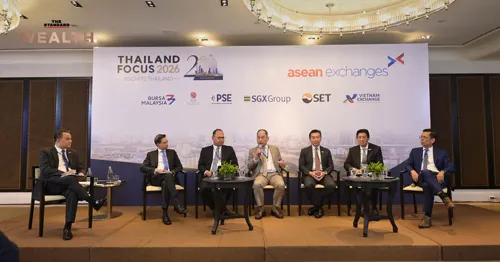
Six ASEAN stock exchange CEOs outlined coordinated strategies to attract global investment and boost market valuations. Thailand's SET focuses on the Jump+ program to support balanced company growth; Malaysia targets 88 large-cap companies with the MY ValueUp initiative; Indonesia is enforcing stricter regulatory measures including higher free-float requirements; Singapore is deploying MAS's $6.5B equity development program; Philippines is liberalizing REIT rules for infrastructure and data centers; Indonesia launched gold ETFs. These initiatives reflect regional efforts to improve liquidity, governance, and attract new industry listings, with particular emphasis on semiconductors, digital assets, and green energy sectors.
▾ Hover for summary ▾ Tap for summary
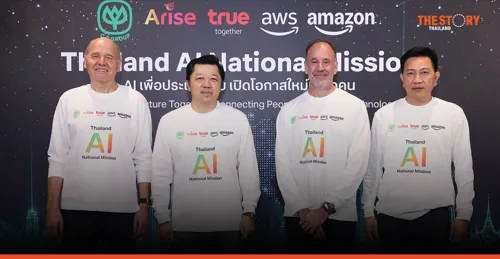
CP Group, Aireize Ventures, True Corporation, and AWS announced a strategic 5-year partnership ("Thailand AI National Mission") to drive AI adoption across Thai business and upskill 3 million Thais in cloud and AI. Key initiatives include: deploying AI across CP's 65+ million customer base via a Single ID system, targeting 20,000 AI startups, reforming university AI curricula, and developing sovereign cloud/AI infrastructure. This positions Thailand as a regional AI hub while balancing technology adoption with ethics, security, and human-centric governance—critical for Thailand's competitive positioning as AI becomes national infrastructure.
 Together GoWeGo! Ferry tickets in Thailand.
▾ Hover for summary ▾ Tap for summary
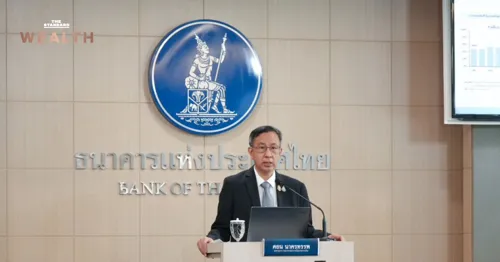
Thailand's central bank (BOT) held its policy rate at 1.0% and decided against cutting rates now, arguing current economic conditions don't justify the move despite weak recovery. The BOT signaled it has room to cut to 0.5% if crisis emerges, but prefers coordinated fiscal and targeted financial measures to support growth. This reflects cautious monetary stance amid uneven economic recovery.

▾ Hover for summary ▾ Tap for summary
AMD has crossed the 30% market share threshold in x86 PC CPUs (desktop + laptop combined), up from 21.1% two years ago. Desktop CPUs hold 34.9% while laptop CPUs reach 28.9%, collectively pushing AMD above Intel for the first time. However, the emerging threat of ARM-based PCs is growing, now capturing 15.3% of the total PC market. This signals a structural shift in the CPU landscape beyond the Intel-AMD duopoly.

▾ Hover for summary ▾ Tap for summary
Thailand Focus 2026 event attracted 220 investors from 74 funds, including 42 foreign funds, signaling renewed foreign investor interest in Thai capital markets. UBS and DBS highlighted positive momentum, with major funds returning to Thailand for the first time since 2018. Key drivers include political stability, prospects for AI leadership in ASEAN, and government growth commitments—though sustained capital inflows depend on Thailand executing its economic policies and growth plans. Long-term risks include competition from extended US market trading hours and regional market dynamics.

▾ Hover for summary ▾ Tap for summary
Senior Thai executives from CP, AIS Ventures, and True Corp announced a 5-year partnership with AWS to position Thailand as a regional AI hub. The article emphasizes that AI could add $11–19 trillion to global GDP by 2039, but Thailand ranks 26th globally in competitiveness (IMD 2026), with critical gaps in technological infrastructure and AI readiness. Thailand's GDP per capita ($8,057) lags Singapore ($98,814) by 12x despite having 12x more people. The AI value chain—spanning energy, chips, infrastructure, models, and applications—is outlined as essential for Thailand to escape the middle-income trap and become a technology creator rather than mere consumer.

 Stop running your company on Excel.