
Archive
August 27, 2026

▾ Hover for summary ▾ Tap for summary
Global consumer brands (Nike, Starbucks, Estée Lauder, Gap) are losing market share in China due to failure to adapt to local preferences and aggressive pricing by domestic competitors. Key reasons: sticking to outdated business models, premium pricing without matching value, inability to innovate at local speed, and geopolitical tensions shifting consumer preference toward local brands. Successful Western brands (KFC, Lululemon, Ralph Lauren) adapt by creating China-specific products, understanding local insights, and using appropriate distribution channels. The lesson: generic global strategies no longer work—brands must make country-specific investments.

▾ Hover for summary ▾ Tap for summary
TikTok's affiliate model has fundamentally shifted brand spending priorities by enabling measurable ROI through shoppable content, forcing YouTube and Meta to develop their own affiliate programs. Global creator economy is projected to reach $480B by 2027, with Asia-Pacific driving 15% annual growth. Each platform suits different needs: TikTok excels at authentic, direct content and immediate sales measurement; Instagram focuses on premium, aesthetic branding; Facebook offers broader reach for engagement-driven products like insurance and investments.

▾ Hover for summary ▾ Tap for summary
Kioxia and SanDisk are planning a new NAND flash manufacturing facility in Japan to address rising global demand driven by AI applications. While this signals significant industry investment in memory chip capacity, the direct relevance to Thai SMEs depends on supply chain impact and any planned regional partnerships. Key to monitor: timeline, capacity targets, and whether Thailand-based tech suppliers could participate.

▾ Hover for summary ▾ Tap for summary
Brent and WTI crude prices fell on progress signals around opening the Hormuz Strait, with Iran and Oman discussing temporary shipping routes. However, only 5 vessels transited the strait on Tuesday versus a 10-day average of 15, indicating shipping remains significantly constrained. For Thai SMEs, lower oil prices reduce input costs but the volatile geopolitical backdrop—including Ukraine conflict impacts on Russian refining—suggests continued energy price uncertainty that could affect supply chains and logistics.

 Empower businesses to thrive in the digital age.

▾ Hover for summary ▾ Tap for summary
Thailand's Securities and Exchange Commission (SEC) is reforming the Provident Fund (PVD) system with three pillars: saving early (automatic enrollment), saving more (allowing up to 15% contributions), and saving wisely (improved Individual Statements). Current data shows 95% of members retire with only ~1.5M baht—far below the 5M baht sufficiency target. Key reforms include automatic enrollment (opt-out model), temporary contribution suspension options during financial hardship, and enhanced disclosure on investment allocation to help members make informed retirement planning decisions. Implementation expected in 2571.

▾ Hover for summary ▾ Tap for summary
The Mall and CP Extra are deploying strategic shifts to compete in a tough economic environment. Key initiatives include: launching a "Grocerant" model (hybrid grocery-restaurant) to create in-store experiences, developing AI-driven demand forecasting to identify unmet customer needs before they emerge, expanding private label offerings into complete lifestyle solutions, and building community spaces around shared interests. The focus shifts from reactive supply to proactive consumer insight—using data analytics to spot trends early and develop products 2+ pipeline stages ahead of mainstream demand.

▾ Hover for summary ▾ Tap for summary
MiniMax reported explosive H1 revenue growth of 283% to $117 million, with major backers (Baillie Gifford, GIC) reportedly supporting a $619 million IPO. The strong financial performance signals significant traction in AI/tech, though specific regional impact on Thai SMEs remains unclear without full article access.

▾ Hover for summary ▾ Tap for summary
AWS and Nvidia are scaling AI infrastructure with a 2 million GPU deployment plan. This signals major cloud/AI capex expansion that could influence global data center costs and AI service availability. Relevant to Thai tech firms evaluating cloud partnerships and AI adoption strategies.
 Your real translator for LINE and Discord.
▾ Hover for summary ▾ Tap for summary
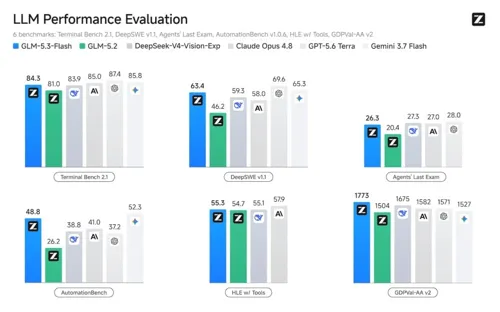
Z.ai released GLM-5.3-Flash, a mid-sized AI model (320B-A18B) that outperforms its predecessor GLM-5.2 and includes multimodal image-reading capabilities. The model is priced at $0.15–0.50 per million tokens—5× cheaper than Gemini-3.7-Flash and 10× cheaper with launch-period 50% discounts. It approaches Claude Opus 4.8 and Gemini-3.7-Flash performance while natively supporting Chinese AI chips, offering strong value for developers building design-heavy applications like web testing.
▾ Hover for summary ▾ Tap for summary
Synopsys, a major chip design software vendor, has revised its 2026 guidance upward, driven by strong demand for AI chip development tools. While Q-series revenue came in at $1.7B below the initial forecast, the company's optimism on future AI-driven semiconductor growth signals continued investment in tools that enable chip designers to build AI processors. For Thai SMEs in semiconductors or tech partnerships, this reflects global infrastructure shifts toward AI that may create opportunities in design services or localized chip development support.

▾ Hover for summary ▾ Tap for summary
Thailand will host the IMF–World Bank annual meeting in October 2026, presenting an opportunity to advance structural economic reforms. Key speakers—including the Deputy Minister of Finance, KASIKORNBANK CEO, and World Bank operations manager—emphasized that international financial forums must catalyze genuine institutional reform and regulatory clarity, not just temporary summits. Thailand faces challenges in bridging policy documents with implementation, turning infrastructure potential into bankable projects, and ensuring that capital inflows and digital/industrial investments benefit local communities and SMEs. Success requires coordinated public-private effort to unlock productivity, retool banking from crisis recovery to future readiness, and combine financing with technology access and market connectivity for competitive resilience.
▾ Hover for summary ▾ Tap for summary
Thailand's central bank raises interest rates consecutively, indicating a multi-step monetary tightening cycle ahead that will impact SME borrowing costs and cash flow planning.

 Want to buy or sell a business?

▾ Hover for summary ▾ Tap for summary
AI research labs are pivoting from developing cutting-edge frontier models to focusing on hosting and serving existing Chinese AI models. This signals a shift in strategy, likely driven by cost constraints, compute limitations, or market pressures, as the cost and complexity of training large-scale models becomes prohibitive for many research organizations.

▾ Hover for summary ▾ Tap for summary
Thailand's Tourism Authority announced a major 2027 strategy shift: moving from quantity-focused tourism to high-value, meaningful experiences. The pivot targets 5% revenue growth, better geographic income distribution (60:40 major-secondary cities), and top-3 tourist loyalty ranking in Asia. Four key pillars—market balance, brand elevation (Amazing Thailand), new growth engines linking tourism to Life Economy, and experience quality—aim to leverage wellness, culture, food, and sustainability. This reframes Thailand's competitive advantage by converting domestic assets into what international tourists actually seek.

▾ Hover for summary ▾ Tap for summary
Thailand's private-sector coalition (comprising three major institutions) unveiled the Bangkok Business Summit 2026 under the "Reinvent Thailand, Resilient ASEAN" banner to attract foreign investment ahead of IMF-World Bank meetings. Seven target industries (smart electronics, tourism, agri-food, health & wellness, retail, automotive, and creative economy) are prioritized, with emphasis on clean energy, AI, data centres, and EV adoption. Crucially, the Industrial Council of Thailand stressed that SMEs (85% of its ~16,000 members) must not be left behind—intelligent industry upgrades tailored to each firm's capacity, green automation, and linkages to green financing are core pillars.

▾ Hover for summary ▾ Tap for summary
Salesforce reported better-than-expected earnings and issued an upbeat forward guidance, driving a 12% jump in share price. The article mentions the company's $300m token purchase commitment with Anthropic through 2026, signaling serious enterprise AI integration plans. While globally significant, the direct relevance to Thai SME/tech ecosystem is limited unless they use Salesforce CRM or plan AI investments.
 Together GoWeGo! Ferry tickets in Thailand.

▾ Hover for summary ▾ Tap for summary
Meta faces a landmark $18 billion settlement with U.S. states over child safety violations. This major legal action underscores growing regulatory pressure on social platforms regarding youth protection and data practices—critical issues for Thai tech companies expanding into the social space and handling user data.

▾ Hover for summary ▾ Tap for summary
Apple has announced a September 9 event where a foldable iPhone is expected to be unveiled. This represents a major product innovation in the smartphone segment and could influence consumer tech purchasing decisions and market trends globally.
▾ Hover for summary ▾ Tap for summary
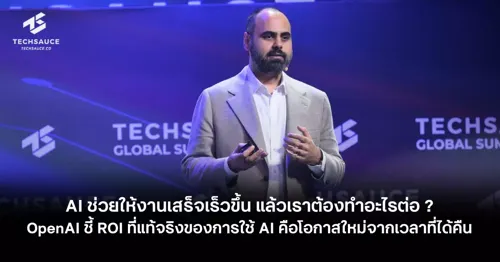
OpenAI's regional Asia-Pacific lead argues that AI's value for organizations is shifting from productivity metrics (saved hours, cost reduction) to effectiveness—enabling teams to complete multistep work, tackle previously resource-starved projects, and compress long-term timelines. The gap between "frontier firms" (top 10% in AI output per employee) and typical organizations has widened from 2.6× to 8.3× in five months, suggesting that implementation approach matters more than tool access. Success requires an "Intelligence Layer" integrating AI across processes with proper access controls, governance, and organizational context-sharing—moving AI from a developer tool to cross-functional infrastructure.
August 26, 2026

▾ Hover for summary ▾ Tap for summary
Opposition MP Sirikannya Tansakul challenges the government's emergency energy transition decree (4 trillion baht), citing slow implementation (only 1 project approved in 4 months), lack of clear plans for 200 billion baht, and concerns about adding 10 billion baht annual debt service while public debt approaches 70% of GDP. She alleges questionable project procurement practices and warns of economic risk if growth and inflation targets miss projections.

 Stop running your company on Excel.