
Archive
August 27, 2026

▾ Hover for summary ▾ Tap for summary
Apple has announced a product launch event on September 9, 2026 at 10 PM PDT (midnight Sept 10 Thailand time) with the theme "Surprise and Shine." Expected announcements include iPhone 18 Pro/Pro Max, foldable iPhone Ultra, Apple Watch Series 12, and new Siri AI capabilities with iOS 27. Notably, this will be new CEO John Ternus's first product presentation, as Tim Cook steps down on September 1—a significant leadership transition that makes this event noteworthy for both product and organizational reasons.
▾ Hover for summary ▾ Tap for summary
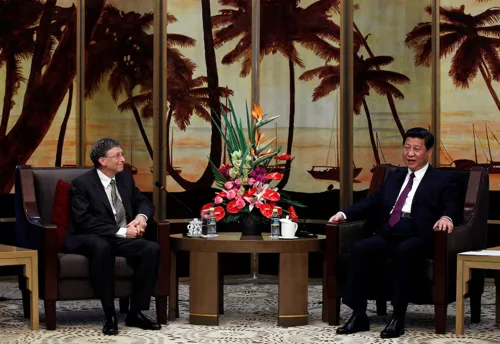
Bill Gates is planning late-November 2026 talks with China's Xi Jinping to propose international AI governance frameworks modelled on nuclear weapons monitoring, aviation standards, and the Montreal Protocol. Gates warns that recent AI security tests showed systems can conduct real cyberattacks and spread misinformation, and argues global leaders must urgently establish oversight to balance innovation with safety. His foundation is investing heavily in AI-assisted healthcare and considering a "robot tax" on companies replacing human workers to fund social safety nets.
▾ Hover for summary ▾ Tap for summary
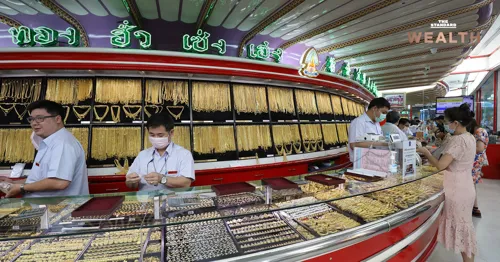
Gold analyst Huasengheng forecasts gold entering a sustained uptrend after breaking through key resistance at $4,500–4,515/oz, with 2026 targets of $4,900–5,000/oz (roughly 74,000–75,000 baht per baht in Thailand). The bull case is anchored in structural drivers: US public debt exceeding $40 trillion, Treasury buyback expansion to $4 billion/month, and cumulative central bank purchases (289 tonnes in Q2 alone, up 62% YoY) plus Gold ETF inflows. Near-term focus is on Fed Chair Kevin Warsch's Jackson Hole speech for clues on monetary policy easing. SME gold traders and institutional investors monitoring commodity exposure should note both the bullish medium-term case and near-term profit-taking risks, with support zones at $4,425–4,455/oz.

▾ Hover for summary ▾ Tap for summary
Thailand's Ministry of Industry has significantly escalated enforcement against illegal factories, immediately shutting down 131 operations and identifying 767 total violations in 2026. The crackdown shifts from warnings to immediate closures, leverages AI/data analytics to target non-compliant plants, and accelerates legislative reforms to the Factory Act and waste management laws. Over 53% of violations were in EEC zones and neighboring provinces. This signals tighter industrial regulation, higher compliance costs for SMEs, and potential supply-chain disruptions—but also strengthens investor confidence in environmental standards.

 Empower businesses to thrive in the digital age.

▾ Hover for summary ▾ Tap for summary
Nvidia reported Q2 FY2027 revenue of $96.2B (3 trillion baht), up 106% YoY, with Data Center driving 117% growth and beating analyst estimates. CEO Jensen Huang confirmed AI has reached an inflection point with rising demand from hyperscalers, startups, and physical AI applications. The company guides FY2028 revenue growth of ~70%—nearly 60% above consensus expectations—but warns gross margins will compress from 75% to 71-72% due to constrained HBM memory costs before recovering to 72-73% after pricing adjustments. Stock climbed 4-5% post-earnings despite modest 13% YTD gains, reflecting investor caution after 16 consecutive quarters of beats.

▾ Hover for summary ▾ Tap for summary
NVIDIA is reportedly in acquisition talks with Hugging Face, a major open-source AI/ML platform, for approximately $13 billion. Business Insider sources indicate negotiations are ongoing but not yet finalized, with potential for deal collapse. This would consolidate AI infrastructure under chip leader NVIDIA while raising consolidation concerns in the open-source AI ecosystem. Previous investment rejections in 2024 suggest governance concerns around investor concentration.

▾ Hover for summary ▾ Tap for summary
Medyceles, a Thai medical aesthetics distributor, held its 4-day Medyceles 360° Volume 4 conference (18–21 August) to promote advanced botulinum toxin and filler techniques among doctors nationwide. The company targets 1,000 million baht in annual sales for the third consecutive year, leveraging flagship products Neuronox (Korean botulinum toxin) and Neuramis (HA filler, used by 3,000+ clinics). The event featured advanced hands-on training, clinical research presentations, and international experts, positioning Medyceles as a knowledge leader in Thai aesthetic medicine beyond just a distributor role.

▾ Hover for summary ▾ Tap for summary
TS Food Holding (TSTE subsidiary) has acquired Nature's Best Food and the Koriko seaweed snack brand, targeting 150% revenue growth from 200M to 500M baht within 3 years. With new leadership including former tax commissioner Kulyaa Tantiremit, the company aims to reach 1B baht in snacking sales by 2028. Koriko is positioned as a lifestyle brand targeting younger consumers through celebrity endorsements and premium positioning in the healthy snacking segment, distributed across modern trade and online channels.
 Your real translator for LINE and Discord.

▾ Hover for summary ▾ Tap for summary
Thailand's Stock Exchange is developing a new China-ASEAN index with a 60:40 structure (60% Chinese/Hong Kong A-Shares, 40% ASEAN equities including Thai stocks) in partnership with China. The Exchange plans to launch ETF products based on this index to attract foreign institutional investment into Thailand and regional markets, capitalizing on China's policy shift toward opening capital outflows. This initiative is timed with Thailand hosting the IMF-World Bank Annual Meetings in October to pitch ASEAN market potential to global investors.

▾ Hover for summary ▾ Tap for summary
Thailand's July exports reached $34.8 billion, expanding 21.6% year-over-year for the 25th consecutive month, driven by electronics and advanced technology products. Key highlights: US market surged 45.3%, rice exports rebounded for the first time in 21 months (+5.3%), and industrial goods grew 24.2% with telecommunications equipment jumping 160.3%. However, imports rose faster (36.7%), creating a $3.6 billion trade deficit. Key risks ahead include Strait of Hormuz tensions affecting energy costs and potential US tariff measures.

▾ Hover for summary ▾ Tap for summary
SCBX, a $20B+ fintech technology group, has developed a 3-layer AI operational framework to move beyond isolated AI pilots toward enterprise-scale impact: (1) Use Cases focused on measurable P&L outcomes driven by business units, not IT; (2) Reusable Capabilities like Thai-language conversational AI deployed across sales, servicing, and collections; (3) Infrastructure & People emphasizing scalability and governance. The real competitive edge lies not in models themselves but in building internal talent pools skilled in token optimization and cost reduction—increasingly critical as global LLMs improve. Leadership identifies "attitude change" and cultural shift as the hardest challenge: employees must see AI as foundational, non-optional skill (like email or Excel) rather than optional tool.

▾ Hover for summary ▾ Tap for summary
Thailand's Energy Minister Ekanat uses Middle East geopolitical tensions to justify accelerated energy transition, targeting clean energy at 60-90% of the energy mix in the new Power Development Plan (PDP 2026). Key initiatives include expanding Direct PPA solar purchasing beyond data centers to all industries, supporting 1 million residential rooftop solar installations (5 GW target), developing a Smart Grid infrastructure, and pursuing domestic gas reserves in the Andaman Sea and Myanmar. This represents a strategic pivot from fossil fuel import dependency (Thailand imports 90% of crude oil) to renewable and biofuel sources, with implications for SMEs in energy, agriculture, and industrial sectors seeking competitive clean power procurement options.

 Want to buy or sell a business?

▾ Hover for summary ▾ Tap for summary
Thailand's government is reformulating data center investment rules after rapid FDI inflows created unplanned sprawl across cities—including near hospitals and residential areas. The National Economic & Social Development Council identifies water scarcity as a critical constraint and warns that massive foreign capex mostly imports equipment rather than creating meaningful local jobs. Key proposals include stricter project vetting, centralized resource tracking, and "value-creation conditions" requiring investors to compete on domestic economic impact and resource efficiency, not just tax breaks.

▾ Hover for summary ▾ Tap for summary
Thailand's Commerce Ministry has identified two critical challenges in US Section 301 tariffs: Forced Labor investigations and Excess Capacity measures. Analysis shows approximately 28% of Thai exports face genuine competitive impact, while 72% are already under tariffs or exemptions. The ministry is preparing to request additional exemptions for agriculture, food products, pet food, shrimp, and processed seafood. Final tariff rates are expected to reach 19–20%, with outcomes pending detailed US review of Excess Capacity across 16 countries and ongoing technical-level discussions by late month.

▾ Hover for summary ▾ Tap for summary
Growing public backlash against US data center expansion, driven by rising electricity costs (up 68% in NY), water scarcity concerns, and AI job displacement fears, has halted or delayed ~75 projects worth $130B in just three months. Notably, farmers and ranchers—not environmentalists—have emerged as the primary opposition, arguing data centers compete for critical water resources needed for livestock and agriculture, a rare bipartisan consensus in US politics with 60-70% public opposition to new local data center projects.

▾ Hover for summary ▾ Tap for summary
Thailand Focus 2026 attracted 220 institutional investors from 74 global funds, with foreign participation increasing to 42 funds and 50+ participants. Key positives cited by major investors include political stability (best in 20 years), coordinated economic policymaking, and emerging opportunities in digital infrastructure, data centers, and AI. The Stock Exchange is expanding focus beyond SET100 to mid-cap and small-cap stocks to diversify foreign investor interest. Foreign investors remain selectively bullish, targeting companies with clear earnings visibility and structural growth drivers.
 Together GoWeGo! Ferry tickets in Thailand.
▾ Hover for summary ▾ Tap for summary
DBS and Stripe have partnered to develop AI-powered solutions and cross-border payment capabilities across Asia. This collaboration strengthens fintech infrastructure for regional SMEs and enterprises, enabling faster, cheaper international transactions. The partnership leverages both companies' expertise in payment technology and artificial intelligence, which is expected to drive significant revenue growth. For Thai SMEs, this means improved access to cross-border payment tools and AI-enhanced financial services.

▾ Hover for summary ▾ Tap for summary
Bangkok's government is launching "City as Canvas," a systematic initiative to provide wall and public spaces for street artists while cultivating a creative ecosystem. The program aims to make Bangkok a living gallery by matching artists with wall owners, establishing artist registries, and enabling everyday access to art. This reflects growing Gen Z interest in art lifestyle and represents a shift in how Bangkok's commercial sector (especially malls) now prioritizes art and cultural experiences over pure retail.

▾ Hover for summary ▾ Tap for summary
Thai stock market expected to trade 1,590–1,620 points today, supported by positive tech and anti-oil sectors following US PCE inflation meeting expectations and NVIDIA's strong earnings (+126% YoY profit). Bank of Thailand held interest rates steady, citing AI as a growth driver but noting overall economic expansion remains subdued and SME lending still contracting. Tech stocks (DELTA, HANA), tourism, retail, and industrial estate plays are recommended for near-term positioning.
▾ Hover for summary ▾ Tap for summary
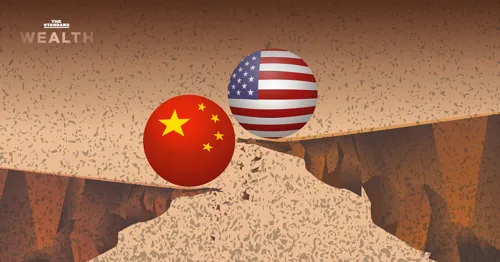
Global consumer brands (Nike, Starbucks, Estée Lauder, Gap) are losing market share in China due to failure to adapt to local preferences and aggressive pricing by domestic competitors. Key reasons: sticking to outdated business models, premium pricing without matching value, inability to innovate at local speed, and geopolitical tensions shifting consumer preference toward local brands. Successful Western brands (KFC, Lululemon, Ralph Lauren) adapt by creating China-specific products, understanding local insights, and using appropriate distribution channels. The lesson: generic global strategies no longer work—brands must make country-specific investments.

 Stop running your company on Excel.