
Archive
August 30, 2026

▾ Hover for summary ▾ Tap for summary
Anthropic faces legal action from music publishers regarding the use of copyrighted music content in training its Claude AI model. This reflects broader industry tensions over AI training data practices and intellectual property rights—a critical issue for Thai tech companies developing AI systems and considering international expansion.

▾ Hover for summary ▾ Tap for summary
Evante, the official MAXUS commercial EV distributor in Thailand, has launched three electric commercial vehicle models (eDeliver 5, 7, and 9) with pricing from 990,000–1,300,000 baht. Each variant is equipped with CATL batteries and targets logistics, transport, and tourism businesses seeking lower operating costs and flexibility. The company also offers customized variants including ambulance and passenger van configurations.

▾ Hover for summary ▾ Tap for summary
Thailand's major developer Sansiri is positioning sustainability as core business strategy, targeting Net Zero 2050 through three initiatives: green architecture/design, innovative green precast construction (15% waste reduction), and carbon-conscious procurement. Already deployed 1,200 EV charging stations, 3,800 solar installations, and reduced emissions by 7,000 tCO2e. The SANSIRI T77 campus in Onnuch is being positioned as a "clean energy city" model with mixed-use development across 70 rai. This reflects Thailand's broader shift toward ESG-aligned real estate and demonstrates integration of sustainability with profitable operations.
▾ Hover for summary ▾ Tap for summary
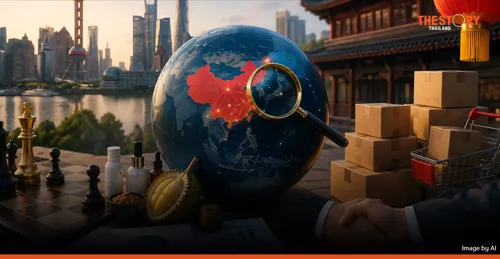
Thai SMEs targeting China face a fundamentally changed landscape: competing on product quality and price alone is no longer sufficient. Success requires three critical strategies: (1) precise market segmentation—recognizing that China comprises diverse provinces and cities with distinct consumer behaviors, income levels, and preferences rather than treating it as a monolithic market; (2) product differentiation—leveraging rare local ingredients, cultural heritage, or unique Thai identity that competitors cannot easily replicate; and (3) brand control—maintaining direct involvement in market operations and end-consumer relationships rather than over-relying on distributors, who may otherwise establish competing manufacturing or dilute brand equity. The article cautions that rapid sales growth without strategic market understanding and brand ownership can paradoxically expose Thai businesses to long-term risk.

 Empower businesses to thrive in the digital age.

▾ Hover for summary ▾ Tap for summary
Jio Platforms, Reliance Industries' digital subsidiary, has secured regulatory approval from India's SEBI for a $3.8 billion IPO. This major capital raise signals consolidation in India's digital ecosystem and demonstrates investor appetite for telecom and digital infrastructure plays. For Thai SMEs and tech investors, this highlights how Indian digital platforms are scaling rapidly and presents competitive/partnership benchmarking opportunities in the broader Southeast Asian tech landscape.
▾ Hover for summary ▾ Tap for summary
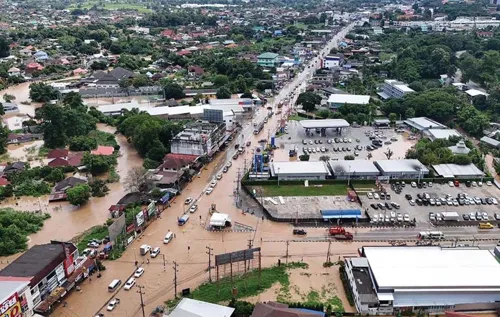
Chiang Mai has fundamentally shifted its flood management strategy following 2024's devastating floods, moving from reactive crisis response to systematic, science-led disaster resilience. Key innovations include 90%+ accurate 9-12 hour flood forecasting, new dynamic flood hazard maps calibrated to river levels, centralized crisis communication to combat misinformation, and prioritized evacuation protocols for vulnerable populations. Expert assessment: efficient warning systems can reduce economic and life losses by ~30%, with phased evacuation of bedridden and vulnerable groups before water arrival being critical to safety.
▾ Hover for summary ▾ Tap for summary
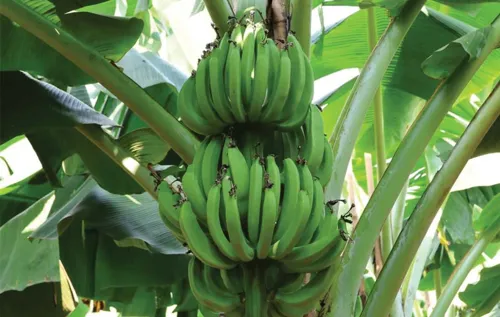
Thailand's golden banana market is experiencing strong demand driven by El Niño effects and competition from modern retailers (7-Eleven, convenience stores) seeking supply. Farm-gate prices have surged to 22–30 baht/kg, with promising export demand from China and Japan. However, rising production costs—energy up 30%, plastic wrapping up 25%—are offsetting farmer margins. YSF Phatthalung cooperative is expanding cultivation and aims to fill a supply gap of ~500,000 bananas/day across Thailand's retail network.
August 29, 2026

▾ Hover for summary ▾ Tap for summary
Thailand's Government Pension Fund (GPF) Secretary-General has launched a strategic initiative to address low retirement adequacy among Thai civil servants. Current retirees receive an average lump sum of 1–1.5 million baht, deemed insufficient for long-term financial security. Proposed reforms include allowing former members to reinvest retirement payouts and contribute ongoing pension income to the fund. A survey showed 80–90% member interest in re-saving lump sums. The GPF is also shifting from traditional SAA to Hybrid TPA portfolio management to better navigate changing asset correlations—a move that could impact returns and risk exposure across 1.29 million members managing 1.58 trillion baht in assets.
 Your real translator for LINE and Discord.

▾ Hover for summary ▾ Tap for summary
Thai universities and research institutions are bridging academia and commerce through innovation intermediary roles, university holding companies, and market-driven research partnerships. The article showcases real examples—BeNeat (domestic services platform) and Snowgirl (jasmine rice cosmetics)—illustrating how successful startups combine researcher expertise with entrepreneur instinct and market-validated problems, supported by institutional frameworks like Chiang Mai University's Ang Kaew Holding and Chulalongkorn's CU Enterprise.

▾ Hover for summary ▾ Tap for summary
Thailand's Cabinet has approved extending mandatory Social Security Act coverage (Section 33) to informal workers including household workers, street vendors, and agricultural employees. However, three economic agencies—Finance, Budget Bureau, and others—have raised concerns about fiscal sustainability, potential burden on small employers and workers, and broader economic impacts. The Labour Ministry is now tasked with assessing welfare and economic implications before implementation, particularly regarding contribution sustainability and employment formalization risks.
▾ Hover for summary ▾ Tap for summary
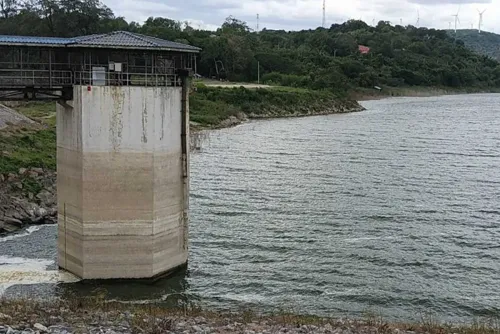
A prolonged drought linked to El Niño is severely depleting water reserves in Nakhon Ratchasima province's northeastern reservoirs (Lam Takong holding only 28.12% usable capacity), threatening agricultural supplies and forcing careful water management. Meanwhile, Songkhla in the South prepares for possible flooding. Government agencies are coordinating mitigation measures and urging improved monitoring and faster disaster warnings to protect vulnerable communities and farming sectors across both regions.
▾ Hover for summary ▾ Tap for summary
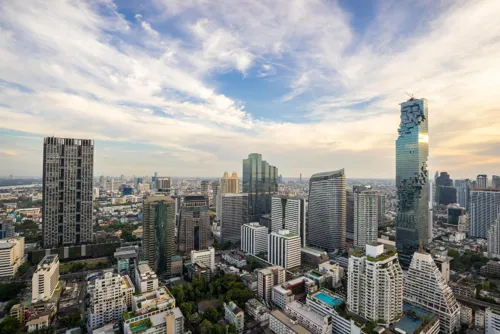
The Thai Consumer Foundation has publicly warned that narrow alleyways in Bangkok (Pradipat, Ratchada, Phaholyothin) under 6 meters wide are at risk of becoming fire hazards similar to the Klong Toei Center disaster. The foundation opposes proposed changes to Building Control Ministerial Regulation No. 33, claiming it would weaken safety standards to benefit large real estate developers. They urge Bangkok Metropolitan Administration to halt high-rise construction in these areas and comprehensively review urban planning to prioritize public safety alongside economic development.

 Want to buy or sell a business?
▾ Hover for summary ▾ Tap for summary
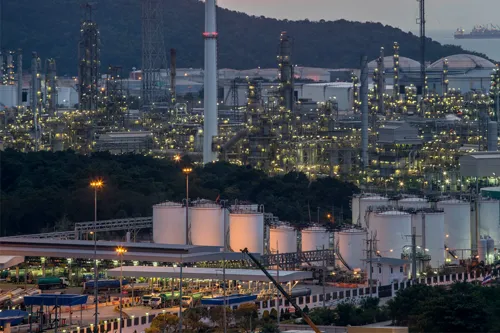
Thailand is incorporating Small Modular Reactor (SMR) technology into its revised Power Development Plan (PDP) to diversify energy sources and reduce LNG import dependency. Starting with ~300 MW capacity, SMR offers continuous baseload power, lower carbon emissions, and modular scalability. Key advantages include factory-built quality control, reduced construction time, and passive safety systems. Government, academia, and utility stakeholders view SMR as a strategic "option to buy" requiring 5–6 years of feasibility studies, environmental assessment, and regulatory approval before construction—positioning Thailand to benefit from maturing SMR technologies globally within the next 5–10 years.
▾ Hover for summary ▾ Tap for summary
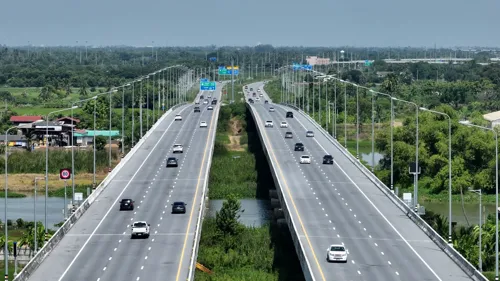
Thailand's government will push forward with the M8 motorway project (Nakhon Pathom to Pak To), a 61 km, 61.154 billion baht infrastructure investment scheduled for 2025-2029. Phase 1 (9.3 km, 10.5 billion baht) will be funded by motorway toll reserves (~7 billion baht available); Phase 2 (51.8 km, 40.2 billion baht) will tap Thailand Future Fund. Project aims to extend southern connectivity from Bangkok and alleviate Rama 2 road congestion. Cabinet approval expected late 2026, with land expropriation to follow.
▾ Hover for summary ▾ Tap for summary
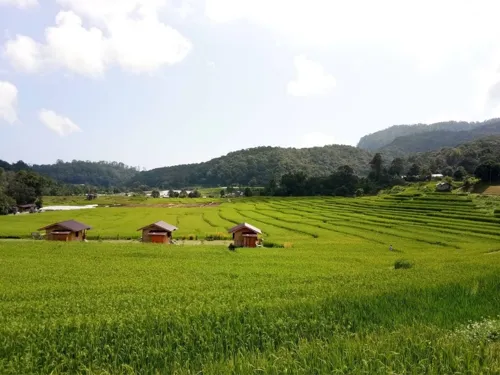
Thailand's Tourism Authority (TAT) is positioning Chiang Mai as a "Green Destination" prototype to address environmental challenges, particularly PM2.5 pollution that deters high-value international tourists. The initiative includes ~600 STAR-certified businesses and 21 carbon-neutral hotels in Chiang Mai, with plans to expand to Nan Province by 2027. This long-term model aims to rebuild tourism attractiveness while engaging stakeholders in sustainable environmental management.
▾ Hover for summary ▾ Tap for summary
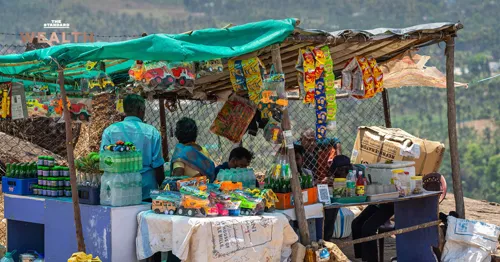
India's food safety authority (FSSAI) dropped plans for mandatory front-of-package colour-coded warning labels for high sugar, fat and salt content after industry pushback in March consultations, prioritizing business arguments over public health. The reversal is significant: ~80% of packaged foods would show red labels, affecting a market worth $100+ billion, yet major corporations like Coca-Cola and Nestlé voluntarily use such labeling in Europe. The Supreme Court is now reviewing the decision as public health advocates challenge the regulatory retreat.
 Together GoWeGo! Ferry tickets in Thailand.

▾ Hover for summary ▾ Tap for summary
SCB EIC analysis shows global electronics industry recovering in K-shaped pattern, with AI-related semiconductor and infrastructure products growing 35.6% CAGR (2023-2025) while non-AI electronics stagnate at 3.2%. Taiwan dominates advanced chip supply via TSMC (90% global share), China's high-end role weakens due to US tech restrictions, and ASEAN is emerging as critical manufacturing hub. Thailand should strategically position in AI supply chain segments where it has competitive advantages.

▾ Hover for summary ▾ Tap for summary
Salesforce and Anthropic have launched "Claudeforce," a strategic partnership integrating Claude AI natively into Salesforce's ecosystem. Three key initiatives enable Claude to work within Salesforce workflows: (1) Salesforce-in-Claude adds 37 sales-focused skills as a plugin for Claude Cowork, (2) Claude-inside-Salesforce embeds Claude as a reasoning engine in Agentforce, and (3) Slack Claude becomes the default AI for Slack features. This integration gives Thai SMEs using Salesforce direct access to Claude's reasoning capabilities alongside CRM, data analytics, and communication tools—reducing context-switching and enabling smarter workflow automation.
▾ Hover for summary ▾ Tap for summary
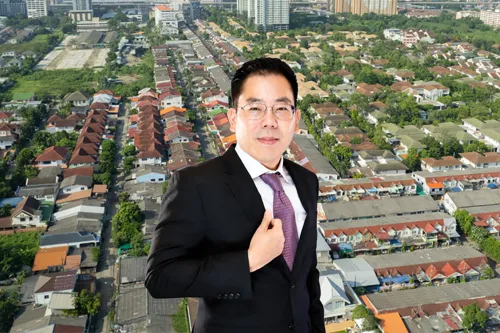
Thailand's residential real estate market in H1 2026 shows tentative recovery signs, buoyed by two government measures (reduced transfer/mortgage fees and relaxed LTV rules). Housing transfers reached 167,665 units (+17.6% YoY), worth 429.8 billion THB (+9.8%). Second-hand homes now dominate 63% of market share, driven by affordability as consumers seek mid-range properties (2–3 million THB). Bangkok-metro accounts for 56% of transactions; regional growth in Eastern Thailand (EEC benefits) and Phuket (foreign buyers, notably Russian investment +75.9%) show geographic shift. Overall credit growth remains modest (2.6%) despite strong new lending (+12.2%), signaling cautious recovery amid persistent inflation and high household debt.

▾ Hover for summary ▾ Tap for summary
Thailand's exports grew 21.6% in July 2026 (25 consecutive months of growth) to $34.8B, and 18.2% year-to-date. However, the Commerce Ministry (Deputy PM Supatchee Sutthammaphan) identifies a critical structural weakness: 80% of export revenues concentrate with 7,000 large companies, while 23,000 SMEs capture only 20%, leaving grassroots economies disconnected. To address this, the ministry is rolling out a "3 Balance" strategy: (1) Market Balance—diversify export destinations beyond China/US; (2) Product Balance—increase local content and value-add in supply chains; (3) Income Balance—redistribute export gains to SMEs and farmers. This signals a policy pivot from volume-driven exports toward inclusive, resilient growth that reaches Thailand's broader economy.

 Stop running your company on Excel.