
Archive
August 30, 2026

▾ Hover for summary ▾ Tap for summary
Thailand's healthcare system could generate ~2.1% GDP impact by leveraging medical research, health data, and innovation to prevent NCDs and attract biotech investment, rather than treating it solely as an expense. Siriraj proposes a two-tier screening system targeting 15–30 million working-age citizens with basic checks, then precision medicine + genetic testing for ~500k high-risk individuals, feeding a National Genomics Database to drive drug R&D and medical innovation tailored to Thai populations.

▾ Hover for summary ▾ Tap for summary
A PIER research study reveals Thailand's economic slowdown stems not from insufficient capital but from capital misallocation. Key findings show asset turnover efficiency declined from 1.24 to 0.88 times over a decade, capital is flowing to less efficient businesses rather than high-performers, and SMEs—employing 13.6 million people—face dual barriers: only 20% access bank credit compared to 60% for large firms, while paying 7.8% interest versus 3.9% for larger peers with similar risk profiles. This systemic credit mispricing suggests the financial sector needs better screening and pricing mechanisms to reallocate resources toward productive sectors.

▾ Hover for summary ▾ Tap for summary
Artstory By Autistic Thai, now in its 8th year, is a social enterprise employing 100 autistic and special-needs artists, scaled from 7 founder members. The brand generates income through art sales, merchandise, and affiliated coffee businesses (For All Coffee, เติมเต็มคอฟฟี่), operating on the principle that each special-needs individual is unique and can develop talent in multiple professions. Revenue focus has shifted from high-priced artworks (historically up to 200,000 baht per piece) to consistent monthly income distribution among all artists. The model combines art therapy, job placement matching, and skill development, with online outreach to 60–70 artists across provinces.

▾ Hover for summary ▾ Tap for summary
Thailand's Finance Minister Ekniti states the government will clarify details of the "Thai Helping Thai Plus" Phase 3 stimulus program only after assessing current economic conditions and inflation. A recent poll shows public support for continuing the program. The government will consider public feedback alongside economic indicators including inflation and cost of living before proceeding.

 Empower businesses to thrive in the digital age.

▾ Hover for summary ▾ Tap for summary
AWS partners with CP Group on a 5-year "Thailand AI National Mission" aimed at positioning Thailand as an ASEAN AI hub. The collaboration spans cloud infrastructure, Agentic AI deployment, and infrastructure modernization—including LEO satellite connectivity for rural areas. CP Group executives outline a comprehensive AI value-chain strategy (energy, chips, infrastructure, models, applications) and plan initial implementations across customer experience, retail supply chains, and digital banking through Ascend Money. AWS and SYNNEX also deepen their tech-partner ecosystem in Thailand.
▾ Hover for summary ▾ Tap for summary
Rising US Treasury yields driven by structural fiscal deficits (5-7% of GDP annually) and massive AI capex demands (~$0.5-1.0 trillion/year) are creating sustained term premium pressure that unlikely to ease without policy intervention. Thai investors must prepare for four possible scenarios: benign AI capex plateau scenario, more likely elevated yields with strong economy, or potentially destabilizing Fed intervention approaches. The core challenge: even successful yield suppression may come with "financial repression"—negative real returns on bonds amid persistent inflation.

▾ Hover for summary ▾ Tap for summary
Quantum computers pose an imminent threat to current encryption standards protecting digital infrastructure worldwide. Recent advances have accelerated the Q-Day timeline: qubit requirements for breaking standard encryption have dropped 20-fold in just five years (from 20M to under 1M qubits by May 2025), driven by algorithmic improvements and error correction rather than hardware alone. Adversaries are already conducting "Harvest Now, Decrypt Later" attacks, storing encrypted data to decrypt once quantum machines mature. The US has moved its post-quantum cryptography deadline to 2030 for key exchanges and 2031 for digital signatures, with UK and major tech firms (Google, Microsoft, Cloudflare) following suit—time-sensitive for organizations worldwide.
▾ Hover for summary ▾ Tap for summary
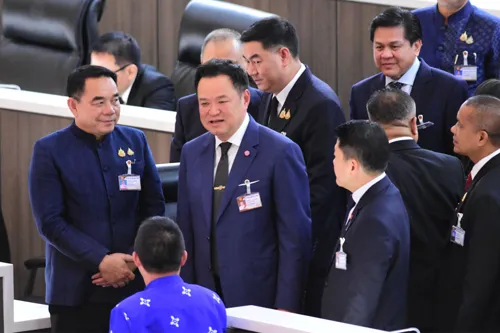
Thailand's parliament approved a 400-billion-baht emergency loan decree (285–141 vote) to address energy crisis impacts and fund clean energy transition. PM Anuthim and Finance Minister Ekniti emphasized strict spending oversight, zero budget leakage, and cost-benefit justification. The loan targets support for households/economy, rapid clean energy transition (including private investment and direct electricity trading), and foreign green energy investment (e.g., solar subsidies). Key concern: while increasing public debt, success depends on project transparency, rigorous committee vetting, and continuous public/opposition monitoring to prevent misallocation.
 Your real translator for LINE and Discord.

▾ Hover for summary ▾ Tap for summary
SCB EIC survey reveals 1 in 4 Thais have been scammed, with online shopping fraud accounting for 73% (139,000) of 190,000 crime reports Jan–Jul. Annual damage exceeds 9.3 billion baht. Key concern: over half of victims receive no remediation. Consumers increasingly prefer large e-commerce platforms and official brand channels for trust and security. SMEs must build confidence via transparent shop info, platform certification, robust customer service, and cybersecurity measures to compete in the digital market.

▾ Hover for summary ▾ Tap for summary
Thailand's Agriculture and MHESI ministries launched a joint initiative in Chiang Rai to convert agricultural waste (rice straw, corn stalks) into income through biomass pellets and alternative energy, addressing PM 2.5 pollution while boosting farmer earnings by 35–49%. Private sector has committed �฿20M+ in purchase agreements; authorities target ฿3B in added economic value within 5 years. ARDA research shows viable alternatives to field burning can reduce production costs 20–30% and cut burn area by 2,000+ rai annually.

▾ Hover for summary ▾ Tap for summary
US President Trump convened a high-level meeting with major oil refinery operators (Marathon, Valero, Chevron, others) to address surging fuel prices—now at historic highs exceeding $4/gallon for gasoline. Rising energy costs pose political pressure ahead of November midterm elections. The discussion covers domestic refining capacity expansion, Venezuela crude import approvals, and the contentious Renewable Fuel Standard (RFS) biofuel blending mandates. Thailand SMEs with US energy supply dependencies should monitor fuel cost trends and potential regulatory shifts.

▾ Hover for summary ▾ Tap for summary
Thailand's Rubber Authority (Thai Rubber) is escalating flood response across 17 northern provinces following recent inundation in Nan Province (19–23 Aug). Priority actions include pre-screening 3,500 affected rubber farmers for 3,000 baht emergency assistance, creating farmer databases pinpointed to at-risk zones, deploying mobile survey teams, and pre-positioning emergency supplies at district hubs to ensure rapid aid delivery if flooding recurs. The initiative aims to prevent farmer exclusion from aid systems and reduce repeated damage assessment delays.

 Want to buy or sell a business?
▾ Hover for summary ▾ Tap for summary
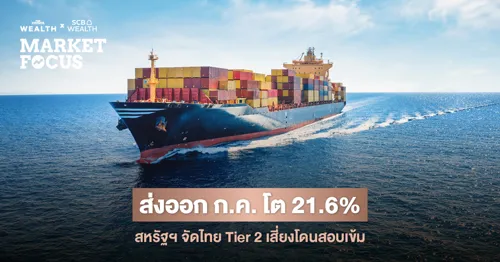
Thailand's July 2026 exports surged 21.6% YoY to $34.8 billion, with electronics driving 67.8% growth and US-bound shipments up 45.3%, partly due to front-loading ahead of potential tariffs. However, imports grew faster at 36.7%, widening the trade deficit to -$3.6 billion. SCB EIC raised its 2026 export forecast to 16% YoY but warned of mounting risks: Thailand faces a Tier-2 classification in a US trafficking report, opening the door to stricter origin inspections on goods and potential compliance penalties.
▾ Hover for summary ▾ Tap for summary
Thailand's Stock Exchange and SEC are advancing a BOI-to-IPO initiative to bring investment-promoted and New Economy companies to the capital market. Criteria have been approved by SEC, with discussions underway with BOI to connect qualified companies. The strategy aims to create new market opportunities, attract record foreign institutional investor participation (220 from 74 funds), and build a more diverse equity market—particularly adding large-cap tech companies to complement the currently limited ecosystem.
▾ Hover for summary ▾ Tap for summary
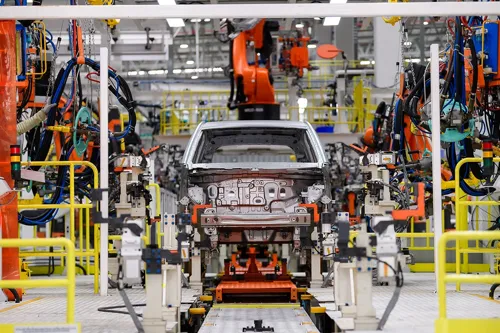
Thailand's government is restructuring vehicle excise tax to support EV adoption and local manufacturing. Three key priorities: (1) tie imports to long-term local investment, (2) position Thailand as a regional EV production and export hub, and (3) support Thai parts suppliers in moving toward high-value components. Finance Ministry expects clarity by September. Aimed at balancing market growth, FTA obligations, and domestic job creation in automotive sector.

▾ Hover for summary ▾ Tap for summary
A three-storey commercial building fire at Klongthom Center in Bangkok on 28 August damaged multiple shops (electrical goods, auto accessories, CCTV) and vehicles. The Insurance Commission (OIC) coordinated with Thawatchai Insurance—the property insurer—to expedite damage surveys and compensation claims. OIC is also investigating insurance coverage for affected businesses and assets. The incident underscores the importance of adequate property and business interruption insurance; OIC urges SME owners to regularly review coverage limits and policy terms. Affected parties can call OIC hotline 1186 or contact via @OICConnect for support.
 Together GoWeGo! Ferry tickets in Thailand.
▾ Hover for summary ▾ Tap for summary
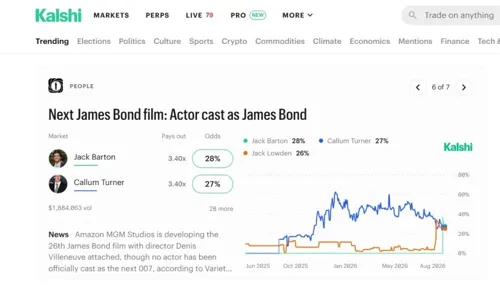
A Nevada court has ruled that prediction markets (betting platforms like Polymarket and Kalshi) constitute gambling rather than commodity futures trading. This landmark 3-0 decision could trigger regulatory enforcement across the sector, including against mainstream platforms like Crypto.com and Robinhood. The ruling shifts prediction markets from lighter securities regulation to stricter gambling oversight—a significant blow to startups positioning these as financial instruments rather than wagering.

▾ Hover for summary ▾ Tap for summary
Thailand's PM convened a multi-stakeholder workshop on 30 August 2026 in Songkhla, bringing together 171 government and private sector participants to develop policy proposals for the lower southern provinces (Songkhla, Pattani, Narathiwat, Satun, Yala). Key recommendations span economic stimulus (deep-sea ports, railway, motorways, soft loans), social development (education, healthcare, elder care), security (border fencing, smart checkpoints), and disaster management (water management, early warning systems). All proposals will feed into a formal Cabinet meeting on 1 September to unlock budgets and legal barriers for regional development.
▾ Hover for summary ▾ Tap for summary
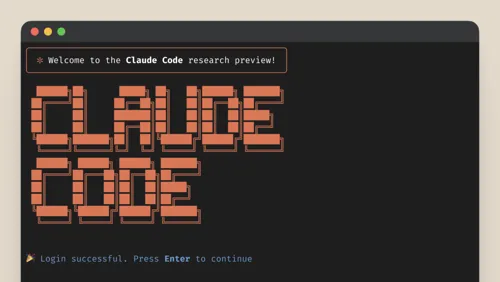
Anthropic is expanding Claude Code weekly usage quotas by a permanent 25% for paid tiers (Pro, Max, Team, Enterprise) effective September 14, with an interim temporary 50% boost beforehand. However, when accounting for the eventual removal of the temporary increase, the net permanent change is actually a 17% reduction from current peak levels—though the new baseline will be permanent, offering long-term predictability for paid users.

▾ Hover for summary ▾ Tap for summary
Anthropic faces legal action from music publishers regarding the use of copyrighted music content in training its Claude AI model. This reflects broader industry tensions over AI training data practices and intellectual property rights—a critical issue for Thai tech companies developing AI systems and considering international expansion.

 Stop running your company on Excel.