
Archive
September 4, 2026

▾ Hover for summary ▾ Tap for summary
Volkswagen's board approved a major restructuring plan ("Future Plan 2030") involving 100,000 job cuts (50,000 additional to existing 50,000) by 2030—the largest in the company's 89-year history. The plan also cuts R&D investment by 16%, reduces vehicle models by half by 2035, and explores closing 4 German plants. Triggered by falling Chinese sales, high German costs, and Chinese EV competition (BYD), this aggressive cost reduction aims to achieve 9% profit margins while freeing capital for high-return brands. Though unions secured guarantees against involuntary layoffs through 2030, the scope reflects existential pressure on Europe's largest automaker.
▾ Hover for summary ▾ Tap for summary
Chinese rare earth material suppliers are restricting shipments to the US amid escalating trade tensions, potentially disrupting global supply chains for critical tech and defense components.
▾ Hover for summary ▾ Tap for summary
Chinese banks are increasing Treasury purchases while attracting dollar deposits, signaling strategic currency positioning and capital flows that could affect global financial markets and US-China economic dynamics.

▾ Hover for summary ▾ Tap for summary
Thailand's Ministry of Agriculture is implementing new quality standards for high-potential agricultural products—including fava beans (positioned as a superfood), bottled fish sauce, and low-carbon rice—to enhance competitiveness in global markets increasingly focused on health food, plant-based products, and sustainable production. The initiative includes streamlined certification processes (15-day turnaround), development of low-carbon shrimp standards, and an upgraded THRASFF food safety alert system linked to ASEAN data networks. Key focus: standards must be practically implementable for smallholder farmers without imposing excessive costs, while serving as tools to boost farmer livelihoods and create trade value.

 Empower businesses to thrive in the digital age.
▾ Hover for summary ▾ Tap for summary
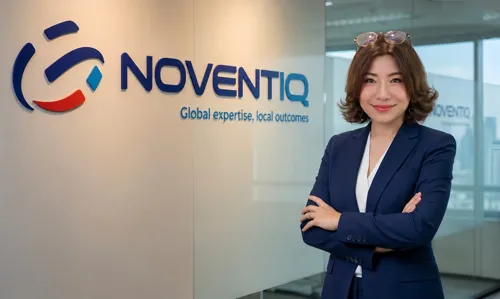
Noventiq, a global digital transformation and cybersecurity leader, appoints Dr. Monthasinee Keeratikainanon as MD for Thailand & APAC Growth. The appointment signals the company's commitment to scaling AI and cloud services across Thai SMEs and enterprises, leveraging 30+ years of tech expertise and Microsoft partnership. Key strategy includes building local delivery capability and developing Thai talent in AI transformation, cloud engineering, and cybersecurity.
▾ Hover for summary ▾ Tap for summary
Global tech professionals are increasingly traveling to China to engage with its innovation ecosystem amid intensifying international competition for technological leadership.

▾ Hover for summary ▾ Tap for summary
Volkswagen's board approved its largest restructuring in 89 years, cutting 50,000 additional jobs globally amid crushing pressures: weakened Chinese market (profits down 80%), escalating US tariffs, and intense competition from Chinese EV makers. Four German plants face potential closure by 2031, and the deal resolves labor tensions while simplifying group structure. This signals profound structural challenges in the global auto industry and competitive landscape reshaping.

▾ Hover for summary ▾ Tap for summary
ONYX Hospitality Group leverages AI-driven travel trends (54% of travelers confident using AI for planning) to position its four hotel brands (Amari, OZO, Shama, Oriental Residence) as experience-driven solutions. Each brand addresses different traveler preferences—from local cultural immersion to digital connectivity and sanctuary spaces—translating AI-curated plans into meaningful on-ground experiences. Relevant for hospitality tech adoption and customer experience innovation in Thailand's tourism sector.
 Your real translator for LINE and Discord.
▾ Hover for summary ▾ Tap for summary
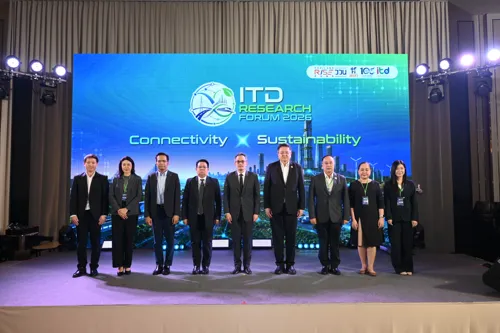
ITD (International Institute of Trade and Development) released four national research projects aimed at modernizing Thailand's economy: sustainable data center development, agricultural product traceability systems, railway-logistics integration, and special economic zone optimization via FTA. These studies identify concrete opportunities and constraints for SMEs and policymakers to build competitive advantages amid shifting geopolitics, new trade rules, and digital transformation—particularly critical as data center demand globally doubles by 2030.

▾ Hover for summary ▾ Tap for summary
Deputy PM and Science Minister Dr. Yodchanan outlined a transformative vision for Thai R&D that prioritizes "Heartware" (human foundation and basic science) over chasing AI trends alone. Key strategies include building commercialization ecosystems via CWIE work-integrated education, anchoring research to local problems (tropical diseases, agriculture) to create defensible solutions, regional ASEAN collaboration over talent poaching, and "Nature Finance" positioning Thailand as a biodiversity steward to attract green capital. The emphasis is on sustainable, context-driven innovation rather than imported research agendas.

▾ Hover for summary ▾ Tap for summary
Tesla has begun commercial operations of Cybercab, a fully autonomous two-seater taxi with no steering wheel or pedals, launching in Austin, Texas with 45 registered vehicles. This marks a significant milestone in self-driving vehicle deployment, though still modest compared to competitor Waymo's 988 vehicles in the same state. The service represents Tesla's strategy to operate a dedicated autonomous fleet, separate from its Robotaxi program which relies on Tesla owners sharing their vehicles.
▾ Hover for summary ▾ Tap for summary
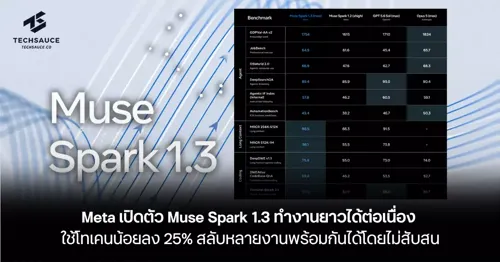
Meta released Muse Spark 1.3, an agentic AI model designed for sustained long-form task execution with 25% lower token usage and improved multi-tasking capabilities. Key improvements include better context preservation in complex multi-step instructions, 20% fewer tool calls, enhanced human-AI collaboration (asking clarifications, requesting confirmations for high-impact actions), and stronger resistance to prompt injection attacks. The model supports 1M token context windows and multimodal inputs, available now on Muse Code and Meta Model API. Relevance: SME developers using AI coding assistants or API consumers will see direct cost savings and efficiency gains; the shift toward "agentic" AI marks a pivotal transition in how businesses deploy autonomous task completion.

 Want to buy or sell a business?

▾ Hover for summary ▾ Tap for summary
Thailand's Interior Ministry and Bangkok city administration have suspended approval for 3 pending Data Center projects (not yet under construction) pending policy review within one month. The freeze aims to tighten oversight of urban planning, electricity and water supply impacts. Three existing projects (2565–2567) will undergo inspection, while new regulatory standards will address environmental impact, building codes, and fuel storage safety—signaling stricter governance of data center expansion in Thailand.

▾ Hover for summary ▾ Tap for summary
Thailand's Deputy PM Ekniti announced the establishment of four specialized sub-committees to develop minimum technical standards and frameworks for data center development across economic, infrastructure, land-use, and environmental dimensions. The policy is designed to shift from ad-hoc approvals to a national-level strategy, with minimum requirements to be finalized within one week and full policy recommendations due by September 2026. This creates a structured, competitive evaluation process for foreign data center investors while ensuring alignment with Thailand's digital and Net Zero strategies—critical for SMEs and tech firms seeking infrastructure clarity and supply-chain investment security.

▾ Hover for summary ▾ Tap for summary
Cloudflare and OpenAI have partnered to launch a new AI vulnerability service, likely targeting security concerns as AI adoption accelerates. The partnership combines Cloudflare's network security expertise with OpenAI's AI capabilities. For Thai SMEs adopting AI tools, this signals growing security infrastructure maturation and potential third-party risk management solutions in the market.
▾ Hover for summary ▾ Tap for summary
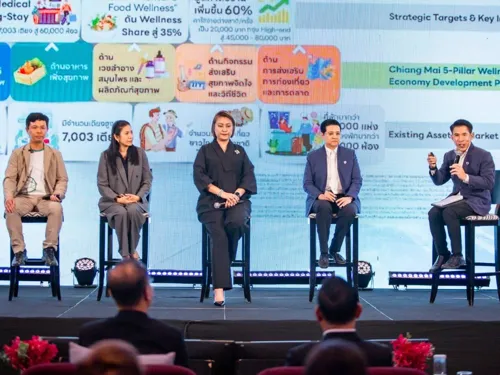
Thailand's Tourism Authority (TAT) is driving a strategic initiative to position Chiang Mai as a "World Class Wellness Destination" under the "Chiang Mai Prototype: Travel with Care" concept. The plan integrates five pillars—community/culture care, craft/creativity, wellbeing care, nature-based healing, and local food/culinary—leveraging Lanna wisdom and traditional healing as unique differentiators. TCEB is positioning itself as an ecosystem connector to coordinate government, private sector, and community efforts, while infusing wellness into MICE industries and preventive healthcare models to attract high-spending health-conscious tourists and extend economic benefits to local communities.
 Together GoWeGo! Ferry tickets in Thailand.
▾ Hover for summary ▾ Tap for summary
Nvidia's $13 billion acquisition of Hugging Face signals a major strategic shift toward open-source AI models, reshaping the competitive landscape for AI infrastructure and deployment.
▾ Hover for summary ▾ Tap for summary
SJWD (SCG Double You D Logistics) launched a 3.5-year digital bond offering with Krung Thai Bank, yielding 2.95–3.20% annually with quarterly payouts. Minimum subscription is 1,000 baht per unit, available to Thai individuals via the Pao-Tang mobile app for bonds. The bond carries a BBB+(tha) credit rating from Fitch. Subscription runs 18–22 September 2026. This demonstrates growing digital capital-market infrastructure in Thailand, enabling retail access to corporate debt and supporting SME fundraising channels.

▾ Hover for summary ▾ Tap for summary
Thailand's Energy Ministry has established a 4-point regulatory framework for data center electricity management: (1) dedicated tiered rates reflecting true costs without burdening households; (2) mandatory clean energy usage aligning with the national Power Development Plan targeting 60%+ renewables; (3) backup power system safety standards for batteries/generators; (4) strict grid connectivity rules to protect network stability and prevent disruption to residential and industrial users. This policy shields ordinary consumers while enabling the data center sector to scale sustainably toward Net Zero commitments.
▾ Hover for summary ▾ Tap for summary
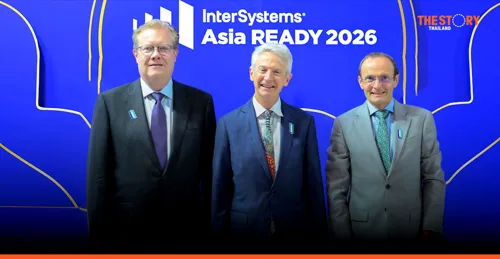
InterSystems executives argue that AI effectiveness in healthcare depends fundamentally on unified data systems. Thailand's healthcare sector faces data silos—especially outside Bangkok—that prevent interoperability. The company advocates using standardized frameworks (FHIR) to connect hospital, clinic, and lab data centrally. Real-world results show AI-powered systems can reduce physician appointment time by ~5 minutes, potentially increasing patient throughput by 2–3 per session. AI also aids medical communication by translating complex terminology into patient-friendly language. The core insight: implementing AI requires first solving data fragmentation and creating shared infrastructure—not just deploying algorithms.

 Stop running your company on Excel.