
Archive
September 8, 2026
▾ Hover for summary ▾ Tap for summary
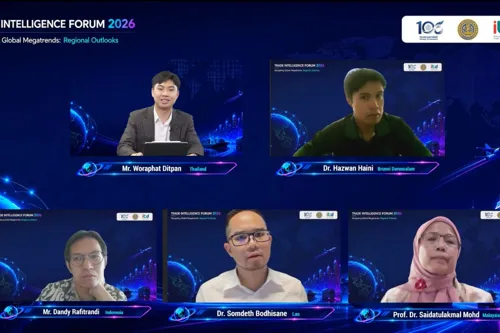
Thailand's Institute of International Trade and Development (ITD) convened academic networks from 8 ASEAN nations to analyse regional economic impacts of green and digital transition. Multiple countries propose deepening ties with Thailand across EV supply chains (Indonesia linking nickel to auto assembly), semiconductors (Philippines), halal food systems (Brunei), smart agriculture, clean energy, digital trade, and low-carbon manufacturing. Thailand is positioned as a critical supply-chain connector and hub for ASEAN's next-generation economic integration, with concrete collaboration frameworks emerging in electrification, green industry standards, and regional payment systems.

▾ Hover for summary ▾ Tap for summary
Thailand's Industry Minister announces an escalated crackdown on illegal industrial waste dumping, particularly in the Eastern Special Development Zone (EEC). New enforcement measures include coordinated inspections across multiple agencies, stricter criminal penalties, asset seizure under anti-money-laundering laws, E-Manifest GPS tracking of waste transport, and a 24/7 reporting hotline. The ministry is also promoting circular economy solutions and End-of-Waste frameworks to convert industrial waste into reusable raw materials—a significant policy shift affecting manufacturers' compliance costs and operational practices.
▾ Hover for summary ▾ Tap for summary
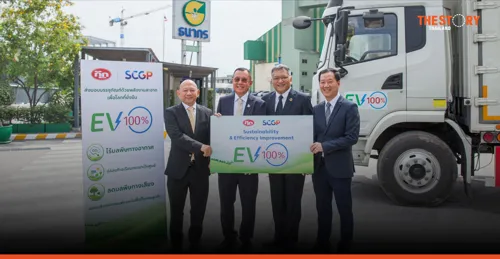
SCGP and Thanakarn Vegetable Oil (Kook brand) formalized a sustainability partnership to integrate circular economy principles across their value chain. The collaboration covers sustainable packaging development, inventory management, EV truck logistics, and systematic paper recycling/upcycling programs. This end-to-end resource management approach aims to reduce waste, lower emissions, and create shared value for business and society while advancing practical circular economy implementation in Thailand's food processing sector.

▾ Hover for summary ▾ Tap for summary
The Thai stock market (SET) is expected to trade in a narrow range of 1,610-1,630 points today, with semiconductor stocks (DELTA, HANA, KCE) driving short-term momentum due to global demand for AI chips and increased HBM4 production capacity from major players. A brokerage recommends short-term trading positions in semiconductor plays while gradually accumulating foundational stocks (CPALL, CPN, HMPRO, KBANK, SCB) and tourism stocks, pending U.S. CPI/PPI data that will shape Fed rate expectations.

 Empower businesses to thrive in the digital age.
▾ Hover for summary ▾ Tap for summary
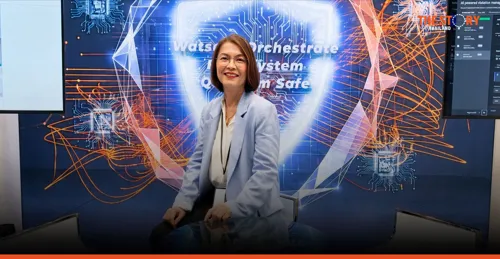
PortalNet MD Sirilak Chhuenprasert presented a framework at NECTEC-ACE 2026 for moving AI from pilot to production: validate use cases aligned with business goals, assess infrastructure readiness, and implement robust data management and security (including quantum-safe cryptography). The firm promotes IBM-based solutions and positions itself as a technology partner helping Thai organizations design scaled AI deployments with appropriate compute, storage, and risk mitigation layers.

▾ Hover for summary ▾ Tap for summary
Brent crude hit a 6-week high following escalating Middle East tensions, including threats of Iranian retaliation against US strikes and fresh Israeli attacks on southern Lebanon (12+ deaths) and Saudi Aramco facilities. Shipping through Hormuz strait hit 5-month lows; OPEC+ held output policy steady pending new quota negotiations. Supply risks are intensifying with geopolitical premium driving prices higher.

▾ Hover for summary ▾ Tap for summary
Preferred Networks, a major Japanese AI chip developer, is exploring an initial public offering (IPO). The move signals growing investor appetite for specialized AI hardware beyond Nvidia, with potential implications for regional tech markets and startup valuations in the semiconductor space.

▾ Hover for summary ▾ Tap for summary
Samsung plans to launch a humanoid robot in January 2027, signaling major tech industry investment in robotics and AI. For Thai SMEs in manufacturing or logistics, this indicates accelerating automation trends and potential future supply chain disruptions or opportunities in robot integration.
 Your real translator for LINE and Discord.
▾ Hover for summary ▾ Tap for summary
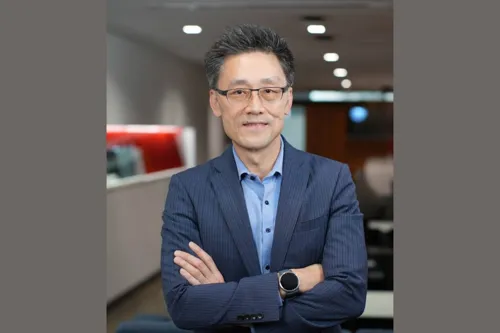
FETCO chair Paibuul Nlintraangkur argues that establishing clear data center regulations—a practice already common in many countries—will not deter foreign investors from Thailand. Major investments are long-planned strategic decisions; additional regulatory frameworks are unlikely to cause relocation. Clear rules actually strengthen investor confidence and social trust, as long as Thailand maintains its underlying competitive advantages in energy, infrastructure, and geographic positioning within the digital economy ecosystem.
▾ Hover for summary ▾ Tap for summary
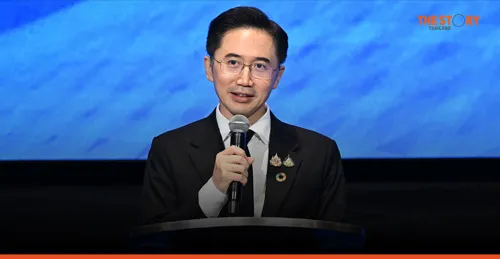
Deputy PM Yodchanan outlines Thailand's need to reframe sustainability as inseparable from economic survival, not as an afterthought. Key messages: pilot projects before legislation; integrate ESG into all business operations (not as a standalone function); shift agriculture and industry from volume to value; combine Net Zero with Nature Positive strategies using technology and data. Actionable for SMEs seeking to align operations with emerging market expectations (wellness, procurement standards, supply chain transparency) and for tech entrepreneurs in IoT/sensors/smart systems supporting sustainability tracking.
▾ Hover for summary ▾ Tap for summary
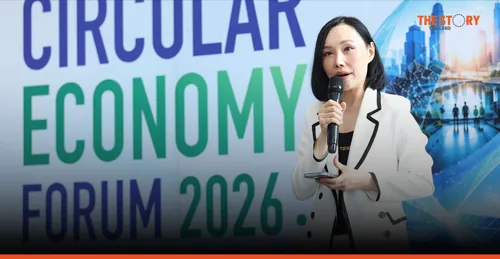
Thai Eastern Group Holdings (TEGH) is repositioning its core agricultural supply chain business—rubber, palm oil, and organic waste management—toward a circular economy model under "Thai Eastern Symbiosis." The company now works upstream with farmers on sustainability practices and traceability, treats waste as a resource (diverting over 90% of organic waste from landfills into bioenergy), recycles over 90% of water within production, and monetizes carbon-low products. This shifts TEGH's value proposition from commodity seller to reliability guarantor, embedding environmental compliance and supply chain resilience into competitive advantage.

▾ Hover for summary ▾ Tap for summary
CardX (SCB's credit card subsidiary) has enabled Google Pay support for its cardholders in Thailand, allowing Android users to make contactless NFC payments via Google Wallet without carrying physical cards. Supported products include all CardX-branded cards, SCB Wealth by CardX, and CardX Flex credit lines—joining other Thai banks in the growing digital wallet ecosystem.

 Want to buy or sell a business?
▾ Hover for summary ▾ Tap for summary
OpenAI secures additional AI data centre capacity in Malaysia through Nvidia-backed Firmus, signalling regional infrastructure expansion for cloud and AI services in Southeast Asia.
▾ Hover for summary ▾ Tap for summary
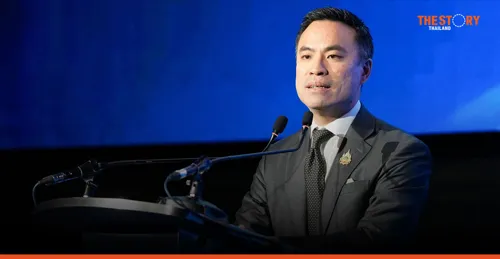
Thailand's Energy Minister Akanat outlines a major energy transition strategy to reduce dependency on imported oil and LNG through domestic biofuels, solar, and wind. Key initiatives include: (1) expanding ethanol production from agricultural crops to replace imported oil; (2) deploying 5,000–7,000 MW of rooftop solar capacity across one million households through a government-backed financing model, allowing citizens to become energy producers with revenue returns over 7–10 years; (3) introducing Direct PPA markets for clean energy trading, broadening access beyond major corporations. The plan targets 60%+ clean energy in the new Power Development Plan (PDP), positioning SMEs and citizens as stakeholders rather than passive consumers.
▾ Hover for summary ▾ Tap for summary
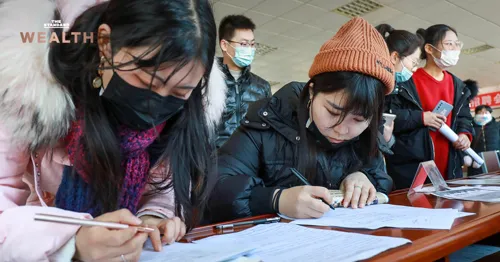
China faces a structural employment crisis with 12.7 million graduates entering the market in 2026—a historic peak. AI adoption, backed by aggressive government support, is rapidly displacing entry-level positions that have traditionally absorbed new talent. Youth unemployment (16–24 age group) already stands at 17.9%, and job openings haven't kept pace with graduate supply. The convergence of economic weakness and AI-driven disruption creates dual pressures on new entrants, making this a politically sensitive issue for Beijing given social stability concerns.

▾ Hover for summary ▾ Tap for summary
Thailand's Department of Business Development has conducted a comprehensive audit of foreign-invested entities' real estate holdings, revealing over 1.06 million rai of land and 4.1 million sq.m. of condominiums held by 36,277 foreign-backed companies. While not all holdings are necessarily illegal nominees, the data—covering 147+ nationalities—has been shared with law enforcement, BOI, and AMLO for deeper financial and compliance checks. Companies found facilitating nominee arrangements or misrepresenting ownership will face prosecution. This affects SMEs with foreign investors and highlights increased regulatory scrutiny on cross-border property control.
 Together GoWeGo! Ferry tickets in Thailand.
▾ Hover for summary ▾ Tap for summary
Malaysia is planning a $494 million sovereign AI infrastructure project and is evaluating Huawei chips as a core component. This reflects regional interest in AI sovereignty amid geopolitical tensions and supply-chain diversification efforts. For Thai tech SMEs, this signals demand for AI integration, potential partnerships in ASEAN AI ecosystems, and the strategic importance of hardware choices in national digital initiatives.
▾ Hover for summary ▾ Tap for summary
Huawei launched the Mate XT2 tri-fold smartphone to strengthen its position in the premium foldable market. This move represents Huawei's continued innovation in advanced display technology and competitive response to rivals in the high-end segment, relevant to Thai tech entrepreneurs tracking smartphone innovation trends and premium device manufacturing capabilities.
September 7, 2026
▾ Hover for summary ▾ Tap for summary
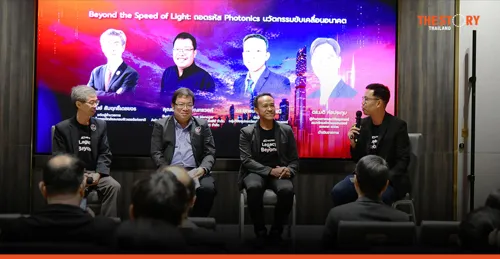
Thailand has a 20+ year foundation in photonics technology, from NECTEC's 1993 research to established manufacturing by companies like Fabrinet, Lumentum, and the Thai firm Photonics Science. AI-driven data center demand is now revitalizing this sector as optical systems overcome electronic bandwidth/heat limits. Silicon photonics and photonic integrated circuits (PICs) are becoming critical infrastructure, positioning Thailand to move beyond manufacturing into IP development and higher-value roles in the global photonics supply chain.

▾ Hover for summary ▾ Tap for summary
Thailand's Department of Business Development has referred 36,277 foreign-owned entities holding 305,838 land plots (1.6 million rai) to enforcement agencies for investigation into possible nominee business violations. The probe covers entities with varying foreign ownership stakes; 3,450 entities have 100% foreign ownership, while others operate as joint ventures. Authorities will use the data to verify compliance with investment promotion conditions and identify illegitimate nominee operations, though many holdings may represent legitimate Thai-foreign joint investments.

 Stop running your company on Excel.