
Archive
September 9, 2026

▾ Hover for summary ▾ Tap for summary
Kumamoto Airport (operated by Kyushu Kumamoto International Airport Co.) plans to launch direct routes to Southeast Asia, with Thailand's Bangkok as the first destination by end of fiscal 2030. The airport aims to grow international passenger volume by 40% to 920,000 by FY2029, driven by its proximity to TSMC and Sony manufacturing hubs. New infrastructure including bonded warehouses supports semiconductor cargo logistics. For Thai SMEs and tourism operators, this creates export/import opportunities and stronger bilateral air connectivity with Japan's Kyushu region.
▾ Hover for summary ▾ Tap for summary
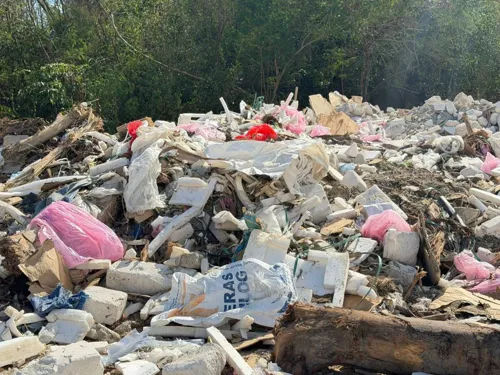
Thailand's Natural Resources Ministry ordered an inspection of illegal waste dumping from a Data Center construction project in Ban Chang, Rayong, and found ~20 tonnes of construction debris (bricks, stone, plastic, fiberglass) improperly filled on ~1–2 rai of land. The ministry has directed the sub-district municipality to remove all waste within 7 days via authorized waste management facilities. This highlights regulatory enforcement gaps in large infrastructure projects and raises questions about whether proper environmental impact assessment (EIA) was conducted before the Data Center development began.
▾ Hover for summary ▾ Tap for summary
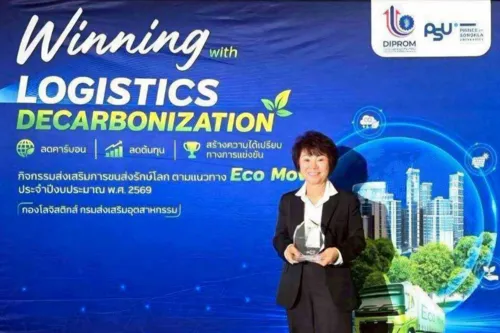
Poolodom, a Thai animal feed raw materials and logistics provider, is pivoting toward Green Supply Chain practices in its 50th year, with goals to become a Low Carbon Organization. The company plans to optimize sourcing, warehousing, and transport while reducing emissions, supported by Backhaul Matching Systems and recent recognition as a Low Carbon Logistics success case. This positions them to meet global ESG standards increasingly demanded by trading partners.
▾ Hover for summary ▾ Tap for summary
Brent crude oil has climbed above $100/barrel on escalating Middle East tensions, which could raise input costs for Thai manufacturing and energy-dependent SMEs.

 Empower businesses to thrive in the digital age.
▾ Hover for summary ▾ Tap for summary
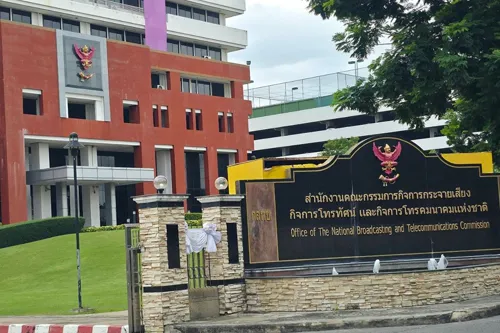
Thailand's National Broadcasting and Telecommunications Commission (NBTC) board has collapsed 9 times in 2 months amid a leadership crisis. After a selection committee found NBTC Chair Dr. Sorn ineligible, three remaining board members pushed to convene a 6-person board to address 148 pending agenda items—including urgent digital TV licensing matters expiring in 2027. Consumer groups and broadcasters urged the secretary-general to facilitate these meetings, while legal uncertainty paralyzes the regulator despite Dr. Sorn's court appeal.

▾ Hover for summary ▾ Tap for summary
An AI software startup is tackling construction waste by developing technology to reduce rework, targeting a potential market saving of US$100 billion globally. The approach applies machine learning to construction project management—a sector with significant inefficiencies that SMEs and contractors could benefit from as the technology matures.

▾ Hover for summary ▾ Tap for summary
Thailand's digital industry reached 270.9 billion baht in 2568 (2025), growing 16% year-on-year. Cloud-based software surged 26% to capture 43% of the software product market, displacing on-premise solutions. Managed services now outpaced custom development for the first time, reflecting client demand for continuous operations. Hardware exports boomed 38% (135% in USD terms) driven by global AI and data center investments, but domestic IT sales contracted—widening the gap between export-oriented and local-market businesses. AI tools reshape developer roles toward architecture and business understanding rather than coding. Talent and skills gaps remain a critical challenge as the industry transforms structurally.

▾ Hover for summary ▾ Tap for summary
Kalasin's fisheries department has confirmed the presence of black catfish (striped catfish) in Lam Pao Dam, a major reservoir used for tilapia and freshwater shrimp farming by local communities. A sample tested positive at the Inland Fisheries Research and Development Institute. An in-depth investigation is scheduled for September 12 with the participation of senior fisheries officials, reflecting the seriousness of the threat to local aquaculture livelihoods in the region.
 Your real translator for LINE and Discord.
▾ Hover for summary ▾ Tap for summary
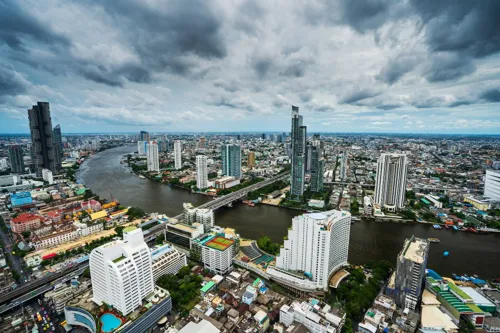
Thailand's second-hand residential market expanded in Q2, with total listed units reaching 195,941 units (up 6.1%) and cumulative listed value hitting 941.2 billion baht (up 24.9%). The market is shifting toward premium segment—properties above 10 million baht jumped 32.4% in units and 39.6% in value. Bangkok and its metropolitan area dominate, accounting for 48.3% of units and 71.6% of total value, driving the growth. This signals rising property values and shifting buyer demand toward mid-to-high-tier residential assets.
▾ Hover for summary ▾ Tap for summary
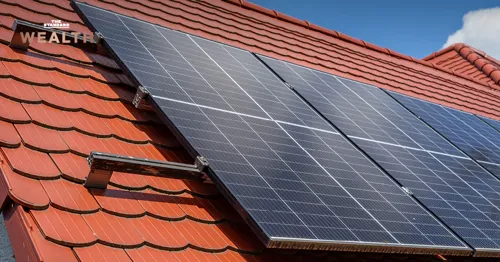
Thailand's Interior Ministry is expanding solar rooftop installation subsidies from 1 million to 1.5 million households, each receiving 50,000 baht in support. Registration is expected to open mid-October. The government will facilitate financing through state banks and enable household solar producers to sell excess electricity back to the grid—effectively converting consumers into micro-generators. The rollout plan extends through 2027, supported by Smart Meter/Smart Grid infrastructure development and tariff reductions on solar equipment imports to boost domestic manufacturing and create jobs.
▾ Hover for summary ▾ Tap for summary
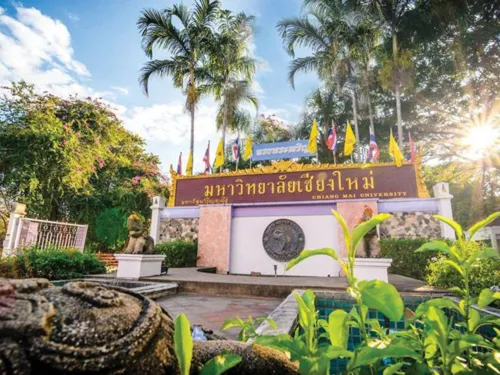
A Chiang Mai University survey of Northern Thailand Gen Z reveals IT-AI careers now rank #1 (replacing medicine at #3), with 55%+ of youth valuing hands-on work over university education. Youth identify foreign language skills (targeting 3 languages: Thai, Chinese, English) as the top future competency. Key finding: universities critically underteach personal financial literacy (60.7% gap) and real-world job experience (33.6% gap). Labor market data shows wholesale/retail hiring down -49%, real estate down -41.7%, but manufacturing stable (+6.2%). Actionable for EdTech SMEs and skill-training providers targeting Gen Z in underserved areas.

▾ Hover for summary ▾ Tap for summary
Thaivivat Holdings (TVH) has restructured into a holding company and deployed 60.24 million baht for a 25.1% stake in Tune Insurance via private placement to generate investment returns, enable strategic business synergies (travel insurance, health insurance, airline partnerships, broker channels), and diversify its insurance portfolio. The company targets double-digit premium growth (10%+) versus industry average of 3-4%, balancing motor (70% of premiums, 7% growth) and non-motor portfolios (15% growth) through cross-selling via its digital app. TVH is also developing new revenue streams through Thaivivat Asset by monetizing real estate and expanding digital channels (airlines, digital wallets). As it marks 75 years, the insurer is shifting from reactive to proactive customer care using technology and innovation to improve policyholders' quality of life.

 Want to buy or sell a business?
▾ Hover for summary ▾ Tap for summary
PTT disclosed to the Thai SEC on 9 September 2026 that it is in ongoing discussions with multiple foreign strategic partners about potential investment in its refining and petrochemical businesses. No material progress has been reached yet. PTT emphasizes that any partnership structure must retain PTT as the majority shareholder with control, balancing energy security, supply chain resilience, technology access, and operational efficiency against global overcapacity and volatile energy markets.

▾ Hover for summary ▾ Tap for summary
Nvidia is shifting from a traditional hardware sales model to functioning as a "central bank of AI," offering revenue guarantees, debt guarantees, and equity stakes in startups to finance customer chip purchases. This creates near-$300 trillion in hidden liabilities. While effective during AI growth, the strategy mirrors pre-2000 Dot-com tactics (like Cisco's financing boom), risking severe losses if AI demand slows or compute capacity oversupplies without sufficient revenue generation to cover guarantees.

▾ Hover for summary ▾ Tap for summary
Shopee launched two new services in Thailand on 7 September 2024: Shopee Instant Mart for 1-hour grocery delivery with free shipping (no minimum order) available 24/7, and Shopee Telepharmacy for online pharmacist consultations. The move follows a competitive landscape shift toward profitability after intense price wars, targeting major retailers (Big C, Lotus's, Tops, Maxvalu, Villa Market) and local pharmacy networks. Initial rollout covers Bangkok, Chiang Mai, and five other major cities with aggressive promotions (up to 50% discounts).

▾ Hover for summary ▾ Tap for summary
The Nakhon Ratchasima Chamber of Commerce is calling on the government to expedite planning for the World Floricultural Expo 2029 (relocated from Khong to Pakchong District) and establish a clear master timeline with only ~3 years and 2 months remaining. The private sector proposes converting the original Khong site into a Northeast agricultural hub/trading center and prioritizes accelerating high-speed rail operations (originally targeted for 2573) to handle an expected 3+ million visitors. Strategic tourism distribution across multiple districts is planned to maximize provincial economic benefit.
 Together GoWeGo! Ferry tickets in Thailand.
▾ Hover for summary ▾ Tap for summary
Circle, a major crypto/payments company, has acquired Tazapay in a $400m deal. Tazapay is a payments startup (reportedly serving APAC SMEs with cross-border and B2B payment solutions). This signals continued consolidation in the fintech/payments space and Circle's expansion into emerging markets—relevant to Thai SMEs exploring modern payment infrastructure, though the deal itself is not Thailand-specific.

▾ Hover for summary ▾ Tap for summary
Thailand's private sector is escalating anti-corruption efforts, marking October 1 as a pivotal date to launch a campaign against under-the-table payments. The Thai Chamber of Commerce chair argues that corruption is the root cause of smuggled goods, counterfeit products, and substandard items flooding the market. The initiative calls for stricter law enforcement, digital systems adoption, and reduced bureaucratic discretion across trade checkpoints and distribution channels to combat both corruption and illegal commerce.

▾ Hover for summary ▾ Tap for summary
Thailand's Federation of Industries (FTI) reports industrial confidence dropped to 89.7 in August 2026 from 90.0 in July, citing energy costs, fragile domestic demand, credit access, and global uncertainty. The FTI proposes three measures: (1) promote E20 ethanol-blended fuel to reduce energy costs and support agriculture; (2) require foreign investors to use Thai suppliers through local content policies and BOI incentives to ensure SME benefits; (3) launch a nationwide campaign to boost purchases of Thai goods alongside government stimulus spending in Q4. The FTI notes 3-month-ahead confidence at 97.0 suggests some recovery optimism, but risks remain from US tariff uncertainty, Middle East tensions affecting supply chains, and weather-related agricultural shocks.

▾ Hover for summary ▾ Tap for summary
Deputy PM Ekniti reveals plan to expand the rooftop solar programme from 1 to 1.5 million households, allocating 50 billion baht (5,000 per household). The Ministry of Interior will present the proposal to the Finance Ministry board on 11 Sept for approval from the 200-billion-baht energy transition fund. Partnership with state utilities, three banks, and training initiatives aims to make households both power consumers and micro-producers, generating up to 1,000 baht monthly income. Concurrent efforts include tariff reduction on solar panel imports to stimulate domestic production (7–8 local factories available) and smart grid infrastructure development.

 Stop running your company on Excel.