
Archive
September 10, 2026

▾ Hover for summary ▾ Tap for summary
Thailand's EV Board has approved a three-tier excise tax structure designed to incentivize domestic EV production and discourage imports. Domestically produced EVs face 2-8% tax (depending on local content and investment promotion), while imported EVs face 10%. The policy aims to boost domestic investment, develop local supply chains, and position Thailand as a regional automotive export hub. Implementation could help domestic production return to growth in 2027, though risks include rising vehicle prices and questions about actual value-add requirements.
▾ Hover for summary ▾ Tap for summary
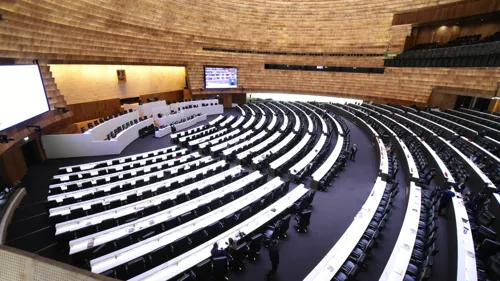
Thailand's parliament approved the 2570 (2027) fiscal budget of 3.788 trillion baht with 338-144 vote majority. A key component is 12 billion baht in central spending aimed at economic stimulus, energy crisis relief, and green energy transition—critical for SMEs facing energy cost volatility and structural economic shifts in the coming year.
▾ Hover for summary ▾ Tap for summary
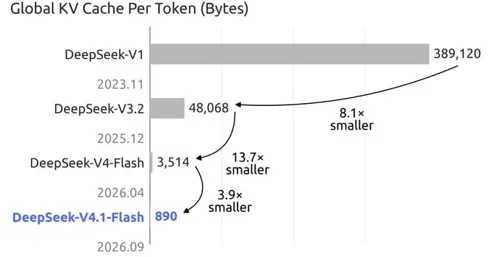
DeepSeek has released V4.1 Flash, a mid-tier LLM that delivers benchmark performance matching GLM-5.3, Kimi K3, and Claude Opus 5, while dramatically reducing operational costs. The model uses an efficient 552B-A8B/A16B architecture with Compressed Sparse Attention 2 and FP4 KV Caching, reducing per-token memory to just 890 bytes (4× more efficient than V4 Flash). Cache pricing is only 1/50 of input pricing, making agentic workflows significantly cheaper. API pricing: $0.3/$1.2 per million tokens (input/output) with cache at $0.006 per million tokens—a major cost advantage for Thai developers and SMEs running AI agents or long-context applications.
▾ Hover for summary ▾ Tap for summary
Chinese AI chipmakers are raising prices due to HBM (high-bandwidth memory) supply constraints, signaling tightening conditions in the global AI chip market that may impact costs for Thailand-based tech firms sourcing components.

 Empower businesses to thrive in the digital age.

▾ Hover for summary ▾ Tap for summary
Apple releases iOS 27 and companion OS updates across all platforms on September 14. iPhone 11 and later devices are eligible to upgrade. The headline feature is Siri AI (Apple Intelligence), available exclusively on iPhone 15 Pro and newer devices, initially supporting English only. This affects device upgrade cycles and AI feature access for Thai SMEs using Apple ecosystem.
▾ Hover for summary ▾ Tap for summary
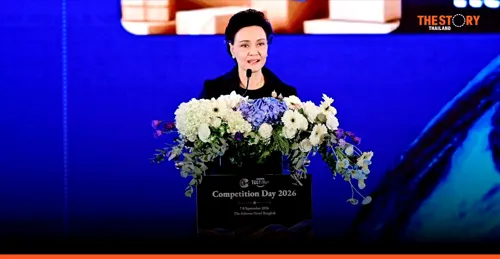
Thailand's SMEs account for 99.5% of registered businesses but generate only 34.8% of revenue—a gap unchanged for a decade. The Deputy PM and Commerce Minister advocates shifting regulatory focus from passive rule-enforcement to proactive market support, including credit term standardization (30-45 days), oversight of digital platform fees, and inter-agency coordination to level the competitive playing field for small and mid-sized enterprises.

▾ Hover for summary ▾ Tap for summary
Google DeepMind released AlphaGenome Atlas, a 1 PB database that precomputes AI predictions for all 9 billion possible single-nucleotide variants (SNVs) in human DNA and their health impacts. The tool uses the AlphaGenome model to assess how specific mutations affect the body, accessible via web interface or API. This addresses a long-standing research bottleneck—lab validation of mutation effects was previously impractical at scale. Early adoption by life science research units signals real-world utility for genomics research and drug development workflows.
▾ Hover for summary ▾ Tap for summary
Foreign investors are returning to Asian equity markets after a prolonged nine-month period of outflows, signaling renewed confidence in the region.
 Your real translator for LINE and Discord.

▾ Hover for summary ▾ Tap for summary
SCB EIC's 2026 housing survey shows the lowest purchase demand in 4 years, with 56% of Thai consumers planning no home purchase within 5 years. Key pressures include weak economic outlook, high property prices, and tightened lending standards from financial institutions. Second-hand housing remains resilient while rental markets face headwinds as consumers defer purchases and seek cheaper alternatives or consolidate housing costs.

▾ Hover for summary ▾ Tap for summary
Osathaspa (OSP), a 135-year-old beverage conglomerate, is consolidating production at its Ayutthaya facility into a semi-automated smart factory (2.2B bottles/year capacity, 14-storey automated warehouse with 32,000 pallet capacity) to cut costs by ~300M baht and boost efficiency 15%. The strategy balances premium-segment growth (12-15 baht range) against base-market pressure, while leveraging 80% recycled glass content to reduce energy costs and emissions. With annual capex of 1B baht and Net Zero 2050 targets, OSP is positioning for sustainable margin defence amid subsidy withdrawal and volatile supply chains.

▾ Hover for summary ▾ Tap for summary
The Bank of Thailand announced a formal multi-agency framework with 11 financial institutions to combat grey capital flows and illegal financial activities. Early results show significant impact: large cash withdrawals (>5 million baht) dropped over 50% to ~40 billion baht/month, and high-volume gold bar withdrawals fell ~70% to ~3 billion baht/month. The central bank also aims to monitor foreign transactions in tourism provinces for nominee account risks and plans to coordinate with the SEC on USDT trading surveillance under new Travel Rule regulations.
▾ Hover for summary ▾ Tap for summary
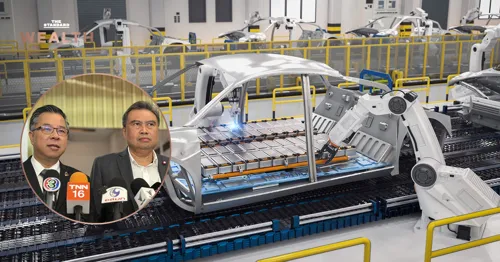
Thailand's EV Board has approved a three-tier excise tax framework designed to incentivize domestic manufacturing and local content usage over pure imports. The structure offers lowest rates for producers with high local content and in-country investment, middle rates for partial producers/importers, and highest rates for import-only players. The government will now work with the private sector on exact tax rates and grace periods. This policy shift, coupled with plans to redefine "Local Content" and introduce "Thai Content" bonuses, targets reducing import dependency and positioning Thailand as an EV export hub for right-hand-drive markets. Battery recycling and charging infrastructure are concurrent priorities.

 Want to buy or sell a business?
▾ Hover for summary ▾ Tap for summary
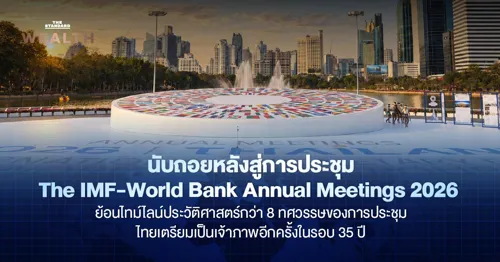
Thailand will host the IMF-World Bank Annual Meetings in 2026 in Bangkok—the country's first time hosting in 35 years since 1991. This positions Thailand as only one of three nations globally permitted to host outside the US twice. The event brings together finance ministers, central bank governors, and policymakers from 191 countries to shape global economic direction, making it critical for Thailand's international profile and economic diplomacy. The article traces 80+ years of these meetings' history and institutional significance.
▾ Hover for summary ▾ Tap for summary
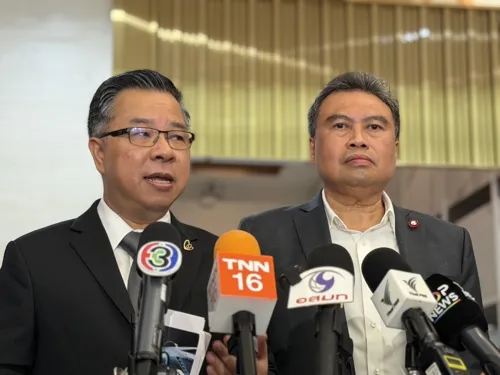
Thailand's EV Board has approved a three-tier excise tax framework to incentivize domestic EV production and local component manufacturing. Imported EVs will face the highest tax (over 10%), while domestic-produced vehicles with high local content will get the lowest rates. The measure aims to attract foreign investment, boost supply chain development, and increase local content value without requiring government budget allocations. Final tax rates and grace period details expected by September; two subcommittees established to tackle battery management, vehicle recycling, and charging infrastructure.
▾ Hover for summary ▾ Tap for summary
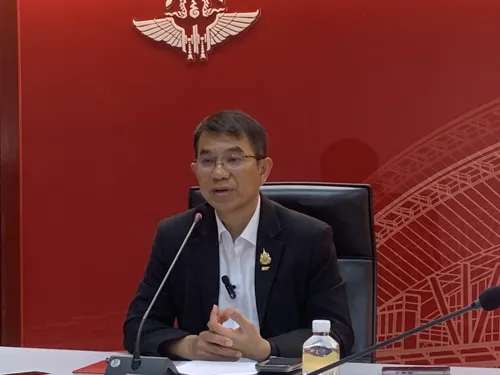
Thai State Railways (SRT) rejected four conditions from CP's Asia Era One for continuing Airport Rail Link operations after the September 30 contract end. CP will operate for four months until January 31, 2570, but disputes remain over: (1) payment terms and 30-day dispute resolution clause; (2) 60M baht/month operating fee (SRT currently cannot pay due to pending main contract); (3) return of 1B baht guarantee deposit; (4) equipment handover condition. SRT plans to transition to subsidiary company RRFF after 4-month extension if agreement reached. Current service generates only 30M baht monthly revenue against 60M baht operating costs.
▾ Hover for summary ▾ Tap for summary
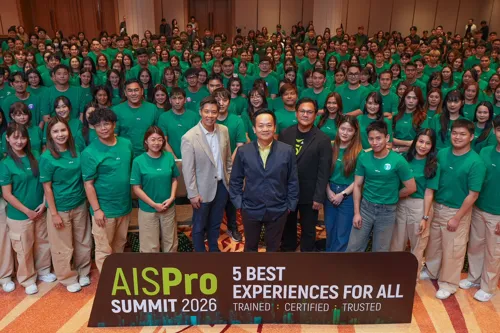
AIS is hosting AIS Pro SUMMIT 2026 to train nationwide retail specialists on new smartphone products, AI tools, and omnichannel services. The program has already achieved 20% reduction in customer service times and seamless unified commerce. AIS is deploying AI Assistance to staff, integrating inventory across branches, and adding 3-hour fast delivery in Bangkok, positioning the carrier to compete on service experience rather than price alone.
 Together GoWeGo! Ferry tickets in Thailand.
▾ Hover for summary ▾ Tap for summary
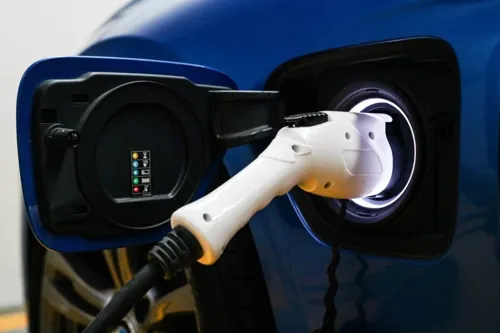
Thailand's EV Board approved a restructured excise tax framework designed to incentivize local component production and manufacturing investment. The new tiered tax system ties import duties to domestic investment, production levels, and local content usage—with higher taxes on imported EVs from companies with no local facilities, and lower rates for domestically-produced vehicles with high local component adoption. This strategy aims to position Thailand as a regional manufacturing and export hub, supported by 1.52 trillion baht in cumulative EV sector investment and a 55% market share for xEV registrations year-to-date.
▾ Hover for summary ▾ Tap for summary
Thailand is raising import tariffs on electric vehicles, which could affect automotive importers, EV startups, and the competitive landscape for foreign EV brands in the Thai market.

▾ Hover for summary ▾ Tap for summary
Apple has discontinued iPhone 17 Pro/Pro Max following iPhone 18 Pro launch, following normal annual Pro model cycles. Concurrently, Apple raised prices on older iPhone models still in stock by 4,000–12,000 baht (e.g., iPhone 16 128GB: 26,900 → 30,900 baht; iPhone Air 1TB: 55,900 → 67,900 baht), citing RAM/storage cost pressures. Price increases took effect immediately at Apple Store channels; dealer stock may vary. This impacts Thai consumer purchasing decisions and SME device refresh budgets.
▾ Hover for summary ▾ Tap for summary
The Thai government's second issuance of Government Savings Bonds (OmPlus) was massively oversubscribed, with 6.56 billion baht in applications against a 2 billion baht offering quota—a 3.28x oversubscription rate across 13,705 retail investors and 24 distribution channels. Both the 3-year tranche (1.8% yield) and 10-year tranche (2.8% yield) saw strong demand, with allocations distributed using a Small Lot First method to prioritize retail investors. This reflects solid retail investor appetite for government-backed savings instruments in the current Thai investment landscape.

 Stop running your company on Excel.