
Archive
August 4, 2026
▾ Hover for summary ▾ Tap for summary
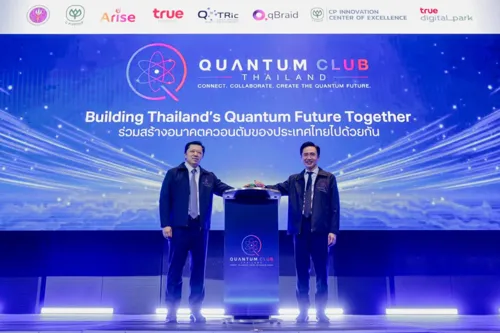
Thailand's Ministry of Higher Education, Science Research and Innovation (MHESI), alongside CP Group, Arise, True Corporation, QTRic, and US-based qBraid, has launched "Quantum Club Thailand"—a national quantum technology platform uniting government, academia, and industry. The initiative operates on four pillars: talent development, research acceleration, industrial capability upgrading, and commercializable innovation. Initial focus areas span quantum optimization, simulation/digital twins, quantum AI, and post-quantum security, positioning Thailand as a quantum technology co-creator rather than merely an adopter.

▾ Hover for summary ▾ Tap for summary
Ferrari's launch of its first EV model, the Luce (designed by former Apple chief designer Jony Ive), faced intense social media backlash and investor concern—stock fell 8% on announcement. However, the company employed a deliberate dual-positioning strategy: avoiding forced transitions for existing clients while aggressively targeting new wealth in China and Silicon Valley tech entrepreneurs who value innovation over traditional combustion engines. Sales exceeded the 2026 target within weeks, validating Ferrari's niche market approach (~600 units/year, 5% of total output through 2030). This case demonstrates how luxury brands can pivot to disruptive technology by reframing brand identity around innovation and status for new demographics rather than core customers.

▾ Hover for summary ▾ Tap for summary
LINE Thailand marked its 15th anniversary by partnering with NDVR to train media professionals in emergency response and life-saving skills (CPR, OODA Loop decision-making, fire hazard assessment). The initiative aims to position media as informed communicators during crises while promoting LINE's digital safety tools—LINE Alert (disaster alerts for up to 5 custom areas) and LINE Safety Check (auto-activation during national emergencies). For SMEs, this signals growing corporate investment in public safety infrastructure and digital resilience products that could create B2B/B2C opportunities in crisis communications and emergency tech.
▾ Hover for summary ▾ Tap for summary
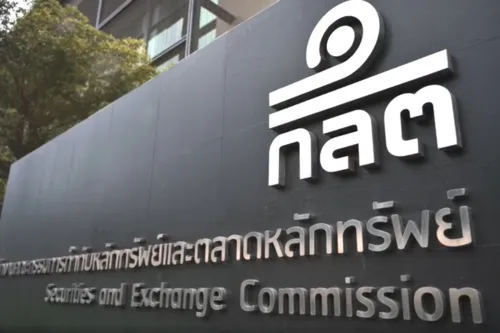
Thailand's Securities and Exchange Commission (SEC) is opening public consultation on a draft regulation to allow mutual funds (retail, institutional, and pension funds) to invest in Government Housing Bank savings lottery bonds. The proposal aims to broaden fund investment options, improve portfolio management flexibility, and harmonize investment criteria across state financial institutions, while maintaining risk controls and investor protections. Public feedback closes September 2, 2026.

 Empower businesses to thrive in the digital age.

▾ Hover for summary ▾ Tap for summary
Ugreen launched a limited-edition Honkai Star Rail accessory collection in Bangkok, featuring a magnetic power bank with integrated charging cable, 65W wall charger, retractable USB-C cable, and Apple Find My tracker. Targets daily commuters seeking portable, fast-charging solutions; combines gaming appeal with practical utility for Thailand's mobile-first workforce.

▾ Hover for summary ▾ Tap for summary
Vietnam's jewelry industry faces a crisis after police uncovered a massive smuggling ring importing over 30,000 counterfeit diamonds (1.9 billion baht value) with altered GIA certifications. Major retailers including Phu Nhuan Jewelry and Saigon Jewelry are implicated; market confidence has collapsed with PNJ losing ~50% market value, shops reporting 100+ daily return requests, and regulatory crackdowns underway. The scandal threatens a sector where diamonds hold cultural significance as wealth storage for Vietnamese households.

▾ Hover for summary ▾ Tap for summary
The Udon Thani Chamber of Commerce is running a major city-wide promotional campaign (August 15–September 30, 2026) to stimulate local spending and support SMEs. The initiative bridges government and private sector efforts to boost retail sales, tourism, and economic circulation across department stores, small retailers, F&B, and hospitality sectors. Success depends on sustained consumer confidence and keeping money flowing within the local economy.

▾ Hover for summary ▾ Tap for summary
Thailand's government and private sector launched five strategic task forces under a public-private partnership framework targeting 3% GDP growth, top-20 global competitiveness ranking, and 30% investment-to-GDP ratio by 2029. Focus areas include AI/digital economy, green transition, regional financial hub development, and medical innovation—critical for SMEs seeking policy-aligned investment and supply-chain opportunities.
 Your real translator for LINE and Discord.

▾ Hover for summary ▾ Tap for summary
Google Health v5.05 now enables two-way sync between Fitbit data and Apple Health, ending a 12-year gap. iPhone users can finally push Fitbit workout logs, sleep, heart rate, steps, and other health metrics directly to Apple Health without third-party middleware apps. The update rolls out gradually on iOS and Android; users enable it via Google Health settings under Partner Apps, with granular control over which data categories are shared. This resolves a long-standing interoperability friction between Apple's and Google's health ecosystems.
▾ Hover for summary ▾ Tap for summary
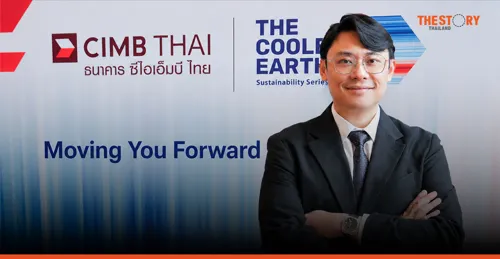
Thailand's ESG bond market has grown 55% annually and now exceeds 1 trillion baht in outstanding value. The SEC is set to launch two new bond types—Transition Bonds and Thailand Amber Bonds—to help businesses transitioning toward net zero by 2650 (Buddhist Era). CIMB Thai is introducing tools to help "brown sector" (carbon-heavy) industries plan their transition, addressing a critical financing gap. With ADB estimating Thailand needs 500–700 billion baht annually through 2578 for its climate targets, new instruments and bank initiatives are essential to unlock capital for non-green businesses seeking a credible path to sustainability.

▾ Hover for summary ▾ Tap for summary
Chiang Mai's Lanna heritage is 90% ready for ICOMOS evaluation on August 3–8, 2026, seeking Thailand's 10th UNESCO World Heritage listing. Distinctive from past sites, Chiang Mai positions itself as a "living historic city" with 730+ years of continuous culture: temples remain active, residents engage daily, commerce thrives. If approved by the World Heritage Committee next year, the designation would boost tourism revenue and local brand value across hotels, restaurants, and traditional goods—though management must balance conservation with the city's vibrant, everyday use.
▾ Hover for summary ▾ Tap for summary
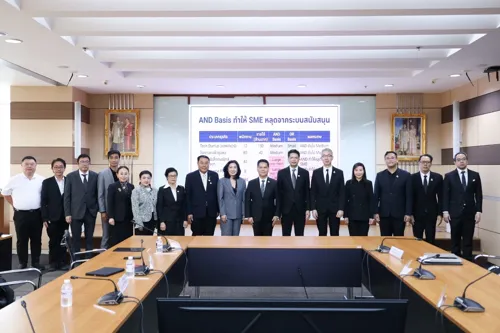
Thailand's SME Council presented the "3Access" strategy to the Industry Minister, targeting structural business challenges through three pillars: (1) Access to Finance—introducing Business Score and Capital Optimizer tools to improve lending criteria beyond credit scores; (2) Access to Market—proposing an SME Single Journey Framework and standardized SME classification across 20+ government agencies; (3) Access to Fairness—pushing for an SME Business Law and analyzing 159 legal gaps, plus reducing credit terms to 45 days to unlock ~250 billion baht for SMEs. The council also proposed a private-sector certification network to reduce export standards verification costs and help combat substandard imports flooding the market.

 Want to buy or sell a business?
▾ Hover for summary ▾ Tap for summary
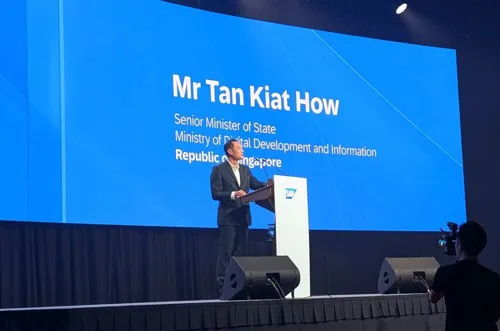
Singapore's ICT Minister Tan Kiat How argues that despite AI automating software creation, data analysis, and repetitive tasks, workers still need strong technical knowledge to make strategic decisions about what AI should do. He notes that tech jobs are increasingly moving outside traditional ICT sectors into manufacturing, healthcare, and finance, requiring education systems to shift toward problem-solving and lifelong learning approaches.
▾ Hover for summary ▾ Tap for summary
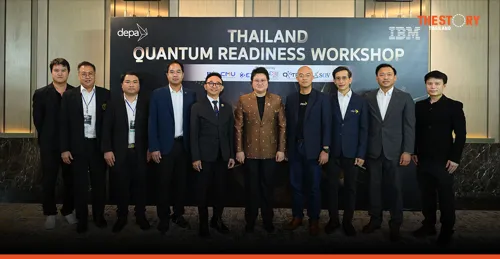
Thailand's Digital Economy Ministry (DEPA) and IBM have organized a Quantum Readiness Workshop to position the country for quantum computing adoption. The government aims to develop quantum technology within the broader framework of digital government transformation, focusing on phased implementation in healthcare and agriculture sectors rather than immediate mandate across all agencies. IBM projects quantum computing will generate $2 trillion USD by 2035, with 2026 marking the inflection point when early adopters transition from testing to real-world commercial applications—a critical window for Thailand to build competitive advantage.

▾ Hover for summary ▾ Tap for summary
Apple removed Telegram from the App Store briefly over CSAM content policy violations, but restored it within hours after Telegram removed offending content and banned related accounts. The incident triggered speculation but was quickly resolved, with Telegram clarifying that rumors had been overblown. For SMEs, this highlights the importance of platform compliance and rapid content moderation in avoiding service disruption.

▾ Hover for summary ▾ Tap for summary
Grab reported Q2 2026 net profit of $252 million, a 7x increase year-over-year, driven by strong Mobility and Delivery services growing 22% in quarterly revenue ($997M). Monthly Transacting Users hit a record 53.9 million. The company is investing strategically in driver subsidies ($706M) to offset fuel costs, particularly in Thailand and Philippines, while pursuing fintech expansion through Superbank investments and the $600M Foodpanda acquisition in Taiwan. These moves reflect a shift toward sustainable profitability and ecosystem balance rather than burn-rate competition.
 Together GoWeGo! Ferry tickets in Thailand.
▾ Hover for summary ▾ Tap for summary
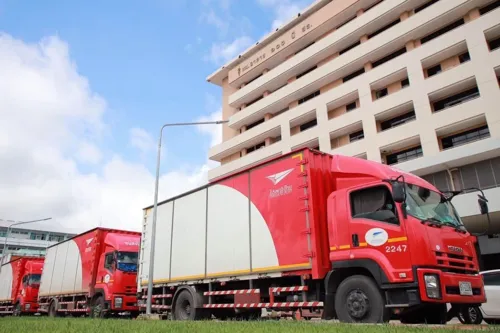
Thailand's draft amendment to the 100-year-old Postal Act (2477) remains stalled in the legal department across two administrations, hindering efforts to regulate modern express delivery and e-commerce logistics. The Digital Economy Ministry aims to submit it to Cabinet by end-August alongside pending digital platform and AI laws, though officials acknowledge "inertia" in the process. Thai Post CEO emphasizes the need for licensing (not mere registration) to ensure consumer protection and service accountability as competition intensifies with private couriers.

▾ Hover for summary ▾ Tap for summary
Muang Thai Life Insurance (75-year-old major Thai insurer) launched a major anniversary event to energize sales channels and announced a strategic pivot toward a "Longevity Ecosystem" spanning health (preventive care, treatment, telemedicine via 750+ hospital network), financial planning (retirement savings, long-term care), and wealth management. The company is repositioning from pure insurance protection to a lifestyle partner addressing Thailand's aging demographic challenges and insufficient retirement savings.
▾ Hover for summary ▾ Tap for summary
Grab reported strong Q2 financial results with $252 million in earnings and raised its 2026 guidance, signaling confidence in continued growth across its Southeast Asian ride-hailing, delivery, and financial services operations. This is significant for regional tech entrepreneurship and demonstrates a path to profitability for a major Thai-founded regional platform.
▾ Hover for summary ▾ Tap for summary
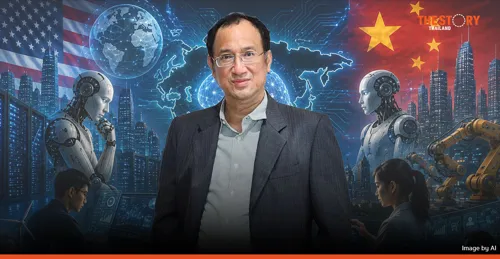
The article frames Thailand's position in the global AI race between the US and China, analysing the AI value chain (energy, chips, data centers, models, applications) to identify where Thai SMEs can realistically compete. Key finding: while Thailand cannot compete in chip manufacturing or foundational models, there is significant opportunity in developing domain-specific AI applications (e.g., healthcare, tourism, SME tools) and achieving "sovereign AI" capabilities. The US is closely watching transit countries like Thailand and Singapore to prevent China from circumventing AI sanctions. This matters for Thai tech policy and SME strategy.

 Stop running your company on Excel.