
Archive
August 7, 2026
▾ Hover for summary ▾ Tap for summary
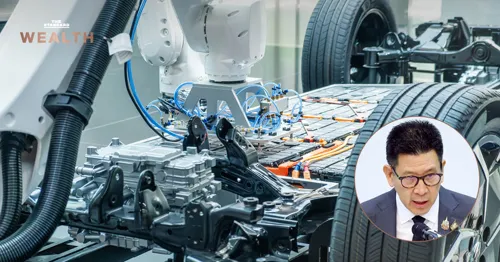
Deputy PM and Finance Minister Ekniti announced a new tax incentive measure to attract EV manufacturers to establish production bases in Thailand, to be proposed to Cabinet by September 2026. Unlike the EV 3.5 subsidy program that directly funds automakers, this measure uses excise tax reductions conditioned on local supply chain use while maintaining higher tax rates for imported completed vehicles—aiming to balance fair competition and production investment.

▾ Hover for summary ▾ Tap for summary
Thailand's automotive industry generates ~10% of GDP but faces critical challenges in maintaining value creation amid EV transition and Chinese competition. Experts propose tiered tax mechanisms on imports vs. domestic production, mandatory local content in mid-tier components, and supply-chain strengthening to prevent Thailand from becoming a mere assembly pass-through. Success depends on balancing FDI incentives with indigenous SME development and tackling China's cost advantage (30M+ annual EV units vs. global 90M).

▾ Hover for summary ▾ Tap for summary
A Chulalongkorn law professor proposes a three-dimensional framework (legal, engineering, and economic) for managing aging petroleum fields beyond their statutory 30-year (+10 year extension) concession periods. The argument centers on allowing case-by-case assessment of remaining reserves, technical feasibility, and net economic benefit—rather than automatic renewals or blanket terminations. Strong emphasis on transparent decision-making mechanisms and protection of state interests.

▾ Hover for summary ▾ Tap for summary
Cloudflare has raised its financial forecast driven by growing demand for AI agent services. This reflects broader market momentum in AI infrastructure and edge computing, which are relevant to Thai tech firms building or scaling AI-powered solutions and those offering cloud/content delivery services.

 Empower businesses to thrive in the digital age.

▾ Hover for summary ▾ Tap for summary
Gulf Development (GULF) reported record Q2/2025 core profit of 12.3 billion baht (+74% YoY) driven by strong energy portfolio performance, higher electricity demand, and AIS dividend income (4.5B baht). Revenue grew 24% to 50.3B baht with EBITDA up 41% to 19B baht. The company projects FY2025 revenue and EBITDA growth of 12-15%, and will add ~700 MW renewable capacity (solar + BESS) in H2/2025, plus launch Direct PPA community solar projects—positioning Gulf as a key clean energy player amid Thailand's energy transition.

▾ Hover for summary ▾ Tap for summary
Thailand's Consumer Council is advocating for a victim compensation fund (modeled as a "safety airbag") to help online fraud victims, backed by over 1 million reported cybercrime cases since 2565. The proposal pushes "Shared Responsibility" (Shared Responsibility) requiring digital platforms, financial institutions, and payment services—especially Facebook (which accounts for ~60% of fraud complaints)—to co-fund and prevent fraud rather than placing full burden on consumers. This signals potential policy shift with implications for tech compliance and consumer protection frameworks affecting SMEs and fintech players operating in Thailand.

▾ Hover for summary ▾ Tap for summary
Deputy PM advisor Dr. Panpriya outlined ASEAN's 59-year trajectory and strategic priorities for 2026–2045, emphasizing regional connectivity as critical for growth. Key initiatives include implementing the ASEAN Digital Economy Framework Agreement (DEFA)—expected to double regional digital economy value—plus modernizing trade frameworks, bolstering energy transitions, and supporting SMEs. Thailand is preparing for ASEAN chair duties in 2028, with private sector (C ASEAN) engagement essential to achieving Vision 2045 goals in an increasingly complex geopolitical environment.
▾ Hover for summary ▾ Tap for summary
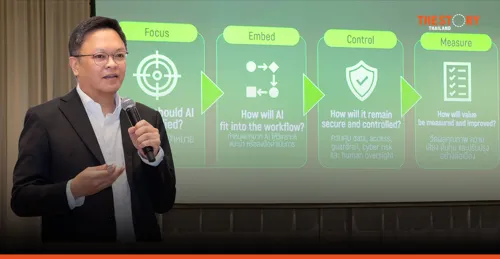
AIS executives outlined four key considerations for deploying AI in government and large organizations: selecting appropriate use cases with sustainable adoption, understanding AI's probabilistic nature (unlike traditional systems), emphasizing ongoing maintenance and monitoring over launch, and managing data volume to prevent "hallucinations." AIS shared concrete cases of 5G network optimization and customer service automation serving 50+ million users, demonstrating how private-sector AI infrastructure can inform sovereign government systems. The emphasis on data governance, transparency, and equitable service delivery positions AI infrastructure development as strategically important for Thailand's digital sovereignty.
 Your real translator for LINE and Discord.

▾ Hover for summary ▾ Tap for summary
The Government Housing Bank (ธอส.) announced emergency assistance for victims of a school shooting in Nonthaburi, reducing interest rates to 0.01% annually. Severely injured customers receive this rate for one year; deceased or permanently disabled customers get it for the life of the loan to ease long-term debt burdens on affected families. Assistance applications are now open at all branches.

▾ Hover for summary ▾ Tap for summary
Egg prices have increased from 3.80 to 4.00 baht per egg effective 7 August due to reduced production (down 3% from normal levels). The Commerce Ministry is launching a subsidized "Thai Eggs Help Thai" programme from 13–31 August, distributing 3.42 million eggs nationwide at ~10% below market rates to ease household costs. The Ministry confirms no market shortage despite lower production and will coordinate with the Livestock Department to increase supply within a month.
▾ Hover for summary ▾ Tap for summary
Global food prices reached a 3-year peak in July, driven by adverse weather and geopolitical conflict, which may increase input costs and inflation pressures for Thai food producers and SMEs.

▾ Hover for summary ▾ Tap for summary
Amazon, Alphabet, Microsoft, and Meta have accumulated $1.46 trillion in tangible physical assets (land, buildings, equipment) over three years—a 140% jump driven by massive AI data center buildouts. Their capital spending for 2026 alone could reach $760 billion, up 85% YoY. This marks a fundamental shift from the "asset-light" software model that made tech companies profitable without heavy capex, now competing with oil majors in infrastructure scale. Hidden debt (long-term equipment commitments and lease obligations) hit $2.3 trillion—4.3x higher than last year—signaling further expansion ahead. Depreciation costs are already consuming nearly one-third of operating profit across the four firms.

 Want to buy or sell a business?

▾ Hover for summary ▾ Tap for summary
Thailand's government established compensation criteria for the Nonthaburi school shooting, setting payouts at 1 million baht per death, 700,000 for disability, 200,000 for serious injury, and 100,000 for minor injury. Using previous high-profile shooting incidents as benchmarks, officials pledged expedited disbursement within days. The Interior Ministry also reaffirmed strict restrictions on civilian firearm possession and promised legislative amendments to the Firearms Act.

▾ Hover for summary ▾ Tap for summary
Former Deputy PM Suvat Liptapallop, as chairman of Purdue University Alumni Club of Thailand, hosted a networking event for ~150 alumni to exchange ideas on education, business, technology, and national development. The gathering featured senior leaders from energy, agriculture, space technology, transport, and IT sectors, strengthening the alumni network's capacity for cross-sector collaboration.
▾ Hover for summary ▾ Tap for summary
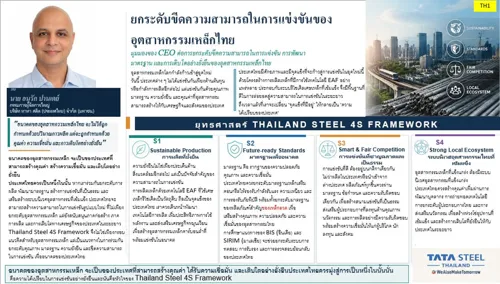
Tata Steel Thailand proposes the Thailand Steel 4S Framework to elevate the local steel industry's global competitiveness through four pillars: sustainable production (EAF/recycling), future-ready standards, fair competition, and a strong local industrial ecosystem. This strategic vision addresses Thailand's shift from competing on cost/capacity alone to competing on quality, standards, sustainability, and long-term value creation—leveraging Thailand's existing strength in electric arc furnace technology.
▾ Hover for summary ▾ Tap for summary
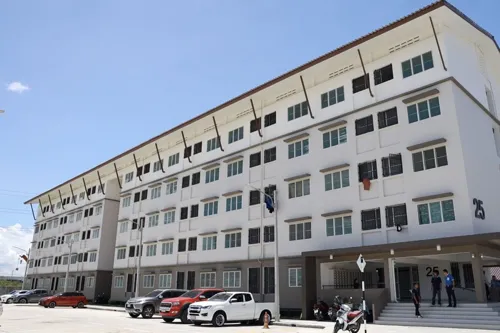
Thailand's Housing Authority launched a rental housing project in Laem Chabang, Chonburi—a key EEC zone—offering 544 affordable units at ฿2,000–2,400/month. Phase 1 is already 50% leased, primarily to workers in nearby industrial estates. Proximity to three industrial zones, transport links, and essential services makes it attractive for SME workers; future Phase 2 expansion is planned.
 Together GoWeGo! Ferry tickets in Thailand.

▾ Hover for summary ▾ Tap for summary
Techsauce Global Summit 2026 (26–28 Aug 2026) gathers 18,000 participants including 1,000+ C-level executives and 300+ investors from 60 countries. Key activities include 1-on-1 business matching, direct VC access, AI/fintech/foodtech tracks, 350+ exhibitions, and 40+ workshops. Pickleball networking and NFT treasure hunt add engagement. Essential for Thai SMEs seeking global connections, funding, and strategic insights on AI, fintech, and innovation.
▾ Hover for summary ▾ Tap for summary
Thailand's Securities and Exchange Commission (SEC) and Bank of Thailand are jointly developing enhanced regulatory guidelines for stablecoin transactions to combat money laundering, cybercrime, and cross-border fund evasion. Travel Rule criteria are expected to be announced this August, with full enforcement targeted for February 2027. The initiative involves collaboration with law enforcement and digital asset businesses to establish clear standards for high-risk customer monitoring (Enhanced Due Diligence) across the industry.

▾ Hover for summary ▾ Tap for summary
Techsauce Global Summit 2026 will feature 300+ global thought leaders, investors, government policymakers, and Thai tech executives discussing AI transformation, fintech, healthspan, foodtech, and innovation strategy. The 3-day event includes 300+ sessions, 350+ tech exhibitions, 40+ hands-on workshops, and 1-on-1 business matching opportunities—critical for Thai SMEs seeking market intelligence and international connections in the AI-driven economy.

▾ Hover for summary ▾ Tap for summary
Asian tourists are increasingly prioritizing short-haul regional travel (3-8 hour flights) over distant international destinations, driven by geopolitical uncertainty and rising costs. Data from Agoda and VISA surveys show 63% of Asian consumers travel within the region, with family-friendly attractions like theme parks and aquariums dominating bookings. This shift represents a significant market opportunity for SMEs in hospitality, tourism, and experience-based services across Southeast Asia, as regional short-haul routes become primary travel drivers.

 Stop running your company on Excel.