
Archive
August 10, 2026

▾ Hover for summary ▾ Tap for summary
Thailand's government is developing "Thailand Travel Thailand Plus," a domestic tourism stimulus programme targeting small and mid-sized hotels. The scheme will offer fixed-rate hotel subsidies (proposed 2,000–3,000 baht/night) through the Krung Thai Bank's mobile app, with rollout expected in October. The initiative aims to prevent price-gouging seen in previous schemes and direct spending toward underserving SME accommodation providers rather than established chains already fully booked during peak seasons. Funding sources and backend systems still require finalisation, with details expected within the next one to two weeks.

▾ Hover for summary ▾ Tap for summary
Thailand's Deputy PM and Commerce Minister Supattanapong Panitchpakdi has established four specialized working groups to drive economic policy across creative economy, visitor economy, agriculture and food security, community economy and SMEs, and international trade. The initiative targets 4–5 urgent priorities within 6–12 months, focusing on deregulation to unlock barriers for Thai businesses and SMEs (which comprise ~35% of national revenue), modernizing agriculture, and leveraging FTA to expand export markets while rebalancing investment promotion away from import dependence.
▾ Hover for summary ▾ Tap for summary
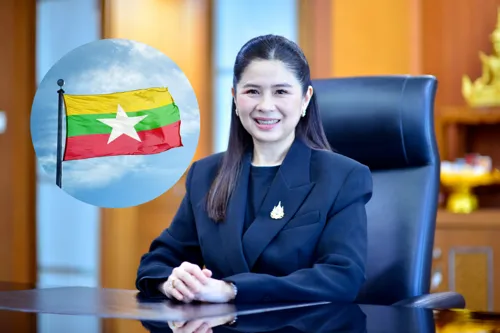
Thailand's Department of Trade in Foreign Affairs is closely monitoring Myanmar's economic policies following its government's 100-day performance report, which emphasizes manufacturing, agriculture, energy, and infrastructure development. Thailand plans to use the Joint Trade Committee (JTC) meeting scheduled for late 2026 to negotiate and resolve trade barriers, particularly Myanmar's import licensing restrictions that have impacted Thai businesses since August 2025. The outcome depends on Myanmar's economic and political stability, which could ease negotiation of trade obstacles and support long-term business confidence between the two countries.
▾ Hover for summary ▾ Tap for summary
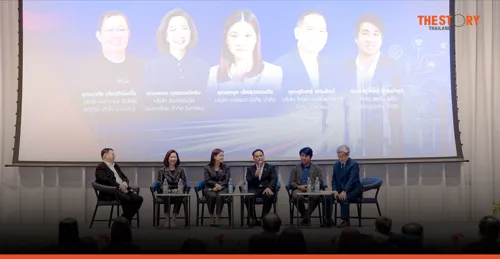
Thailand's NECTEC and five private sector partners are collaborating to build a "Sovereign AI" ecosystem, addressing technology sovereignty, data control, and reducing reliance on foreign tech infrastructure. Four use cases were showcased—including AIS's ACare AI assistant and iNET's real-time health insurance claims system—demonstrating practical AI deployment with privacy safeguards and cost efficiency. The initiative reflects growing global concerns about data security, technological dependence, and the need for domestic AI capabilities.

 Empower businesses to thrive in the digital age.

▾ Hover for summary ▾ Tap for summary
The article discusses how artificial intelligence agents can proactively detect financial margin risks and operational vulnerabilities before they manifest as losses on balance sheets. This is relevant for Thai SMEs seeking to strengthen financial controls and risk management through technology.
▾ Hover for summary ▾ Tap for summary
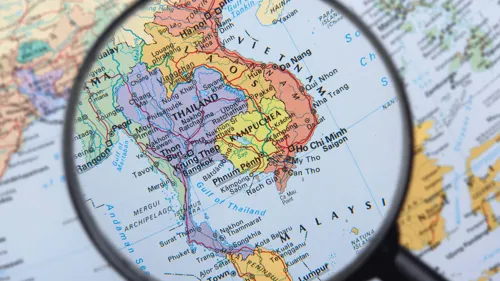
A visual story analyzing the most heavily funded tech startups and companies across Southeast Asia over the past decade. This type of landscape overview can help SMEs benchmark their own funding and positioning within the regional tech ecosystem, though the specific insights depend on the full article content being accessible.

▾ Hover for summary ▾ Tap for summary
Thailand's trade with 18 FTA partners surged 21.8% in H1 2026 to $243.7 billion—57.3% of total Thai trade. Exports rose 12.6% while imports jumped 30%, though over 75% of imports are raw materials, intermediate goods, and capital equipment supporting domestic manufacturing. China remains the top FTA partner at $91.5 billion (37.6% of FTA trade). Key growth areas include agricultural exports (fresh fruit +16.8%, processed chicken +7.6%) and industrial goods (gems +26%, circuits +20.6%, computers +18.5%). The government plans to accelerate negotiations on Thailand-EU, Thailand-South Korea, and ASEAN-Canada FTAs in H2.

▾ Hover for summary ▾ Tap for summary
Thailand's Digital Economy Ministry plans to present a Cabinet resolution requiring 300 state agencies and 35,000 private systems to reset login credentials and implement multi-factor authentication (MFA) to combat widespread credential leaks—approximately 200 million Thai login records have been exposed globally. The measures include short-term credential resets, mandatory MFA implementation, and system audits to close unused/vulnerable systems, with the ministry also considering new authentication infrastructure development. While data breaches cannot be entirely prevented, these layered defenses aim to significantly raise the difficulty of system compromise.
 Your real translator for LINE and Discord.

▾ Hover for summary ▾ Tap for summary
The AI industry is shifting from Large Language Models (LLMs) to World Models—systems that understand spatial intelligence, physics, and 3D reasoning. Within 60 days in early 2026, World Labs and AMI Labs closed over $2 billion in funding to build AI systems that grasp concepts like gravity and object dynamics. Two competing approaches are emerging: "Renderers" (visual synthesis via Marble, Genie 3) and "World Understanders" (physics-accurate prediction via Cosmos, JEPA). This shift signals a move from chatbot interfaces toward AI that can operate in physical environments, drawing massive VC capital flows from VR/AR and beyond.

▾ Hover for summary ▾ Tap for summary
CP Extra (CPAXT), Thailand's major macro and Lotus operator, reported H1 2026 revenue of 268.3 billion baht (+3.6% YoY). Online sales via Makro PRO and Lotus Smart App grew 29%, driving omnichannel expansion. The company plans to scale its "Happy & Healthy Mall" strategy and pursue regional expansion across ASEAN, leveraging e-commerce growth and government stimulus to reach SME and HoReCa segments in tier-2 cities.

▾ Hover for summary ▾ Tap for summary
Over 20 countries globally have enacted or are implementing laws restricting social media access for children under 16, following Australia's December 2025 ban. Key movers include Indonesia (enforcement from March 2026), the UK (stricter rules by spring 2027), Malaysia, and France. Thailand is not yet mentioned among adopting countries, but the regional regulatory momentum—especially Indonesia's enforcement—signals SMEs must prepare for potential age-verification tech requirements and content moderation compliance. Health research links excessive screen time to developmental and mental-health harms in youth.
▾ Hover for summary ▾ Tap for summary
Sony and TSMC are evaluating a $6.4 billion joint investment in a sensor manufacturing facility in Japan. This represents a significant capital commitment in semiconductor production and reflects ongoing consolidation in the sensor supply chain, which could influence regional tech manufacturing and supply security.

 Want to buy or sell a business?

▾ Hover for summary ▾ Tap for summary
Japanese fashion conglomerate World has successfully launched OO, a new brand featuring AI-designed apparel, which is selling out rapidly. The company developed Maison AI—a generative AI tool trained on brand aesthetics—to overcome early design challenges by learning abstract fashion principles from product image datasets. This approach has proven commercially viable, with products like an AI-designed tweed cardigan selling out almost immediately, and other World brands adopting designs generated by the system. The company is scaling AI-designer collaboration by training ~2,000 employees across Japan to work effectively with AI as a creative partner.

▾ Hover for summary ▾ Tap for summary
The Thai government launched the "Thai Help Thai Capital Increase" program allocating 4.45 billion baht across 79,610 village and community funds nationwide. The scheme offers subsidized interest rates (shared 50-50 with borrowers) to provide liquidity for SMEs and households while reducing dependence on informal high-interest debt. PM emphasized this targets grassroots economic development and improved quality of life, positioning it as a key pillar of long-term national economic strategy.
▾ Hover for summary ▾ Tap for summary
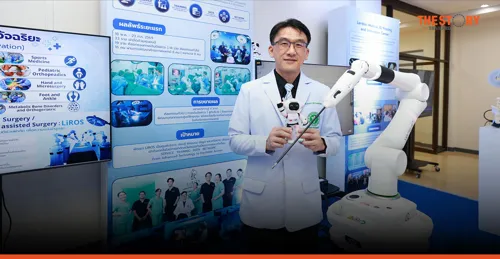
Lerdsin Hospital successfully performed a robotic partial nephrectomy using Versius Plus surgical robot integrated with 3D reconstruction technology and 3D-printed kidney models for pre-surgical planning. The approach combined digital imaging, patient-specific anatomical models, and robotic precision to improve surgical accuracy while preserving healthy kidney tissue. This achievement reflects Thailand's advancement in regional surgical innovation through the Lerdsin Institute of Robotic Surgery (LiROS), positioning Thai healthcare as a center for robotic surgery excellence.

▾ Hover for summary ▾ Tap for summary
Apple's long-standing dual-sourcing strategy to pressure memory chip makers into lower prices is failing as Chinese chipmaker ChangXin Memory Technologies (CXMT) refuses price cuts, supported by long-term contracts from Huawei and Xiaomi. With Chinese cheaper chips no longer viable options, Apple loses leverage against Korean suppliers SK Hynix and Samsung, likely forcing higher memory costs and iPhone prices—a structural shift strengthening US chipmaker Micron's bargaining position.
 Together GoWeGo! Ferry tickets in Thailand.
▾ Hover for summary ▾ Tap for summary
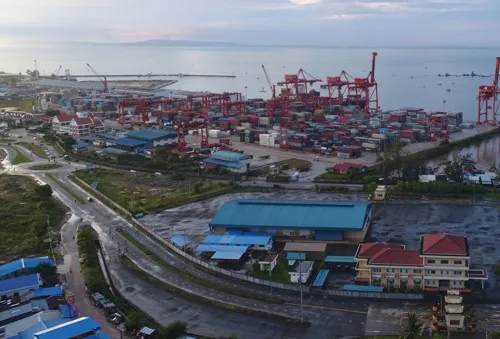
Thailand–Cambodia border closure has redirected Japanese business logistics to Sihanoukville port, causing its Q1 2026 net profit to surge nearly 6x to 505 million baht with 36% margin. However, high container handling fees and operational inefficiencies are forcing Japanese companies to demand fare reductions and port improvements, while creating logistics cost pressures on regional supply chains and investment sustainability.

▾ Hover for summary ▾ Tap for summary
Researchers at UCSB, ETH Zurich, and Miguel Hernández University demonstrated that deep learning can optimize brain stimulation signals for visual cortex prosthetics by learning individual brain responses rather than using pre-set parameters. In a proof-of-concept trial, an AI-designed stimulation pattern achieved target neural activity more accurately than traditional methods while using less electrical current—a critical safety and durability advantage. The advance reveals that how the brain processes signals matters as much as the signal itself, paving the way for personalized, adaptive neurotechnology that could help patients who lost vision from stroke, neurodegeneration, or brain injury.
▾ Hover for summary ▾ Tap for summary
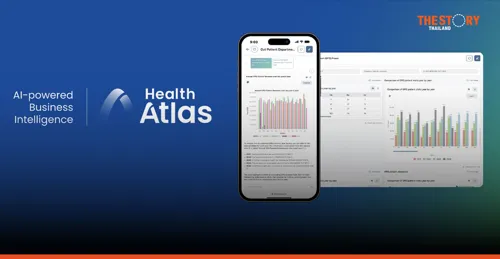
OCare Health Hub, a Thai health tech startup founded in 2017, has developed AI-powered solutions for hospital health data analytics and clinical decision support. Its flagship product, Joey Doctor, automates health checkup report generation using rule-based AI and NLP, currently serving 50+ private hospitals with 10M+ processed transactions and 0.7% error rate. The company's newer platform, Journey Insight, connects to hospital HIS systems in real-time, enabling administrators to access actionable dashboards for strategic planning—a key gap in Thailand's Medical Hub policy rollout. The startup has secured NIA backing and targets significant ROI for the Thai healthcare sector.

▾ Hover for summary ▾ Tap for summary
Opinion piece arguing that organizational failure stems not from technological lag but from leaders' reluctance to embrace change. Using McKinsey & Harvard Business Review research, the author contends that 70%+ of organizations fail due to leadership inaction on innovation and AI adoption. The article advocates for "Pioneering Change" as a critical modern leadership skill—the ability to spot future opportunities, challenge established practices, and proactively drive transformation rather than waiting for crisis to force adaptation.

 Stop running your company on Excel.