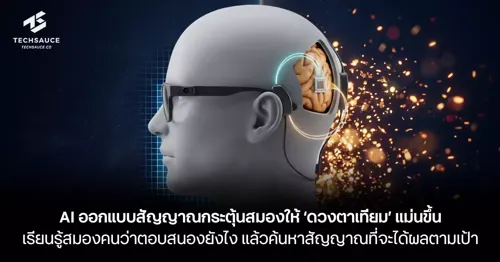
Researchers at UCSB, ETH Zurich, and Miguel Hernández University demonstrated that deep learning can optimize brain stimulation signals for visual cortex prosthetics by learning individual brain responses rather than using pre-set parameters. In a proof-of-concept trial, an AI-designed stimulation pattern achieved target neural activity more accurately than traditional methods while using less electrical current—a critical safety and durability advantage. The advance reveals that how the brain processes signals matters as much as the signal itself, paving the way for personalized, adaptive neurotechnology that could help patients who lost vision from stroke, neurodegeneration, or brain injury.
← Back to all articles