
Archive
August 10, 2026
▾ Hover for summary ▾ Tap for summary
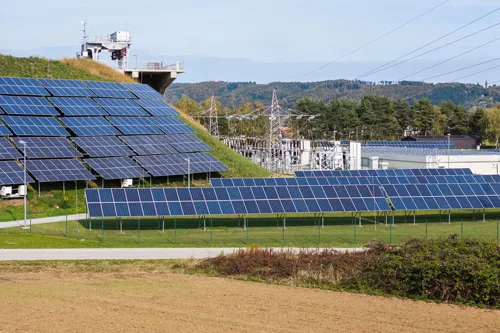
Thailand's Power Development Plan (PDP 2026) faces delays due to major revisions needed to accommodate EV growth, data centre demand, and Net Zero commitments. The key debate centres on renewable energy targets: officials propose increasing renewables from 20% to 70% by 2027, but the article warns this creates grid instability risks without backup capacity. SMRs are being increased from 600 to 2,400 MW as a stable clean energy anchor, but renewable integration without battery storage and smart grid investment could drive data centre investors to Vietnam—stability, not just cleanliness, is the critical challenge.

▾ Hover for summary ▾ Tap for summary
Hugging Face discusses how open-weight AI models can support cybersecurity teams, highlighting potential benefits for defensive security operations. The piece appears to address tensions between AI safety guardrails and practical security needs, relevant for tech teams evaluating AI tools for defensive purposes.

▾ Hover for summary ▾ Tap for summary
Anthropic is rolling out Auto Mode as the default for Claude Code (Pro, Max, Team) starting August 14, allowing autonomous code generation without manual approval at each step. Testing with 1,053 users showed the system detects harmful actions 89% of the time vs. humans at only 13.6%, due to habitual approval bias (97% pass-through rate). The upgrade includes enhanced security features like prompt injection filters and customizable deny rules to mitigate data leakage risks.

▾ Hover for summary ▾ Tap for summary
Thailand's government and the National Economic and Social Development Council have unveiled a strategic plan to elevate Thailand to high-income country status, targeting per-capita income of $16,000–20,000 USD annually within 12–15 years (roughly double current levels). The plan requires 3% annual GDP growth (up from ~2%) and hinges on three pillars: promoting eight key industries (future vehicles, advanced agriculture, high-tech, healthcare, tourism, trade, creative economy), improving global competitiveness ranking to top 20, and raising total investment to 30% of GDP—a critical gap since private investment has slumped to 16.8% of GDP (from 35% historically). Recent signals are positive: Q1 private investment grew 10.1% year-on-year for the first double-digit expansion in 11 years, though much more acceleration is needed to hit the 30% target.

 Empower businesses to thrive in the digital age.
▾ Hover for summary ▾ Tap for summary
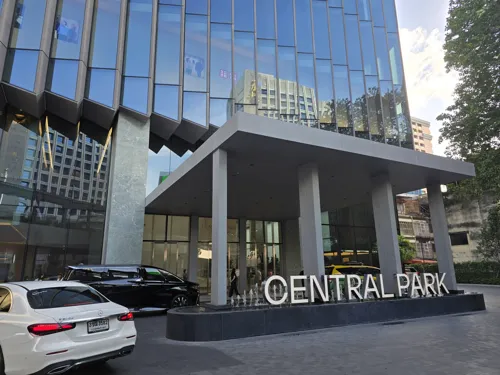
Central Pattana (CPN) reported Q2 2025 rental and service revenue of 11,530 million baht, up 8% YoY and marking the fourth consecutive quarterly record. Growth was driven by new property launches (Central Khon Kaen Campus, Central Park, Central Krabi) and improved tenant mix at existing malls, with occupancy rates rising 160bps. This segment now represents 88% of total company revenue and remains the core growth driver.

▾ Hover for summary ▾ Tap for summary
Mr. DIY (MRDIYT), Thailand's major DIY retail chain, reported Q2 2026 earnings with revenue growth of 17.8% YoY to 5.83 billion baht and net profit up 19.4% to 757 million baht. The company expanded by 59 new stores (now 1,248 total across 77 provinces), saw transaction volume grow 18.8% to 34.9 million, and improved gross margin to 52%. Key milestone: MRDIYT was added to SET50, SET100, SETWB, and MSCI Global Small Cap indices. Management expects to open 210 new stores in 2026, with 60% of annual target already met in H1.
▾ Hover for summary ▾ Tap for summary
Sony and Taiwan Semiconductor Manufacturing Company (TSMC) are forming a $6.3 billion joint venture to manufacture image sensors, signaling major consolidation in a critical semiconductor supply chain.

▾ Hover for summary ▾ Tap for summary
Thailand's tax base is dangerously narrow: only 5 million people actually pay income tax despite 40 million being in the workforce. The article argues this reflects deeper structural problems—low income across the economy, a large informal sector (48% of GDP), and an aging population requiring higher state expenditure. The core challenge isn't raising taxes on the wealthy (less than 1% of population) but broadening the tax base through economic growth, quality job creation, and better incentives to bring informal workers into the system.
 Your real translator for LINE and Discord.

▾ Hover for summary ▾ Tap for summary
Brent and WTI crude prices rose (Aug 7: Brent +$1.06 to $83.55/barrel, WTI +$0.89 to $78.18/barrel) due to uncertainty over Iran–US negotiations regarding Strait of Hormuz shipping, with Iran proposing 5–7% transit fees and stricter enforcement. A separate drone attack on Russia's CPC pipeline (handling ~2% of global supply) has cut loading by ~20%, though supply concerns are easing after Ukraine agreed not to target non-Russian tankers. US non-farm employment fell 23,000 in July, raising expectations the Fed may pause rate hikes in September, which could support future oil demand.

▾ Hover for summary ▾ Tap for summary
MI GROUP identifies "Invisible Consumers"—over 40% of Thai digital consumers who actively browse online but leave minimal digital footprints (few likes/comments/shares). Despite being overlooked by most brands, these consumers retain brand memory, research purchases offline, and show strong loyalty once convinced. Two engagement strategies emerge: reach The Quiet Absorber through non-intrusive, contextual content (entertainment, banners); engage The Intentional Selector via credible, specialized information (reviews, expert content, AI overviews). Success requires respecting consumer autonomy and appearing at relevant search moments rather than maximizing ad frequency.

▾ Hover for summary ▾ Tap for summary
Global AI leaders and cloud hyperscalers (AWS, Huawei, Microsoft) are aggressively cutting token pricing—with some models seeing 80% reductions—pushing down costs for end users. Thai enterprises adopting Agentic AI must manage token budgets carefully; Kasikornbank exemplifies a multi-model strategy using subscription and token-based pricing tiers to control costs while empowering staff to become AI builders, not just users. Key lesson: avoid vendor lock-in, match model complexity to task needs, and implement systematic cost governance.
▾ Hover for summary ▾ Tap for summary
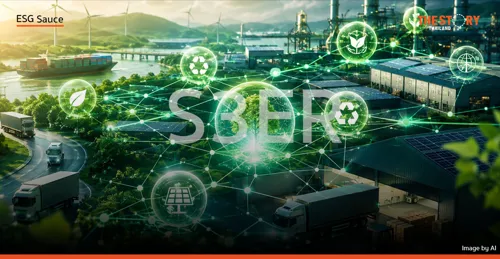
Thailand's Institute for the Promotion of Development (Thai-PAT) has launched S3ER, a tool to help Thai businesses calculate and manage Scope 3 greenhouse gas emissions—the hardest-to-track portion of corporate carbon footprints. Using secondary data and sector-specific emission ratios (SER) derived from 841 Thai companies, S3ER enables SMEs and enterprises to prioritize decarbonization efforts across their value chains without expensive data collection, supporting Thailand's sustainable business competitiveness.

 Want to buy or sell a business?

▾ Hover for summary ▾ Tap for summary
Thailand's Finance Ministry is implementing a major SME support package: reducing state bank fund contributions to free up liquidity for expanded "SME Credit Boost" and "Close Debt, Move Forward" programs, backed by state-owned commercial banks and SMEG (SME credit guarantee firm) guarantees. This aims to boost SME access to credit without destabilizing financial institutions, with budget confirmed as sufficient.

▾ Hover for summary ▾ Tap for summary
Unitree, a Chinese robotics company, has opened subscriptions for its Shanghai IPO with a reported valuation of approximately $904 million. This represents a significant milestone for the robotics sector in Asia and demonstrates investor appetite for emerging technology companies in the region. For Thailand SMEs, this signals growing market momentum in robotics and automation—a sector with potential applications across manufacturing and logistics.

▾ Hover for summary ▾ Tap for summary
Thai baht opened at 33.02 baht/USD on 10 August 2026, strengthening from Friday's close of 33.08. The move reflects broader USD weakness driven by disappointing US employment data (23,000 jobs lost in July vs. 80,000 expected), raising recession concerns and reducing odds of Fed rate hikes. Markets now price 56% probability of no Fed action in September. Thai SMEs exposed to USD costs (imports, debt) may face headwinds, while exporters benefit from baht strength. Key upcoming US inflation data (CPI on 12 Aug, PPI on 13 Aug) will guide Fed policy direction.

▾ Hover for summary ▾ Tap for summary
The article discusses emerging AI competition beyond conversational AI. Two distinct competitive races in AI development are being identified, signaling a shift from chatbot dominance toward broader AI capabilities and applications. This is relevant for tech-focused SMEs evaluating AI adoption strategies beyond chatbot tools.
 Together GoWeGo! Ferry tickets in Thailand.

▾ Hover for summary ▾ Tap for summary
Thailand's Commerce Ministry, led by Deputy PM Supachai, is rebranding tropical fruits from seasonal commodity to a trade-tourism-soft power lever. The initiative brought ambassadors from 13 strategically selected countries to Southern Thailand's durian farms to taste and evaluate 9 local varieties, aiming to reduce reliance on China (which accounts for 90%+ of fresh durian exports) and open new markets in Europe, South Asia, CIS nations, Latin America, and Africa. The strategy involves using diplomatic networks and geographical indication (GI) branding to differentiate regional durian varieties and premium positioning.

▾ Hover for summary ▾ Tap for summary
Thailand's Cabinet approved the long-stalled Klongwangtonod Dam (Chanthaburi) on 5 August 2026, after 17 years of delays. The 7.2-billion-baht, 99.5-million-cubic-meter project will irrigate 87,700 rai and supply water to EEC, though construction cannot start immediately—legal procedures to resolve forestry jurisdiction and royal decrees remain pending. Despite this milestone, implementation is still years away and must navigate overlapping water-demand conflicts in the eastern region.

▾ Hover for summary ▾ Tap for summary
Apple is reportedly testing CXMT (Copper/Lithography Metal Trace) chips as a response to AI-driven memory shortages affecting the semiconductor industry. This suggests potential cost pressures on iPhone components and possible price adjustments ahead. For Thai SMEs in supply chains or device distribution, monitor shifts in chip sourcing and pricing strategies.

▾ Hover for summary ▾ Tap for summary
Thailand's Tourism Ministry is finalizing the "Thailand Travel Plus" co-payment stimulus program this week, with a revised plan: 500,000 vouchers worth 1,000 baht each (up from 500 baht), government covering 50% per voucher capped at 3 billion baht, distributed via the "Pao Tang" app. Crucially, vouchers now cover all tourism services nationwide—restaurants, attractions, handicrafts, tour guides, car rentals—not just dining. Rollout targeted for September 2026 over 4 months. Officials project 26+ billion baht economic circulation. This directly impacts SME operators across hospitality, retail, and tourism sectors seeking stimulus access.

 Stop running your company on Excel.