
Archive
August 13, 2026
▾ Hover for summary ▾ Tap for summary
US inflation data suggests lower likelihood of a Fed rate increase in September, boosting regional stock markets including those relevant to Thai SMEs.

▾ Hover for summary ▾ Tap for summary
Cerebras, a competitor to Nvidia in AI chip manufacturing, has raised its 2026 outlook and is seeking $1 billion in funding at a $22 billion valuation. The improved guidance suggests confidence in growing AI chip demand and market expansion, though the relevance to Thailand SMEs depends on their involvement in semiconductor supply chains or AI adoption strategy.

▾ Hover for summary ▾ Tap for summary
Thailand's energy committee meets 17 August to finalize direction for PDP 2026, a critical infrastructure plan balancing system stability, electricity costs, and clean energy targets. Key decisions needed on renewable energy share, gas plant roles, battery storage (BESS), and data-centre capacity allocation—major considerations for SMEs, tech firms, and foreign investors planning operations in Thailand amid rising AI/data-centre demand.

▾ Hover for summary ▾ Tap for summary
Lightspeed Venture Partners is raising $600 million for a new investment fund with connections to OpenAI. This signals continued institutional appetite for AI-focused venture capital despite market volatility, though details remain limited pending fuller reporting.

 Empower businesses to thrive in the digital age.

▾ Hover for summary ▾ Tap for summary
The US is developing a new AI-focused trade platform designed for trusted partners, likely part of broader geopolitical strategy to manage AI technology flows and build an aligned bloc of countries. For Thai SMEs and tech companies, this signals potential shifts in trade access and partnership opportunities depending on Thailand's positioning with the US and whether Thai entities can meet trusted-partner criteria for advanced technology commerce.

▾ Hover for summary ▾ Tap for summary
Nebius, an AI cloud infrastructure firm, reported strong Q2 revenue growth to $582M with a $20B backlog and is targeting Asia expansion. This signals major investment in cloud/AI infrastructure that could impact regional SME access to GPU-powered compute services and competitive pricing in emerging markets.
August 12, 2026

▾ Hover for summary ▾ Tap for summary
Thailand's competition regulator (TCCT) is creating targeted guidelines for ride-hailing and food delivery platforms following market consolidation into duopolies: Grab and Bolt control ride-hailing, while GrabFood and Line Man Wongnai dominate food delivery with 80-90% combined share. The TCCT warns that platform concentration risks exclusionary behaviour, unfair pricing, self-preferencing algorithms, and barriers to entry through network effects and data advantages. New draft regulations addressing service standards and algorithmic practices are under review, with implications for SME merchants and drivers reliant on platform access.

▾ Hover for summary ▾ Tap for summary
Bangkok's BMA intensified safety inspections of entertainment venues following the deadly July 12 Na Ladprao fire that killed 37. Recent inspections of 948 outlets found only 209 met full safety standards, while 632 required improvements and 107 were ordered to close. Focus areas include fire prevention, emergency exits, and flammable materials. SME operators in hospitality/entertainment should expect heightened regulatory scrutiny and must address safety compliance or face closure orders.
 Your real translator for LINE and Discord.
▾ Hover for summary ▾ Tap for summary
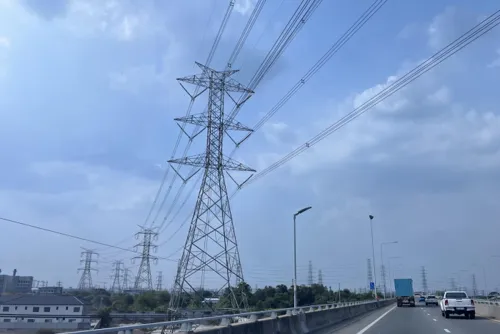
Thailand's government is introducing new screening rules for data centre investments, set to take effect in Q4 2026, designed to balance energy security with attracting foreign capital. The framework will require operators to post deposits (4.5M baht/MW), demonstrate genuine operations within 5–7 years, and prioritize hyperscale facilities with high employment/tax contributions over crypto-mining and storage. Existing BoI-incentivized operators may be exempt, but new projects face stricter compliance. This is a critical policy signal for Thailand's tech infrastructure ambitions, though implementation clarity on retrospective application remains uncertain.
▾ Hover for summary ▾ Tap for summary
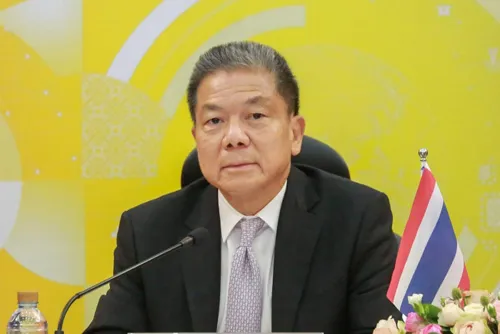
Thailand's telecommunications regulator (NBTC) is embroiled in a leadership crisis: PM Anutin has signed a submission to remove chairman Dr Sarana Boonbaichaiyapruck over alleged violations of conflict-of-interest rules (Section 8(2) of the NBTC Act). The NBTC selection committee voted unanimously that Dr Sarana held a prohibited characteristic—specifically, continued medical work at Mahidol University after joining the commission—but he contests the finding and remains in post pending a Royal Command. This institutional instability directly impacts telecom policy, notably the contentious 2022 True-DTAC merger approval (which Dr Sarana's casting vote enabled) and upcoming digital TV license expirations in 2029. For Thai SMEs in telecom/broadcasting, regulatory clarity is now in flux.

▾ Hover for summary ▾ Tap for summary
Foundation secretary-general rebuts Chanthaburi MP's criticism, clarifying that water allocation is a state duty, not an NGO function. The foundation opposes the ~6,000-rai Wang Tond Canal reservoir project within Khao Sip Ha Chachan National Park, citing flawed EHIA environmental assessment data, inadequate biodiversity impact mitigation, and the need for rethought water management approaches in climate-change conditions. Legal challenge to revoke the EHIA approval is planned.

▾ Hover for summary ▾ Tap for summary
Lovable, a Google Cloud AI startup, has secured $400M in Series C funding at a $13.3B valuation. While this represents significant growth in the AI/developer tools space, the direct relevance to Thai SMEs is indirect—primarily valuable as a market signal about AI startup scaling and potential partnership models for local tech firms exploring similar funding trajectories or cloud-based AI solutions.

 Want to buy or sell a business?

▾ Hover for summary ▾ Tap for summary
Thailand's real estate sector is leveraging strong foreign buyer demand, particularly from Polish, Russian, and Chinese investors in Phuket and Chiang Mai. Major developers (Aorsi, Origin, SC Asset) are raising agent commissions to 7–10% and hosting networking events to capture high-value transactions in the luxury segment. The market shows healthy absorption (some projects selling 50% of units within 2 months at 5–6M baht) despite rising supply, suggesting sustained investment appeal—especially as geopolitical disruption diverts capital from Russia to new sources like Poland and the Middle East.

▾ Hover for summary ▾ Tap for summary
Google announced Gemini has reached 1 billion monthly active users, making it the company's fastest-growing product ever and the 14th product to hit the 1B-user milestone. However, ChatGPT still leads with 1 billion weekly users. Key usage insights include 63% of users leverage voice interaction, 20% of Gemini Live users enable camera/screen sharing, and Gemini generates 150 million images daily. For Thai SMEs, this signals Google's AI maturity and potential enterprise/educational opportunities, though user sentiment indicates concerns about reliability and hallucinations compared to alternatives.

▾ Hover for summary ▾ Tap for summary
Nothing Thailand launched two AI-integrated devices: Ear (3a) earbuds (3,999 THB) with built-in audio recording, transcription, and summarization via Nothing X app; and Phone (4b) (13,999 THB) running Nothing OS 4.1 featuring Essential suite—AI tools for note-taking, search, voice conversion, and no-code widget creation. Both leverage on-device AI for productivity workflows. Relevant for tech SMEs exploring AI-native consumer products and competitive feature bundling in affordable segments.

▾ Hover for summary ▾ Tap for summary
Thai flight search activity jumped 86% despite ongoing fuel-price volatility and travel cost uncertainty. AirAsia MOVE analysis shows travelers are actively planning trips for Mother's Day, with Japan leading destination interest, followed by Vietnam, Malaysia, Taiwan, and China. Secondary Thai cities (Chiang Mai, Phuket, Nan, Surat Thani) and family/group travel are gaining traction. The data suggests sustained consumer interest in travel planning despite economic headwinds, with travelers spanning multiple age groups (30-39 year-olds leading) and diverse travel styles including growing group travel.
 Together GoWeGo! Ferry tickets in Thailand.
▾ Hover for summary ▾ Tap for summary
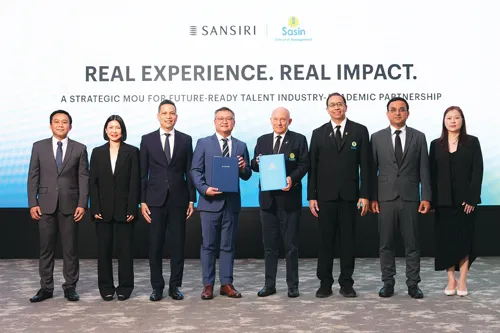
Sansiri has partnered with Sasin Graduate Institute of Business Administration (Chulalongkorn University) to embed real-world business projects into their Master of Science in Management programme. Students will develop strategic thinking, problem-solving, and analytical skills through hands-on work on actual company challenges under guidance from Sansiri executives. The collaboration aims to bridge education and business practice while building Thailand's next-generation talent ecosystem.

▾ Hover for summary ▾ Tap for summary
Two iconic Bangkok markets operating on State Railway land face lease renewal uncertainty: Chatuchak (68 rai) expires Dec 2027, with Bangkok authorities signalling return to railway management; Kor Ror Tor (35 rai) ends late 2027, facing 40% vendor loss and weak sales. Key concerns: Bangkok's 1.34B baht accumulated debt, unclear future rent rates, and deteriorating market conditions threaten these SME hubs. Vendors fear rent hikes post-handover while seeking facility upgrades.

▾ Hover for summary ▾ Tap for summary
Thai educational institutions rank in the top 10 cybersecurity attack targets globally, with average data breach costs reaching $3.86 million (~130M baht) per incident. Synology emphasizes that data governance—managing data as a strategic asset across access control, protection, and recovery—must become an executive-level priority, not just an IT function. Three critical challenges: rising storage costs, PDPA compliance for student/staff/research data, and ransomware resilience. Organizations should strengthen on-premises infrastructure, audit access controls, implement robust backup strategies, and adopt cyber resilience frameworks to minimize operational and reputational damage.

▾ Hover for summary ▾ Tap for summary
Minor Food has acquired global rights to Bonchon (outside North America) for $50 million, marking a strategic shift from master franchisee to full brand owner. The company controls ~500 outlets across 9 markets and gains ownership of Bonchon's proprietary sauce factory, enabling consistent royalty revenue and rapid scaling under an asset-light model while managing the supply chain end-to-end.

 Stop running your company on Excel.