
Archive
September 23, 2026

▾ Hover for summary ▾ Tap for summary
Thailand's creator economy is maturing from vanity metrics (views/followers) to performance-driven outcomes. The Thai market is projected to reach 60 billion baht by 2027, with 74% of brands planning budget increases. However, only 3 million of 9 million self-identified creators are professional, and platform compensation has collapsed (from 40,000 to 8,000 baht per million views). Credibility now drives purchasing decisions (81% of consumers prioritize authentic expertise), positioning creators as business infrastructure rather than mere media channels. AI commoditizes content production, making trustworthiness the highest-value asset.

▾ Hover for summary ▾ Tap for summary
Thailand's National Statistics Office launched regional rollout of the Digital Census 2025, focusing on Northeast demographic data. Key findings: urban areas grew 29.1% over 15 years, households shrank to 3.0 persons average, and elderly now represent 23.3% (1.5× child population). This creates policy implications for resource allocation, elderly care, and public services. Labor migration patterns increasingly favor Eastern Economic Corridor (EEC) zones over Bangkok. Data aims to inform regional development planning and resource distribution.

▾ Hover for summary ▾ Tap for summary
The Asian Development Bank upgraded Thailand's 2026 GDP growth forecast from 1.8% to 2.0%, driven by stronger-than-expected exports (especially tech-related goods) and private investment expansion. The 2027 forecast was slightly trimmed to 1.9% due to anticipated slowdown in global tech demand. Inflation is expected to ease to 2.5% in 2026 from 2.9%, with downside risks including geopolitical tensions, limited fiscal space, and El Niño impacts on agriculture.

▾ Hover for summary ▾ Tap for summary
Thailand's Government Housing Bank (ธอส.) marks 73 years of operations, shifting beyond traditional housing finance toward broader social impact. The bank has supported 4.8+ million families with affordable mortgages and now runs three major CSR pillars: home construction/repair for vulnerable populations (targeting 294 units in 2026), skills development for financial empowerment (4 new learning centers in Kanchanaburi, Sa Kaeo, Ang Thong, Phetchaburi teaching 6 basic trades), and education infrastructure in remote areas (47+ school buildings, 235+ student homes repaired). This signals a strategic pivot to community economic resilience and grassroots development—relevant for SMEs engaged in construction, financial services, vocational training, and community-based enterprises.

 Empower businesses to thrive in the digital age.

▾ Hover for summary ▾ Tap for summary
A guide for fund managers on balancing cost-effective AI-generated data with human judgment in investment decision-making. Relevant for Thai fintech and asset management sectors seeking to optimize operational costs while maintaining quality investment outcomes.

▾ Hover for summary ▾ Tap for summary
Grab has partnered with OpenAI to launch an AI training program targeting 30,000 partners across Southeast Asia. This initiative aims to upskill SMEs and drivers on the platform with AI capabilities, enabling them to improve productivity and business operations. The program represents a significant effort to democratize AI access for platform workers and small businesses in the region.

▾ Hover for summary ▾ Tap for summary
Saha Lawson opened 2 new LAWSON 108 convenience stores in Bangkok (Future Park Rangsit and Suthi Building) under distinctive concepts—Premium "Modern Japanese Luxury" and "Black Neo"—bringing total branches to 239. The move reflects the company's strategy to differentiate the convenience store experience through location-specific design and Japanese-style fresh products, targeting both working professionals and younger demographics while continuing expansion in high-potential areas.

▾ Hover for summary ▾ Tap for summary
Parliament unanimously approved (444-0) a bankruptcy law revision allowing bankrupt individuals to remain civil servants if they successfully enter rehabilitation. However, opposition leader Abhisit warned of legal inconsistency, as the measure only protects those who obtain court-approved rehabilitation plans but not other honest bankrupts. He urged the government to urgently enact comprehensive umbrella legislation (2-3 core articles) to standardize bankrupt civil servant qualifications across dozens of related laws, ensuring fair and equal treatment.
 Your real translator for LINE and Discord.
▾ Hover for summary ▾ Tap for summary
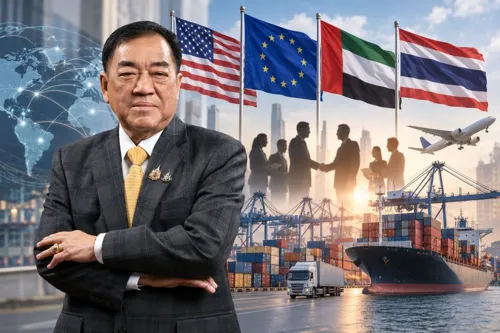
Thailand's Chamber of Commerce is pushing the government to accelerate three strategic trade agreements: ART (US), FTA (EU), and CEPA (UAE). The chamber projects these deals could boost GDP by over 2% within 3 years and attract foreign direct investment in semiconductors, electronics, digital/AI, clean energy, and premium food products. FTA-EU alone is estimated to add 1.28% to GDP and increase exports by 2.8% (~350 billion baht). The UAE agreement could open Middle Eastern, African, and South Asian markets for Thai exporters. Priority is securing favorable tariff rates and protecting sensitive agricultural sectors.

▾ Hover for summary ▾ Tap for summary
A major U.S.–China summit scheduled for September 24 is a critical market trigger. Huasen Heng analysis suggests that if negotiations show progress on trade/tariffs and avoid tech/geopolitical escalation, risk-on sentiment may return to stocks, reducing safe-haven demand for gold and pressuring its price short-term. Conversely, failed or tense negotiations would likely drive investors toward gold. Key variables beyond the summit outcome include U.S. Treasury yields and dollar strength, which influence gold independently. The structural nature of U.S.–China competition means one meeting is unlikely to resolve all disputes.
▾ Hover for summary ▾ Tap for summary
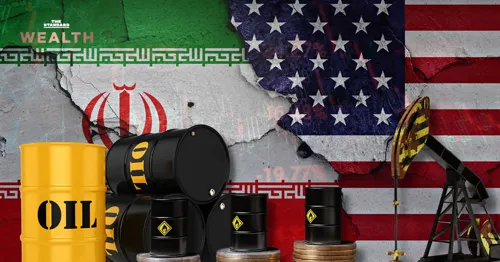
Global oil prices (BRENT and WTI) have fallen 5 consecutive trading days, dropping below $100 and $90 per barrel respectively, amid diplomatic hopes following Trump's disclosure of 3-hour US-Iran talks. Saudi Arabia's planned restart of the East-West pipeline (7M bbl/day capacity) and increased throughput via the Strait of Hormuz are easing supply-side tensions. However, risks remain: Iranian negotiating power weakens while escalation risks persist, previous ceasefire attempts have failed, and Houthi attacks continue. Thai energy importers and businesses exposed to fuel-dependent sectors should monitor these geopolitical developments closely.
▾ Hover for summary ▾ Tap for summary
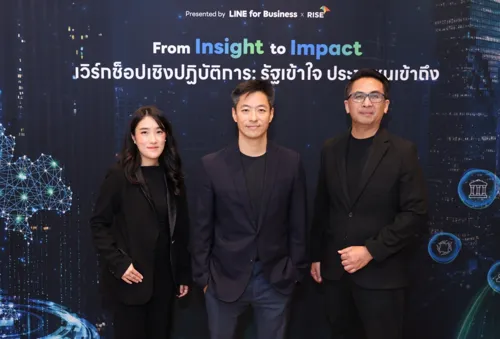
LINE Thailand partnered with Nielsen to survey 500 respondents and identified critical barriers to digital government adoption: 56% of Thais find it difficult to contact officials, 44% cite lack of accessibility for elderly/disabled users, and 42% waste time navigating multiple channels. The report recommends a "Seamless Hand-off" model positioning LINE as an engagement layer (notifications, eligibility checks, Q&A) while directing deeper transactions to government apps, combined with "Hybrid Allocation" using AI chatbots for routine tasks (80%) and human staff for complex issues (20%). Global examples (Vietnam's Zalo, South Korea's Kakao) demonstrate that proactive, omni-channel communication—not just building new apps—drives citizen engagement and revenue collection efficiency.

 Want to buy or sell a business?

▾ Hover for summary ▾ Tap for summary
TCEB is reorienting Thailand's trade exhibition industry toward Net Zero Carbon Events by 2050, with a 50% greenhouse gas reduction target by 2030. The shift moves beyond traditional metrics (booth size, attendance) to prioritize carbon footprint and environmental impact. Six global sustainability trends—Net Zero Carbon, Regenerative Practices, Mandatory ESG Reporting, Circular Economy, Digital Transformation, and Social Equity—will reshape trade show standards. Exhibitors, organizers, and suppliers must embrace this transition: 90% of emissions must be reduced through behavioral change (energy, logistics, waste, travel), with only 10% offset. This positions Thai MICE businesses to lead regionally, but requires immediate adaptation to remain competitive.

▾ Hover for summary ▾ Tap for summary
The article discusses miniaturization of AI chips designed to reduce power consumption in wearable devices. This trend is significant for SMEs developing IoT and wearable solutions, as smaller, more efficient chips enable new product categories and extend battery life—key competitive factors in consumer electronics and health-tech markets.

▾ Hover for summary ▾ Tap for summary
Siamratchathani (SO), a major Thai outsourcing services company, launched MOBIX, an integrated platform for managing personnel, vehicles, and field operations. The app consolidates data from fieldwork—including route tracking, driver behavior, customer interactions, and fuel receipt OCR—into a single system to improve cost control, operational efficiency, and business decision-making. This move reflects SO's strategic shift from service provider to technology-enabled operations partner, with plans to generate recurring subscription revenue and extend the platform to new customer segments.
▾ Hover for summary ▾ Tap for summary
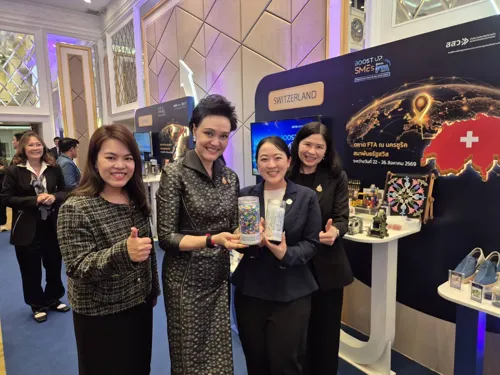
Thailand's Commerce Ministry selected 64 exemplary SMEs under the "Boost up SMEs to FTA Markets" programme to expand into free-trade agreement markets. Thai Plastic Recycling Group, a PET bottle recycler, was among 16 companies chosen for a Switzerland business-matching mission (August 22–26), meeting with major retailers like Migros and logistics provider DSV. The company plans to leverage the upcoming Thailand–Switzerland FTA (effective January 2027) to export recycled plastic pellets (rPET). The initiative highlights Thailand's effort to position green-business SMEs as export role models and increase SME contribution to national exports.
 Together GoWeGo! Ferry tickets in Thailand.
▾ Hover for summary ▾ Tap for summary
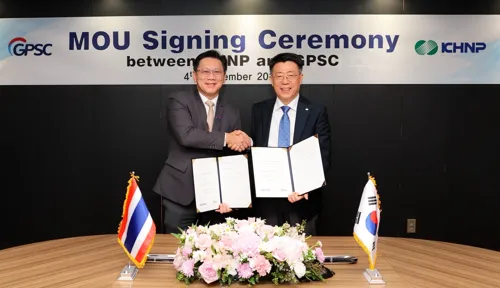
GPSC (Thai utility, PTT subsidiary) signed an MOU with Korea Hydro & Nuclear Power (KHNP) to jointly study Small Modular Reactor (SMR) feasibility in Thailand. The partnership includes exploring co-investment and O&M (operations & maintenance) services, with both companies planning to develop strategic business expansion plans for SMR technology. KHNP operates all South Korea's nuclear plants and generates 31.5% of the country's power. This move signals Thailand's serious interest in deploying SMR as part of its clean energy transition, supported by Korean expertise in engineering, procurement, construction, and long-term operations.

▾ Hover for summary ▾ Tap for summary
Germany faces a critical fiscal challenge as EV adoption surges (30% growth in Europe Q1 2025, 95% in Norway), slashing fuel tax revenue from €37bn (2016) toward €5bn by 2050. The article explores this energy paradox: governments funded road/transport infrastructure through fuel levies, but rapid EV adoption erodes that revenue base. It examines how countries—UK, NZ, Iceland, Switzerland, Norway—are testing alternative EV taxation methods (per-mile fees, odometer checks, weight-based levies, charging taxes). The trend signals SMEs in logistics, fleet management, and energy infrastructure must anticipate new tax regimes affecting operational costs.

▾ Hover for summary ▾ Tap for summary
Thailand's Deputy PM and Commerce Minister Suphajee Suthammapanthu met with US Trade Representative Jamieson Greer at UNGA81 in New York to advance bilateral trade cooperation and economic relationship discussions. The meeting signals Thailand's intent to strengthen ties with the US amid global economic shifts, though no specific agreements or deal outcomes have been announced yet. This engagement remains diplomatically important but lacks concrete, immediately actionable developments for SMEs.
▾ Hover for summary ▾ Tap for summary
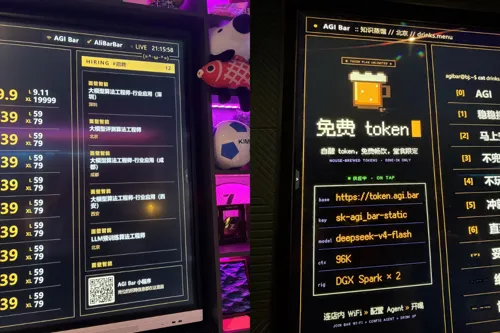
China's AI token economy exploded 5,000x in two years (early 2024 to mid-2026), from ~100 billion to ~500 quintillion tokens daily. Businesses now embed AI tokens as rewards—credit cards offer tokens instead of miles, telecoms package them like mobile data plans, and cafés throw in free AI compute with purchases. Lower token costs (60–90% cheaper than US alternatives) are driving mainstream adoption and creating a new tokenomics battlefield where Chinese open-source models undercut premium Western competitors.

 Stop running your company on Excel.