
Archive
August 14, 2026
▾ Hover for summary ▾ Tap for summary
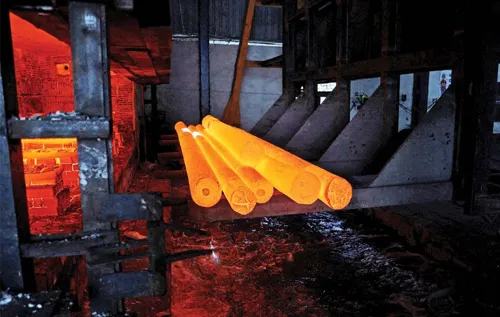
Thailand's steel industry faces dual structural pressures: cheap Chinese steel imports (up 23% YoY, 65% of domestic consumption in H1 2026) and safety/quality concerns from Induction Furnace (IF) production, which lacks impurity removal efficiency compared to Electric Arc Furnaces (EAF). While China banned IF use in 2018, Thai SMEs face cost barriers to switching. Expert recommendation: implement a phased technology transition roadmap with government incentives (tax deductions, import duty exemptions, green financing) rather than immediate IF bans—balancing public safety, environmental standards, and SME viability.

▾ Hover for summary ▾ Tap for summary
Siam Ratchathani (SO), a Thai outsourcing and technology services firm, reported H1 2025 revenue of 1,430.24 million baht and net profit of 102.92 million baht, approving an interim dividend of 0.18 baht per share. The company plans to expand its customer base, particularly targeting high-potential industries (manufacturing, energy, logistics), while developing SO NEXT platform for new revenue streams and targeting ~10% revenue growth for full-year 2025.

▾ Hover for summary ▾ Tap for summary
B.Grimm Power reported Q2 2025 revenue of 15,123 million baht with net profit (NNP) of 478 million baht, up 0.6% YoY despite geopolitical uncertainty. Growth drivers include the new tariff formula reflecting natural gas costs, cost optimization measures, and renewable energy project contributions. Total electricity sales rose 2.7% YoY to 4,003 GWh, bolstered by sales to EGAT (+1.9%) and industrial customers (+3.8%). The company approved an interim dividend of 0.18 baht/share and expanded internationally through LNG imports, Korean wind projects, and solar investments.

▾ Hover for summary ▾ Tap for summary
AI is dramatically accelerating materials science research and development, compressing timelines from years down to months. This breakthrough has significant implications for manufacturing, industrials, and technology sectors—particularly relevant for Thai SMEs in materials, chemicals, and advanced manufacturing looking to modernize R&D capabilities and reduce time-to-market for new products.

 Empower businesses to thrive in the digital age.

▾ Hover for summary ▾ Tap for summary
CHAO Foods (CHAO), a Thai snack and processed meat manufacturer, reported Q2 2026 revenue of 308.4 million baht, up 5.2% QoQ, with H1 revenue reaching 601.7 million baht. However, Q2 net loss was 7.2 million baht due to raw material and shipping cost pressures, partially offset by modern trade channel gains. The company plans aggressive China market expansion through retail partnerships and new product launches by year-end, alongside domestic portfolio shifts toward health-conscious snacks and new processed food offerings. Cost controls and automation investments aim to support H2 growth targets.
▾ Hover for summary ▾ Tap for summary
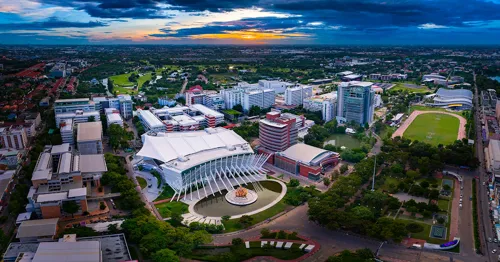
Rangsit University is implementing a comprehensive Net Zero Campus strategy spanning clean energy, smart buildings, and AI-powered management systems. The university has already saved 24 million baht in electricity costs through solar installations and smart building technology that reduced energy use by 45-49% while improving occupant comfort. A roadmap through 2030+ includes campus-wide solar coverage, EV fleet transition, and a Digital Twin model for real-time energy and emissions management aligned with UN SDGs and global carbon neutrality goals.

▾ Hover for summary ▾ Tap for summary
BEM achieved record Q2/2569 net profit of 1,012 million baht (10-year high), driven by strong Blue Line ridership growth and aggressive debt management cutting finance costs by 9%. The critical growth catalyst arrives late November: the first Orange Line train reaches Thailand, unlocking full commercial operations in 2571. Orange Line is positioned to add 300,000 daily passenger trips at maturity (2573), catalyzing BEM's "Big Jump" growth phase. For tech/SME ecosystem: major transit expansion signals infrastructure investment and urban mobility transformation underway.
▾ Hover for summary ▾ Tap for summary
Thai Airways announced a 120 billion baht five-year fleet modernization plan to reach 150 aircraft by 2026, while facing energy cost pressures from Middle East volatility. The airline is adopting defensive measures including fuel hedging (max 60% coverage), cost discipline, and strategic pricing adjustments. Near-term initiatives include increased domestic and international flight frequencies, new routes to Da Nang, and premium service upgrades. Profit dropped significantly in Q2, underscoring the urgency of fleet efficiency gains.
 Your real translator for LINE and Discord.
▾ Hover for summary ▾ Tap for summary
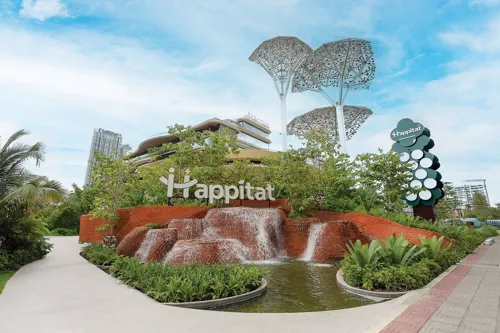
CP Extra launches Happitat, a 200,000 sq.m mixed-use mall in Bangkok's Bangna area designed as a retail "destination" (akin to Disney for shopping). The project spans three buildings with distinct concepts: Bloominas (lifestyle retail), Wonderwild (family activities), and Festie Town (events/entertainment). Features include 500m of interconnected walkways, 30 acres of green space, international brands, and signature attractions like parades with licensed characters and a large LED screen. With 85% tenant occupancy secured, Happitat targets opening August 21, 2026, positioning itself against competing mega-malls by combining shopping, dining, wellness, and entertainment to drive repeat visits.

▾ Hover for summary ▾ Tap for summary
BEM (Bangkok Mass Transit System) reported record Q2/26 net profit of 1.012 billion baht, up 19 million year-over-year, driven by diversified revenue streams (tolls ~50%, rail fares ~40%). The company is also advancing its major growth driver: the Orange Line expansion (east segment), with the first train arriving in Thailand in late November 2026 for testing and planned operational launch by end of 2027. Full expansion including the west segment is targeted for 2030, projecting capacity to rise from 100,000 to 300,000 daily passengers. BEM has also cut financial costs by 9% through active debt management. This positions BEM as a stable defensive stock with strong cash flow and significant upside from infrastructure megaprojects.

▾ Hover for summary ▾ Tap for summary
The US has announced punitive tariffs of up to 100% on advanced drones and components, with 25% on standard models and 10-15% for allied nations' products, aiming to reduce dependence on foreign—particularly Chinese—drone manufacturers. This move targets DJI's 70% market share in US commercial drones and signals escalating tech-sector tensions ahead of Trump-Xi talks. Thailand SMEs in manufacturing, assembly, or drone-related supply chains should monitor whether tariff exemptions apply to their jurisdictions and assess exposure to market shift toward domestic US production.

▾ Hover for summary ▾ Tap for summary
The head of Thailand's warehousing and cold storage association outlines a strategic "4S" framework—Seamless (integrated multimodal transport), Smart (digital transformation & AI), Specialized (sector focus on food, tourism, data), and Sustainable (green logistics)—to elevate Thailand's position as a regional logistics hub. Key challenges include geopolitical disruption, supply chain resilience, and the need for real-time data sharing between public and private sectors. SMEs are urged to adopt scalable technologies (even basic solutions like OCR) rather than large enterprise systems.

 Want to buy or sell a business?
▾ Hover for summary ▾ Tap for summary
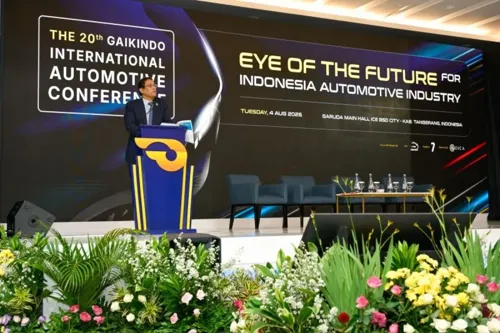
Indonesia's Finance Minister publicly pitched incentives to Toyota at the GIIAS 2026 auto show (Aug 4) to relocate its ASEAN production hub from Thailand to Indonesia, offering tax exemptions up to 100% and VAT reductions of 40% for EVs. The timing coincided with Thai PM Anutin's official first visit to Indonesia in 15 years, underscoring intensifying regional competition for automotive manufacturing investment and Thailand's vulnerability to such recruitment efforts.

▾ Hover for summary ▾ Tap for summary
South Korea's government has launched the SEEDs (Strategic Emerging Engines for Disruptive Innovation) strategy to develop seven new industries over the next 10–20 years, recognizing that semiconductor chip production alone will not sustain economic growth amid demographic decline and global competition. The roadmap targets quantum computing (K-Quantum Foundry by 2035), advanced energy (SMR and fusion power), space/aviation, advanced biotech with AI/robotics, improved solar cells, rare-earth supply chains, and space infrastructure (moon landing by 2030, 6G satellite network by 2035). This signals a shift beyond AI-era opportunities toward long-term economic diversification and technology leadership.
▾ Hover for summary ▾ Tap for summary
Sony and TSMC plan a joint venture (60%-40% ownership) to produce next-generation image sensors in Kumamoto, Japan, with 1 trillion yen (~$6.3B USD) investment and production target of 2029. The partnership targets high-performance camera sensors for Apple iPhones and AI-powered Physical AI applications. This signals major capital commitment to Japanese semiconductor manufacturing by two industry leaders competing against Chinese (OmniVision) and South Korean (Samsung) rivals.

▾ Hover for summary ▾ Tap for summary
Thailand's Insurance Commission (คปภ.) launched a youth road safety campaign targeting 15-19 year-olds at 5 technical colleges in high-risk provinces (Saraburi, Prachuap Khiri Khan, Nakhon Ratchasima, Chachoengsao). The initiative addresses a critical issue: ~32% of youth motorcycles lack mandatory third-party insurance, leaving families exposed to medical costs. The campaign uses edutainment (games, interactive activities) to educate students on insurance benefits—up to 500,000 baht coverage for victims, with premiums as low as under 1 baht/day. Success will be measured by awareness metrics and increased insurance enrollment among youth riders.
 Together GoWeGo! Ferry tickets in Thailand.

▾ Hover for summary ▾ Tap for summary
Thailand's Digital Minister has paused the EU-modeled Digital Platform Economy Bill, deeming it too strict for Thai context, and is now exploring alternative regulatory frameworks. The government is actively studying the Open Network for Digital Commerce (OCN) model, which would create a state-backed central platform infrastructure (payment, logistics, marketing) that both Thai and foreign e-commerce platforms can adopt to operate under unified rules. This represents a significant shift from direct regulation toward a collaborative governance approach designed to strengthen SME bargaining power against major platforms while maintaining state oversight.

▾ Hover for summary ▾ Tap for summary
ONYX Hospitality Group has adopted AIS Cloud (powered by Oracle Cloud Infrastructure)—Thailand's first Hyperscale Cloud offering—to modernize its digital infrastructure and support expansion from 45 to 70+ hotels across Asia-Pacific by 2030. The cloud platform consolidates ERP, analytics, and hotel operations while enabling future AI and automation capabilities, backed by local data residency and AIS Business expertise to improve cross-border data management and guest personalization.
▾ Hover for summary ▾ Tap for summary
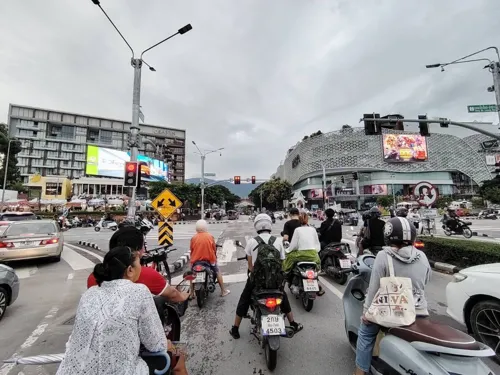
Chiang Mai is launching a service-design-led public transport research project using EV buses to solve traffic congestion in two critical zones (Kaewnawarat and Nimmanhaemin areas) handling 300,000 daily commuters. Key outcomes: Phase 3 (Aug–Nov 2026) will develop interchange transit hubs; a shuttle partnership with schools at Meta Mall (Santitham) targets 500 daily car reduction; hospitals and local schools are co-designing solutions. This data-driven, community-centered approach shifts transport planning from top-down to demand-responsive, addressing both congestion and livability for school students and low-vehicle-ownership groups.
▾ Hover for summary ▾ Tap for summary
El Niño weather patterns are driving heightened corporate risk concerns, likely affecting supply chains, operations, and climate-related business planning across sectors.

 Stop running your company on Excel.