
Archive
August 16, 2026

▾ Hover for summary ▾ Tap for summary
An article examining venture capital and investment fund activity in Southeast Asia, identifying major funds that have paused or withdrawn from SEA deals over the past year. This signals potential shifts in regional funding dynamics and investor confidence—important context for Thai startups and SMEs seeking capital.
▾ Hover for summary ▾ Tap for summary
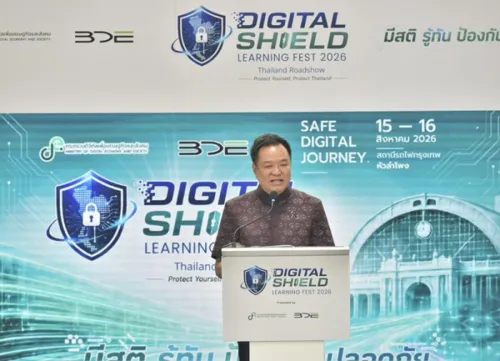
PM Anutin announced government efforts to combat online crime through cross-agency coordination targeting mule accounts, SIM cards, digital assets, and criminal networks. The strategy emphasizes prevention and involves financial institutions, capital market regulators, and digital platforms. SMEs accepting online payments and using digital services should strengthen verification protocols for suspicious transactions and customer identity verification.
▾ Hover for summary ▾ Tap for summary
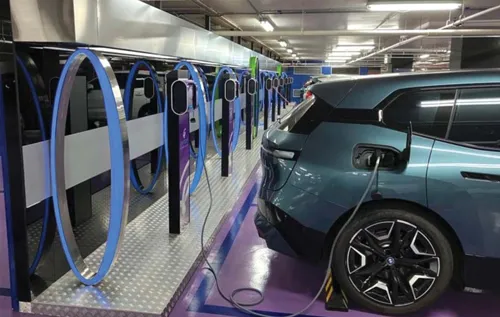
Thailand's automotive exporters face an imminent EU regulatory requirement: all EVs shipped to Europe from 2027 must feature a Battery Passport (QR code-tracked system) for traceability. Thai government agencies are still clarifying implementation details, but manufacturers need clarity before year-end. Meanwhile, ENTEC and the Industrial Economics Office are collaborating to establish a battery management framework—Thailand is projected to accumulate 1 million tonnes of EV battery waste by 2044, yet lacks recycling infrastructure and expertise today.
▾ Hover for summary ▾ Tap for summary
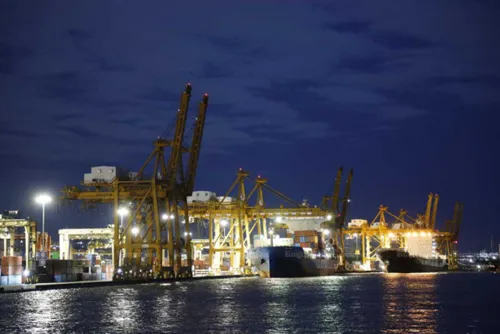
Thailand has been classified as Tier 2 in a White House transshipment report alongside Vietnam, Malaysia, and Indonesia, raising concerns that it could damage US confidence in Thai exports. The Thai National Shippers' Council warns this may lead to stricter US inspections and longer customs clearance times, particularly for goods with high proportions of Chinese materials. Thai exporters should prepare for enhanced supply chain transparency requirements and consider the opportunity to develop genuine local manufacturing and value-added content to differentiate from transshipment risks.

 Empower businesses to thrive in the digital age.
August 15, 2026
▾ Hover for summary ▾ Tap for summary
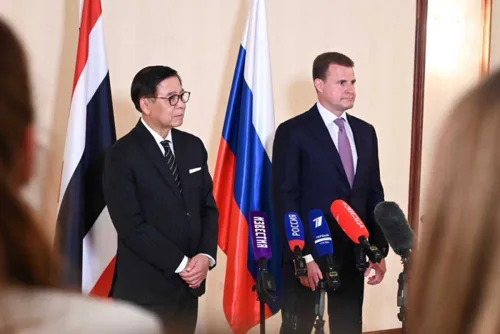
Thailand's Deputy PM and Foreign Minister announced plans to initiate free trade agreement negotiations with the Eurasian Economic Union (EAEU), following discussions in Moscow with the Russian-Thai Joint Commission on Bilateral Cooperation. Thailand aims to expand trade across agriculture, food, energy, and tourism sectors with EAEU members. While this represents a strategic push for new market access and economic partnerships, negotiations remain in early stages with no imminent deal timeline.
▾ Hover for summary ▾ Tap for summary
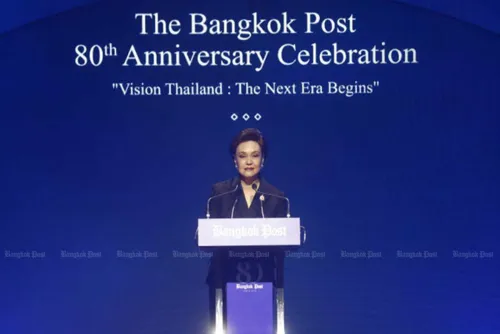
Deputy PM Suphajee Suthumpun identifies four priorities to strengthen Thailand's economy amid global uncertainty: expanding market access through trade negotiations and FTAs; shifting production focus from supply-based to value-based by leveraging IP and branding; improving SME competitiveness through better access to skills, knowledge, and resources; and building trust and resilience in supply chain partnerships. The government must support entrepreneurs while maintaining open, diversified trade policy and positioning Thailand as a reliable supply chain partner.
▾ Hover for summary ▾ Tap for summary
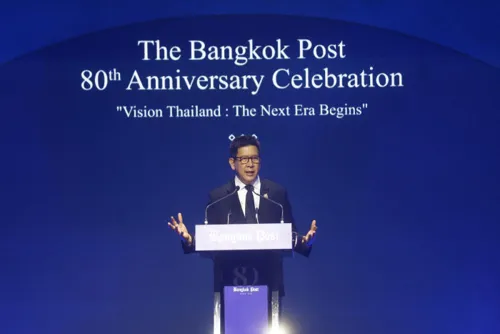
Deputy PM Ekniti Nitithanprapas outlined Thailand's fiscal strategy to transform into a high-income nation within 12 years through coordinated investment and reforms. Key priorities include basic infrastructure (deep-sea ports, petrochemicals, electricity), AI/digital skills training (80,000 trained via "Skill Bridge"), and energy transition support—including unlocking PPAs for private renewable energy. The government aims to unlock outdated capital flow regulations and maintain fiscal discipline while generating growth momentum.
▾ Hover for summary ▾ Tap for summary
A UAE-flagged ADNOC vessel was reportedly attacked in the Strait of Hormuz, raising regional tensions and supply-chain risks for energy-dependent importers including Thailand.
 Your real translator for LINE and Discord.

▾ Hover for summary ▾ Tap for summary
Thailand's health insurance industry faces a critical inflection: Loss Ratios rising from 67% (2023) to 89% (2026) are forcing structural change. Instead of reactive claims-management, insurers like Muang Thai Life are shifting toward "value-based longevity" — investing in prevention and wellness to extend healthspan rather than just treating illness. Dynamic pricing tied to patient behavior (e.g., for Type 2 diabetes) and telemedicine coverage signal a tech-enabled pivot. The math is clear: every year a customer stays healthy is a year the system doesn't pay claims. This is happening across Asia; healthcare inflation in the region hits 12.5% annually by 2026. Thai SMEs in healthtech, preventive care, and insurtech integration face new opportunities.

▾ Hover for summary ▾ Tap for summary
Character Fest Thailand 2026 is Thailand's second major character IP festival, running Aug 14–17 at Central World with an expected 600,000+ visitors. The event showcases Thai character creators and brands (PEA, MEA, CP ALL, etc.) through red-carpet debuts, exclusive stage shows, IP collaborations, and limited-edition merchandise. The festival reflects Thailand's growing character economy—a strategic component of creative industries where brands build fandoms and IP monetization through licensing and partnerships rather than direct product sales alone.

▾ Hover for summary ▾ Tap for summary
EGAT launched the third year of its Green Innovation competition, splitting into two tracks: "Circular Innovation Challenge" (combining AI/IoT/Data Analytics with circular economy principles) and "Sustainable Concrete" (using EGAT's industrial by-products like fly ash and synthetic gypsum to create low-carbon construction materials via Geopolymer and Alkali Activated technologies). Over 20 years, EGAT has deployed 28M tons of fly ash, offsetting ~24M tons of CO2. The initiative aims to bridge innovation from lab to market-ready products, positioning environmental sustainability as a competitive business advantage rather than a cost burden. Winners receive prize money and mentorship to commercialize solutions.

▾ Hover for summary ▾ Tap for summary
Apple is reportedly developing a custom AI model specifically for China's market to power Apple Intelligence, built in collaboration with Alibaba. This marks a shift from previous plans to use existing Chinese models from Alibaba and Baidu. Chinese regulators have already approved the implementation using Alibaba's Qwen model, and Apple is expected to roll out the service imminently across iOS and macOS.

 Want to buy or sell a business?

▾ Hover for summary ▾ Tap for summary
Princess Sirivannavari, in collaboration with ICONCRAFT at Icon Siam, launched the SCRAFT: Craftsmanship 2026 collection—a limited-edition line of 88 hand-woven Thai fabric bags honoring late Queen Sirikit's legacy in textile conservation. The collection features work by master weavers, award-winning young artisans, and embroidery specialists from the SIRIVANNAVARI Atelier & Academy, with highlight pieces including the exclusive VICHIT RATTANA collection (only 4 pieces) combining fabrics from two master weavers, gold hardware from renowned master goldsmiths, and embroidery inspired by Queen Sirikit's formal attire. This initiative supports traditional Thai craftsmanship while positioning it on the international stage.
▾ Hover for summary ▾ Tap for summary
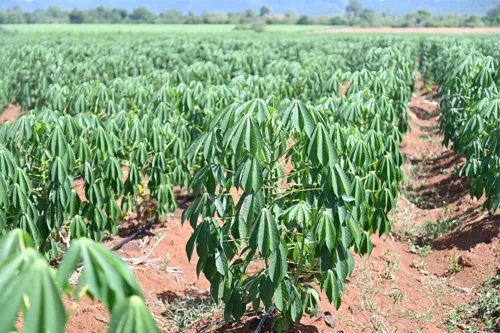
Thailand's cassava industry faces its worst raw material shortage in history: output at 18.7 million tonnes against demand of 37–42 million, creating a 15-million-tonne deficit. Export value has crashed from 155.5 billion baht (2023) to a projected below 70 billion baht in 2026, erasing ~85 billion baht in economic value. Root causes include cassava leaf disease, climate variability, and farmer exits; many mills operate at only 30–40% capacity. Industry leaders propose emergency measures: expanding disease-resistant varieties (now only 25,000 rai), boosting yields from current averages, and levying import duties to fund breeding R&D—critical as the country can no longer rely on imports from neighbours who are now building domestic capacity.

▾ Hover for summary ▾ Tap for summary
Anthropic achieved Q2 2026 revenue of $11.5 billion, a 14x increase from the prior-year quarter ($787 million), with single-quarter revenue now exceeding the prior year's full-year total. The company reached operating profitability for the first time with $559 million in operating profit. Anthropic projects 2028 full-year revenue of $190–200 billion, signaling aggressive scaling ambitions; this valuation framework could support a potential IPO valuation approaching $2 trillion. For Thai SMEs and tech stakeholders, this underscores the accelerating global competition in AI infrastructure and enterprise adoption.

▾ Hover for summary ▾ Tap for summary
Mono Streaming (MONO) upgraded Monomax, its sports/entertainment streaming platform with 4M+ registered users, by migrating to AWS Asia Pacific (Thailand) infrastructure. The upgrade enables support for 400K+ concurrent viewers and plans 4K streaming for Premier League 2026/27. With global sports rights including Premier League, FA Cup, and World Cup 2030, this infrastructure enhancement directly strengthens the company's competitive position in Thailand's sports streaming market and its ability to monetize premium content during peak-demand events.
 Together GoWeGo! Ferry tickets in Thailand.

▾ Hover for summary ▾ Tap for summary
A car crash at a kindergarten in Kanchanaburi on August 7 injured 18 children. The Thai Consumer Council has proposed four safety measures: (1) strengthen building structures and barriers with impact buffers, (2) create safe child activity zones away from risk points, (3) upgrade traffic standards with warning signs and speed controls, and (4) establish emergency response plans. All children have recovered and returned home. The incident highlights risks for early-childhood facilities located near roads and prompts systematic safety standard-setting for local government organizations.

▾ Hover for summary ▾ Tap for summary
Thai Life Insurance (TLI) reported H1 2025 net profit of 6,575 million baht (+3.9% YoY) with a strong 23.4% net margin. The company approved its first interim dividend at 0.25 baht/share and launched LifeVerse, an innovative flexible life insurance product tied to major life events, with digital integration including AI-powered health assessment. The company maintains solid capital adequacy (CAR 459%) and continues enhancing its mobile app for end-to-end customer lifecycle management.

▾ Hover for summary ▾ Tap for summary
A major wealth transfer of $99.3 trillion is expected across Asian family businesses by 2029. The article features insights from century-old Eu Yan Sang and DSG Group Indonesia, revealing three critical succession factors: establishing legitimacy beyond surname (next-gen leaders must prove capability to earn respect from senior staff and cousins), embedding family core values in family DNA through multi-generational storytelling, and prioritizing organizational interests over personal conflicts. Key lesson: professional systems and values transmission are as vital as capital transfer for business longevity.

▾ Hover for summary ▾ Tap for summary
Toyota's Thai executive has publicly raised critical concerns about Thailand's ability to compete as an EV hub against Indonesia's aggressive push into battery manufacturing and supply chains. Indonesia is partnering with CATL to build domestic battery production ($75.8M investment, exports planned for H2 2026), shifting regional competition from factory competition to entire ecosystem competition (parts, technology, supply chains). Thailand's 60-year automotive advantage risks erosion unless it moves beyond assembly toward value-added manufacturing and clarifies whether it's promoting EV sales or building genuine EV industry capability.

 Stop running your company on Excel.