
Archive
August 16, 2026

▾ Hover for summary ▾ Tap for summary
Thailand's real-world asset (RWA) tokenisation market is experiencing rapid expansion, with on-chain RWA value growing from ~$5B in 2022 to $31B by mid-2026—over 400% growth. The article outlines significant structural advantages driving adoption: fractional ownership enabling broader market access, near-instant settlement, collateral mobility, and growing institutional participation from major firms like BlackRock, Franklin Templeton, and JPMorgan. By 2030, Thailand's RWA tokenisation opportunity could reach $51B (1.7 trillion baht), positioning the country as Southeast Asia's leading regulated hub. The SEC is advancing regulatory foundations—amending the Securities Exchange Act and launching public consultation on mutual fund regulations—essential for scaling digital bond and security issuance. Policy recommendations focus on strengthening licensing frameworks for ICO portals and distribution partners.
▾ Hover for summary ▾ Tap for summary
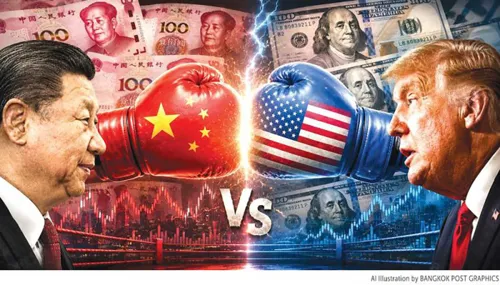
Chinese commercial banks have been granted permission to add about a dozen currencies including the Thai baht and Brazilian real to their direct settlement arrangements. This development reduces reliance on the US dollar and lowers transaction costs for Thai exporters and importers through shorter processing times and competitive exchange rates. Thailand's shift reflects broader BRICS efforts to diversify away from dollar dominance, with benefits particularly for businesses settling baht-denominated payments with China and managing forex hedging costs naturally.

▾ Hover for summary ▾ Tap for summary
Thammasat University researchers propose architectural changes to school buildings—including strengthened perimeters, separated building clusters, and staggered corridors—to delay active shooter attackers and provide students and staff more time to escape or shelter. The study recommends integrating active-response drills and mental health measures alongside physical design modifications. The Education Ministry is urged to incorporate these evacuation and emergency response plans into school procedures.
▾ Hover for summary ▾ Tap for summary
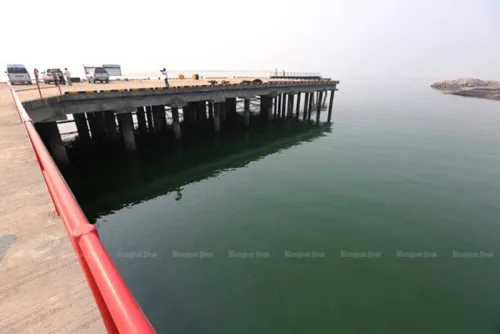
Thailand is positioning itself as a strategic player in Myanmar's delayed Dawei deep-sea port project, particularly to reduce Malacca Strait dependency and provide an alternative trade gateway. During bilateral talks, Thailand and Russia discussed the port's viability, infrastructure connections (rail and road), and broader regional economic cooperation including a potential Thailand-EAEU trade agreement. Key barriers include payment mechanisms amid Ukraine sanctions and agricultural trade restrictions, which authorities are working to resolve through reciprocal inspections.

 Empower businesses to thrive in the digital age.

▾ Hover for summary ▾ Tap for summary
Citi recommends Thailand accelerate government procedures, maintain policy stability, and pursue selective industrial strengths (semiconductors, digital governance, autonomous software) rather than broad strategies to attract foreign investment. Key challenges: adopting AI (expected to reshape ~22% of jobs over 5 years), diversifying supply chains, and ensuring institutional mindset shifts across government, finance, and business to compete in a rapidly transforming global economy.

▾ Hover for summary ▾ Tap for summary
TikTok highlights Thailand's opportunity to capitalize on "discovery commerce"—where social content drives impulse purchases—particularly in tourism, food, hospitality, and wellness. The platform has trained 82,000+ Thai SMEs and projects Thailand's creator economy will reach $127 billion by 2030. Key advantage: combining Thailand's cultural/heritage strengths with digital tools and creator networks to monetize experiences and local products at scale.
▾ Hover for summary ▾ Tap for summary
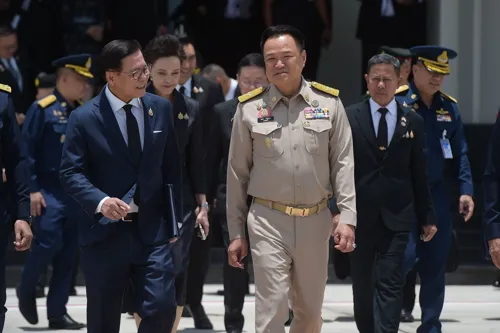
Thailand's Prime Minister is visiting Australia (Aug 17–20) and New Zealand (Aug 20–22) to elevate bilateral ties to strategic partnerships and sign joint agreements. The trip marks the first official visit to Australia in 14 years and to New Zealand in 13 years. Fourteen major Thai enterprises—including Thai Beverage, Gulf, Minor Group, B.Grimm Power, CP Foods, and SCG—join to participate in business networking and breakfast sessions, targeting concrete trade and investment opportunities in energy, digital, innovation, and tourism sectors.
▾ Hover for summary ▾ Tap for summary
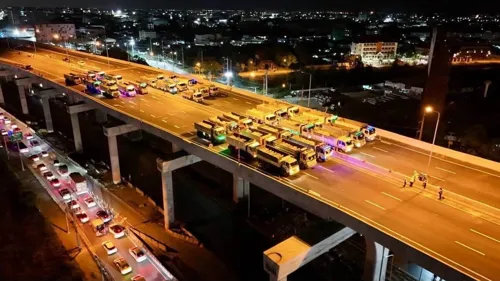
Thailand's Department of Highways has completed structural safety testing on the M82 motorway (Bangkhuntian-Banphaew elevated section) with certification from the Engineering Institute of Thailand. Advanced testing techniques including high-precision laser measurement and 3D scanning confirmed the structure meets AASHTO standards and is safe for traffic. The motorway is scheduled to open to the public on August 28, 2026. This represents significant infrastructure completion but impacts mainly Bangkok commuters rather than broader SME/tech ecosystems.
 Your real translator for LINE and Discord.

▾ Hover for summary ▾ Tap for summary
Netflix is shuttering two acquired game studios (Night School Studio, acquired 2021; Moonloot, acquired 2022) and cutting some gaming division roles, though headcount impact is unspecified. The company is pivoting its gaming strategy from smartphone games to casual and party games playable on TV via smartphone controls—a strategic shift that signals consolidation in its gaming ambitions.
▾ Hover for summary ▾ Tap for summary
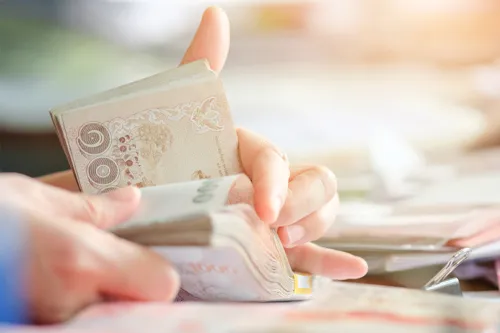
The Thai baht weakened to 33.8 THB/USD in July—its worst level in over a year—before recovering to 33.0 THB/USD in early August as US Fed signaled less hawkish policy and US economic data cooled. However, Thailand faces persistent headwinds: a current account deficit driven by high energy imports amid Middle East tensions, weak tourism recovery, and a structural fiscal deficit. Late Q3 seasonal factors (September typically sees dollar strength) and risks from Fed policy reassessment at Jackson Hole could reignite baht pressure. Kasikornbank forecasts 33.80 THB/USD by end-2026.

▾ Hover for summary ▾ Tap for summary
Thailand's Transport Ministry has unveiled plans for Phase 2 of the dual-track railway southern route, spanning 534 km across three segments connecting Chumphon to Padang Besawar (Thailand-Malaysia border). An initial 504 km will begin construction with a budget of 106.8 billion baht, targeting starts in July 2027. A 30 km Haad Yai-Songkhla segment (15.9 billion baht) is deferred due to dense settlement challenges. The project incorporates lessons from November 2024 flooding, adding 3 km elevated viaduct and 2 km embankments in Haad Yai. The Cabinet will review the proposal at a Songkhla mobile meeting on 1 September 2026.

▾ Hover for summary ▾ Tap for summary
Chinese luxury brands are aggressively entering Southeast Asia (including Thailand) with handbags (Songmont), jewelry (Chow Tai Fook), watches (Atelier Wen), and fragrances as their domestic market slows. These brands leverage China's manufacturing expertise while repositioning designs for younger consumers and international audiences. However, consumer perception challenges remain—buyers still hesitate about products made entirely in China. This creates both opportunities for Thai retailers to stock trending luxury brands and competitive pressure on local luxury distribution networks.

 Want to buy or sell a business?
▾ Hover for summary ▾ Tap for summary
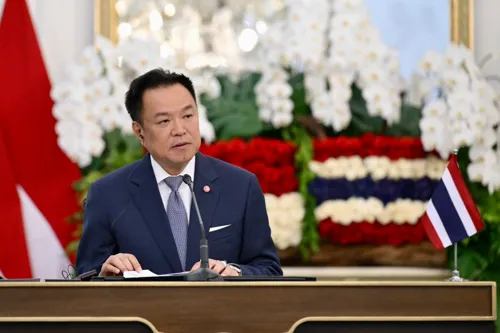
PM Anutin will lead a Thai delegation to Australia and New Zealand (Aug 17-22) for investment-focused negotiations with leading businesses. BOI aims to attract FDI and advanced knowledge in modern agriculture, energy, digital technology, and advanced manufacturing. Over 10 Thai companies will participate in investment networking events and bilateral meetings, positioning Thailand to leverage both countries' expertise in resources, food production, and technology for economic growth.

▾ Hover for summary ▾ Tap for summary
EV vehicle registrations have surged to 147,571 units in the first 7 months of 2026, exceeding last year's full 122,128—yet over 70% are imported. Domestic automakers and parts suppliers are calling on the government to balance EV promotion with protection of the local automotive industry; the current 8% excise tax gap (10% on imported EVs vs. 2% on locally assembled) may be insufficient to incentivize domestic production. Tax policy alignment and measures to support SME component suppliers are critical to maintaining Thailand's automotive manufacturing base while advancing EV adoption and emissions reduction goals.

▾ Hover for summary ▾ Tap for summary
This article maps major investors backing AI startups across Southeast Asia, including Thailand. Understanding the investor landscape is critical for local founders seeking funding and for SMEs evaluating partnership or acquisition opportunities in the region's growing AI ecosystem.

▾ Hover for summary ▾ Tap for summary
Comprehensive explainer on financial leverage (borrowing to invest), illustrating both amplified gains and catastrophic losses. Article uses South Korean market crash case study to show how margin calls and forced liquidations can wipe out portfolios in cascading market downturns. Key relevance for Thai retail investors using margin accounts, futures, or crypto trading—mechanisms widely available locally. Actionable warning: 1:10 leverage with 30% market drop can erase 60% of principal. Suitable for fintech platforms, brokers, and investor education content.
 Together GoWeGo! Ferry tickets in Thailand.

▾ Hover for summary ▾ Tap for summary
Samsung and SK hynix, South Korea's semiconductor giants, may announce combined shareholder payouts of up to $212 billion—a massive return of capital signaling confidence in the chip industry outlook. For Thai SMEs in tech or electronics supply chains, this reflects consolidated strength among major regional players and potential ripple effects on component availability and partnerships.

▾ Hover for summary ▾ Tap for summary
Thai Prime Minister Anutthin is visiting Australia (17–20 August) and New Zealand (20–22 August) to elevate bilateral relations to 'strategic partnerships'. Key initiatives include expanding trade, tech cooperation (digital innovation, advanced manufacturing, renewable energy), and supporting SME export/investment opportunities. Thailand-New Zealand aim to triple bilateral trade by 2045 and restore direct Bangkok-Auckland flights. This signals systematic openness to high-tech inflows and market access for Thai businesses in APAC.
▾ Hover for summary ▾ Tap for summary
A retrospective on Thailand's most well-funded tech startups and companies over the past 10 years. This landscape review helps SMEs and investors understand which sectors and founders have attracted significant capital, offering benchmarks for fundraising and competitive positioning in the Thai tech ecosystem.
▾ Hover for summary ▾ Tap for summary
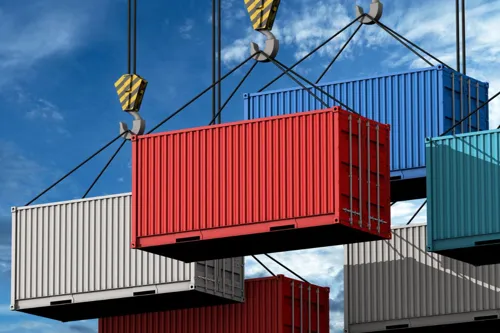
The US White House released "The Great Transshipment Scam" report targeting Chinese goods being re-routed through third countries to avoid tariffs. Thailand is classified as Tier 2 risk (moderate concern) alongside Brazil, Indonesia, Malaysia, Turkey, and Vietnam. Eight Thai export industries worth over $52 billion face potential enhanced scrutiny from US Customs, affecting goods valued at 172–345 billion baht. This is a classification for monitoring, not a formal accusation, though it signals increased inspection risk for Thai exporters shipping to the US.

 Stop running your company on Excel.