
Archive
August 17, 2026

▾ Hover for summary ▾ Tap for summary
The article explores "Shrekking," a workplace trend where talented workers deliberately accept jobs below their skill level to escape toxic environments and economic uncertainty. While citing real data (41.2% of US graduates underemployed; 29% drop in entry-level roles globally), it warns that this strategy creates psychological "rust-out" and makes workers vulnerable to layoffs. SMEs and talent-dependent businesses should recognize this emerging pattern in hiring and retention, particularly among Gen Z who prioritize mental health and work-life balance over career titles.

▾ Hover for summary ▾ Tap for summary
Thai investors holding baht-denominated assets still face hidden currency risk from US dollar exposure. The article identifies four key risk channels: foreign direct investments, foreign-derived revenues, cost structures, and foreign debt. Understanding these exposures is critical for evaluating true portfolio returns and hedging strategies.
▾ Hover for summary ▾ Tap for summary
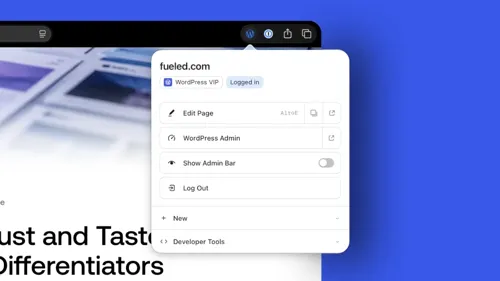
WordPress has launched an official browser extension (available on Chrome Web Store and Safari's Mac App Store) that enhances the developer and admin experience. Key features include hiding the admin bar and relocating admin controls to the browser toolbar, showing WordPress detection status across websites, one-click login access to sites you manage, and developer tools for testing (mobile preview, cache clearing, block boundary display). This is valuable for WordPress professionals and agencies managing multiple sites, improving workflow efficiency while reducing UI clutter.
▾ Hover for summary ▾ Tap for summary
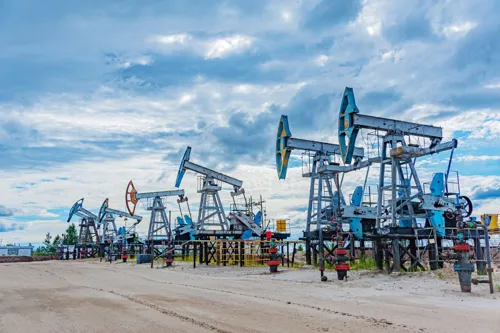
US escalation of Iran sanctions and threats to control the Strait of Hormuz are driving crude oil prices higher (WTI +$1.15 to $82.40/barrel, Brent +$1.45 to $88.52/barrel). Ongoing attacks on vessels and geopolitical tensions in the Strait create sustained upside pressure on energy costs. Limited peace prospects suggest this risk premium will persist, directly impacting fuel import costs for Thai SMEs and manufacturers dependent on stable energy prices.

 Empower businesses to thrive in the digital age.

▾ Hover for summary ▾ Tap for summary
HP Thailand launched a partnership with the Ministry of Social Development and Human Security to promote e-waste recycling awareness through technology donations and knowledge-sharing on circular economy practices. The initiative includes the "HP Plant a Tree" program, where every 30 returned cartridges fund one tree planting, supporting Thailand's sustainability goals while reducing electronic waste.

▾ Hover for summary ▾ Tap for summary
This article explores burnout in high-pressure work environments and the tension between personal mental health recovery needs and couple relationship expectations. It applies psychological frameworks (emotional labor, individual recharge mechanisms) to justify why overworked employees need solo time—not as selfishness, but as essential recovery—while warning that escape trips masking relationship problems are unhealthy red flags. Relevant to working adults managing both career stress and personal relationships.

▾ Hover for summary ▾ Tap for summary
A deep analysis of how content production economics have fundamentally shifted due to AI and algorithmic curation. The article argues that brands chasing volume without differentiation will be suppressed by algorithms designed to filter commoditized content. Key insight: success now requires understanding platform-specific mechanics (TikTok as commerce engine, Instagram for parasocial relationships, YouTube for intent-driven search) and cross-platform consumer behavior (multi-touchpoint verification, dark social). Thai SMEs pursuing organic reach must shift from quantity plays to distinctiveness, psychology-driven content, and platform-native strategies.

▾ Hover for summary ▾ Tap for summary
Thailand's Board of Investment (BOI) is coordinating with four state agencies to remove infrastructure bottlenecks and attract high-tech manufacturing to the Eastern Region. From 2023–mid-2026, the Eastern Region attracted 4,566 investment applications worth 2.6 trillion baht (50% of national total), with Chachoengsao, Rayong, and Prachuap Khiri Khan leading. BOI targets six sectors—biotech, electric vehicles, semiconductors, digital/AI, robotics, and advanced electronics—leveraging existing manufacturing bases and supply chains to position Thailand as a regional industry hub amid global geopolitical and supply-chain shifts.
 Your real translator for LINE and Discord.

▾ Hover for summary ▾ Tap for summary
Deputy PM Ekniti Nitithamnongphasat will lead a trade delegation to Australia and New Zealand (Aug 17–22) to leverage existing FTA frameworks for automotive and EV exports, Thailand's key markets. BOI will also meet with Australian tech firm Canva to explore creative economy investments. This targets both traditional automotive exports and emerging tech sector growth.

▾ Hover for summary ▾ Tap for summary
The US is issuing warnings to allied nations against participating in China's artificial intelligence framework, signaling growing geopolitical tensions over AI governance and technology standards. This reflects broader concerns about technology decoupling and control over critical AI infrastructure on the global stage.
▾ Hover for summary ▾ Tap for summary
Japan's Q2 GDP growth fell short of expectations due to weaker consumer spending and business investment, signaling potential regional economic headwinds that could affect Thai exporters and supply chains.

▾ Hover for summary ▾ Tap for summary
Bloomberg reports Stripe and OpenRouter have agreed on a $7 billion acquisition—down from earlier $10 billion estimates. OpenRouter, an AI routing platform that raised $113M in Series B funding at a $1.3B valuation (backed by Sequoia, A16Z, Menlo, and Alphabet's Capital G), would significantly expand Stripe's AI infrastructure offerings. However, the deal remains unconfirmed by either party.

 Want to buy or sell a business?

▾ Hover for summary ▾ Tap for summary
This article appears to track startup closure trends across Southeast Asia, providing data-driven insights into startup failures and market challenges. For Thai SMEs and tech entrepreneurs, understanding regional closure patterns and failure factors is critical for risk assessment and business strategy—especially in a period of capital tightening and selective market consolidation.
August 16, 2026
▾ Hover for summary ▾ Tap for summary
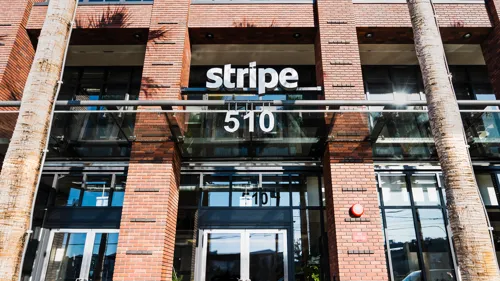
Stripe has acquired OpenRouter, a US-based AI startup, signaling the payments giant's expansion into AI infrastructure and model routing. This move reflects Stripe's strategy to strengthen AI capabilities for its developer ecosystem, though the deal's direct impact on Thai SMEs remains indirect unless they use Stripe's platform for international payments and AI services integration.
▾ Hover for summary ▾ Tap for summary
Tanker attacks in the Strait of Hormuz are causing shipping delays, which could impact global energy and supply chain costs for Thai importers and manufacturers relying on Middle Eastern oil.
▾ Hover for summary ▾ Tap for summary
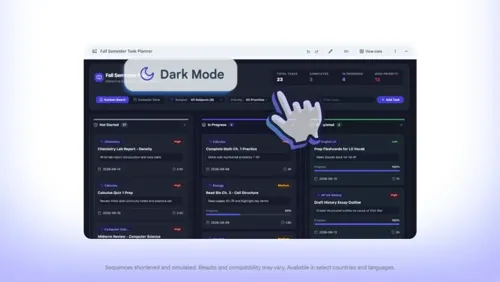
Google Sheets now offers a Canvas feature powered by Gemini AI that automatically generates visual dashboards without coding. Users trigger Gemini via the star icon and describe their desired dashboard; the feature creates a new linked sheet with customizable charts, dark mode, and other elements. The feature requires Google AI Pro or Ultra subscription and currently supports English only.
 Together GoWeGo! Ferry tickets in Thailand.

▾ Hover for summary ▾ Tap for summary
Sansiri (55% stake) and Japan's Nomura Real Estate (45% stake) have launched a 4.5 billion baht joint venture to develop The Monument Sathon, a 29-storey luxury condominium in Bangkok's Sathorn—a rare high-end freehold land plot targeting ultra-high-net-worth individuals. The project combines Japanese craftsmanship standards and heritage-conscious design; it marks Nomura's expansion into Thailand's premium real estate and reinforces Sansiri's market dominance in the luxury segment.

▾ Hover for summary ▾ Tap for summary
Thailand's real-world asset (RWA) tokenisation market is experiencing rapid expansion, with on-chain RWA value growing from ~$5B in 2022 to $31B by mid-2026—over 400% growth. The article outlines significant structural advantages driving adoption: fractional ownership enabling broader market access, near-instant settlement, collateral mobility, and growing institutional participation from major firms like BlackRock, Franklin Templeton, and JPMorgan. By 2030, Thailand's RWA tokenisation opportunity could reach $51B (1.7 trillion baht), positioning the country as Southeast Asia's leading regulated hub. The SEC is advancing regulatory foundations—amending the Securities Exchange Act and launching public consultation on mutual fund regulations—essential for scaling digital bond and security issuance. Policy recommendations focus on strengthening licensing frameworks for ICO portals and distribution partners.
▾ Hover for summary ▾ Tap for summary
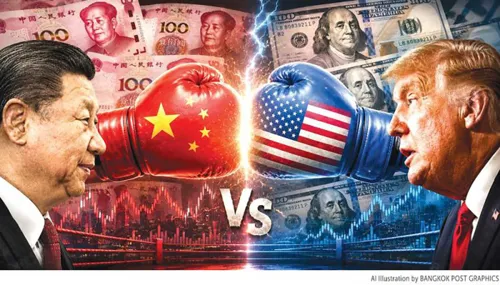
Chinese commercial banks have been granted permission to add about a dozen currencies including the Thai baht and Brazilian real to their direct settlement arrangements. This development reduces reliance on the US dollar and lowers transaction costs for Thai exporters and importers through shorter processing times and competitive exchange rates. Thailand's shift reflects broader BRICS efforts to diversify away from dollar dominance, with benefits particularly for businesses settling baht-denominated payments with China and managing forex hedging costs naturally.

▾ Hover for summary ▾ Tap for summary
Thammasat University researchers propose architectural changes to school buildings—including strengthened perimeters, separated building clusters, and staggered corridors—to delay active shooter attackers and provide students and staff more time to escape or shelter. The study recommends integrating active-response drills and mental health measures alongside physical design modifications. The Education Ministry is urged to incorporate these evacuation and emergency response plans into school procedures.

 Stop running your company on Excel.