Archive
November 19, 2026

▾ Hover for summary ▾ Tap for summary
Toyota says a planned 'old-for-new' pickup trade-in scheme could lift the pickup market by at least 10% if actually used. The industry expects 136,000 pickups sold this year, down 4-5%, mainly from flooding that disrupted production, and 156,000 in 2027. Banks are still tight on car loans. Toyota's new Fortuner launch has moved to early January 2027. For a Thai SME, the practical point is that pickup demand may pick up next year, but financing remains hard to get, so plan around loan approvals rather than the scheme alone.

▾ Hover for summary ▾ Tap for summary
Microsoft's new Agent 365 Business Analytics dashboard shows AI costs across all tools in a company and estimates the value of hours saved. It rolls out from 17 November 2026 to Frontier programme customers with 50+ Microsoft 365 Copilot licences, widening to 1+ licences in mid-December 2026. Pricing is not yet announced. The estimates are directional, not cash savings, and the default wage base is US-based, so Thai firms should adjust wage assumptions before relying on the ROI figures. For SMEs this is mainly relevant if they already pay for Copilot at scale; otherwise it is background.
▾ Hover for summary ▾ Tap for summary
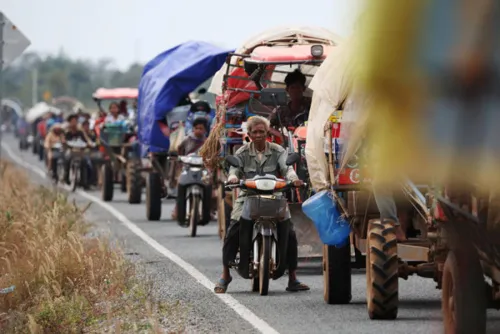
Thailand and Cambodia hold the third round of talks on their sea boundary dispute in Kuala Lumpur from Nov 24 to 27, run by the Permanent Court of Arbitration. Rulings under the UN Law of the Sea convention are not legally binding. Thailand's position is that the boundary must be fixed before any joint development or resource sharing, which means no near-term change to oil and gas access in the disputed area. All land border crossings remain closed, so cross-border trade and travel stay disrupted for now. For most SMEs, nothing needs to change yet; keep watching if you depend on border trade.

▾ Hover for summary ▾ Tap for summary
The House rejected the People's Party bill to make all Social Security Board members directly elected and take the Social Security Office out of the civil service. It accepted four other amendments, including the cabinet-sponsored bill, and set up a 25-member committee to scrutinise them. The Labour Ministry is also forming a working group to study the matter. No change to contributions, benefits or employer obligations has been decided. Nothing to act on this quarter; watch for the committee's final amendments to the Social Security Act.

▾ Hover for summary ▾ Tap for summary
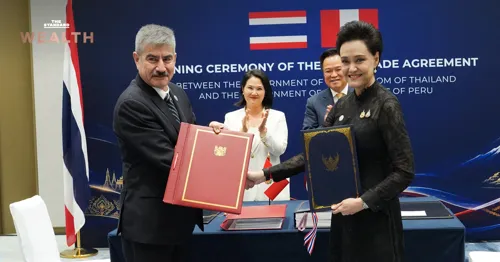
Thailand and Peru signed the full Thailand-Peru free trade agreement on 19 November 2026 at APEC in Shenzhen. It still needs Thai parliamentary approval and domestic procedures, and officials expect Thai businesses to use it within 2027. Trade between the two countries rose 33.66% in the first nine months of 2026 to US$555.24 million. Exports named as in demand include auto parts, tyres, canned and processed seafood, pineapple, papaya, processed fruit, machinery, building materials, and plastics and pet health products. For SMEs in these sectors, this is a medium-term market to plan for, not a change to this quarter's orders.

▾ Hover for summary ▾ Tap for summary
The baht weakened past 34 per US dollar today, its weakest level in 19 months, and is down about 7.7% year to date. Krungthai's economist expects the peak to stay below 34.50, likely around January or Q1 next year, and expects the baht to stabilise only once the Fed nears the end of its hikes. The Fed is widely expected to raise rates at its 8-9 December meeting, and Thai rates are expected to stay flat through year-end. For SMEs that import raw materials, machinery or fuel priced in dollars, costs will rise; exporters get a better rate but should watch for pressure on margins from imported inputs. Consider reviewing dollar-denominated purchase contracts and hedging before the December meeting.

▾ Hover for summary ▾ Tap for summary
At the Money Expo 2026 year-end event, BoT Governor Vitai Ratanakorn said AI-linked exports are about 24% of Thailand's total exports and grew over 55% this year, but the economy is K-shaped. He urged businesses to adopt AI quickly to raise productivity, offset labour shortages from an ageing society, and stay competitive. He also flagged that AI-driven cyberattacks on financial institutions have risen sharply, with attackers using AI agents. For an SME owner: no new rule is announced, but expect easier credit assessment (Inclusion) and tighter bank security checks, and consider where AI can cut costs or save staff time.
▾ Hover for summary ▾ Tap for summary
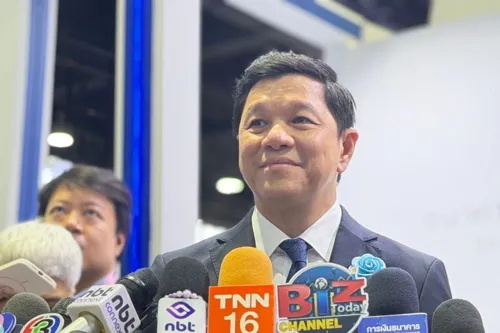
The BoT kept its 2026 GDP forecast at 2.4%. Q3 growth came in slightly below expectations, at 2.9% after MPI revisions versus its 3.1% estimate. The US dollar index is near 104, up from about 100, pressuring the baht and regional currencies. The BoT says it watches the baht closely. Inflation is expected to rise in Q4 and Q1 for about six months, then ease after April. Policy rates can move either way and depend on the next MPC meeting. A US plan to restrict advanced chip exports includes Thailand, but details are not yet clear. For SMEs: plan imported-cost budgets for a weaker baht, and expect possible inflation pressure into early next year.
 Your real translator for LINE and Discord.

▾ Hover for summary ▾ Tap for summary
Thailand's rooftop solar support includes a tax deduction of up to 200,000 baht and a 50,000 baht subsidy. ION Energy says household interest rose, but many buyers paused because it is unclear whether both measures can be combined and how the 50,000 baht will be paid. Installing one home system costs about 150,000-200,000 baht, and personal loans carry double-digit interest. If you sell or install solar, expect demand to stay uneven until the rules are final. Check the eligibility and stacking rules before quoting customers, and plan for cash-flow timing.

▾ Hover for summary ▾ Tap for summary
UTCC's economic forecast for Thailand in 2026 stays at 2.5%, with a possible range of 2.5-3%, pending the Thai-US ART trade deal and energy prices. If Thailand gets a 10% US tariff instead of 12.5% under Section 301, exporters' cost disadvantage shrinks. EV import tax restructuring to 35% may favour locally assembled combustion and hybrid cars. Pork and offal import terms are not yet clear, so local pork and feed-crop producers should watch the details. No price or rule has changed yet; plan on the assumption that terms can still move.
▾ Hover for summary ▾ Tap for summary
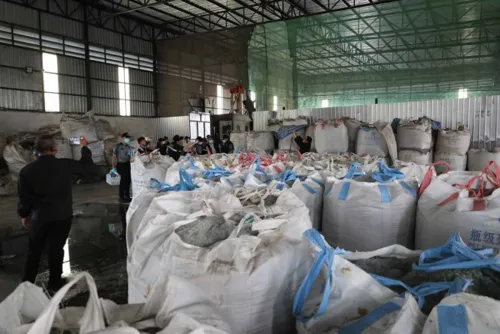
Pollution officials found about 6,000 tonnes of contaminated industrial waste (arsenic, cadmium, lead, mercury and others) at three warehouses run by KOK Recycle in Chachoengsao, which was sorting and grinding it without permission. The waste was bound for illegal dumping in Saraburi. Police report more attempts to dump waste from eastern industrial provinces there after some eastern landfills were closed. If your business sends scrap, wire or industrial residue to a recycler or hauler, check that they hold valid permits and that the trucks are registered and tracked. Ask for documents on where the waste ends up, because the generator can be held responsible.
▾ Hover for summary ▾ Tap for summary
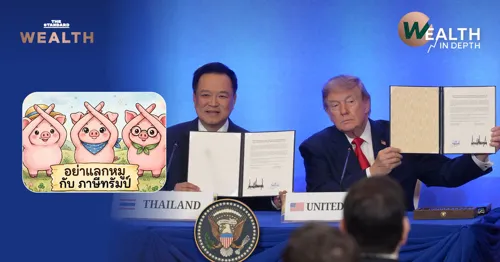
Thailand and the US reached a substantial conclusion on an Agreement on Reciprocal Trade (signed as a joint statement on 17 November, the ART text is not yet final). It covers about US$2.6bn a year in US farm imports, including pork and poultry. The National Swine Producers Association opposes opening the market, saying US corn costs about 4-5 baht/kg versus roughly 13 baht/kg in Thailand. Details are still unclear and the deal must go through domestic procedures before it takes effect. For livestock, feed and meat-related SMEs, this is one to watch: import competition for pork and chicken is possible but not yet confirmed.

▾ Hover for summary ▾ Tap for summary
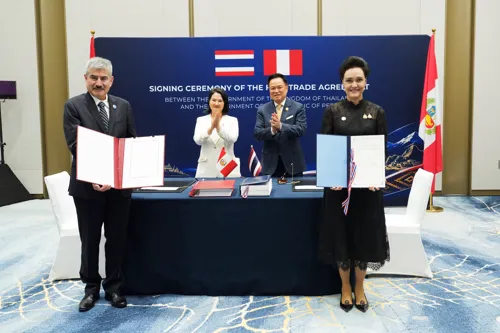
Thailand and Peru signed the full Thai-Peru FTA on 19 November 2026 at APEC in Shenzhen. It is not yet in force: it must go to Thai parliament first, with the commerce ministry targeting the start of use in 2027 (BE 2570). The deal opens Peru for cars and parts, tyres, processed food, tilapia and catfish, pineapple, papaya, machinery, construction materials and pet health products. Trade with Peru was US$555m in January-September, up 33.66%. For now, no change to pricing or planning; SMEs exporting to Latin America can start checking which of their HS codes are covered.

▾ Hover for summary ▾ Tap for summary
The BOT governor said AI-agent cyberattacks now fire 4-5 million automated requests at a time, repeating against any weakness found, and attacks have started to ease after early November. Banks must keep raising cyber defences, and IT spending is still rising. If a bank's system is breached through its own failure to meet BOT rules, the bank bears full liability for customer deposits with no cap. For SMEs, check your own bank-app and login security, and expect banks to tighten verification on transfers. Customer data leaks must be reported to PDPC within 72 hours. The article also says AI-related exports are about 24% of total exports and grew around 55% this year.

▾ Hover for summary ▾ Tap for summary
A University of the Thai Chamber of Commerce survey of 1,250 people (9-14 Nov 2026) expects Loy Krathong spending of 10,135m baht, up 4.7%. Average spend per person rose 23.7%, but 29.3% bought less in volume and only 15.3% bought more, so the increase is mostly price. Only 58.1% of planners intend to float krathong, a 13-year low. Shoppers' worries: quality (57.9%), high prices (56.5%) and being taken advantage of (49.2%). Government Thai Chuay Thai Plus credit was already used up by 64.9% of eligible people, so don't count on a state boost. Plan for price-sensitive, fewer-visit demand; 44.8% expect the economy to worsen over three months.
▾ Hover for summary ▾ Tap for summary
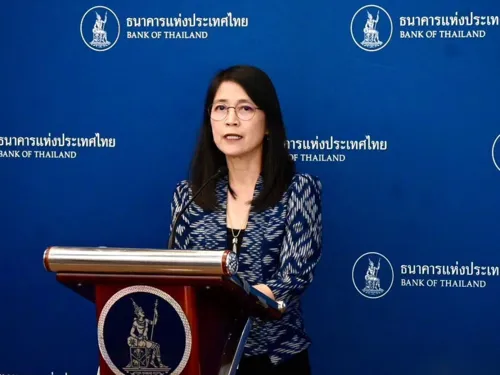
The Bank of Thailand's Northeast office says Isan grew slightly in Q3 2026, helped by the Thai Chuay Thai Plus stimulus and EV/hybrid car sales. It expects Q4 2026 to contract again, with drought risk to rice, weaker consumer confidence and tighter bank lending. GDP for 2026 is forecast at 0.4% to 1.4%, and 2027 at -0.4% to 0.6%. Plan for softer sales in Q4, watch cash-flow and credit terms, and prepare for drought-hit agricultural demand. New rules also apply: from 1 Nov 2026, cash and cheque transactions of 5 million baht or more per day face closer checks. Planned BNPL limits would cap loans at 20,000 baht with a 6-month term.
 Together GoWeGo! Ferry tickets in Thailand.
▾ Hover for summary ▾ Tap for summary
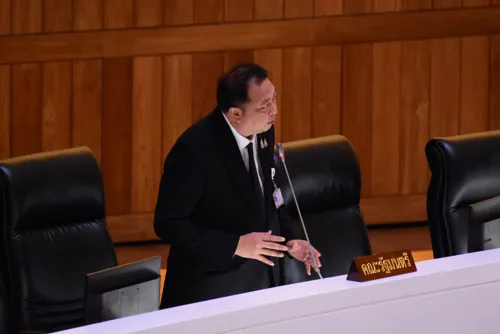
The Natural Resources Minister says the Pollution Control Department will declare a pollution control zone around the Kok, Sai and Ruak rivers, with no date set yet. Inspections of fish and rice-field soil are under way, and Thai and Myanmar officials meet on 25-26 November. A new environment bill may also be proposed, and it could affect export and import of certain chemicals. If you run a farm, restaurant, fishery or water-dependent business in these districts, expect tighter checks and possible restrictions on water use and produce sales. Keep records of your water and product sourcing for now.
▾ Hover for summary ▾ Tap for summary
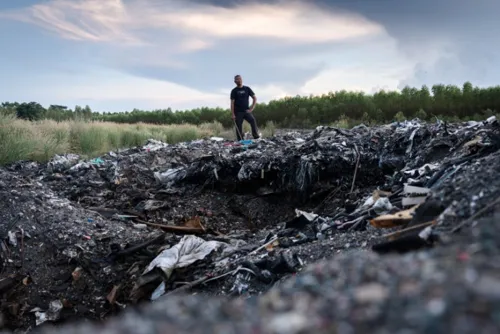
After September-October floods exposed toxic waste dumping in Prachin Buri, the Ministry of Industry temporarily closed one landfill, suspended two other facilities and ordered a nationwide inspection of 3,000 waste plants. About 300 have already been found in breach. If your business generates oil-contaminated water, scrap, or other industrial waste, check that your waste handler is licensed and that your disposal records are in order, since enforcement is tightening. Expect stricter oversight of waste contractors in the EEC and nearby provinces.
▾ Hover for summary ▾ Tap for summary
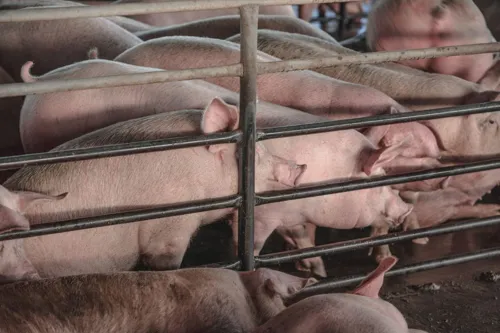
The National Pig Farmers Association opposes opening Thai markets to US pork as a bargaining chip in the US-Thailand Agreement on Reciprocal Trade (ART). It says Thai pig farms have lost money for three years (2023-2025) and are likely to lose money again in 2026, with feed costs among the highest in the world and domestic supply already above demand. It also raises concern over ractopamine, a growth enhancer that Thai law bans, and asks the government to file a reservation on the 2012 Codex residue limits and to publish the deal terms. For pork, feed and livestock businesses, expect possible price pressure and watch for the government's final decision on US pork access.
▾ Hover for summary ▾ Tap for summary
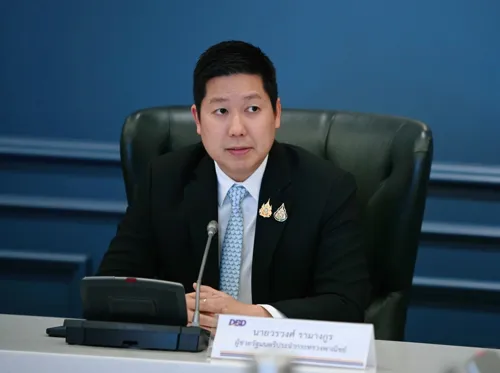
The former commerce ministry adviser says the 19% US tariff no longer applies. Thailand now pays 12.5% under Section 301, 2.5 points above Cambodia, Indonesia and Malaysia at 10%. The 10% rate goes to countries that ban forced-labour imports or have signed an ART. A separate US Section 301 probe on structural overcapacity is still pending and could add tariffs. Talks may open quotas on items such as corn, beef and possibly ethanol and soybean meal, which could affect feed and farm input costs. Pork is said to be excluded. Exporters should price US orders on 12.5%, and importers should watch for changes in feed costs.