Archive
November 19, 2026

▾ Hover for summary ▾ Tap for summary
The Department of Business Development, with SME Promotion Office, Department of International Trade Promotion, Shopee and Meta, launched "Digital Connect" to get 500 Thai SMEs opening shops on Shopee Philippines. Participants get 0% sales commission (GP) for 6 months. The top 100 get coupons worth over 600,000 baht, Shopee Ads credit, affiliate marketing and livestream support. Ten will be picked for a Philippines trip in March 2026. Workshops are in Chiang Mai on 26 Nov 2026 and online on 30 Nov 2026. Relevant if you sell health and beauty, electronics or fashion and want to test overseas demand without a local office. The article gives no sign-up deadline or cost to join, so check with the department or SME Promotion Office before committing.

▾ Hover for summary ▾ Tap for summary
Ipsos Thailand Consumer Pulse: 61% of Thais rate the economy as bad and 53% are reluctant to buy big-ticket items. The Bank of Thailand projects 2027 GDP growth of 2.1%, and household debt sits at 85.2% of GDP. Retail is still forecast to grow about 3% in 2026, with convenience stores (4.5–5.2%) and supermarkets (3.0–4.0%) growing fastest in Modern Trade for 2027–2028. For a small business, this points to value-priced everyday products, smaller pack sizes for frequent small baskets, mobile-first sales channels (over 80% of online sales), and premium pricing only for quality or health products.

▾ Hover for summary ▾ Tap for summary
Bangkok's deputy governor set 20 Dec 2026 as the deadline for district offices to finish inspecting flood-damaged homes and approving claims on the Bangkok claims site (claim.bangkok.go.th). Districts with fewer than 500 claims must finish within a week; 500-1,000 within two weeks; 2,000-3,000 within three weeks; over 3,000 within a month. Documents need not all be complete before submission. Homeowners who file should be home on inspection days, since officials have been finding houses empty; a new online booking system to choose inspection dates is being rushed out. Of 156,380 total requests, 53,973 payments have been transferred so far.

▾ Hover for summary ▾ Tap for summary
ASEAN members signed the Digital Economy Framework Agreement (DEFA) on 14 November 2026 in Manila; Thailand aims for it to take effect by mid-2027. It targets linked payment systems, e-invoices and e-bills of lading, cross-border digital ID, and a regulatory sandbox for SMEs. It does not force one common law, and the benefits depend on which payment channels and services actually connect. For now, nothing changes in your daily operations. Watch for the effective date, and check whether your payment providers and customs/shipping paperwork are on the new digital systems before expanding into a new ASEAN market.


▾ Hover for summary ▾ Tap for summary
The Agriculture Ministry has proposed raising the 2027 main-season rice insurance payout from 1,190 to 2,800 baht per rai. The state would pay 80% of premiums and farmers 20%, covering up to 10 rai per household. This is still a working-group proposal; cabinet approval is targeted for February 2027, before planting. Rice-farming clients should watch for enrolment details and satellite-based flood damage assessment. Nothing is confirmed yet.

▾ Hover for summary ▾ Tap for summary
The Energy Business Department has released a draft Oil Plan 2026 covering 2026-2050. Gasohol 91 is set to be phased out in 2027, with E20 becoming the base petrol and a 50% market share targeted by 2032. B7 stays the base diesel, with B20 targeted at 20% by 2032. The public consultation runs until 27 November 2026, and the final plan is expected about 1.5 months later, alongside the PDP. Fleet operators, fuel-related businesses and vehicle-service shops should check whether their vehicles and equipment run on E20 and B7, and plan for fuel-grade changes. Nothing changes at the pump yet.

▾ Hover for summary ▾ Tap for summary
Domestic gold bars sold at 60,250 baht and jewellery at 61,050 baht on 19 Nov, after world gold fell more than 3% to about 3,720-3,750 USD an ounce. The drop is driven by a strong dollar and high bond yields after hawkish Fed signals, including talk of further rate hikes. For a shop holding gold stock or taking gold as payment, prices are falling fast, so reprice and hedge stock. Gold-buying customers may wait. Not a reason to change long-term plans; UBS still sees higher prices by end-2026.
▾ Hover for summary ▾ Tap for summary
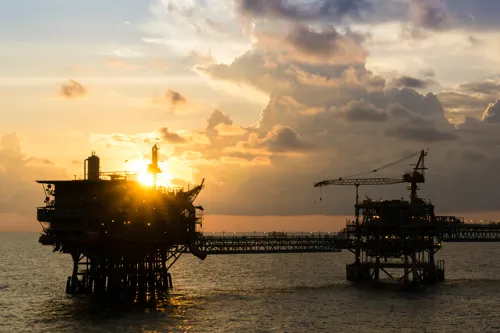
West Texas crude fell to US$83.26 a barrel (down $2.75) and Brent to US$91.95 (down $1.19) on 18 Nov. Thai Oil's analysts cite IEA and EIA forecasts of a supply surplus in Q4 2026, though Middle East tensions remain high. Rising US rates could also weigh on fuel demand later. For a Thai SME, diesel and fuel costs may ease slightly in the near term, but prices remain volatile, so avoid locking in long-term fuel assumptions on this move alone.
 Your real translator for LINE and Discord.

▾ Hover for summary ▾ Tap for summary
On 19 Nov 2026 (per the Gold Traders Association, reported 09:04), gold bar sell price was 60,350 baht and buy-back 60,150 baht per baht-weight. Jewellery (96.5%) sells at 61,150 baht and buys back at about 58,942 baht. The gap between sell and buy-back is roughly 2,200 baht on jewellery, so a shop buying or selling gold stock should price that spread in. Gold spot was about USD 3,750 per ounce. This is a daily move, so check the price on the day of any transaction rather than acting on it.

▾ Hover for summary ▾ Tap for summary
Thailand and the US signed a joint statement on 17 Nov 2026 on the Agreement on Reciprocal Trade (ART), but it is not the final agreement. Commerce Minister Supajee asked the US to cut the Section 301 forced-labour tariff from 12.5% to 10% to match countries that already have ART deals, and to set a favourable rate under the coming excess-capacity measure. Legal scrubbing continues, then public hearings, cabinet, and parliament. For exporters to the US, keep current US tariff costs in your pricing and avoid locking in long US contracts until the final text and rates are confirmed.
▾ Hover for summary ▾ Tap for summary
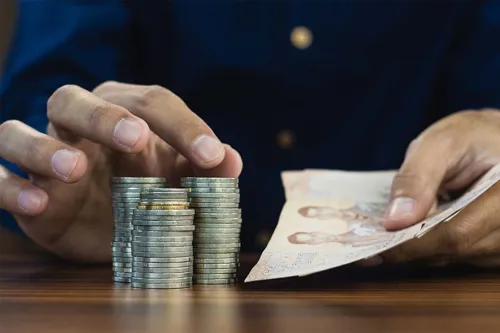
The baht opened at 33.98 per dollar on 19 Nov, its weakest in 19 months, after a stronger US dollar and gold falling below $3,721/oz. Markets expect a 33.80–34.10 range over 24 hours. Foreign investors sold Thai equities and bonds yesterday. A weaker baht makes imported inputs costlier for importers and rewards exporters. Importers paying in dollars should review pricing and hedging. The Fed meets 8–9 Dec and officials are signalling possible rate hikes, which could keep pressure on the baht.
▾ Hover for summary ▾ Tap for summary
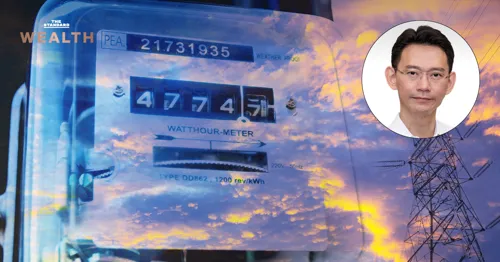
The Energy Regulatory Commission (ERC) is taking public comment from 18 to 24 November 2026 on the Ft electricity charge for January–April 2027. Option 1 (standard formula) lifts the average to about 5.02 baht per unit, up about 1.16 baht from the current 3.86. Option 2 (EGAT's proposal to split Ft by user type) keeps small businesses and homes at about 3.86 baht, but larger businesses would pay about 4.73 baht. Check which tariff group your meter falls under and send comments before 24 November if the change matters to your costs. Budget for a possible rise from January 2027, and note that the government has also approved a Spot LNG-displacing renewable buy-back and IPS framework.

▾ Hover for summary ▾ Tap for summary
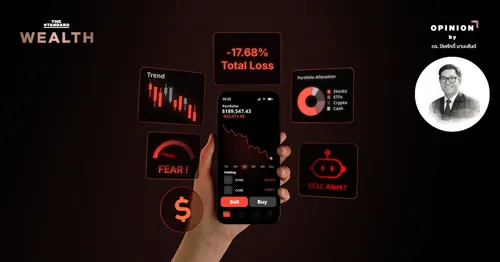
US AI stocks fell after the Nvidia CEO resigned on 12 November amid a probe, and data-centre opposition showed up in the midterm votes. InnovestX estimates the US economy in 2027 could grow about 0.2 points less than expected (1.9% vs 2.2%), and AI capex growth could slow from 94% in 2026 to 50% in 2027. The article says private investment tied to AI supply chains could account for over 93% of Thai economic growth in 2026, so a slowdown in US AI investment would hit Thai exports and investment at the same time. For an SME, this means cautious planning on export orders and capital spending for the next 12 months, not an immediate change.

▾ Hover for summary ▾ Tap for summary
Speaking at a Thammasat event, Somkid Jatusripitak said Thai GDP growth has averaged about 2.5% since 2006-2007, while Vietnam grows 7-8% a year. He flagged a 9-month trade deficit of tens of billions of baht and a fiscal deficit with borrowing above 10% of the budget. Only about 20% of the state budget goes to development spending. Private investment has fallen from over 30% to about 15% of GDP. He also warned BOI not to grant incentives to every investor. For a small business, this is a signal of slow domestic demand and tight public spending, not a change you need to act on this month. Plan cautiously on local sales growth.
November 18, 2026

▾ Hover for summary ▾ Tap for summary
NESDC now expects Thai GDP to grow 2.5% in 2026 and 2-3% in 2027, with exports up 20.4% this year but only 8.6% next year. Baht forecast: about 32.8 per dollar this year, 33-34 next year. Dubai crude about US$93.5/barrel this year, US$80-90 next year. Foreign tourists are forecast at 31 million this year and 33 million next year. Domestic consumption is slowing (private consumption 2.3% now, 2% in 2027), and the report flags drought and SME debt as risks. For budgeting: plan for a weaker export-led boost next year, keep fuel and import costs under review, and expect tighter demand from households.

▾ Hover for summary ▾ Tap for summary
The NBTC has ordered a 30-day technical study on cybersecurity standards for smart TVs and Android TV set-top boxes, after concerns about malware and backdoor surveillance. Once done, new imported or locally made units will need mandatory certification before market approval. Existing households will get warnings and guidance rather than a recall. If you import, resell or install these devices, expect new certification paperwork later; for now, no action is needed.
 Together GoWeGo! Ferry tickets in Thailand.
▾ Hover for summary ▾ Tap for summary
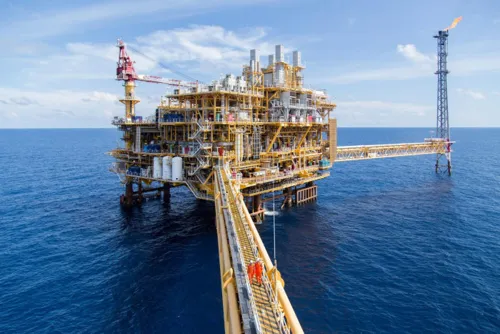
The National Energy Policy Council approved three measures. The Energy Regulatory Commission is told to recalculate the fuel tariff (Ft) for households, SMEs and farmers, aiming to ease electricity costs in January–April 2027. Large users such as data centres and AI firms will pay rates reflecting imported LNG costs. A renewable power purchase scheme runs 1 Jan–31 Aug 2027 at rates below spot LNG (currently above 5 baht/kWh). Private renewable generators that run off-grid get wider room to trade power. For SMEs: plan for a possible lower Ft in early 2027, and if you have or can build solar, biomass or biogas, watch for the purchase scheme and the new trading rules. No amounts or final Ft figures are given yet.
▾ Hover for summary ▾ Tap for summary
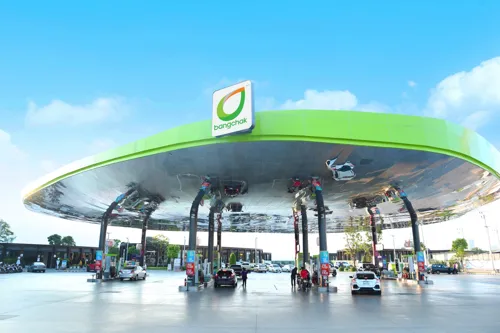
Bangchak's posted prices for 19 November: High Speed Diesel 39.99 baht/litre, B20 33.50 baht/litre (unchanged), Gasohol 95 38.84 baht, Gasohol 91 38.47 baht, E20 30.80 baht. Prices are reference only and exclude Bangkok's local land tax. New prices take effect at 05:00 the next day, so check your station and update fuel cost estimates for delivery vehicles and generators. If your fleet runs on B20, the gap to standard diesel is about 6.5 baht per litre.
▾ Hover for summary ▾ Tap for summary
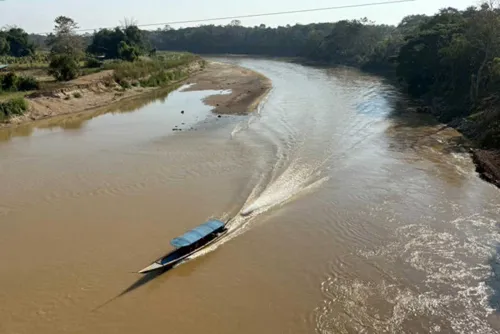
The Public Health Ministry plans to declare special surveillance zones along the Kok, Salween and Mekong basins, with Chiang Rai possibly first, covering Chiang Rai, Mae Hong Son, Loei, Nong Khai, Nakhon Phanom and Bueng Kan. The aim is to monitor arsenic-linked illness from mining pollution in Myanmar. Declaration would bring more health-monitoring funding for the area. Separately, 333 sites on the Kok and Sai rivers will be tested from Nov 23 to 25 for farmland, livestock and food safety, with results expected in one to two weeks. Businesses in farming, fisheries, food or riverside tourism in these provinces should watch for test results and any restrictions on local produce or fish.

▾ Hover for summary ▾ Tap for summary
Thailand and the US have agreed the main points of an Agreement on Reciprocal Trade (ART), but legal drafting is expected to take about two months, followed by cabinet approval, public consultation and parliament. Thailand currently faces an extra 12.5% US tariff under Section 301 (forced-labour concerns) on affected products and is seeking 10%. Import quotas and phased market access are planned for sensitive sectors. Exporters and importers should not change pricing yet, but should watch the final text, especially for farm, SME and manufacturing exports to the US.