
Archive
August 22, 2026

▾ Hover for summary ▾ Tap for summary
Apple has laid off approximately 60 employees from its VR division within the Apple Vision group, signaling a strategic pivot away from VR/Spatial Computing toward AR glasses development under new CEO John Ternus. While the Vision Pro headset program continues, the company is reallocating resources and talent to what it views as a higher-priority AR initiative, suggesting a major shift in Apple's spatial computing roadmap.
▾ Hover for summary ▾ Tap for summary
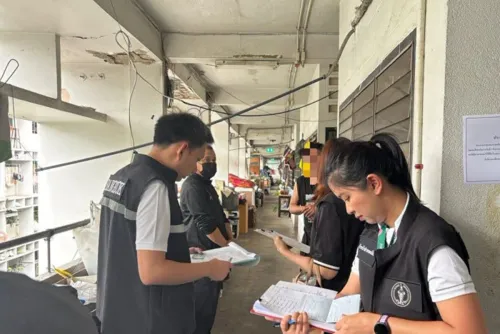
Bangkok authorities discovered 13 irregular household registrations across 9 districts where each address falsely lists 16+ migrant residents—typically in factories, flats, and rental houses. The BMA is launching individual investigations and a special task force review following a previous case where 1,400+ migrant children were illegally registered at public housing, implicating three district officials. This reveals systemic vulnerability in Thailand's identity and residency registration system used by foreign nationals to access public services.

▾ Hover for summary ▾ Tap for summary
China published the first randomized controlled trial of iPSC-derived cardiomyocyte injection for severe heart failure in Nature Medicine (August 2026). Of 10 treated patients, 9 showed functional improvement at 12 months. Key limitations: small sample size (20 total), control group received bypass surgery without cell injection (confounding factor), allogeneic cells required immunosuppression, and primary endpoints focused on safety (no arrhythmia/tumors) rather than efficacy. Off-the-shelf cell production model offers cost/availability advantages but masks contribution of surgery alone.
▾ Hover for summary ▾ Tap for summary
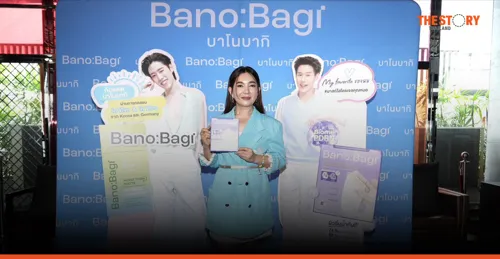
Beyond Beauty Trade, a Korean skincare distributor in Thailand, has evolved from exclusive distributor to 10.08% equity holder in Banobagi Cosmetics—becoming the brand's only foreign shareholder. This shift reflects the success of a "Thailand Model" that adapts Korean innovation to local skin types and consumer behavior (64.6% of Thais have oily skin), driving Banobagi Thailand from 90M baht (2561) to 450M baht in annual sales, with 100M+ mask sheet units sold cumulatively. The localized approach—including a "Sleepless" mask formula tailored to Thai late-night social media habits—became a template exported to 26+ countries. The equity stake mitigates traditional distribution contract risks (typically 3–5 years) while enabling Banobagi to scale its proven playbook globally ahead of planned IPO within 2 years in Singapore or South Korea.

 Empower businesses to thrive in the digital age.

▾ Hover for summary ▾ Tap for summary
Three major Thai banks (SCB, Kasikornbank, and Bangkok Bank) are launching digital gold-trading platforms targeting retail investors. SCB introduced SCB GOLD MARKETPLACE on its app with zero fees and 0.05 baht (≈฿6,000) minimum entry; Kasikornbank followed with K PLUS offering just 10 USD (≈฿300) minimum. The competition reflects a global trend of younger investors (Gen Z, ages 16–35) entering fractional gold trading via mobile apps. This signals growing fintech-enabled democratization of commodity investing in Thailand, relevant for SMEs offering digital financial solutions.

▾ Hover for summary ▾ Tap for summary
A low-budget Chinese animated film "Niu Lai" (about a young bull) became an unexpected viral summer sensation, transforming from social media mockery into box-office gold. After a disastrous first week (¥7,000 / ~฿34k), the film exploded following online buzz, earning ¥8.2M on a single Monday and accumulating ¥33.06M (~฿161.7M) total. The raw animation, stilted dialogue, and deliberately imperfect production became perceived as charming authenticity in an AI-dominated era—a reverse-psychology marketing phenomenon with virtually no traditional advertising. The success has rippled into merchandise sales and cultural commentary on generational preferences for anti-polish aesthetics.
▾ Hover for summary ▾ Tap for summary
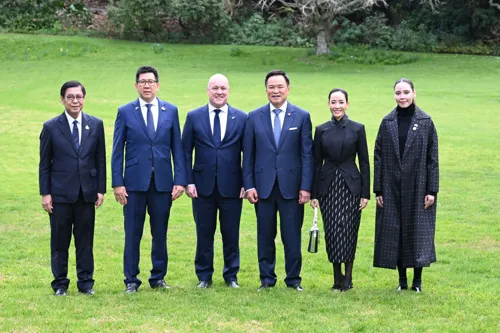
Thailand's Deputy PM and Finance Minister Ekniti is actively attracting New Zealand investment in agricultural technology, clean energy, and modern logistics capabilities. Key initiatives include establishing T&G Global's regional distribution hub in Thailand for fresh produce, securing Thai Airlines' Bangkok-Auckland direct flight route, and leveraging New Zealand's expertise in post-harvest technology and food science to upgrade Thai agricultural value. This reflects Thailand's strategic pivot to position itself as a regional commerce hub while addressing energy and cost-of-living pressures through technology cooperation.
▾ Hover for summary ▾ Tap for summary
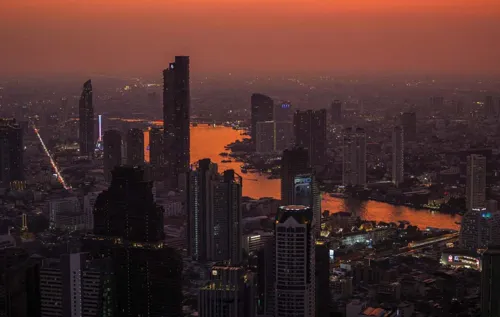
Thailand's Q2 2025 GDP growth slowed to 1.9% (from 2.8% in Q1), with full-year forecast cut to 2.2%. The article warns that SME credit—collapsing for 16 consecutive quarters—signals deeper economic distress. Non-performing loans in the SME sector hit 9%, and commercial bank SME lending contracted 4.6%. Government stimulus measures are inadequate band-aids; the real challenge is not chasing foreign megaprojects but rebuilding domestic SME access to capital and enabling grassroots economic transformation.
 Your real translator for LINE and Discord.
▾ Hover for summary ▾ Tap for summary
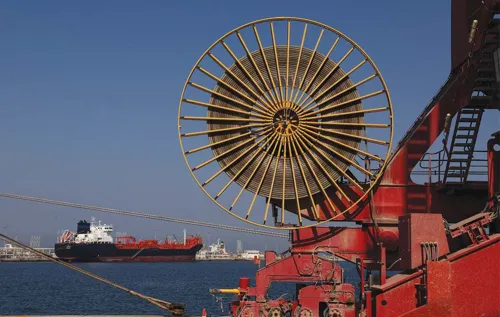
The UAE announced a comprehensive, indefinite trade embargo against Iran on August 19 in response to Iranian missile attacks. This move is strategically significant because UAE—particularly Dubai—has quietly become Iran's largest trade partner (accounting for ~1/3 of Iran's imports) and a key financial hub for circumventing international sanctions. US officials assess the UAE embargo will damage Iran's economy more severely than direct American sanctions, signaling potential economic isolation if other Gulf states follow suit.

▾ Hover for summary ▾ Tap for summary
Thailand's Labor Minister Julaphand Amornviwattana announced plans to negotiate increased work quotas for Thai laborers in New Zealand through an upgraded FTA, currently focused on ~7,800 seasonal agricultural workers annually. Key proposals include raising worker quotas, relaxing English-language requirements for low-complexity roles (agriculture, chef, massage therapy), and improving welfare protections. This diplomatic effort leverages strengthened bilateral ties at leadership level to create employment opportunities and better working conditions for Thai workers abroad.

▾ Hover for summary ▾ Tap for summary
Thailand's FDA reclassified 5,000 ppm fluoride toothpaste as a controlled medicine (not a cosmetic) to clarify consumer confusion after a recent government gazette announcement. Standard toothpaste (≤1,500 ppm) remains unaffected and safe for daily use; high-concentration 5,000 ppm formulations are reserved for high-risk patients (oral cancer radiotherapy survivors, elderly) and require dental professional supervision. The move addresses Thailand's high cavity prevalence (49.7% in 12-year-olds, 80.9% in working-age adults) and enables better prevention options, but users under 12 should avoid the stronger formula due to swallowing risk.
▾ Hover for summary ▾ Tap for summary
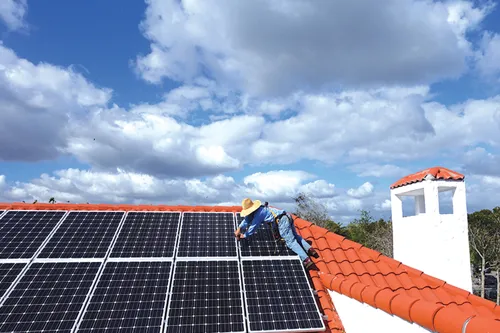
Thailand's Government Housing Bank (ธอส.) showcased solar rooftop financing at the Thailand Smart Money event in Surat Thani, offering home loans with tiered interest rates (0.99–2.99% annually depending on tenure) and installation subsidies up to 50,000 baht. The bank is bundling renewable energy adoption with affordable housing through 40-year mortgages starting at 1,100 baht monthly for a 300,000-baht solar installation. This targets Thai homeowners seeking both energy cost savings and accessible credit, reflecting a policy push toward sustainable housing aligned with net-zero goals.

 Want to buy or sell a business?
▾ Hover for summary ▾ Tap for summary
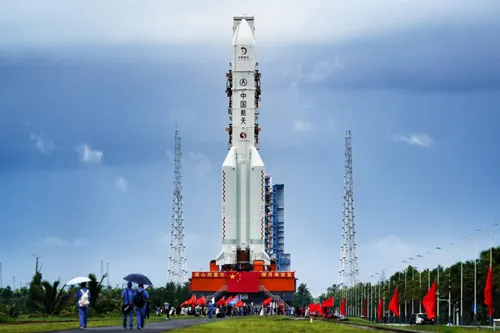
Thailand is positioning itself to capture a share of the emerging $1.8 trillion global space economy (60 trillion baht by 2035) by joining China's Chang'e 7 lunar mission through NARIT and NASA's Artemis program through GISTDA. The government is planning new infrastructure including a Thai spaceport to leverage its equatorial location, while supporting private sector development of satellite and advanced space technologies. The space race between the US and China is driving rapid technology advancement and creating supply chain opportunities for supporting industries.
▾ Hover for summary ▾ Tap for summary
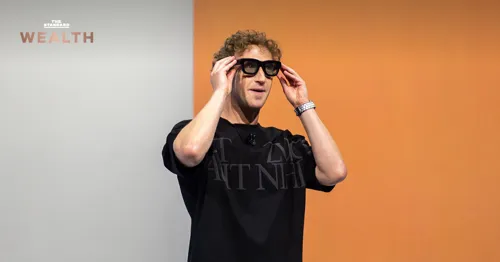
Meta CEO Mark Zuckerberg published a 6,500-word manifesto outlining his AI vision, arguing that AI's benefits should be widely accessible rather than concentrated in a few large organizations. He directly challenges competitors like OpenAI, Anthropic, and Google on their closed-model approach, proposing instead that ordinary people—not just big corporations—should have access to AI tools. The manifesto emphasizes three pillars: empowering everyday users, using AI for invention rather than displacement, and distributing power to prevent monopolistic control. Notably, Zuckerberg questions why AI developers who warn of existential risks continue building these systems, highlighting a core tension in the industry's philosophy.
▾ Hover for summary ▾ Tap for summary
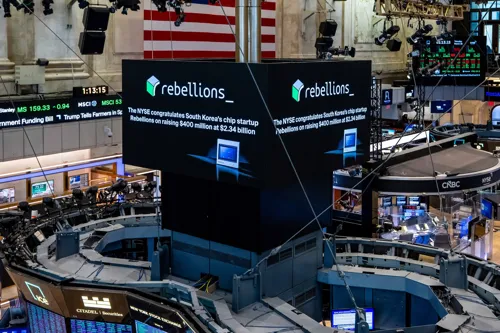
Nvidia is exploring a potential partnership or deal with Rebellions, a South Korean AI chip startup that recently raised $1.4B at a significant valuation backed by Samsung. This reflects consolidation in the AI chip market, where dominant players like Nvidia seek to acquire or partner with emerging competitors to maintain market leadership in specialized AI compute.

▾ Hover for summary ▾ Tap for summary
Rising tensions over the Strait of Hormuz between the U.S. and Iran are driving oil prices higher (toward $94-95/bbl), fueling inflation concerns and pushing U.S. Treasury bond yields to multi-decade highs. This geopolitical shock is pressuring global equities and gold, forcing the Fed to reconsider its interest-rate path; while markets still price in a 70% hold at the September FOMC meeting, the inflation re-acceleration could extend monetary tightening and destabilize investment portfolios across sectors.
 Together GoWeGo! Ferry tickets in Thailand.
▾ Hover for summary ▾ Tap for summary
DeepSeek, a major AI model developer, has released an updated V4 Flash test model with added vision capabilities. This multimodal expansion is relevant to tech professionals and SMEs developing AI-powered applications that require image/video understanding, though the specific market impact depends on benchmark results and availability.

▾ Hover for summary ▾ Tap for summary
Honda Thailand has requested a quota increase for the newly launched Honda Super-ONE electric vehicle after demand severely outpaced supply. The company received 300+ booking requests within 5 minutes of opening pre-orders, but only secured 30 units for 2026. First-batch deliveries are confirmed for November 2026. The Super-ONE features 95 hp, 253 km range, and is priced at 990,000 baht, signaling strong domestic EV market potential that parent company Honda must allocate accordingly.

▾ Hover for summary ▾ Tap for summary
Hawell's, a legendary Thai ice cream brand, is seeking a successor after decades in the market. Founded in 1999 by Dr. Siripong Akraserayukt, the brand expanded rapidly to 22 branches but faced competitive pressures and closure by 2014. It relaunched in October 2023 with a new standalone store model offering ice cream and fast food (pizza, spaghetti khao soi), aiming to establish stability for franchisees and expand globally. The company's latest financials show modest activity, with the main entity last reporting THB 6.9M revenue in 2012.
▾ Hover for summary ▾ Tap for summary
OpenAI is reducing GPT-5.6 Sol API pricing by over 20%. This is relevant to Thai SMEs building AI-powered applications or leveraging OpenAI's APIs, as lower costs directly improve margins on AI-integrated products and services. Tech startups should reassess their AI infrastructure budgets and consider expanding AI features given improved economics.

 Stop running your company on Excel.