
Archive
August 27, 2026
▾ Hover for summary ▾ Tap for summary
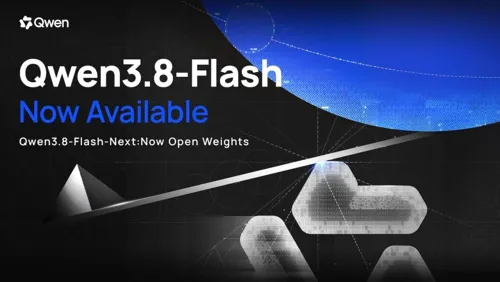
Alibaba Cloud released Qwen3.8-Flash-Next, a 125B-A6B parameter model that outperforms larger competitors like DeepSeek V4 Flash despite its smaller size. Using Qwen Sparse Attention architecture, it delivers 7.6x faster prompt processing and 4.9x faster token generation while maintaining multimodal (image reading) capabilities. Priced at $0.16/0.47 per million tokens, it's competitive for local deployment use cases, though API pricing matches rivals. Relevant for Thai SMEs evaluating AI infrastructure efficiency.
▾ Hover for summary ▾ Tap for summary
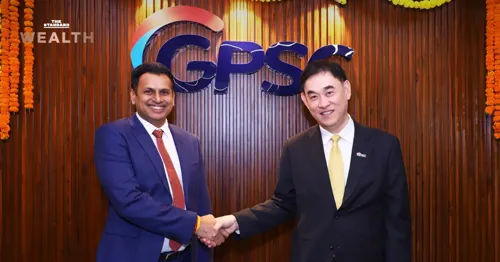
Thai energy company GPSC (a PTT Group subsidiary) has opened a permanent office in New Delhi to manage its 39.9% stake in Indian renewable energy platform AEPL, a joint venture with Avaada Group. Over five years, AEPL's portfolio has grown 8-fold from 3.7 GW to 30 GW solar-equivalent capacity across 9 Indian states, with 20-year power purchase agreements. The new office aims to accelerate AEPL's planned IPO on the Indian stock exchange and expand into future energy innovations (ammonia, hydrogen) as India targets 500 GW renewable capacity by 2030. This signals GPSC's confidence in India's energy transition and high-growth renewable market.
▾ Hover for summary ▾ Tap for summary
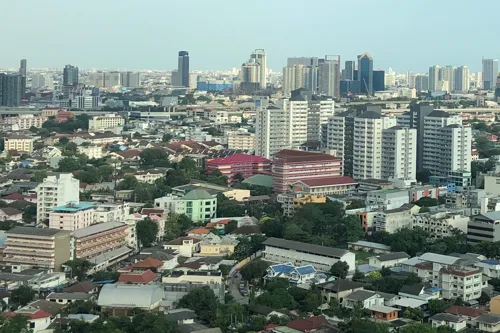
Thailand's condo market saw foreign buyer demand cool in the first half, with overall foreign transfers down 8.8% (6,533 units). China remains the top buyer but purchases fell 27.7% due to US trade policy uncertainty; Russia surged 75.9% and is now prominently active in Phuket and Chon Buri. Myanmar, historically the second-largest foreign buyer, declined 16.2% but remains focused on Bangkok. The story is relevant to real-estate investors and developers tracking foreign capital flows and regional buyer trends.
▾ Hover for summary ▾ Tap for summary
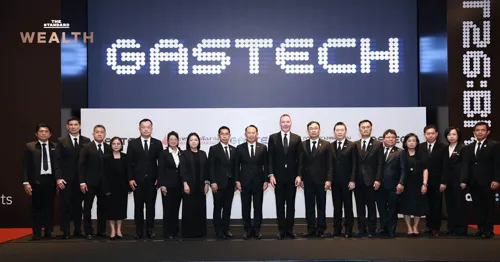
GASTECH 2026 (14–17 September) will be hosted at Bangkok's BITEC, drawing 50,000 energy leaders from 150+ countries to address global energy security, LNG, and the emerging AI-data centre infrastructure challenge. The conference features 1,000+ exhibiting companies, 15 national pavilions, 200+ seminars across 12 tracks, and a dedicated AixEnergy stream on AI integration in energy systems. Thailand's government sees this as positioning the country as Southeast Asia's digital infrastructure and energy hub, with Data Centre electricity demand projected to nearly double globally by 2030.

 Empower businesses to thrive in the digital age.
▾ Hover for summary ▾ Tap for summary
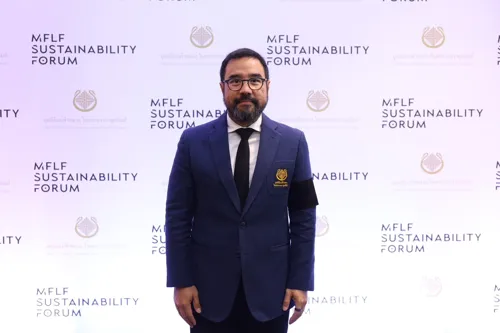
Mae Fa Luang Foundation Secretary-General Disapananda challenges the conventional "hungry people, lost forests" narrative at the 2026 Sustainability Forum. She proposes a "Nature-based Economy" model where businesses, financial institutions, communities, and government bridge gaps through nature-rights framing and investment-driven natural-capital accounting. The core message: prosperity and ecosystem health are reconcilable through proper valuation of natural resources in corporate finance and policy alignment.
▾ Hover for summary ▾ Tap for summary
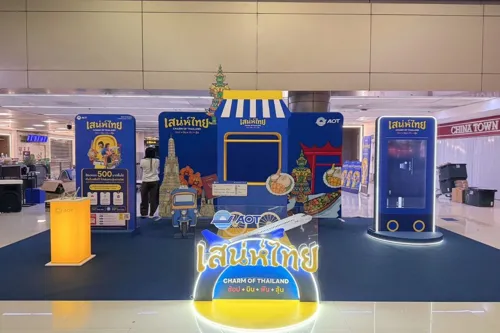
Airports of Thailand (AOT) launches "Charm of Thailand" promotional campaign across 5 major airports (Bangkok, Chiang Mai, Mae Fah Luang, Phuket, Hat Yai) offering cash vouchers and free flight tickets to incentivize passenger spending. The campaign aims to boost non-aviation commercial revenue through a structured commercial ecosystem connecting retailers, airlines, and tourism partners—a strategic move to enhance passenger experience and drive secondary market economic circulation.
▾ Hover for summary ▾ Tap for summary
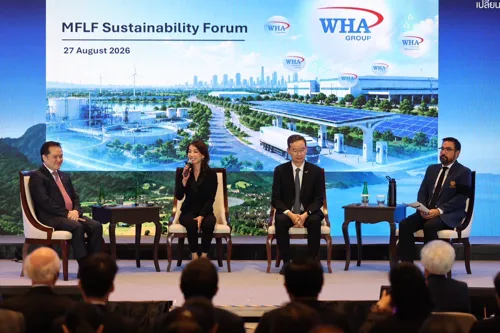
Three major Thai conglomerates—WHA (industrial estates), TCP (Red Bull/energy drinks), and Charoenwit—outlined sustainability strategies treating nature as a business partner at the MFLF Sustainability Forum 2026. WHA's "3 P" framework (cultivate people, forests, cities) includes zero-discharge water systems and biodiversity restoration; TCP focuses on water security across three dimensions—internal recycling, community management, and watershed restoration—generating 1,000M+ baht annually from EV trucks and solar roofs. Both frame ESG as investment returns, not cost, signaling market shift among Thailand's largest SMEs.

▾ Hover for summary ▾ Tap for summary
FETCO Chairman Paiboon Nalinthrangkurn warns the government that boosting investment to 30% of GDP must be paired with raising national savings from 24% to at least 27% of GDP, to avoid a repeat of the 1997 financial crisis. He advocates for mandatory retirement savings schemes, TISA measures, and long-term foreign capital attraction as part of a national savings strategy to fund productive investment and break Thailand's decade-long productivity stagnation (0% TFP growth 2015–2023).
 Your real translator for LINE and Discord.
▾ Hover for summary ▾ Tap for summary
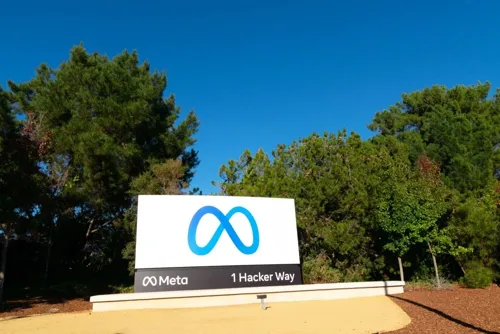
Meta agreed to pay approximately $17.6 billion to 48 US states and federal agencies to settle lawsuits over child addiction and safety issues on Facebook and Instagram. The settlement includes implementation of usage restrictions for teens (max 2 hours daily, no notifications during school, banned midnight-6am access) over 10 years. While primarily a US regulatory story, it signals global regulatory pressure on social platforms regarding youth safety—relevant for Thai tech operators and platform developers considering similar constraints ahead.
▾ Hover for summary ▾ Tap for summary
A major industrial fire at Russia's Amur gas chemical complex has killed at least 15 people, signaling potential disruptions to global energy supply chains relevant to Thai energy and industrial sectors.

▾ Hover for summary ▾ Tap for summary
Thailand's listed companies delivered strong H1 2025 results with consolidated net profit of 766 billion baht (+22.2%) and core profit surging 64.5%, driven by expanding economy and rising oil prices. Petrochemicals rebounded sharply, technology/electronics grew with digital expansion, and services benefited from tourism and consumption recovery. 74% of reporting companies (592 out of 800) posted profits, signaling broad-based recovery. However, commercial banks faced headwinds from lower policy rates, and agricultural products weakened amid falling commodity prices.

▾ Hover for summary ▾ Tap for summary
Thailand's beauty sector has 11,000 brands competing for share, but the real competitive advantage lies not in cost or trends but in understanding actual usage conditions and consumer trust—something global brands struggle to replicate. T-Beauty's strength stems from quality-to-price positioning, social media reach, entertainment content exports (BL/GL series), and strong retail distribution strategies. Physical retail remains undervalued but critical for tourist markets and brand credibility, working synergistically with online channels rather than replacing them.

 Want to buy or sell a business?
▾ Hover for summary ▾ Tap for summary
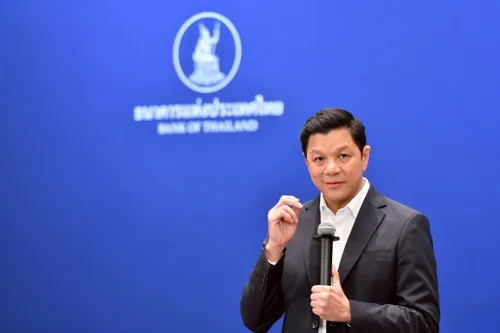
BOT Governor Vithaya Ratanakorn rejected market expectations that the central bank will keep rates on hold for an extended period, stating that the Monetary Policy Committee is not committed to maintaining rates at current levels and retains flexibility to move either way. Future decisions will depend on inflation, baht movement, and economic trends. He also warned that prolonged low rates carry risks including reduced saver returns, capital misallocation, and depleted policy ammunition for future shocks.
▾ Hover for summary ▾ Tap for summary
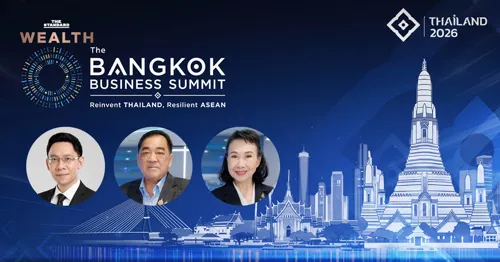
Thailand's private sector—Chamber of Commerce, Federation of Industries, and Thai Bankers Association—is jointly hosting The Bangkok Business Summit 2026 (Sept 2026) to drive economic restructuring away from low-wage manufacturing toward high-skill sectors (EV, semiconductors, AI, digital services). Four key pillars: attract advanced investment to create high-income jobs; build clean energy infrastructure and digital finance systems; elevate agriculture from commodity export to strategic food security asset; and enforce zero-corruption/digital governance to level the SME (85% of industry) playing field. The private sector is self-funding 100% and framing this as a starting point for systemic reform ahead of Thailand's IMF-World Bank host duties and 2027 ASEAN presidency.
▾ Hover for summary ▾ Tap for summary
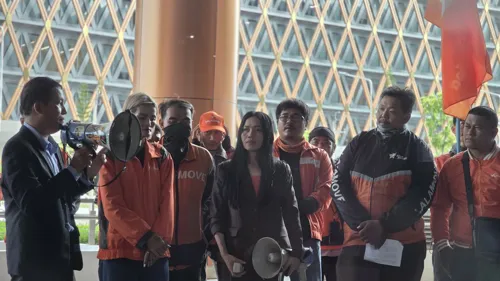
Thailand's Digital Ministry (DE) convened negotiations between Lalamove and organized rider groups over pay disputes. Riders claim the platform reduced rates from 10–13 baht/km to just 3 baht/km over three years and demanded a return to 10 baht/km. Lalamove countered that only 5% of riders actually earn 3 baht/km and average ~5–6 baht/km, while denying a blanket rate increase. DE tasked ETDA with studying fair minimum pricing within 15 days. Key unresolved issues: no commitment to raise minimums immediately, disputed data on actual earnings, and rider threat of potential action if demands aren't met. This signals ongoing platform–worker tension in Thailand's gig economy.
▾ Hover for summary ▾ Tap for summary
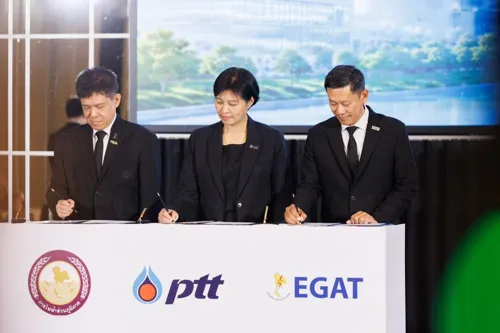
Thailand's National Nuclear Technology Institute (NNTI) partnered with 13 government, academic, and industry organizations to establish HOTNET (Hub of Talents for Nuclear Energy Technology), a knowledge-sharing hub for nuclear energy expertise. The initiative focuses on developing personnel, advancing research, fostering international collaboration, and building a skilled workforce to safely deploy nuclear technology for Thailand's clean energy future. Thai students demonstrated strong performance at the 2026 International Nuclear Science Olympiad, winning 1 gold, 1 silver, and 2 bronze medals.
 Together GoWeGo! Ferry tickets in Thailand.
▾ Hover for summary ▾ Tap for summary
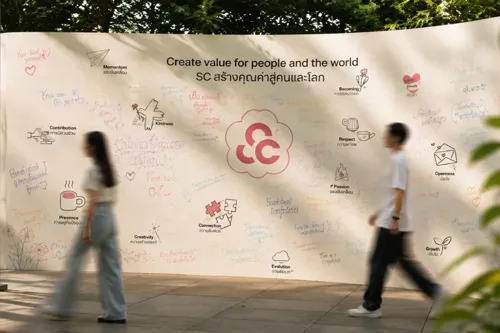
SC Asset Corporation, in partnership with The Present Haus and Thai Kham Foundation, is hosting a 3-day Mindful Fest (Aug 28–30) focused on employee mental health and self-reflection. The event includes a Mindful Work Companion notebook, panel discussions with celebrities on life and work, creative activity zones, and a donation drive supporting mental wellness initiatives. This extends SC's broader 2026 campaign to help employees transition from burnout to learning through structured reflection practices.
▾ Hover for summary ▾ Tap for summary
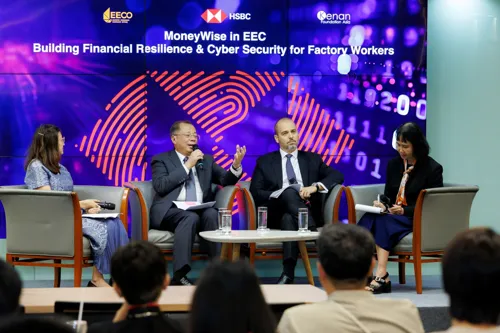
HSBC, Kenan Foundation Asia, and EECO launched "MoneyWise in EEC," a financial literacy and cyber security awareness program targeting 400+ factory workers in Thailand's Eastern Economic Corridor. The initiative addresses two critical issues: high household debt levels and surging online fraud (170,000+ cases in first half of 2025 with 9 billion baht in damages). Financial stress reduces worker productivity by 7 hours per week per employee, while effective financial wellness programs can boost work focus by up to 84%. The program delivers practical training on budgeting, debt management, and cyber threat prevention through on-site and hybrid workshops, positioning improved worker financial security as a key competitive advantage for attracting foreign investment to the EEC region.
▾ Hover for summary ▾ Tap for summary
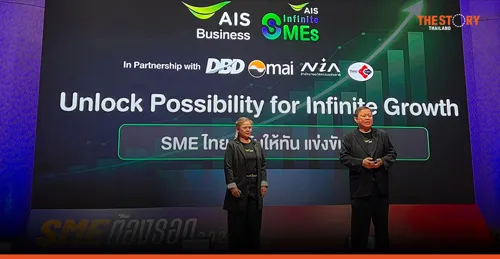
AIS Infinite SMEs research analyzing 3,000+ Thai enterprises reveals a critical gap in sustainable growth. While top 20% SMEs average 1,500M+ baht in annual revenue versus 35M baht for bottom 20%, only 20% sustain growth for 3+ consecutive years—40% falter after 2 years, 40% after just 1 year. The analysis categorizes SMEs into performance groups: "Marathon Runners" (20%, avg 9.3% CAGR, manufacturing-heavy) show consistent growth through data-driven planning; "Acid Wind Runners" (30%, 17.7% growth rate, service-focused) show volatile revenue dependent on large projects. Key takeaway: revenue size and growth rate alone mislead—consistency, diversification, and forward-looking decision-making (12–18 month horizon) separate sustainable operators from high-risk volatility.
▾ Hover for summary ▾ Tap for summary
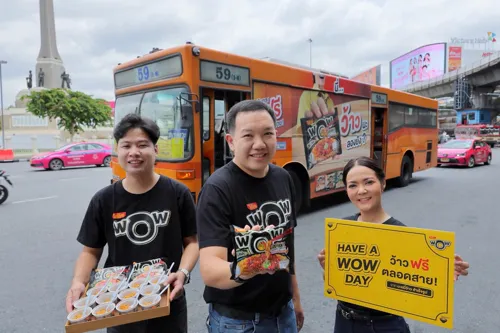
WaiWai WOW, a premium instant noodle brand under Thai Food Products Company, launched "WOW BUS" on 25 August as a mobile experiential marketing campaign. A converted public bus offers free rides and lets passengers sample all five noodle flavours (Korean spicy seafood, Japanese curry cheese, stir-fried pork, crispy chicken, and pork with black pepper). This direct engagement strategy aims to build brand awareness and create memorable experiences among consumers while gathering real-time feedback from target audiences.

 Stop running your company on Excel.