
Archive
August 31, 2026

▾ Hover for summary ▾ Tap for summary
Antidotes, a Thai premium fragrance brand founded in 2021, has scaled to over 100 million baht in annual revenue by positioning itself as a lifestyle brand rather than a luxury product. The company leveraged emotional branding (fragrance as identity/wellness), distinctive product design, compelling storytelling, and omnichannel strategy (retail flagship stores + e-commerce presence on Lazada with 30-50% higher basket sizes) to capture Thailand's 12.9 billion baht fragrance market growing at ~5.86% annually. Key differentiation: targeting "Masstige" (affordable premium) through quality and experience rather than price competition alone.
▾ Hover for summary ▾ Tap for summary
Thailand's Insurance Commission (OIC) has issued clear regulatory guidance distinguishing permissible content—general insurance education, personal reviews, and shared experiences—from regulated sales activity. Influencers and content creators who recommend or target specific individuals for insurance products in exchange for variable compensation must obtain an insurance agent/broker license. Hired promotional content requires written contracts with fixed (not volume-based) compensation, pre-approval of all materials, and clear disclosure of sponsorship and licensing status. Non-compliance puts creators at legal risk and targets emerging digital insurance marketing practices.

▾ Hover for summary ▾ Tap for summary
US military conducted first strike on Iran in over a month, targeting rocket launch facilities and intercepting mine-laying operations in the Hormuz Strait. The escalation drives oil prices up 1.4% (Brent crude to $89.30/barrel) and threatens to raise energy costs globally. Trump administration pivots back to military action after weeks of economic pressure, with Treasury preparing additional sanctions on Iranian partners including China and secondary bank sanctions—critical for monitoring energy market impacts on Thai importers and SMEs dependent on oil prices.
▾ Hover for summary ▾ Tap for summary
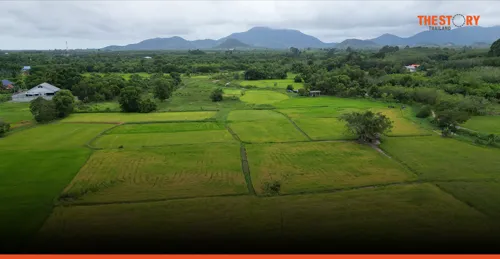
SCGC and the Baan Maab Chanthorn community developed a scalable water-resource management model combining forest restoration (28,000 rai reforested), 7,600+ water-retention barriers, and data-driven allocation rules. The "2 Build 2 Keep" approach (building knowledge & rules; preserving water & data) increased annual stream yield by 14+ million cubic meters and enabled farmers to survive severe droughts. This demonstrates a replicable template for SME-scale water security and agricultural resilience in drought-prone regions.

 Empower businesses to thrive in the digital age.
▾ Hover for summary ▾ Tap for summary
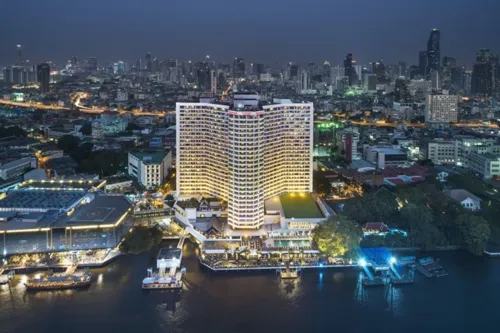
ROH issued a clarification to the SET regarding its stalled buyback of Royal Orchid Sheraton Riverside hotel (4.873 billion baht) following a Stock Exchange query about the missed July 14 deadline. The company confirmed good faith intent to repurchase and disclosed that a financial partner (experienced fund) signed a preliminary term sheet on August 14 and is currently in due diligence phase on asset status and internal approvals. The hotel continues operating normally, with ROH pledging further disclosure when material progress occurs. Key contingencies remain: satisfactory due diligence, requisite approvals, and final contract negotiation.

▾ Hover for summary ▾ Tap for summary
Thailand's TH-AI Passport platform (AiPASS) launched to distribute 5 million free premium AI access rights, but registration hit only 1.35 million by day one. The Digital Ministry targets 5 million users to raise Thailand's AI adoption rate from global average (17.8%) to 23%. If uptake stalls, officials plan to mobilize local government, education ministry, and universities for wider grassroots outreach, particularly to underrepresented elderly and remote communities.

▾ Hover for summary ▾ Tap for summary
Songkhla Chamber of Commerce is proposing 4 strategic projects to the Cabinet's mobile meeting (Aug 31–Sep 1, 2025): (1) 25,000 million baht soft-loan program for Hadyai flood recovery, (2) UNESCO-backed "Songkhla World Table" food-tourism initiative (40M baht), (3) deepwater port dredging to boost container throughput from 150K to 450K TEUs/year (253M baht), and (4) comprehensive SEA environmental/strategic planning framework. The proposal aims to position Songkhla as ASEAN's logistics hub and diversify the southern border economy through tourism, trade, and infrastructure.

▾ Hover for summary ▾ Tap for summary
Airbus is elevating Thailand's role as a regional digital and aerospace engineering hub by establishing Bangkok as the Asia headquarters for Skywise (its digital division) and deploying it as the world's sole software testing base. The company is scaling up from ~200 to ~240+ high-skilled staff, with ambitions to develop local aerospace supply chain expertise, MRO capabilities, and sustainable aviation fuel production—signaling strong confidence in Thai talent and positioning the country for higher-value aerospace work.
 Your real translator for LINE and Discord.
▾ Hover for summary ▾ Tap for summary
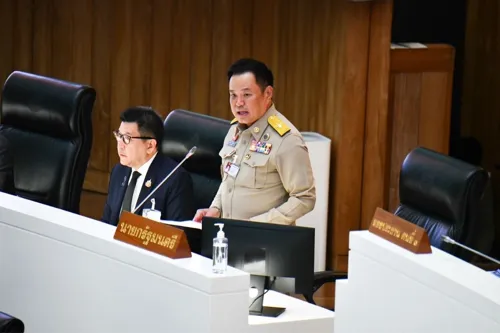
Thailand's PM presented an emergency decree (พ.ร.ก.) to the Senate authorizing 400 billion baht in borrowing to address energy crisis impacts and fund the energy transition. The government emphasized the funds are urgent, necessary, and will not breach the 70% public debt ceiling. The decree has already been enacted and validated by the Constitutional Court as constitutional. This is a macroeconomic measure targeting SME and agricultural relief, energy security, and a shift toward renewable sources.
▾ Hover for summary ▾ Tap for summary
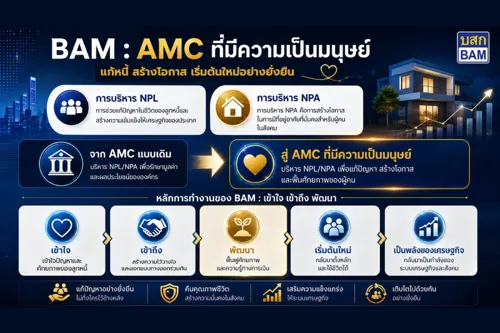
Bangkok Asset Management (BAM) is reframing its debt-management model from pure asset recovery to "opportunity management," emphasizing debtor rehabilitation over collection. The "Start Fresh with BAM" program offers distressed borrowers relief via 70% lump-sum settlement or interest-free principal repayment over three years (covering 7,000+ borrowers, ~10 billion baht in debt). Beyond NPL management, BAM is also using non-performing assets to enable affordable housing access. This represents a shift toward human-centered AMC operations that prioritize long-term economic stability and dignity over short-term recovery metrics.

▾ Hover for summary ▾ Tap for summary
Thailand's Excise Department is negotiating EV tax policy adjustments with the Finance Ministry, aiming to position Thailand as an EV export hub ("Detroit of Asia of EVs"). Three key principles guide the approach: avoiding import dependency by attracting foreign investment in local production; scaling domestic EV manufacturing for exports; and increasing local content with higher value-added components—sourced domestically or as assembled parts—rather than just importing finished vehicles. This reflects a shift from Thailand's 30-year legacy as an ICE vehicle export leader toward capturing EV manufacturing leadership.

▾ Hover for summary ▾ Tap for summary
Fed chair's hawkish Jackson Hole remarks have raised market expectations of a September rate hike to 57%, tightening global financial conditions and pressuring Thai equities. The SET index is forecast to trade sideways-to-down within 1,575–1,590 points today. Analysts recommend selective stock picking focused on companies with strong H2 earnings momentum, while domestic political uncertainties (Constitutional Court verdict on ballot QR codes on 28 September) may add volatility. Medium-to-long-term strategy favors value stocks and domestic plays benefiting from local economic recovery.

 Want to buy or sell a business?
▾ Hover for summary ▾ Tap for summary
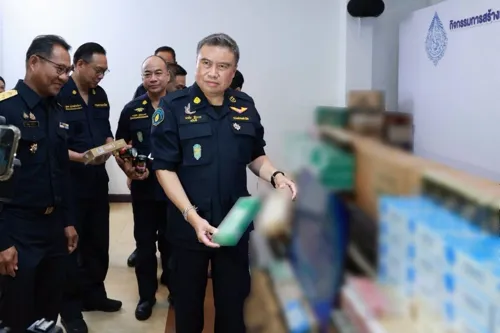
Thailand's Excise Department is restructuring tobacco tax from a two-tier system (25% and 42%) to a single-tier rate, with policy clarity expected by October 2026. The reform aims to recover 10,000–20,000 million baht in annual tax revenue lost to consumers clustering in the lower tax bracket, while eliminating the export tax exemption that enabled re-imported tobacco to re-enter the domestic market. Smuggled tobacco remains the top illicit goods enforcement target, with 35,739 cases in the first 11 months of fiscal 2026.

▾ Hover for summary ▾ Tap for summary
Thailand faces mounting economic risks from climate change—GDP could drop 11-14% in worst scenarios, labor productivity could fall 14%, and agriculture could lose 10,000-80,000 million baht annually. The transition to low-carbon economy is not optional but essential to reduce future damage. The Climate Finance Network reveals a critical imbalance: mitigation projects (renewable energy, transport) have attracted 2 trillion baht in investment, 67% from private sector seeking returns. Adaptation projects (water management, flood defenses) lag far behind at only 280 billion baht because they yield no direct revenue for business. The gap highlights a core challenge for SMEs and policymakers: how to mobilize private capital and blended finance for climate-resilient infrastructure that protects economic growth.

▾ Hover for summary ▾ Tap for summary
The Thai PM confirms allocation of 200 billion baht from a 400 billion baht emergency loan decree (passed by parliament Aug 26) for energy transition and crisis mitigation. The remaining 200 billion baht tranche is expected to deploy quickly per Finance Ministry timeline. A key cabinet meeting in Songkhla will address southern region development, tourism, transport, and disaster preparedness—combining economic stimulus with infrastructure readiness.
▾ Hover for summary ▾ Tap for summary
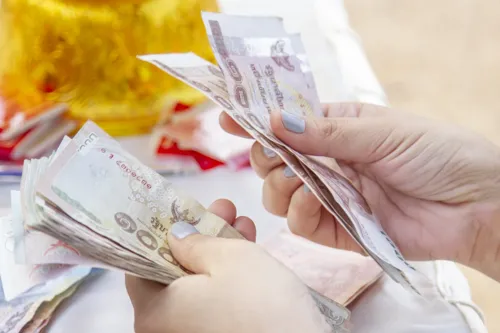
Thai baht weakened to 33.15 per USD at opening on 31 Aug 2026, down from Friday's close of 32.95. The weakness is driven by USD strength following Fed Chair Powell's signals of potential interest rate increases if inflation doesn't clearly decline toward the 2% target. CME FedWatch shows 57.5% odds of a 0.25%+ rate hike in September (up from 35%). Key monitoring points include Thai current account data, foreign fund flows, Middle East developments, and critical US economic indicators (employment, ISM/PMI, jobless claims). Foreign investors sold 12.2 billion baht in Thai equities during 24–28 Aug.
 Together GoWeGo! Ferry tickets in Thailand.
▾ Hover for summary ▾ Tap for summary
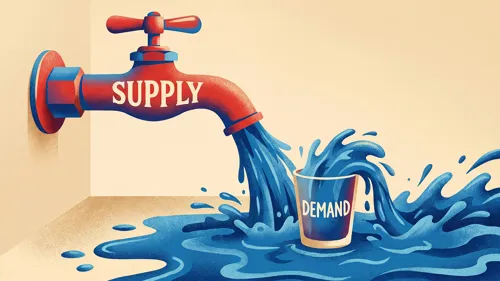
The article explores how AI has successfully addressed cost challenges in deployment and operations, but the real bottleneck is now driving sufficient market demand for AI solutions. For Thai SMEs, this signals that cost barriers to AI adoption have lowered, but success requires understanding customer needs and building genuine demand rather than just assuming adoption will follow.

▾ Hover for summary ▾ Tap for summary
GDH Entertainment is navigating Thailand's challenging domestic film market—where box office revenue has collapsed from 5,000 million baht pre-COVID to 2,800–3,000 million today, while production budgets have jumped 30% to 70 million baht per film. The studio targets 556 million baht in 2025 revenue (+74% YoY) by pivoting to international distribution (50% of revenue vs. 20–25% historically), international remakes, co-productions, and IP monetization through games, education, and merchandise partnerships with brands like Double A and 7-Eleven.

▾ Hover for summary ▾ Tap for summary
Thai Credit Bank, a microfinance lender focused on SMEs, plans to grow its credit portfolio to 200 billion baht in 2026 (double-digit growth) while maintaining NPL ratio below 4.5%. The bank is countering Virtual Bank competition through its network of 500 branches and relationship managers who understand local merchants better than purely digital systems. Key initiatives include new debt consolidation products, digital transformation on cloud infrastructure, and a target ROE of 20%.

▾ Hover for summary ▾ Tap for summary
Gastech 2026 in Bangkok (Sep 14-17) positions Thailand as a regional energy dialogue hub amid projected 25-30% growth in Asian energy demand over 10-15 years and 60% electricity demand surge driven by urbanization, AI, and data centers. The article emphasizes that energy security—balancing stable supply, affordability, decarbonization, and grid reliability—is now a core competitive factor for countries attracting industries, shifting the focus from traditional supply-side concerns to managing surging electricity demand alongside geopolitical pressures and climate commitments.

 Stop running your company on Excel.