
Archive
September 2, 2026
▾ Hover for summary ▾ Tap for summary
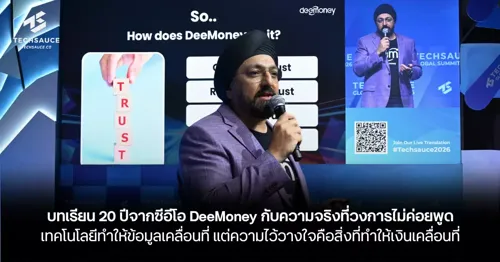
DeeMoney founder Ashwin reveals a counterintuitive 20-year insight: technology moves data, but trust moves money. The article debunks myths about global payment systems—there's no single elegant cross-border network, only local systems stitched together. Success in payments requires four multiplied elements: technology, regulation, liquidity management, and trust. Legacy systems like Hawala ($300B annually) persist because they understand trust trumps innovation. Fintechs often fail by overestimating technology's role and underestimating liquidity management and regulatory complexity.
▾ Hover for summary ▾ Tap for summary
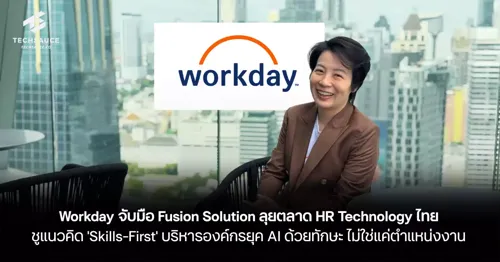
Workday and Fusion Solution announced a partnership to expand HR technology solutions in Thailand, focusing on the "Skills-First Organization" approach. Rather than hiring externally, this model helps companies unlock hidden employee skills—one case study found 40% of open positions could be filled internally. The strategy leverages Workday Skills Cloud to create a real-time skills inventory, enabling better talent allocation and employee growth paths in the AI-driven workplace.

▾ Hover for summary ▾ Tap for summary
OpenAI's new Astra AI model demonstrates significantly improved vulnerability detection capabilities—achieving 100% on the ExploitBench test and identifying two zero-day exploits—while also strengthening refusal safeguards to 91.5% accuracy (vs. GPT-5.6 Sol's 59%). The model will launch soon with restricted cybersecurity features available only to approved organizations. This represents a key advancement in AI safety controls but may limit broad developer access to security testing capabilities.
▾ Hover for summary ▾ Tap for summary
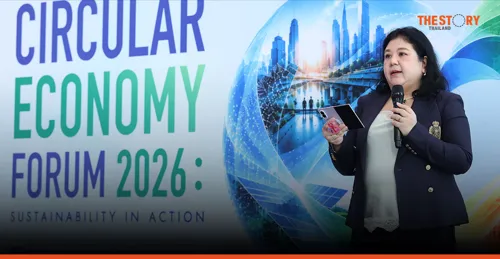
Unilever presented its circular economy strategy ("Closing the Loop") at the Circular Economy Forum 2026, positioning sustainability as core to business operations rather than a standalone CSR initiative. The company is addressing Thailand's plastic waste challenge—27 million tons produced annually but only 25% recycled—by integrating design-phase thinking that extends material value throughout product lifecycles. This aligns with Unilever's Net Zero 2039 commitment and offers operational efficiency lessons for Thai SMEs managing resource constraints.

 Empower businesses to thrive in the digital age.
▾ Hover for summary ▾ Tap for summary
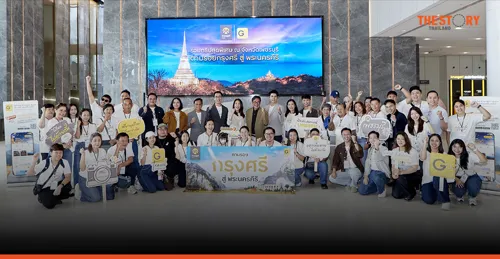
Krungsri Auto, Thailand's auto financing leader, launched "GO Travel UNESCO Caravan" — a customer loyalty program combining heritage tourism in Phetchaburi with digital travel tools. The initiative reflects broader fintech strategy: moving "beyond financing" to lifestyle engagement through their GO by Krungsri Auto app, which now features route planning, hotel booking, EV charging networks, and 120+ partner discounts. Relevant for SMEs as it shows how financial services are bundling digital travel platforms and ecosystem partnerships to deepen customer retention and expand into adjacent services (tourism, EV infrastructure).
▾ Hover for summary ▾ Tap for summary
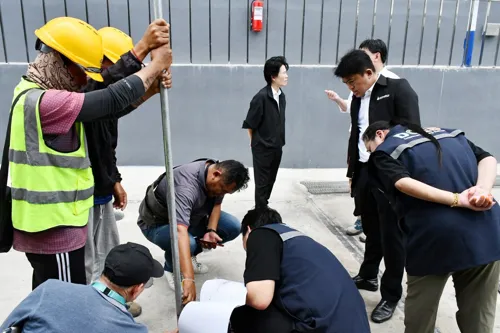
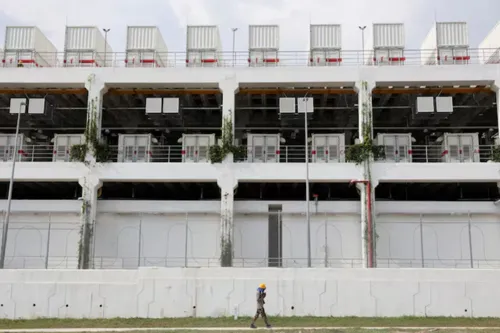
Thailand's Energy Ministry inspected a data center in Bangkok's Rama 9 area and discovered approximately 200,000 liters of diesel stored for backup power generation without proper authorization. Following complaints from residents and nearby businesses about strong fuel odors causing health complaints, authorities ordered the immediate removal of all fuel and will file criminal charges on September 3 under the Fuel Control Act. Penalties include up to 2 years imprisonment and/or fines up to 200,000 baht. The ministry has signaled a clear policy: no unauthorized fuel storage for data center emergency generators will be permitted in densely populated urban areas.
▾ Hover for summary ▾ Tap for summary
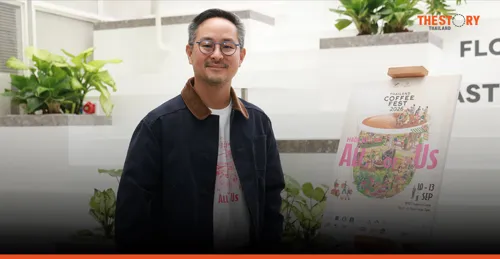
Thailand's specialty coffee market is transitioning from competing on volume to quality and value, with prices climbing from 1,000 baht/kg a decade ago to recent highs of 33,000 baht/kg. The 11th Thailand Coffee Fest (Sept 10–13, 2026, Bangkok) aims to position Thailand as a global coffee destination by connecting farmers, processors, roasters, and consumers across the value chain. While the Thai beverage market is forecast to grow to 66,000–67,000 million baht in 2026, the constraint is supply: only ~4,000 tonnes of specialty arabica from 15,000 tonnes annual production. Growth strategy must focus on quality and margin per kg rather than volume, supported by farmer education and international promotion.
▾ Hover for summary ▾ Tap for summary
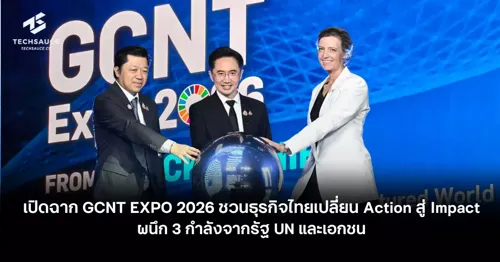
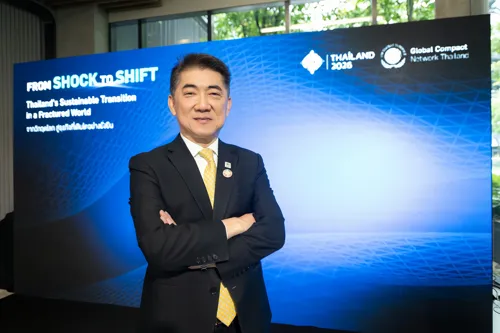
GCNT EXPO 2026 (Sept 2-4, 2026) brings together state, business, UN, finance, academia, and civil society leaders to address Thailand's sustainable transition amid global shocks. Key focus: (1) converting sustainability pledges into measurable results; (2) mobilizing private capital to close the $4T annual SDG funding gap; (3) scaling large enterprises' innovations to strengthen SMEs—which comprise most Thai businesses but lack affordable capital, tech, and expertise. Deputy PM emphasizes "Nature Positive" development, circular economy linked to livelihoods, and science-led ecosystem restoration as critical priorities for disaster-hit communities.
 Your real translator for LINE and Discord.

▾ Hover for summary ▾ Tap for summary
SCB 10X's CIO reveals a significant shift in AI venture funding: VCs are moving away from backing any "smart AI" to demanding sustainable, profitable business models with real unit economics. Key criteria now include durability (resistance to commoditization), proprietary ownership (data, workflows), compounding effects (network benefits), and production readiness (safety, scalability). Being AI-native is no longer a differentiator—it's the baseline. Most critically, investors are focusing on "Control Layer" infrastructure (safety, observability) as AI shifts from content generation to autonomous execution, creating an entirely new investment thesis for founders.

▾ Hover for summary ▾ Tap for summary
Pimalai Resort on Koh Lanta is pivoting from capacity growth to premium pricing strategy, aiming for 600M baht annual revenue despite maintaining flat room inventory. Green Zone regulations restricting large commercial development, combined with rising demand from direct international flights and a shift toward luxury positioning, enable 3.5–5% rate increases. The strategy reflects how Thai hospitality operators can drive revenue growth through yield optimization and service upgrades rather than physical expansion, with 50 rai of beachfront land deliberately left undeveloped pending regulatory clarity.

▾ Hover for summary ▾ Tap for summary
Sansiri, Thailand's largest housing developer, is launching 12 new projects worth 15.3 billion baht in the second half of 2026, targeting premium single-family homes and townships. The flagship "Sathit Siri Great Don Mueang" luxury development (15–40 million baht) aims to capitalize on strong demand for horizontal real estate, which remains resilient due to low-risk phased construction, premium buyer credit profiles, and government stimulus. Year-to-date sales reached 15 billion baht (60% of annual target), with the company deploying a four-pronged strategy: expanding large residential communities, launching new luxury designs in three strategic locations, filling supply gaps in sub-10-million segments, and entering provincial markets. This signals confidence in Thailand's residential market recovery and consolidation among large players.
▾ Hover for summary ▾ Tap for summary
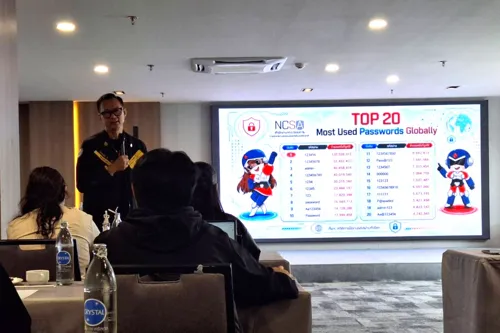
Thailand's National Cybersecurity Committee (NCSA) conducted a training workshop for media organizations on cybersecurity and open-source intelligence tools for digital journalism. NCSA Secretary General emphasized that cyber threats—including data breaches, hacking, misinformation, and disinformation—are now pervasive risks affecting media outlets and the public. He distinguished NCSA's protective mandate (securing critical infrastructure) from law enforcement's criminal investigation role, and highlighted the global spread of false information (both unintentional misinformation and deliberate disinformation) as a critical emerging threat that requires media literacy and fact-checking capacity.

 Want to buy or sell a business?
▾ Hover for summary ▾ Tap for summary
South Korea is investing 240 billion baht (through 2027) to build sovereign AI capabilities—including independent LLMs and semiconductor supply chains—while Thailand is spending 1.6 billion baht on the TH-AI Passport to provide free AI tool access to 5 million citizens. This reflects fundamentally different strategies: South Korea targets long-term technological ownership and leverage, while Thailand prioritizes rapid AI literacy and broad public access. For Thai SMEs, this highlights the distinct positioning of Thailand in the regional AI race and raises questions about long-term sustainability of access-based versus ownership-based approaches.
▾ Hover for summary ▾ Tap for summary
CPF (Charoen Pokphand Foods) showcased its sustainability initiative at GCNT Expo 2026 under the theme "Grow Together, Nourish the Future," emphasizing inclusive growth for its 1+ million supply chain partners and SME suppliers. The company highlighted the "Partner to Grow" program supporting Thai SMEs across five pillars—quality, cost efficiency, service, innovation, and sustainability—while sharing achievements including SBTi climate certification, 35% renewable energy usage, and initiatives reaching 60,000+ farmers and 223,000 students. For Thai SMEs, this signals major conglomerate commitment to structured capacity-building and supply-chain resilience amid global uncertainty.
▾ Hover for summary ▾ Tap for summary
Thailand is promoting rooftop solar adoption as a strategy to reduce exposure to volatile LNG import costs and build energy resilience.

▾ Hover for summary ▾ Tap for summary
Dyson enters the electric toothbrush market with CameraJet, a device featuring an in-mouth camera and AI-powered liquid dispenser designed to clean hard-to-reach interdental areas. After 6 years of R&D, the product combines a 100,000-pixel camera with machine learning to identify gaps and automatically dispense mouthwash via a cone-shaped nozzle. Priced at ~16,600 baht, it launches in the US from September 8, with optional app-controlled manual mode and proprietary foam-free formulations required to avoid interfering with the camera.
 Together GoWeGo! Ferry tickets in Thailand.
▾ Hover for summary ▾ Tap for summary
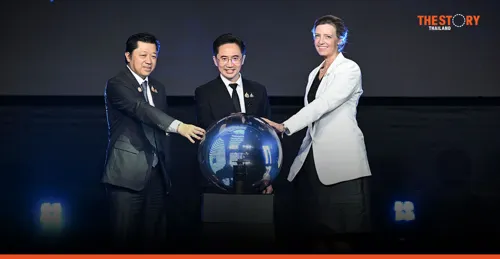
GCNT EXPO 2026 (September 2–4, 2026, Bangkok) convenes leaders across government, business, UN, finance, academia, and civil society to address how Thailand can transform global shocks—geopolitical conflict, climate change, technology disruption, trade instability, and rising costs—into sustainable economic, social, and environmental change. The expo emphasizes a shift from action and announcements to measurable impact; SMEs and communities must be co-creators, not just victims of change. Business investment, leadership commitment, and government systems must align to enable this transition equitably.

▾ Hover for summary ▾ Tap for summary
Udon Thani province is developing a bamboo pavilion for the World Horticulture Expo 2026, featuring 5 zones designed to promote bamboo as a high-value economic crop and sustainable material. The initiative, led by FTI Udon Thani, MTEC, and industry groups, focuses on the bamboo supply chain using BCG and ESG frameworks to achieve Net Zero emissions. The pavilion highlights modern wood processing technologies (GLULAM, CLT), biochar applications, and bio-plastic development, with a legacy plan ensuring reusability through art installations and donations to other agencies. Completion is planned for September 2026 with a budget exceeding one million baht.

▾ Hover for summary ▾ Tap for summary
Udon Thani's FTI and MTEC are unveiling a flagship "Bamboo Pavilion" at the 2026 World Horticultural Expo, designed across 5 zones to promote bamboo as a high-value economic crop and sustainable material for timber industry. The initiative integrates BCG Model, ESG principles, and carbon reduction targets through biochar, bio-plastics, and modern CLT/GLULAM technologies inspired by Isan architecture. The pavilion has a legacy plan for post-event reuse and sustainability, targeting completion by end of September with a budget exceeding 1 million baht. This effort bridges traditional Isan livelihoods with future business opportunities and environmental responsibility.
▾ Hover for summary ▾ Tap for summary
Thailand's Stock Exchange is reforming trading regulations with approval from its board and now awaits SEC sign-off (expected September–October 2026). Key changes include revised Uptick Rule for short selling, elimination of Dynamic Price Bands, new registration requirements for High-Frequency Trading (HFT), and removal of Minimum Resting Time restrictions. The exchange reports improved trading behavior after recent supervisory process updates that now share risk-flagged activity with all brokers rather than isolated warnings.

 Stop running your company on Excel.