
Archive
September 4, 2026

▾ Hover for summary ▾ Tap for summary
Thai stock market expected to edge higher today as U.S. bond yields ease and Fed expectations shift toward rate hold in September; trading range 1,570–1,590 points. Key market drivers: U.S. nonfarm payrolls data tonight and domestic policy catalyst (Data Center Board meeting on regulatory framework). InnovestX recommends "Selective Buy" across four themes—Policy Play, Consumption Play, Laggard Play, and High Dividend Play—with BDMS (hospital/healthcare benefiting from 8% July revenue growth) and TU (seafood demand recovery, tariff tailwind) highlighted as top picks today.

▾ Hover for summary ▾ Tap for summary
GCNT (Global Compact Network Thailand) is positioning sustainable development through its upcoming GCNT Expo 2026, aligned with the IMF-World Bank Annual Meetings to be hosted in Thailand. The organization emphasizes moving from individual silos to integrated collaboration across public, private, NGO, civil society, and academic sectors. With over 100 surveyed organizations now integrating SDGs into business strategy, GCNT is driving capacity-building through education initiatives (1,200+ applicants for a new sustainability management curriculum) and establishing ~100 Learning Centers nationwide. Key priorities include expanding market mechanisms to benefit SMEs, farmers, and communities in the sustainable transition while developing ethical technology and innovation approaches.
▾ Hover for summary ▾ Tap for summary
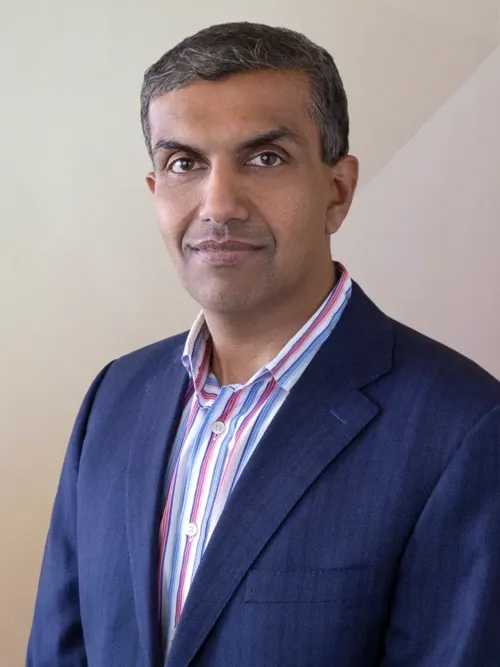
Adobe names Anil Chakravarthy, an internal executive leading Customer Experience Orchestration (CX), as new CEO effective December 1, 2026, replacing 18-year incumbent Shantanu Narayen. Chakravarthy brings product leadership experience from roles at Informatica, McKinsey, and Symantec. The transition signals potential strategic shifts in Adobe's CX platform and marketing automation businesses, relevant for tech-dependent Thai SMEs using Adobe's enterprise tools.

▾ Hover for summary ▾ Tap for summary
Mental health has emerged as a critical organizational performance metric, particularly as Gen Z employees prioritize psychological wellbeing alongside compensation. The article outlines three hidden workplace behaviors masking mental health issues—the "smile mask," over-resilience (especially among C-level), and endless goal-chasing—and argues that sleep quality is the most accurate indicator of employee mental wellness. With 70% of sleep disorders rooted in psychological stress rather than neurological dysfunction, organizations must distinguish between normal sadness and clinical depression, implement proper psychological support infrastructure (particularly training HR teams), and recognize that stress cascades from leadership downward through company culture. Thailand SME leaders should establish mental health protocols and employee support systems to prevent burnout and improve retention.

 Empower businesses to thrive in the digital age.

▾ Hover for summary ▾ Tap for summary
Thailand's PM convened the first Data Center Policy Committee meeting to establish clear legal frameworks and regulate the sector's rapid growth. Key concerns include speculation on electricity permits (nearly 20,000 MW in pending requests—equivalent to national consumption), unlicensed construction, and resource strain. The PM emphasized the need for balanced growth with mandatory green energy standards, technology transfer, and skilled workforce development, positioning Thailand as a genuine regional digital hub rather than just a facility location.

▾ Hover for summary ▾ Tap for summary
Bangkok's Governor Chatcai Sittipant outlined plans to revise urban zoning laws and strengthen environmental controls on data centers, which have grown as standalone facilities beyond their traditional office-based deployment. Currently, only 3 of 6 data centers in Bangkok have permits—operators applied under warehouse classifications because data centers lack legal definitions. The city plans to update building control laws and environmental impact assessment (EIA) requirements, with discussions ongoing on minimum size standards, zoning appropriateness, and operational oversight. This regulatory framework update signals opportunity for compliant SMEs but requires close monitoring of permitting changes.

▾ Hover for summary ▾ Tap for summary
Global gold rallied to test $4,500/oz following Fed official Christopher Waller's signal supporting rate hold in September, reducing market expectations of a rate increase from 63.2% to 50.4%. Thai domestic gold jumped 600 baht (to ~69,750 baht/baht-weight) as a weaker dollar and lower US bond yields reduced the opportunity cost of holding bullion. Key drivers include upcoming US inflation (CPI) and nonfarm payrolls data, with gold facing resistance at $4,490–$4,540.

▾ Hover for summary ▾ Tap for summary
Thai shrimp farmers' alliance opposes proposed relaxation of import inspection procedures, citing risks of disease introduction and quality degradation. With Ecuadorian shrimp undercutting Thai prices by ~70 baht/kg during a recovery period, farmers propose conditional import framework including mandatory domestic purchase quotas, price floors, market segregation, and tri-party oversight. The industry also seeks urgent resolution of Malaysia's ban on Thai shrimp (in effect since June 1).
 Your real translator for LINE and Discord.

▾ Hover for summary ▾ Tap for summary
NECTEC, Thailand's national electronics and computer technology center, marked its 40th anniversary by announcing three frontier technology labs—Quantum, Space Communication, and Physical AI—to build national readiness over the next 10–20 years. The event (NECTEC ACE 2026) gathered over 3,000 participants and more than 30 government partners. Leadership emphasized that Thailand must develop indigenous deep-tech capabilities beyond import-dependence, requiring both high-skill workforce development and national research labs to absorb private-sector risk and tackle real-world problems.

▾ Hover for summary ▾ Tap for summary
Thailand's Civil Service Commission is preparing legislation to extend retirement ages for state enterprise boards and CEOs—raising director retirement from 65 to 70 years and CEO/MD retirement from 60 to 65 years—to align with an aging society. The proposal, scheduled for Cabinet consideration within Q3–Q4 2026, reflects private-sector precedent and skill retention arguments, though it requires legislative amendments and public consultation. While potentially controversial in parliament, it signals structural shifts in SOE governance and workforce policy that could affect corporate planning and succession.
▾ Hover for summary ▾ Tap for summary
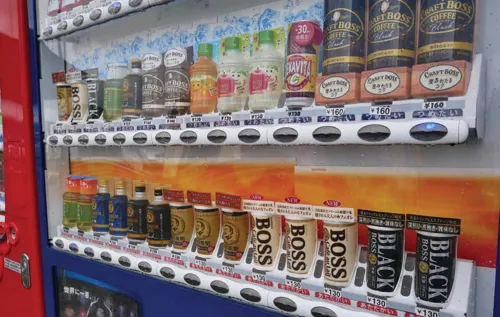
Japan is launching seed-free coffee products in 2026, marking a fifth wave of coffee innovation. Major beverage companies—Asahi, Coca-Cola Japan, Suntory, and Ajinomoto—are commercializing alternatives using plant-based ingredients, fermented agricultural waste, and lab-engineered flavor compounds to replicate taste and caffeine without coffee beans. This addresses climate vulnerability in coffee supply chains and represents a significant pivot toward alternative-protein and biotech-driven consumer staples, relevant to Thai F&B and tech-enabled food manufacturing players.
▾ Hover for summary ▾ Tap for summary
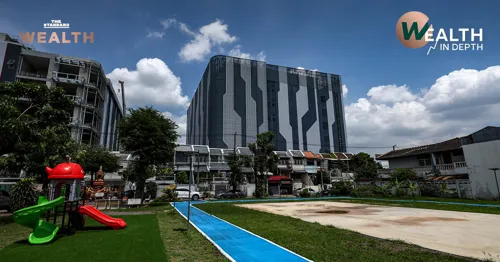
Data center expansion across Asia-Pacific is accelerating due to AI demand, with capacity expected to triple by 2030. However, Thailand—like Australia and Malaysia—faces mounting community resistance (NIMBY), resource constraints (power, water), and "ghost demand" risks. Key challenge: how to attract AI investment without shifting infrastructure and energy costs onto citizens. Thailand will determine policy direction at a September 4 board meeting, with 2026 Power Development Plan crucial for managing actual demand.

 Want to buy or sell a business?

▾ Hover for summary ▾ Tap for summary
NVIDIA has officially acquired Hugging Face, a major open-source AI model hub, for $12.93 billion (~430 billion baht). Hugging Face will continue operating as an open platform with full developer freedom—no forced lock-in to NVIDIA hardware or services. The deal was initiated by Hugging Face CEO Clément Delangue to secure capital and resources for scaling the AI ecosystem. Notably, the deal price encodes Hugging Face's smiling emoji (🤗) in hexadecimal (U+1F397 = 129303), a playful detail reflecting the acquisition's collaborative spirit.
▾ Hover for summary ▾ Tap for summary
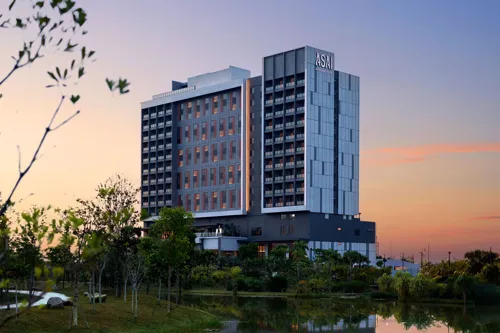
Thai hospitality giant Dusit Thani is launching its lifestyle hotel brand 'Akyra' into Malaysia on September 15, 2026, with a 280-room property called Akyra Kamuda Cove. The hotel emphasizes local cultural experiences and community connection ("Live Local" concept). This is Dusit's second Malaysian property and marks the brand's first expansion outside major urban centers, positioning the company to capture growing demand for experiential travel in Southeast Asia.

▾ Hover for summary ▾ Tap for summary
Google has launched WeatherNext 3, an advanced AI model for weather forecasting. While this represents progress in AI applications, the relevance to Thai SMEs is limited unless they operate in agriculture, logistics, or climate-dependent sectors where improved forecasting could provide operational advantages.

▾ Hover for summary ▾ Tap for summary
Southeast Asian founders face challenges in pitching to US investors and may need to refine their messaging and approach to resonate with Western venture capital audiences. This speaks to broader competitiveness and fundraising dynamics for the region's tech ecosystem.
 Together GoWeGo! Ferry tickets in Thailand.

▾ Hover for summary ▾ Tap for summary
Bitget, a major crypto exchange, is reportedly in discussions with BlackRock to expand cryptocurrency services across Asia. This signals growing institutional interest in crypto adoption in the region and suggests potential product launches or partnerships. For Thai SMEs in fintech, this indicates accelerating crypto market maturation in APAC, though regulatory clarity remains uncertain.

▾ Hover for summary ▾ Tap for summary
Thailand's draft Climate Change Act establishes systematic low-carbon economy mechanisms (carbon reporting, cap-and-trade, carbon tax, climate fund) that will reshape business competition. SMEs must shift mindset from regulatory compliance to competitive advantage—starting by measuring carbon emissions across supply chains, then investing in efficiency gains and green technologies. The climate fund is critical for SMEs lacking capital; early adopters will outpace laggards, but carbon reduction success depends on entire supply chain collaboration, not individual firms.

▾ Hover for summary ▾ Tap for summary
Major developers are competing intensively in Bangkok's premium Thonglor BTS area, with A Asset planning a 12 billion baht luxury mixed-use project, Ananda launching the Porsche Design Tower, and multiple high-end residential and hotel projects underway. Despite soft market conditions, large capital continues flowing into the area, driven by its central business location, expatriate density, and lack of large green spaces in comparable projects. Land prices exceed 1 million baht per sq.m., up 3.2% year-over-year in the Sukhumvit-Ekkamai zone.

▾ Hover for summary ▾ Tap for summary
Nvidia has agreed to acquire Hugging Face, a major open-source AI/ML platform, for $13 billion. This deal signals Nvidia's aggressive expansion into AI software and the broader machine learning ecosystem beyond chips, consolidating control over key infrastructure that Thai tech companies and SMEs rely on for AI development and deployment.

 Stop running your company on Excel.