
Archive
September 26, 2026

▾ Hover for summary ▾ Tap for summary
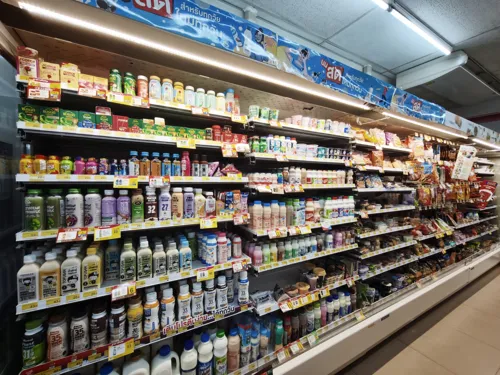
CP ALL is rapidly restocking 7-Eleven outlets in flood-affected regions with essential goods, food, and drinking water. Where road access permits, teams are continuously delivering and shelving supplies; in areas with restricted access, the company is monitoring conditions closely to deliver as soon as feasible, prioritizing staff and public safety. This demonstrates 7-Eleven's role as a neighborhood convenience provider during crises.
▾ Hover for summary ▾ Tap for summary
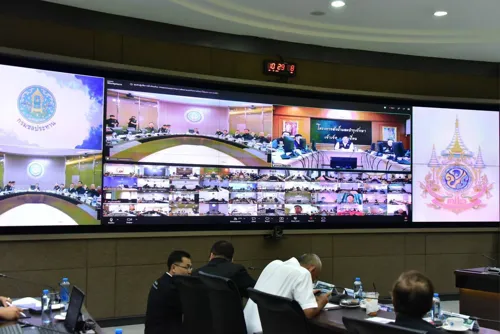
Bangkok experienced over 300mm of cumulative rainfall from 24–26 September, causing major canals to overflow and affecting 13 key roads. Over 4,200 residents have been evacuated to 233 temporary shelters; 52,000 households are impacted. The PM chaired an online crisis meeting from London, ordering all agencies to coordinate relief efforts, allocate emergency budgets, streamline communication, and deploy staff proactively. Rain is expected to ease from 27 September onward.
▾ Hover for summary ▾ Tap for summary
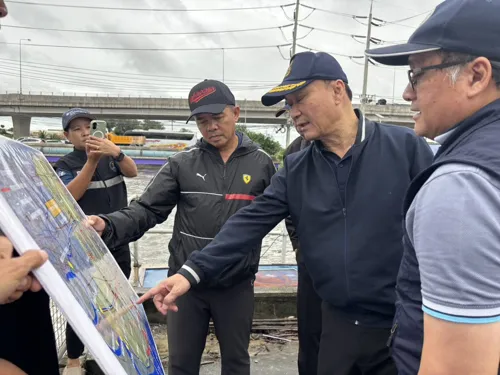
Deputy PM Songsak toured Samut Prakan's water management response on September 26, acknowledging that rainfall exceeded forecasts (over 100mm in some areas) and the situation escalated from "manageable" to "unmanageable." Canal systems are overwhelmed, hindering water drainage to the sea. Authorities have prepared contingency measures but face a critical challenge: excess rainfall and full canals prevent effective water circulation and pumping. The deputy PM rejected online claims of 'mega-disaster' status, asserting current conditions will not match 2011 severity.
▾ Hover for summary ▾ Tap for summary
7-Eleven (CPALL) is accelerating product delivery and restocking across stores to help customers access essential items during flooding. The company emphasized its commitment to serve customers wherever they are, positioning convenience stores as critical infrastructure during emergencies.

 Empower businesses to thrive in the digital age.
▾ Hover for summary ▾ Tap for summary
Thailand's Agriculture Minister has activated 24-hour water management operations across 21 flood-affected provinces, capping Chao Phraya discharge at 2,000 cubic metres/second using a three-stage strategy (hold-regulate-release). Four main reservoirs in the basin are at 70% capacity. The government is deploying 500+ mobile pumps nationwide and reopening the shortcut Klong Lat Pho canal to Bangkok Bay to rapidly drain floodwaters. Officials expect this year's flooding to remain manageable and less severe than the 2011 crisis.

▾ Hover for summary ▾ Tap for summary
The Government Housing Bank (ธอส.) announced seven emergency relief measures to support customers affected by flooding in late September 2026. Measures include payment suspension (3–6 months), 0% interest rates, repair loans up to 300,000 baht at 1–1.99% for 5 years, reconstruction loans up to 2 million baht with 0% for 3 months then 2% for 2 years, debt restructuring for NPL borrowers at 0–1% interest, and expedited insurance claims. These targeted interventions directly reduce financial hardship for homeowners and SME borrowers in disaster-affected areas.
▾ Hover for summary ▾ Tap for summary
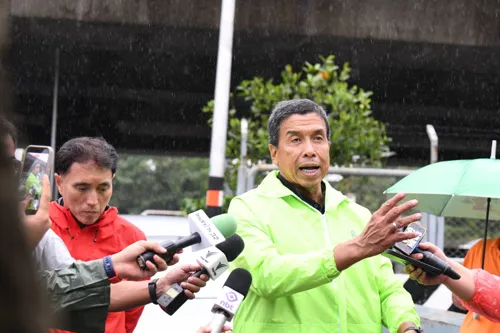
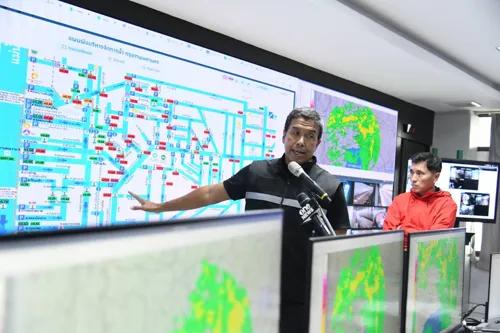
Bangkok's Governor Chatchatchai reported that floodwaters have stabilized as of 26 September following heavy downpours (100–300 mm accumulated rainfall since 24 September). Low-pressure systems are moving north/west, reducing rain pressure; the city expects rainfall to taper by evening and water to drain within 2–3 days if no new rain arrives. Full-capacity drainage (1,200 m³/s) is underway across tunnels and riverside pump stations. 233 shelter centers (15,000 capacity) are active with 981 residents already accommodated; no food shortages reported. Five major canals remain critical (Premchakon, Lad Prao, Saensaep, Prawet Burirom, Thawi Wattana), affecting 93 roads across central Bangkok.
▾ Hover for summary ▾ Tap for summary
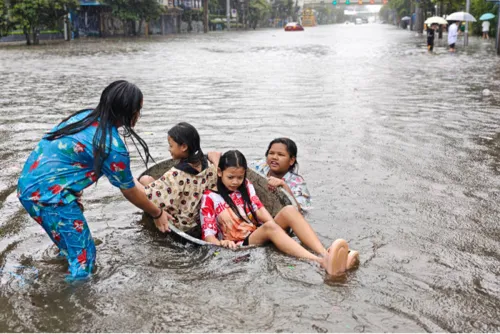
Bangkok experienced severe flooding on September 26, with 487mm of rain recorded since the start of September—82% above the 30-year average. All 50 districts were declared disaster areas to accelerate flood response efforts. This impacts residents, motorists, and homeless populations, disrupting business and daily operations across the city.
 Your real translator for LINE and Discord.

▾ Hover for summary ▾ Tap for summary
Vietnam will relax Economic Needs Test (ENT) requirements for foreign retailers opening second and subsequent branches, effective October 18, 2026. This stems from CPTPP obligations to exempt certain countries like Japan. Major retailers including AEON, FamilyMart, and FujiMart plan significant expansion—AEON targets 300 supermarkets by February 2031. The relaxation addresses longstanding bottlenecks that delayed foreign retailer branch openings; however, some Japanese firms remain cautious about full implementation.

▾ Hover for summary ▾ Tap for summary
Thailand faces a critical longevity challenge as the elderly population will rise from 17% (2016) to 29% (2032), while healthspan–the period of healthy living–lags lifespan by ~11 years. Insurance companies are repositioning from product sales to building "longevity ecosystems" integrating life, health, and wealth-span solutions, recognizing that 30% of Thais lack retirement savings and risk outliving their funds. The shift requires rethinking retirement age, upskilling workers, and coordinating insurers with healthcare and long-term care providers.

▾ Hover for summary ▾ Tap for summary
Thailand's Tourism Minister Surasak Phandcharoenworrakul has issued urgent directives to all tourism ministry units to coordinate care, provide assistance, and prioritize safety for tourists affected by heavy rainfall and flooding. Response measures include 24/7 operations at Suvarnabhumi Airport assistance centers, the Tourism Police hotline 1155, and the Tourist Assistance Center (TAC). Coordination with hotels, accommodations, and tourism operators is ongoing to manage flight cancellations, accommodate stranded tourists, and help travelers adjust travel plans with accurate information.

▾ Hover for summary ▾ Tap for summary
Thai Prime Minister Anutin is accelerating his return from London, departing 2 hours early (13:00 local time) to arrive in Thailand by 08:00 on 27 September to immediately take command of the national flood response. Deputy PMs and responsible ministers are coordinating across agencies and local authorities for evacuation warnings and relief efforts, with the Bangkok Governor leading city-level operations and technical agencies providing equipment and personnel support.

 Want to buy or sell a business?

▾ Hover for summary ▾ Tap for summary
Deputy PM Ekniti led a field inspection in Ayutthaya province to coordinate proactive flood management along the Chao Phraya River. The government is implementing a "fishbone" water distribution strategy to divert water from both sides of the main river channel, protecting critical sites like temples and industrial parks. Military-grade flood barriers (1.9m high) and automated pump systems have been installed. All agencies must monitor water volume continuously, prepare evacuation routes and safe zones, and prioritize vulnerable populations—the focus is prevention before impact rather than reactive response.

▾ Hover for summary ▾ Tap for summary
Thai President Foods (Mama instant noodles producer) executive confirms that sudden flooding alerts on 26 September triggered panic buying, causing temporary shortages of meat and fresh produce in retail—but emphasizes this is demand-side panic rather than supply crisis. Factory output continues normally with adequate raw materials; retail distribution centers have 3–4 days of stock; and impact is expected to resolve within 2–3 days. Issue stems from delayed government alerts, pushing consumers to social media and hoarding rather than genuine supply disruption.
▾ Hover for summary ▾ Tap for summary
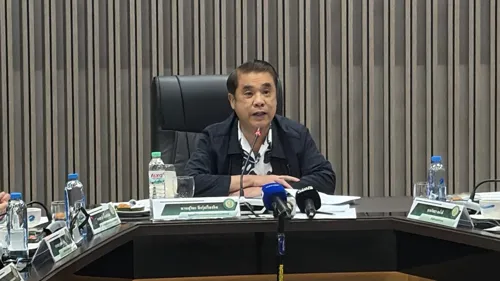
Thailand's Agriculture Ministry has increased water discharge from the Chao Phraya Dam to 1,850 cubic metres per second (from 1,750 m³/s) to manage rising water levels that are approaching the 17-metre safety threshold. The ministry attributes the rise to accumulated rainfall in the Nakhon Sawan–Chai Nat region rather than upstream dam releases, and confirms discharge remains within the safe limit of 2,000 m³/s. Water levels at monitoring station C2 in Nakhon Sawan are assessed as non-critical, though officials are closely tracking flows through to Chai Nat where tributary inflows are accumulating. The strategy involves staggered water release from upper, middle, and lower basin areas to prevent simultaneous peaks and minimize flooding impacts along the river.

▾ Hover for summary ▾ Tap for summary
Thailand's Deputy PM and Commerce Minister Supalee Sutthumpandit has directed the Commerce Ministry to closely monitor heavy rainfall and flood-affected areas to ensure adequate supply of essential goods and prevent price hikes. Provincial Commerce Offices nationwide are tasked with coordinating with wholesalers, retailers, and businesses to stock supplies while reporting logistics issues and consumer needs. Public complaints about unfair pricing, shortages, hoarding, or missing price labels can be reported to the Trade Department hotline 1569 or local Commerce Offices for inspection and enforcement.
 Together GoWeGo! Ferry tickets in Thailand.
▾ Hover for summary ▾ Tap for summary
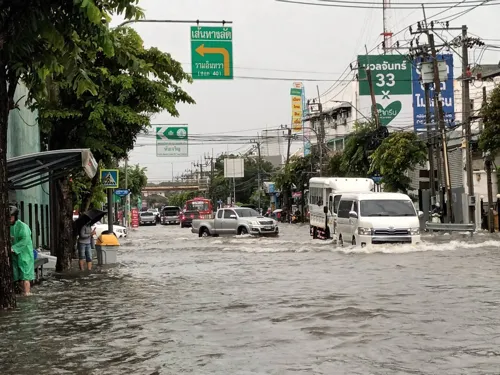
TEAMG forecasts heavy rainfall of 100-150 mm/day on September 26-27 in Bangkok and surrounding areas, exceeding the drainage system's 60 mm/day capacity. The primary concern is localized water accumulation in canals and low-lying areas due to inadequate drainage rather than river flooding. Street water levels are expected to reach 10-20 cm in areas near canals and up to 50 cm in some depression zones. The Chao Phraya River remains at safe levels.

▾ Hover for summary ▾ Tap for summary
IBM and industry analysis presented at KBTG Techtopia 2026 argue that competitive differentiation is shifting from AI capability access to organizational transformation maturity. "AI First" enterprises—those architecting operations with AI as a core component rather than a bolt-on tool—can achieve 70% higher productivity, 74% faster decision-making, and 67% faster project delivery than pilot-stage competitors. IBM itself realized $4.5 billion annually in productivity gains from three years of organizational AI integration. Thailand approved 30+ AI/cloud/data-center infrastructure projects (700 billion baht) last year and ~50 more this year, positioning the country as a potential Southeast Asian hub—signaling both the strategic importance of AI adoption and urgent capex competition among regional players.
▾ Hover for summary ▾ Tap for summary
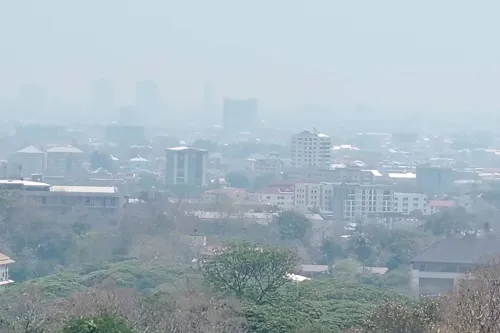
Thailand's Ministry of Tourism postponed its 4-billion-baht "Thailand Travel Plus" subsidy program from late 2026 to April 2027 to target the low season instead of the high season (Oct-Dec). Hotel operators in the north argue the new timing still misses the mark—April overlaps with severe PM2.5 pollution, driving travelers away. Industry leaders propose shifting the budget to June-September (green season) or Feb-March to better stimulate tourism and avoid wasting subsidies during naturally high-demand periods. The reshuffle reflects sector frustration with top-down stimulus timing that ignores seasonal realities.
▾ Hover for summary ▾ Tap for summary
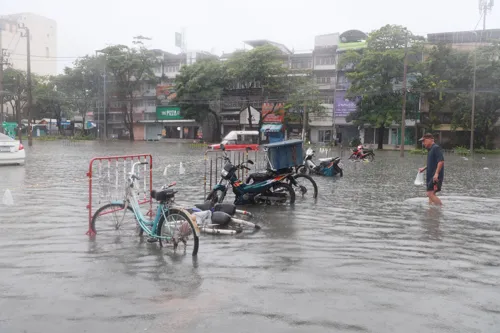
Multiple Thai banks (Kasikornbank, Krungthai, Thai Commercial Bank) announced temporary closures of dozens of branches across Bangkok, metropolitan areas, and the Eastern Region on September 26, 2026 due to severe flooding. The closures affect customer access to financial services in affected zones. SMEs and businesses relying on banking services in these areas should plan for alternative service channels or branch locations.

 Stop running your company on Excel.