
Archive
August 4, 2026
▾ Hover for summary ▾ Tap for summary
Visual analysis of Grab's financial performance metrics. Relevant for understanding a major Southeast Asian tech platform's operational and commercial health, particularly valuable for SMEs evaluating market conditions and potential partnerships in the region's ride-hailing and delivery ecosystem.

▾ Hover for summary ▾ Tap for summary
OpenAI reduced pricing on two new GPT-5.6 models: Terra (mid-tier) by 20% to $2/12 per 1M tokens, and Luna (small) by 80% to $0.2/1.2 per 1M tokens, citing strategy to improve model capabilities at lower cost. Analysts attribute the cuts partly to competition from high-performing Chinese AI models like Kimi K3 that undercut on price. Relevant for Thai tech companies evaluating AI API costs and market dynamics.
▾ Hover for summary ▾ Tap for summary
Thailand's Suvarnabhumi Airport Immigration has implemented new requirements for children under 18 travelling overseas: original or electronic birth certificates and notarized parental consent letters are now mandatory alongside passports, effective August 3. The policy aims to prevent child trafficking and unauthorized removal of minors, impacting families, travel agents, and tourism operators who must educate clients on these new documentation requirements.

▾ Hover for summary ▾ Tap for summary
TikTok Shop faces logistics challenges in Indonesia, likely involving trade-offs between speed, cost, and operational scope. The story is relevant to Southeast Asian e-commerce and social commerce platforms, particularly for SMEs evaluating TikTok as a sales channel. Regional logistics constraints and platform strategy decisions affect merchant competitiveness.

 Empower businesses to thrive in the digital age.
▾ Hover for summary ▾ Tap for summary
The Thai government has established a new national investment development subcommittee to boost private investment from 16.8% to 24% of GDP, aiming to exceed 3% economic growth and achieve high-income status by 2037. Key strategies include upgrading industries via Thailand FastPass, launching an AI and Digital Hub, attracting FDI in semiconductors and medical equipment, and developing skilled workforce through the Skill Bridge programme. Success depends on private sector confidence and removing investment barriers.
▾ Hover for summary ▾ Tap for summary
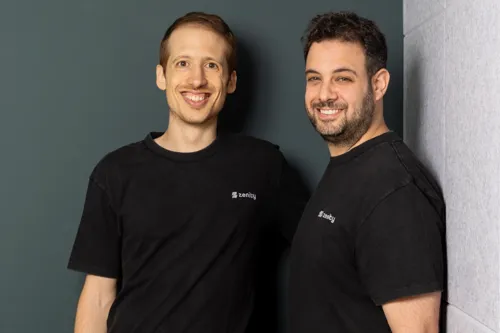
Zenity, an AI security specialist, secured $125 million in Series C funding. This signals strong investor confidence in enterprise AI security solutions, a critical area as organizations rapidly deploy AI systems. For Thai SMEs adopting AI, this highlights the growing market for safeguards against AI-related risks and governance tools that are increasingly essential for responsible deployment.
▾ Hover for summary ▾ Tap for summary
Thai PM Anutin's first official visit to Indonesia in 15 years yielded concrete bilateral outcomes: a US$23bn trade target by 2030, expanded agricultural and halal industry cooperation, cross-border investment promotion, and joint action against online fraud and human trafficking. Thailand positions itself as a regional hub for mainland Southeast Asia, while both nations coordinate on ASEAN integration and OECD membership—directly relevant for Thai SMEs seeking Indonesian partnerships and supply-chain opportunities.
▾ Hover for summary ▾ Tap for summary
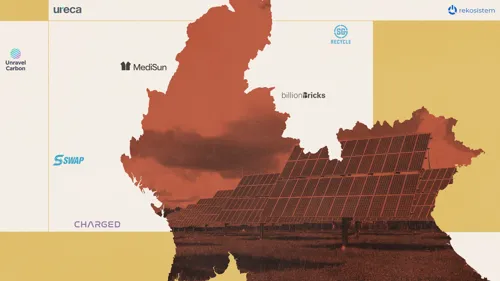
TechAsia is mapping Southeast Asia's leading cleantech companies and innovators. This regional overview helps SMEs and investors identify key cleantech players and trends across the SEA market, particularly relevant for Thai businesses looking to adopt sustainable technology solutions or position themselves in the growing cleantech sector.
 Your real translator for LINE and Discord.
August 3, 2026
▾ Hover for summary ▾ Tap for summary
The US and Japan have coordinated to counter yen speculation, signaling potential currency market intervention or policy coordination affecting regional financial stability.
▾ Hover for summary ▾ Tap for summary
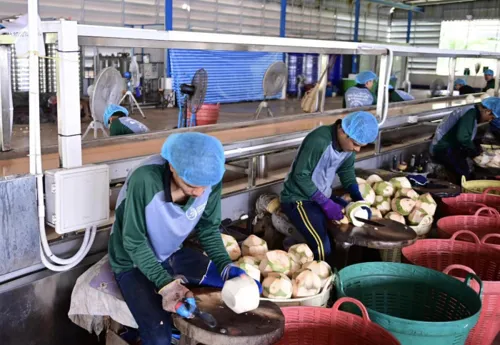
Thailand's central bank projects two lending schemes (SME Credit Boost and SME Secured Plus) will inject 130 billion baht into SMEs by end of 2027, as overall banking growth recovers to 2.3% GDP. However, SME lending remains in contraction; the Northeast is particularly stressed with 10% NPL ratio and lending declining 10%. Success hinges on whether these programmes unlock regional economic potential and reverse the K-shaped recovery pattern.
▾ Hover for summary ▾ Tap for summary
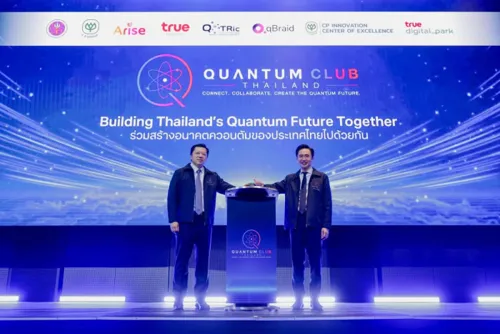
Thailand has launched Quantum Club Thailand at True Digital Park, a government-backed national platform uniting MHESI, CP Group, True Corporation, and US partner qBraid to develop quantum talent, research, and industrial applications. The initiative positions quantum technology as critical infrastructure alongside AI and space exploration, with Thai researchers gaining access to 26+ global quantum computing systems and three flagship programmes (Quantum Academy, Industry Lab, Innovation Challenge) to build the ecosystem and ensure national technological sovereignty.

▾ Hover for summary ▾ Tap for summary
Thailand's Health Ministry is intensifying cannabis enforcement with 1,326 shop inspections, 83 seizures, and 40+ prosecutions since October, with 109+ million baht in products seized. A draft Cannabis and Hemp Act aims to restrict use to medical purposes while preventing recreational sales. Licensed retailers can continue operating until their three-year licences expire, requiring compliance with stricter new rules afterward—creating a transitional compliance window for SMEs in this emerging sector.

 Want to buy or sell a business?
▾ Hover for summary ▾ Tap for summary
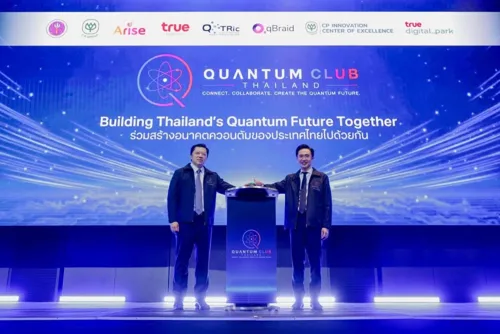
Thailand launched Quantum Club Thailand, a national quantum technology collaboration platform uniting government (Ministry of Higher Education, Science, Research & Innovation), major private-sector players (Charoen Pokphand Group, True Corporation, aRISE Ventures), researchers (QTRic), and international partners (qBraid). The initiative aims to develop workforce, accelerate research commercialization, and position Thailand as a quantum technology innovator through four pillars: talent development, research advancement, industry elevation, and market-viable innovation. Three flagship programs—Quantum Academy Thailand, Quantum Industry Lab, and Quantum Innovation Challenge—will form the foundation of Thailand's quantum ecosystem.
▾ Hover for summary ▾ Tap for summary
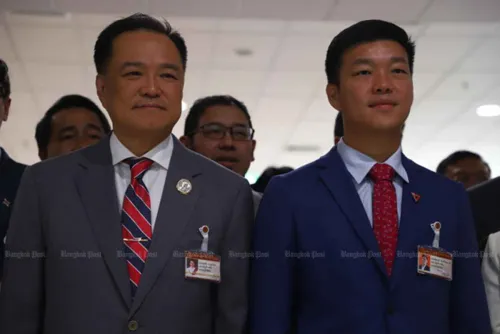
The People's Party (PP) has formally ruled out future cooperation with the ruling Bhumjaithai Party (BJT) and apologized to the public for supporting Anutin Charnvirakul's September 2025 bid for premiership. PP deputy leader Sirikanya acknowledged the party "learned its lesson," noting that expectations about the conditional support agreement were not met and commitments were broken. This political realignment signals a significant shift in coalition dynamics with potential implications for government stability.
▾ Hover for summary ▾ Tap for summary
Democratic-led US states are challenging Trump's new tariffs through legal action, which could impact trade policy and potentially affect supply chains and export markets relevant to Thai businesses.

▾ Hover for summary ▾ Tap for summary
Bloomberg reports (unconfirmed) that Moonshot AI has secured 20,000 additional NVIDIA Blackwell chips through Alibaba, building on its previous 20,000 Hopper-generation chips. The deal signals intensifying GPU competition in China's AI sector, though it remains unverified. Thailand may be implicated as a potential source for existing chip sourcing. For Thai SMEs, this underscores the critical importance of GPU access in AI competition and highlights potential supply-chain vulnerabilities in Southeast Asia.
 Together GoWeGo! Ferry tickets in Thailand.
▾ Hover for summary ▾ Tap for summary
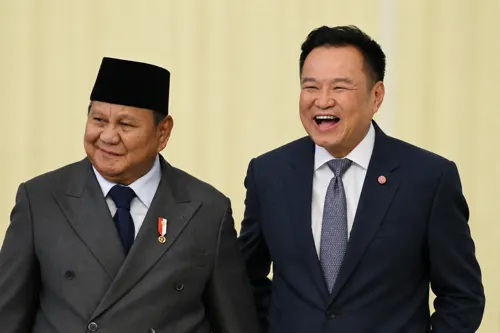
Thailand's PM held strategic talks with Indonesian President Prabowo in Jakarta to strengthen bilateral ties. Key outcomes include: raising bilateral trade target to $23B by 2030 (from $19.5B), promoting halal industry opportunities, coordinating on cybercrime and online fraud, and establishing new direct flight routes. Both nations are OECD applicants and aim to deepen ASEAN economic integration.

▾ Hover for summary ▾ Tap for summary
Red Hat outlines a four-step roadmap to prepare hybrid cloud infrastructure for quantum computing threats ("Q-Day"), emphasizing post-quantum cryptography (PQC) integration. RHEL 10 introduces NIST-standard quantum-safe algorithms (ML-KEM, ML-DSA) at OS level, while OpenShift 4.22 enables hybrid key exchange by default. Organizations should: (1) audit encryption footprints across hybrid environments, (2) test new cryptographic algorithms in non-production settings, (3) shift security enforcement to platform layer to avoid rewriting applications, and (4) govern data storage and processing with isolated environments. This aligns with White House Executive Order 14412 (federal migration by 2027–2029) and NSA's CNSA 2.0 mandate (TLS quantum-safe by 2030), making proactive preparation critical to avoid 3–5 year lag and data exposure risk.

▾ Hover for summary ▾ Tap for summary
Visa and ShopeePay have launched Visa Payment Passkey in Thailand, replacing One-Time Passwords (OTP) with biometric authentication (fingerprint, face recognition, or device PIN) for online payments. The passkey approach enhances security by keeping biometric data solely on user devices while streamlining checkout on Shopee, reducing fraud risk and improving conversion rates for merchants—a significant step toward more secure and frictionless digital commerce in Thailand.
▾ Hover for summary ▾ Tap for summary
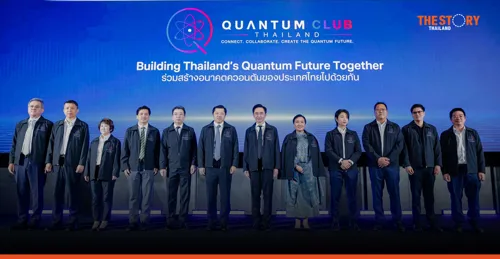
Thailand launched Quantum Club Thailand, a government-private sector coalition linking 120+ researchers from 17 public institutions with True Corporation, Charoen Pokphand Group, and international partner qBraid. The initiative proposes a 100-billion-baht innovation fund to establish Deep Tech centers at 5 leading universities and connect research to industry, aiming to integrate Thailand into global value chains through quantum computing capabilities that can handle data loads beyond classical computers' processing capacity.

 Stop running your company on Excel.