
Archive
August 5, 2026
▾ Hover for summary ▾ Tap for summary
Global oil price volatility and rising US bond yields are pressuring Thai stock valuations through higher discount rates and potential foreign fund outflows. However, recent foreign inflows (~70 billion baht YTD) and moderating US inflation (3.5% vs 3.8% expected) provide counterbalance. The SET Index trades near historical P/E average (16x), limiting valuation upside; further gains depend on earnings surprises or sustained foreign capital. Key support levels: 1,530–1,700 points, contingent on stable foreign flows and non-accelerating US yields.

▾ Hover for summary ▾ Tap for summary
Singapore is capturing the lion's share of Southeast Asia's $9.3 billion AI funding landscape, signaling a concentration of investment and talent in the city-state rather than distributed across the broader region. For Thai SMEs and startups, this highlights both the competitive pressure from a better-funded neighbor and potential opportunities to tap into Singapore's AI ecosystem or position themselves for cross-border collaboration.

▾ Hover for summary ▾ Tap for summary
SpaceX, now publicly traded, reported Q2 2026 results with massive AI infrastructure spending of ~520 billion baht (15.8 billion USD) as part of total capex of 18.4 billion USD, plus plans to launch upgraded Starlink Mobile satellites in 2027 to compete directly with AT&T, Verizon, and T-Mobile. Revenue jumped 92% to 7.8 billion USD despite net losses of 541 million USD. The company expects to reach 100 billion USD in annualized recurring revenue by December, primarily from data center leases with Google and Anthropic, with AI computing ROI achieved in under a year—signaling confidence in AI-driven growth despite stock volatility post-IPO.

▾ Hover for summary ▾ Tap for summary
Choco Up and Koomi have launched a financing solution for F&B businesses in Singapore. This service aims to help food and beverage SMEs access capital for operations and growth, addressing a key pain point in the region's hospitality sector.

 Empower businesses to thrive in the digital age.

▾ Hover for summary ▾ Tap for summary
CoreWeave, a GPU cloud infrastructure provider, is expanding into Indonesia by building 3 new data centers as part of a significant capital partnership. This signals growing AI infrastructure investment in Southeast Asia and highlights competitive regional cloud infrastructure development relevant to Thai businesses exploring AI capabilities and cloud services in the region.

▾ Hover for summary ▾ Tap for summary
NECTEC (Thailand's national research agency) is hosting NECTEC ACE 2026 on 3 September 2026 at Siam Paragon to mark 40 years of technology leadership. The event showcases NECTEC's evolution across four eras (infrastructure, digital policy, platforms, and AI/data) and unveils a forward-looking research roadmap covering quantum technology, humanoid robots, AGI, 6G communications, space technology, and photonics. Public-private partnerships with firms like AIS and Siemens are positioned as essential to scaling these innovations for Thai industry and society.

▾ Hover for summary ▾ Tap for summary
Bain Capital acquired Taiwanese bubble tea chain Gong Cha for $635M, taking over from TA Associates with deal expected to close by end-2024. The company operates 2,000+ locations across 30 countries and will leverage Bain's expertise to expand in Japan, South Korea, and the US. Gong Cha achieved $188.8M revenue in 2024 (up 6%) with operating profit doubling, as the global tea market is projected to grow 30% to $73.78B by 2030.

▾ Hover for summary ▾ Tap for summary
BlaBlaCar, a global carpooling platform with 30+ million users across 41 countries, has officially launched in Thailand. The service connects drivers with empty seats on intercity routes with passengers heading to the same destination to split fuel and toll costs. With fuel prices rising and household budgets under pressure (the fuel fund deficit exceeds 42,000 billion baht), BlaBlaCar's model allows drivers to reduce fuel and toll expenses by over 50%. The platform targets 13 million potential travelers across Thailand and aims to complement existing public transport systems, particularly on routes underserved by formal transit networks. Safety features include profile verification, user ratings, and community moderation.
 Your real translator for LINE and Discord.

▾ Hover for summary ▾ Tap for summary
Cloudflare has introduced a wallet solution enabling AI agents to process payments independently. This represents advancement in autonomous AI infrastructure, relevant to tech-forward businesses exploring AI integration. However, full article details were inaccessible, limiting assessment of specific implications for Thai SMEs.

▾ Hover for summary ▾ Tap for summary
Walmart acquired Vibe.co for $1.4 billion to expand its streaming TV advertising business. This move strengthens Walmart's position in the growing connected TV ad market, leveraging its massive customer base and retail data to compete with major ad platforms. For SMEs, this signals the increasing importance of streaming video as an ad channel and Walmart's intent to become a major player in digital advertising ecosystems.
▾ Hover for summary ▾ Tap for summary
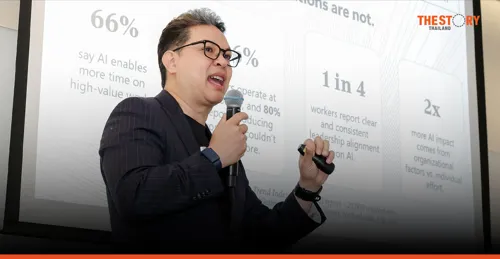
Microsoft's Work Trend Index 2026 reveals Thailand's workforce is exceptionally AI-savvy—32% are "Frontier Professionals" vs. 16% globally—yet Thai organizations fail to operationalize these capabilities. The core challenge: individual adoption outpaces organizational workflow redesign and critical thinking skills. Microsoft advocates a "Human Agency" model deploying supervised AI agents to automate tasks, freeing workers for strategy and quality control. Leaders must embed AI experimentation into core workflows and systematically document successes; currently, only 20% of Thai teams formalize best practices, leaving innovation siloed. This data is actionable for Thai SMEs seeking to close the productivity-to-capability gap.

▾ Hover for summary ▾ Tap for summary
Thailand has reached an aged society milestone with 14 million seniors (20% of population), driving significant economic burden from chronic diseases, particularly stroke (358K cases, 39K deaths in 2567). KTC and Bangkok Hospital launched a brain health awareness campaign emphasizing that neurological health is not just an elderly concern—working-age adults face rising risk from hypertension, diabetes, smoking, stress, and poor sleep. Early warning signs (tremors, gait changes, memory loss, speech difficulties) and acute stroke indicators (facial drooping, limb weakness, slurred speech) require immediate attention. Modern medical technologies (non-invasive brain stimulation, robotic rehabilitation, VR therapy) and AI-assisted diagnosis can improve recovery outcomes.

 Want to buy or sell a business?
▾ Hover for summary ▾ Tap for summary
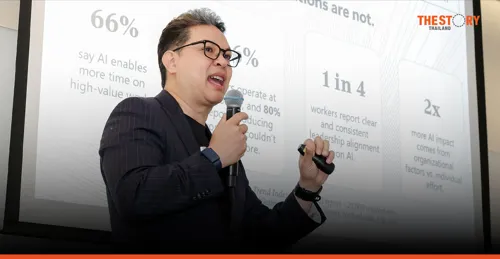
Microsoft's Work Trend Index 2026 survey finds Thai office workers adopt advanced AI at 2x the global average, but most Thai organizations fail to convert individual AI success into organizational capabilities. Key gaps: only 25% see clear leadership direction (vs 51% in Thailand alone), only 32% of managers reward experimentation without guaranteed results, and Thai workers rank lowest in critical thinking skills across ASEAN (45% vs 65% in Philippines). The core challenge is moving from personal AI productivity gains to enterprise-wide process redesign—what Microsoft calls "Owned Intelligence."
▾ Hover for summary ▾ Tap for summary
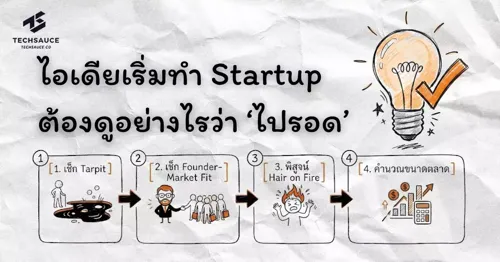
The article warns entrepreneurs not to start with a product idea and retrofit problems afterward. It introduces "Tarpit Ideas"—seemingly attractive ideas that receive universal praise (like a friend-coordination app) but contain hidden structural barriers that prevent success. Drawing on Y Combinator wisdom, the piece advises founders to prioritize Founder-Market Fit, seek Unique Insights beyond common complaints, and identify genuine market gaps created by regulatory, technological, or behavioral shifts—not just obvious pain points.
▾ Hover for summary ▾ Tap for summary
SoftBank's stock gained 10% as AI investments drive growth across Asian tech companies. While this reflects broader momentum in the AI sector, the article content is inaccessible, limiting specific details on what triggered this surge or its relevance to Thailand-based SMEs.
▾ Hover for summary ▾ Tap for summary
Asia's rapid urbanization—adding 1.2 billion city dwellers by 2050—is deepening inequality, with 700 million in slums and 65% in informal work. Rising inequality threatens social stability and slows recovery from crises. Thailand's housing programs, Mongolia's flood resilience initiatives, and India's heat-support for informal workers show how community-centered urban planning can build inclusive, resilient cities—critical for SMEs dependent on stable labor markets and supply chains.
 Together GoWeGo! Ferry tickets in Thailand.

▾ Hover for summary ▾ Tap for summary
CLICX, Thailand's virtual bank (jointly owned by Krungthai, Advance Info and PTT), temporarily closed loan applications due to unexpectedly high user volume causing system delays. The bank issued a stern warning against loan misuse, false information submissions, and fraud—signaling zero tolerance and threat of legal action. This reflects operational challenges in scaling a fintech lending platform alongside regulatory compliance and risk management.
▾ Hover for summary ▾ Tap for summary
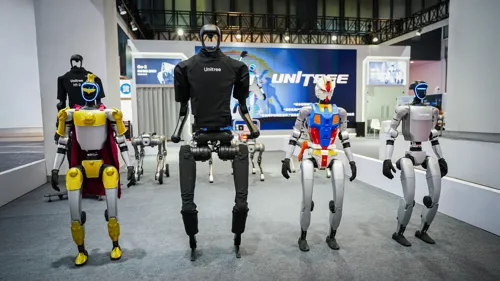
Unitree, a robotics company, is pursuing a Shanghai IPO at a valuation exceeding $7.4 billion. The article indicates pre-IPO profit concerns, suggesting market scrutiny of the company's financial health ahead of its public offering. Relevant for investors tracking robotics innovation and Asian tech IPO trends.

▾ Hover for summary ▾ Tap for summary
ByteDance's billion-yuan investment signals potential cloud infrastructure ambitions, though details remain unclear. For Thailand SMEs, this reflects growing competition among tech giants in cloud services and may influence regional service pricing and availability.

▾ Hover for summary ▾ Tap for summary
UCLA and South Korean researchers have developed Alkaline Thermal Treatment (ATT) technology that converts three common mixed plastics (PET, PE, PP) into hydrogen fuel with 90%+ purity without pre-sorting—a breakthrough that addresses recycling's key bottleneck. The method operates 300-400°C lower than conventional approaches, captures 75% of byproduct carbon as solid, and removes the costly sorting step that limits real-world plastic recycling to just 9% globally. Currently lab-scale; next phase requires industrial scale-up before commercialization.

 Stop running your company on Excel.