
Archive
August 5, 2026
▾ Hover for summary ▾ Tap for summary
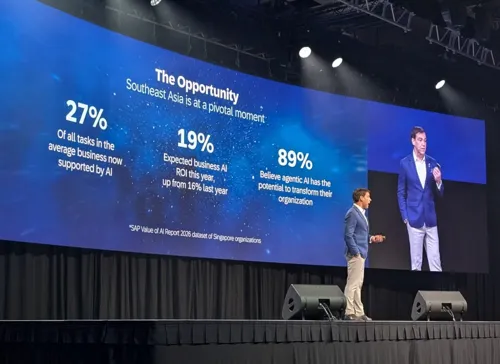
SAP Southeast Asia's leadership emphasized that enterprise AI for finance demands 100% accuracy, not approximations. Beyond data access, implementation requires auditability (tracing how data is accessed and values derived) and knowledge graphs for proper database comprehension. SAP's Joule Assistants (launched 2023) leverage access to SAP system data, priced via credit-based "AI Units" (1-8/user/month or per-usage model, e.g., 0.005 units per document extraction). SAP reportedly uses Anthropic's Claude via its Business AI Platform.

▾ Hover for summary ▾ Tap for summary
Spotify announced Q2 2026 results with 300 million premium paid subscribers (up 9% YoY) and 777 million total users. Revenue reached €4.78 billion (+14%), driven by €4.33 billion from subscriptions and €446 million from ads, with net profit of €545 million. The platform continues to scale globally, though growth remains modest by tech standards.

▾ Hover for summary ▾ Tap for summary
Thailand's cabinet has established a Data Centre Policy Committee to regulate the country's rapidly expanding data centre sector, which saw BoI applications surge to 728 billion baht in 2025 (from 99 billion in 2024). The committee will set standards and monitor impacts on energy, water, and environment, addressing concerns that uncontrolled expansion could strain national resources. This is critical for SMEs and tech firms seeking clarity on investment, infrastructure, and compliance requirements in a key growth sector for Thailand's digital economy ambitions.

▾ Hover for summary ▾ Tap for summary
Myanmar's leader Min Aung Hlaing visits Thailand (6-7 August 2026) for bilateral talks on trade and investment. Thailand-Myanmar business relations face severe headwinds: Myanmar's economy has been hit by five major shocks (COVID-19, internal political turmoil, civil unrest, military recruitment policies, and border conflicts). A critical constraint is Myanmar's depleted foreign reserves, forcing an "Earning Money Policy" that requires exporters to earn foreign currency before securing import licenses. Thai exports to Myanmar have declined sharply alongside a broader contraction in foreign goods penetration. Despite currency weakness and the kyat's depreciation, Myanmar remains a crucial market for Thai SMEs and businesses must adapt their strategies to this new economic reality, particularly in essential goods.

 Empower businesses to thrive in the digital age.
▾ Hover for summary ▾ Tap for summary
Samsung and SK Hynix are testing Chinese semiconductor manufacturing equipment as a strategic hedge against US export restrictions and geopolitical risks.

▾ Hover for summary ▾ Tap for summary
Cabinet approved a 7.2 billion baht dam project on August 5, 2026, in Chanthaburi to serve EEC and irrigate 87,700 rai, citing a 13.18% economic return and 2.20 B/C ratio. However, government communication omits environmental costs: forest area within Khao Sip Ha Chan National Park will be submerged. The Seub Nakhasathien Foundation questions the incomplete disclosure and notes the project still requires National Park Board deselection approval. The foundation previously filed an administrative court case (dismissed July 15) and plans to appeal, citing flawed environmental impact assessment data.
▾ Hover for summary ▾ Tap for summary
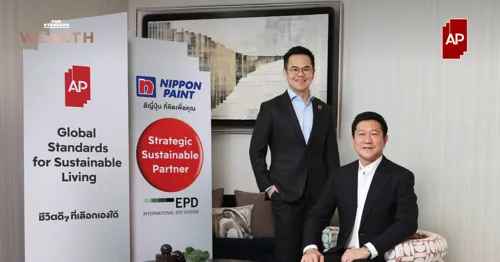
AP Thailand and Nippon Paint have elevated their partnership to a formal "Green Partner" collaboration, with AP becoming Thailand's first real estate developer to adopt Nippon Paint products certified by international EPD (Environmental Product Declaration) standards. The partnership emphasizes sustainable materials selection—including Weatherbond, a heat-reflective acrylic coating reducing energy consumption and environmental impact—and extends to education initiatives supporting sustainable architecture and design through AYDA Awards 2027. This signals a market trend toward third-party verified environmental credentials in Thai construction, relevant for SMEs in materials, construction, and property development seeking competitive sustainability positioning.

▾ Hover for summary ▾ Tap for summary
Telegram founder Pavel Durov revealed that a blackmail group has been exploiting Apple's app review process by flooding Telegram with illegal content, then reporting it to force removals. The group uses AI to modify old messages to hide improper content and avoids user reports. Durov disclosed that these actors demand payment and report to Apple if refused—a tactic that briefly removed Telegram from the App Store. While Telegram quickly resolved the issue, Durov warns other platforms may face similar coordinated attacks exploiting strict app store policies.
 Your real translator for LINE and Discord.

▾ Hover for summary ▾ Tap for summary
TTB launched a new auto loan product ("Car Trade-In Cash Loan") that uses risk-based pricing tied to NCB credit scores rather than vehicle age, offering rates starting at 11.11% annually for customers with strong payment history. The bank aims to disburse 5 billion baht over the final five months of 2026 (August–December), targeting 14,500–15,000 customers and saving over 1 billion baht in interest across loan terms. This product addresses a market opportunity: ~77% of existing car-pledge loan customers (4–5 million vehicles) with good repayment discipline could qualify for lower rates than the typical 20–24% charged by competing lenders.

▾ Hover for summary ▾ Tap for summary
Thailand's private-sector economic council (JCC) reports AI is reshaping global growth into a K-shape pattern, with Asia-Pacific—including Thailand—positioned to benefit. Thailand's H1 2026 exports rose 17.6%, led by tech products (+45.9%), but local content remains low. The council urges accelerating domestic production, developing supply chains, and raising Made-in-Thailand value-add to capture $544B+ in FDI expected to flow into ASEAN by 2035. FDI applications to BOI jumped 37% YoY in H1 2026 to 1.47 trillion baht. The council projects full-year GDP at 1.6–2.0% and exports at +8–10%.

▾ Hover for summary ▾ Tap for summary
TTB's CEO emphasizes credit scoring from Thailand's NCB as the primary tool for preventing loan defaults and assessing customer risk. TTB uses credit scores and payment behavior to set interest rates and approve loans, and views this as more reliable than alternative data sources like mobile app behavior. The bank is unconcerned about virtual bank competition, seeing it as healthy market competition that drives better product design.

▾ Hover for summary ▾ Tap for summary
Thailand's household debt has grown to 16.36 trillion baht (91.3% of GDP) as of 2566, with accumulated NPLs at 1.1–1.2 trillion baht. Recent pressure is concentrated in auto loans, personal credit, and credit cards. The article examines structural debt dynamics over 5 years and clarifies legal/regulatory mechanisms (e-KYC, credit bureau reporting, debt recovery law) that counter deliberate non-payment behavior. Relevant for SMEs assessing credit risk and understanding tightened lending standards.

 Want to buy or sell a business?

▾ Hover for summary ▾ Tap for summary
Thailand's cabinet approved the establishment of a 19-member Data Center Policy Committee (chaired by a deputy PM) to oversee data center development as part of digital economy strategy. The board will set policies balancing economic growth with clean energy use, water resource fairness, energy efficiency, public safety, data sovereignty, and carbon neutrality. Relevant state agencies must report implementation progress every 3 months. This is critical infrastructure governance for Thailand's digital transformation.
▾ Hover for summary ▾ Tap for summary
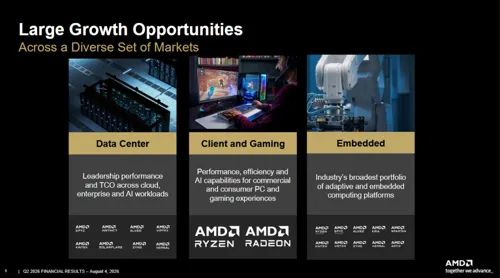
AMD delivered record financial results in Q2 2026 with 50% revenue growth to $11.5B and 54% gross margins. The Data Center segment surged 107% year-over-year to $6.7B, driven by major cloud providers (AWS, Microsoft, Google, Oracle) adopting EPYC processors and expanding AI infrastructure deployments (Instinct, Helios). This sustained momentum in enterprise and AI-driven computing creates ongoing opportunities for AMD's infrastructure business.
▾ Hover for summary ▾ Tap for summary
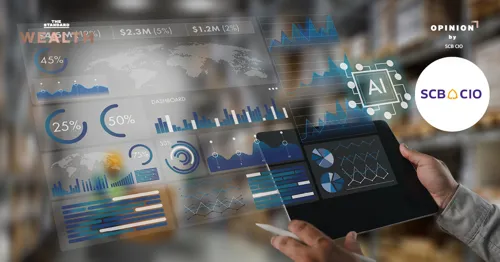
Supply chain strategy is shifting from pure cost-minimization (Just-in-Time) to resilience-building (Just-in-Case) as geopolitical tensions, climate shocks, and energy constraints create frequent disruptions. Thai SMEs face structural vulnerabilities—energy infrastructure, electrical grid stability, and cooling systems for data centers are now critical supply chain bottlenecks. Businesses must adopt adaptive, distributed sourcing strategies and invest in energy security to compete in this new "Adaptability Era."

▾ Hover for summary ▾ Tap for summary
SpaceX posted Q2 losses of $541M (17.9B THB), better than Wall Street forecasts, with revenue surging 90% YoY to $7.8B driven by Starlink internet services reaching 12M users. However, R&D spending soared to $18B (from ~$3B), and investors remain concerned about valuation, Elon Musk's space/AI ambitions, and upcoming insider selling pressure. The company targets $1 trillion annual revenue by 2030—a 3-year acceleration.
 Together GoWeGo! Ferry tickets in Thailand.

▾ Hover for summary ▾ Tap for summary
Thailand's SEC has submitted additional evidence to the Economic Crime Suppression Division against Bitkub and two former executives for falsely reporting financial data to conceal a May 2021 digital asset theft worth ~1.7 billion baht. The company failed to disclose the hack in required daily liquidity reports (ดจ.1 forms) between May–October 2021, and executives allegedly filed false documents to mislead regulators about customer asset safety. All three defendants face charges under the Digital Asset Business Act B.E. 2561.
▾ Hover for summary ▾ Tap for summary
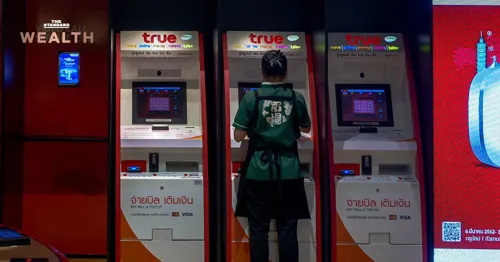
True Corp (Thailand's leading telecom) posted 6.6 billion baht net profit in Q2 2026—its sixth consecutive profitable quarter—with EBITDA up 13.5% year-on-year. However, service revenue grew just 0.8%, signaling that profit gains stem mainly from operational efficiency and spectrum licensing benefits rather than organic revenue expansion. The company added 479,000 mobile users and is targeting 1–2% full-year service revenue growth while maintaining 7–9% EBITDA growth, underpinned by infrastructure investment and AI integration initiatives.
▾ Hover for summary ▾ Tap for summary
Sansiri and Krung Thai Bank are launching digital bonds via the Pao Tang app, enabling retail investors to start with just 1,000 baht at 3.70–3.80% annual interest over 5 years. The offering opens August 27, lowering investment barriers while supporting financial inclusion and digital capital market innovation in Thailand. The bonds carry a BBB+ credit rating and offer 24/7 secondary market trading.

▾ Hover for summary ▾ Tap for summary
World Bank's 2026 development report reveals Thai enterprises lag far behind in AI adoption—only 11.5% of surveyed firms use AI, compared to 40% in Kenya and Nigeria and 42.5% in the US. Despite Thailand ranking 5th globally in AI-enabling semiconductor exports and attracting major data centre investment, the disconnect is stark: Thai companies aren't adopting the technology they're manufacturing and selling. The report warns that without closing gaps in energy, connectivity, skills, and institutional quality, Thailand risks being left behind even as it could theoretically compress a century of development into a decade. Real-world examples show imported AI tools often fail in local contexts—Google Health's diabetic retinopathy screening tool rejected 20% of photos in Thai clinics due to lighting mismatches—highlighting the critical gap between supply chain participation and meaningful adoption.

 Stop running your company on Excel.