
Archive
August 20, 2026
▾ Hover for summary ▾ Tap for summary
Thailand's central bank reports Q2 2026 non-performing loans (NPL) held flat at 2.82% of total credit, but cautioned confidence remains unwarranted. The stable ratio masks deteriorating fundamentals: banks are aggressively selling off bad SME and housing loans, while Stage 2 defaults (pre-NPL) are rising and re-entry into NPL status is increasing among fragile borrowers. BoT is preparing emergency measures including deeper debt restructuring and flexible payment reduction guidelines if geopolitical uncertainty worsens, alongside existing SME credit programs already disbursing 56 billion baht.
▾ Hover for summary ▾ Tap for summary
Elon Musk discusses whether China could overtake the US in AI leadership, citing advantages in electricity and robotics. The article explores geopolitical competition in AI development and what the US government should do in response.

▾ Hover for summary ▾ Tap for summary
Xiaomi's Q2 net profit fell 42.6% to 6.2 billion yuan as AI-driven chip competition pushed memory prices up and weak consumer demand persisted. The company has raised smartphone prices three times this year and faces severe margin pressure (8.5% vs. 11.5% YoY). Its EV venture—critical for future growth—generated losses of 2.6 billion yuan despite 16% revenue growth, while EV sales track at only 40% of the 550k-unit annual target. The broader smartphone market contracted 11% globally in Q2 (lowest since 2013), with Chinese brands (Xiaomi, Oppo, Vivo) hit harder than Apple/Samsung. Management expects memory prices to rise further but at a slower pace in H2.

▾ Hover for summary ▾ Tap for summary
Supalai delivered AUD 420 million (9.5 billion baht) in sales in H1 2026, achieving 62% of its full-year target of AUD 680 million across Australian markets. The company attributes momentum to strong fundamentals in Brisbane (43% of sales) and successful project completions in Melbourne, with over AUD 489 million in revenue awaiting recognition. Management remains confident in hitting annual targets and positioning Australia as a long-term growth driver for the company's expansion strategy.

 Empower businesses to thrive in the digital age.
▾ Hover for summary ▾ Tap for summary
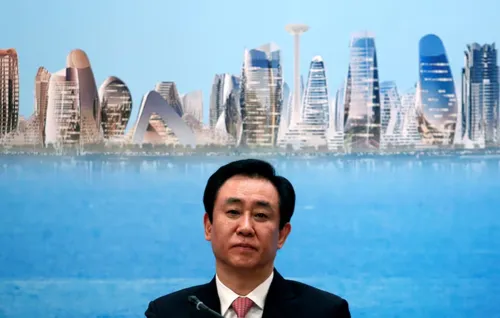
China's Shenzhen court sentenced Hui Ka Yan (Xu Jiayin), founder of Evergrande, to life imprisonment on multiple charges including embezzlement of deposits and fraud. The company and affiliates face combined fines of 15.82 billion yuan (~$2.4B USD). This verdict underscores the collapse of a once-exemplary real estate developer and the broader decline of China's property sector—relevant context for regional business sentiment and financial system confidence.

▾ Hover for summary ▾ Tap for summary
Harvard neuroscientists have cultured human brain organoids (miniature tissue structures) in lab dishes for over 5 years—more than triple the previous world record of 694 days—with cells developing on the same molecular timeline as actual brain development in utero and early childhood. Using single-cell RNA sequencing and epigenetic methylation "clocks," researchers tracked 110 organoids containing nearly 425,000 cells across 5+ years, confirming that organoids faithfully recapitulate human cortical development. This breakthrough could enable disease modeling and drug testing without accessing the inaccessible human brain, addressing a critical gap in neuroscience research.
▾ Hover for summary ▾ Tap for summary
SACIT (Thailand's Institute of Arts and Crafts) is backing a "Waste to Craft" program that transforms production waste—chiefly discarded silk fiber and non-standard cocoons—into craft materials and consumer products. The Socoon brand in Saraburi is now turning these scrap materials into textiles, scarves, bags, and skincare formulations, creating employment and income for local communities while reducing agricultural waste. The initiative bridges research knowledge with local wisdom to build sustainable livelihoods and position Thai crafts for global markets.
▾ Hover for summary ▾ Tap for summary
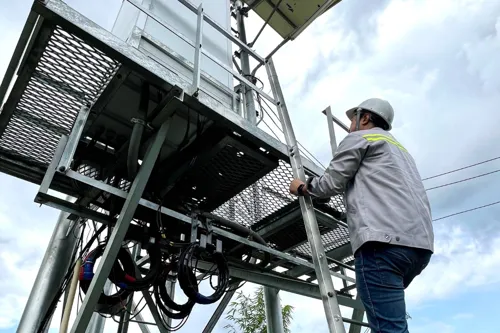
Major Thai telecom operators AIS and TRUE have mobilized network teams and infrastructure across Nan province to maintain communications during ongoing severe flooding. Both companies have deployed mobile base stations, backup power systems, 24/7 monitoring centers, and coordination with disaster relief agencies. AIS is utilizing AI/IoT for network optimization and water level monitoring, while TRUE is sending Cell-On-Wheel units from northern regions. This demonstrates critical telecommunications resilience during natural disasters and ensures continuity of emergency services.
 Your real translator for LINE and Discord.

▾ Hover for summary ▾ Tap for summary
HYROX, a hybrid fitness competition combining 8km running with functional fitness stations, is aggressively expanding across Asia-Pacific with 27 events planned for 2026, targeting 25 major cities by 2030. The company employs a strategic partnership model with local gyms/fitness centers (paying affiliates $130/month to train and recruit competitors) to build market ecosystems before launching events. This creates a win-win: fitness centers gain recurring training revenue and member retention, while HYROX scales participation. With global fitness market projected at $193.3B by 2030 (10.5% CAGR), the event now attracts 550,000+ participants across 80+ cities (2025 figures), and serves as a sports tourism magnet—30%+ of participants are foreign visitors. Relevant to Thai SMEs, especially fitness/wellness operators seeking membership growth and community-building opportunities.

▾ Hover for summary ▾ Tap for summary
Oatside, a Southeast Asian alternative milk brand, has reportedly achieved profitability as its business scales. The story is relevant to SME growth in the region, particularly in the emerging food-tech and plant-based space, though details are limited from the available excerpt.
▾ Hover for summary ▾ Tap for summary
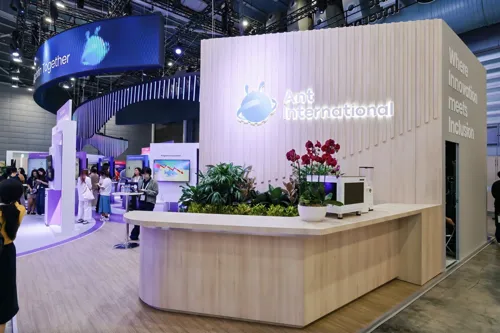
Ant International has launched an AI-powered model designed to forecast foreign exchange (FX) risk for cross-border payment solutions. This development is relevant to SMEs engaged in international trade and fintech operations in Southeast Asia, where currency volatility is a persistent challenge. The innovation could help smaller businesses better manage transaction costs and reduce hedging expenses in regional commerce.
▾ Hover for summary ▾ Tap for summary
TenPay Global and ShopeePay are jointly launching a China QR payment service, enabling cross-border payment capabilities. This matters for Thailand SMEs looking to accept payments from Chinese customers or expand into regional payment infrastructure, though the article content could not be fully verified due to page rendering issues.

 Want to buy or sell a business?
▾ Hover for summary ▾ Tap for summary
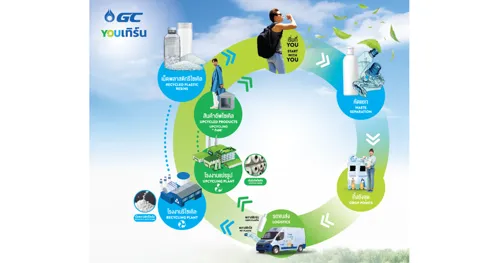
GC, a Thai chemical company, has earned continuous global sustainability recognition (S&P Global #1 ranking for 7 years, A-grade CDP Water Security for 6 years, AAA SET ESG for 3 years) by embedding ESG and circular economy principles across operations. Key innovations include Thailand's first sustainable aviation fuel from used cooking oil, wastewater recycling reducing freshwater use by 1.8M m³/year, and the GC YOUTurn plastics program (122,000+ tons recycled via 400+ collection points). This demonstrates how Thai SMEs can translate sustainability concepts into measurable business and environmental value.
▾ Hover for summary ▾ Tap for summary
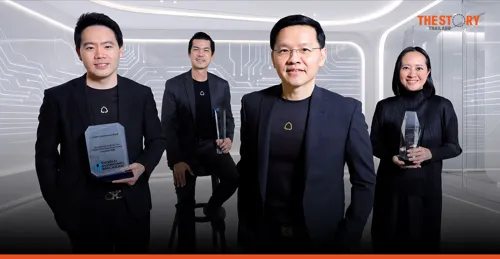
Thai Commercial Bank received three international awards in 2026 for AI-driven digital banking and innovation. The bank has integrated AI and data analytics across operations, with digital business revenue reaching 24.3% of total income in 2025 and growing. While the awards validate the bank's AI-First strategy, the news is largely promotional and offers limited actionable insights for SMEs beyond recognizing a major fintech initiative by a leading Thai bank.

▾ Hover for summary ▾ Tap for summary
Krung Thai Bank (ธนาคารออมสิน) is repositioning itself as a "Smart Social Bank for All Lives," emphasizing holistic financial services across all life stages rather than traditional banking alone. The bank integrates financial inclusion, digital innovation, 1,000+ branches with online channels, and financial literacy programs to serve SMEs, entrepreneurs, and underserved populations. Key focus: bridging capital access with social value creation and life-stage-appropriate products.

▾ Hover for summary ▾ Tap for summary
Thailand's higher education sector faces a structural crisis: 400+ institutions competing for only ~400,000 students (down from 1 million a decade ago), forcing private universities like ABAC to innovate aggressively. ABAC's strategy pivots on entrepreneurship-focused curriculum, English-language delivery, and international diversity (7,000+ students, 50% international from 60 countries) to create globally competitive graduates. The university is adopting business practices—partnerships with MG Motors, Lorial, international dual-degree programs, and short-term credentialed courses—to survive in a shrinking market while maintaining non-profit status. Key insight: a degree alone no longer guarantees success; soft skills (languages, AI literacy, teamwork, adaptability) and cross-cultural experience now define graduate competitiveness.
 Together GoWeGo! Ferry tickets in Thailand.

▾ Hover for summary ▾ Tap for summary
Nebius, an NVIDIA-backed AI infrastructure provider, is raising $4.5 billion through convertible bonds to fund expansion and capitalize on growing demand for AI computing. While this signals strong investor confidence in the AI infrastructure space, the direct relevance to Thailand SMEs is limited unless they're actively engaged in cloud/AI services.
▾ Hover for summary ▾ Tap for summary
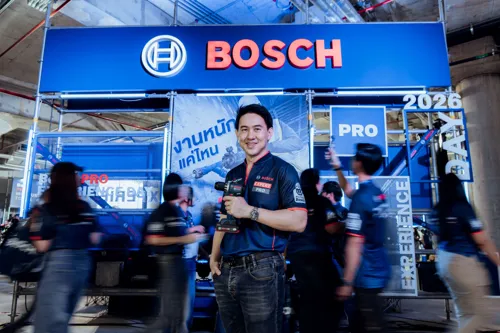
Bosch Thailand is launching over 350 new cordless and hand tools for 2026, anchored by the 18V AmpShare wireless system. The two-day Bosch PRO EXPERIENCE DAY event targets dealers (day 1) and professionals/consumers (day 2), emphasizing safety features across all product tiers from entry-level to pro-grade. Key launches include heavy-duty cordless concrete wall grinder, nail gun, and professional measuring instruments. This demonstrates strong market commitment and product portfolio expansion tailored to Thai SME tool users.
▾ Hover for summary ▾ Tap for summary
Thai equities remain in a sustained uptrend through H2 2026, supported by FDI inflows (1.31 trillion baht in H1 2026), improving earnings recovery (Q1 2026 profit growth up 3.52% YoY for the first time in 4 years), and valuations still attractive at 15× P/E with 61% of the market trading below book value. Investors should rotate away from concentrated MAG-7 exposure and diversify into Thai tech infrastructure plays (telecoms, power), industrials benefiting from Trump policies, and Asian healthcare. The Thai market offers a "safe haven" for upside capture while global capital reallocates from expensive US semiconductors amid questions about AI monetization viability.

▾ Hover for summary ▾ Tap for summary
Thailand's aging population (1 in 5 residents now 60+) with rising life expectancy (77-78 years) means retirees face 25-30 years of post-retirement financial management. Traditional static portfolios miss key retirement risks—longevity risk and sequence-of-returns risk. UOB Thailand introduces two Glide Path funds (UPRE for pre-retirees, UPOST for retirees) that automatically rebalance asset allocation over time, maintaining growth while managing withdrawal-phase risks better than fixed-allocation approaches.

 Stop running your company on Excel.