Archive
November 20, 2026

▾ Hover for summary ▾ Tap for summary
Arsenic and heavy-metal contamination in the Kok, Sai and Ruak rivers has pushed high-season hotel bookings in Chiang Rai below 50%, against a usual 70-80%. Tour operators are cutting two-day programmes to day trips returning to Chiang Mai. The association says only 4 of 18 districts (including Chiang Saen, Mae Sai and Chiang Khong) are affected. Hotels in the Kok river area are getting official government safety certificates. Business owners outside those 4 districts should expect a December slowdown and may want to tell agents and guests which areas are safe, backed by the water-treatment and testing facts.
▾ Hover for summary ▾ Tap for summary
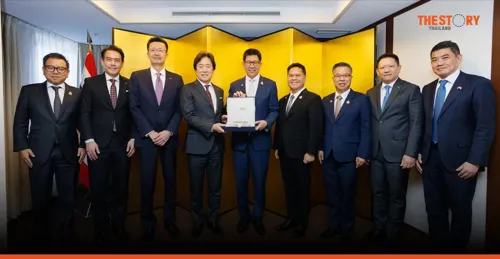
The Finance Ministry says fully imported BEVs and REEVs with no Thai production base will pay a 35% excise tax from 1 January 2570 (2027). Cars from locally based or Thai-made production will get tax rates tied to investment, jobs and local parts use; details are still open to public comment. Six Japanese automakers (Toyota, Honda, Isuzu, Mitsubishi, Mazda, Nissan) announced about 134,000 million baht of investment over 2026–2030. For SMEs in auto parts, the chance to join the supply chain for new models is the practical point; for car importers or dealers of imported EVs, pricing needs to be reviewed before the new year.
▾ Hover for summary ▾ Tap for summary
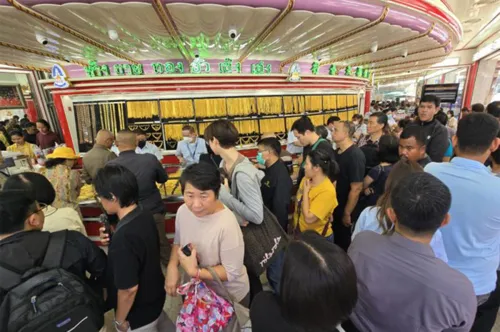
Thai gold prices fell sharply on 20 Nov: bars closed at 57,600 baht per baht-weight, down 2,300 from the day before, with intraday swings of about 90 price changes. The drop follows lower world gold (spot $3,576/oz, near a 14-month low) as markets expect a US Fed rate hike next month and a stronger dollar. For a business holding gold stock or taking gold as payment or collateral, values are moving daily, so price stock and loan-to-value at the current spot rather than last week's price. Gold-shop customers are buying the dip, so expect demand for gold jewellery to swing with price.

▾ Hover for summary ▾ Tap for summary
The SET index closed at 1,453.28 on 20 Nov 2026, down 1.31%, with foreigners net selling 2.37 billion baht. Kasikorn Securities flags five pressures: possible US Fed rate hike at the 9 Dec meeting (25-50 bp weighted), AI investment uncertainty after the US election, unclear Nvidia circular financing, a 90-day US chip export tightening, and higher Thai industrial electricity tariffs expected in Q1 2027. The brokerage estimates every 10% electricity price rise cuts listed companies' margins by about 2%. For SMEs: budget for higher power costs from Q1 2027 and watch the Fed decision, since it affects baht and borrowing costs.


▾ Hover for summary ▾ Tap for summary
The government has outlined six measures to tackle heavy-metal contamination in northern Thai rivers, including arsenic fingerprinting and talks with China and Myanmar on upstream sources from 24-26 November. The Ministry of Industry is tightening controls on mineral imports and exports. The Ministry of Agriculture will map farmland into red, yellow and green zones by 15 December, starting in Mae Ai and Chiang Rai. Farms in green zones may be able to pursue GAP certification. If your business buys produce, agricultural inputs or minerals from Chiang Rai or Chiang Mai, watch the zoning results and the mineral trade rules.
▾ Hover for summary ▾ Tap for summary
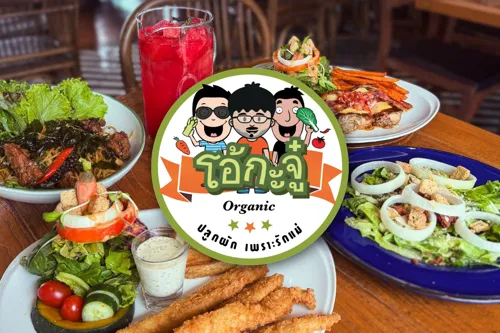
OKJ (listed restaurant operator of Ohkajhu, Joe Wings, Oh! Juice) reported losses for a fourth straight quarter in Q3 2026, citing about 41 million baht in revenue hits from floods, store conversions and the loss of a Thai Airways B2B contract. Its first converted Grill & Ground store averaged about 8 million baht a month versus about 3 million for the old format, with gross margin lower but EBITDA up 2-3x and payback under a year. The company plans to reach 90 stores by year-end and cut 2027 capex to under 80 million baht. For a restaurant owner, the signal is that buffet-style and smaller-plate formats are drawing demand in a weak market, while competition and food costs are squeezing margins.
▾ Hover for summary ▾ Tap for summary
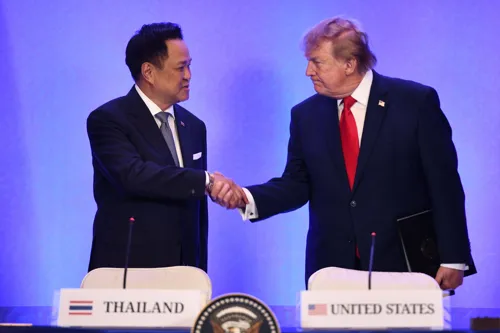
After the ASEAN and APEC meetings, the PM said the Thai–US signing is only a Joint Statement, not the final Agreement on Reciprocal Trade (ART). The government says keeping the US as Thailand's No. 1 export market is the main goal, and that Thailand runs a trade surplus with the US. No tariff rates, dates or product terms were given. For an exporter selling to the US, the final terms are still unknown, so keep current US customers and pricing plans as they are until the full agreement is published. Also watch the Laos rail bridge and Ranong port plans only as long-term background.
▾ Hover for summary ▾ Tap for summary
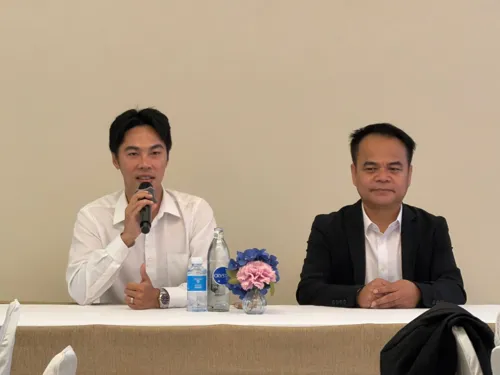
The Provincial Waterworks Authority (PEA's water arm, กปภ.) is tightening monitoring of raw water from the Mekong and Ruak/Sai rivers, checking turbidity and contaminant levels every 30 minutes. If contamination exceeds system capacity, production stops and tankers plus Ko Chang station water are used as backup. Arsenic testing has been extended along the Mekong, including Chiang Khong and Nong Khai. For Chiang Rai and Mae Sai businesses, expect possible supply interruptions and plan on-site stored water. The Mae Sai pipeline is 50% complete, due 2027; the Chiang Rai Mae Lai project (2,248 million baht) is due late 2029.
 Your real translator for LINE and Discord.

▾ Hover for summary ▾ Tap for summary
OpenAI has rolled out Live Dictation to ChatGPT users worldwide from 18 November 2026. It transcribes speech word by word as you talk and removes the old 10-minute recording cap. Gizmodo warns that voice data may be used to train OpenAI models unless the setting is turned off. Individual account holders should switch off training in settings before dictating customer or business details. Team and Enterprise plans already exclude user data from training by default.
▾ Hover for summary ▾ Tap for summary
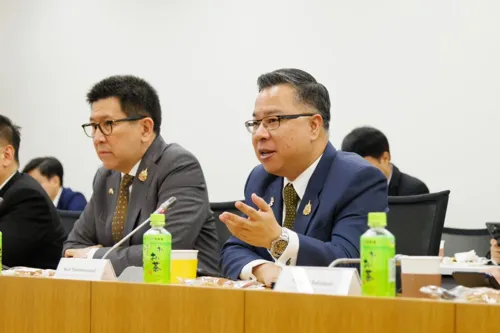
From 1 January 2570 (2027), fully imported BEVs and REEVs with no Thai production base will pay 35% excise tax. Vehicles from makers with local plants will be taxed based on investment, employment and local parts use, with details still open to public consultation. Six Japanese carmakers (Toyota, Honda, Isuzu, Mitsubishi, Mazda, Nissan) announced about 134,000 million baht of Thai investment for 2026-2030. Japanese makers also asked for looser e-Parts deadlines for HEVs and a trade-in scheme to revive the pickup market. For auto parts, transport and dealer businesses, plan pricing and stock of imported EVs before the tax starts; watch the consultation for local-content rules.
▾ Hover for summary ▾ Tap for summary
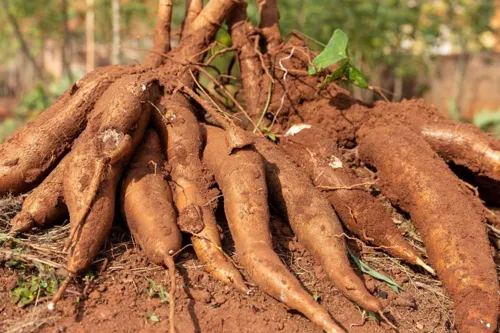
Thai cassava and sugarcane grower groups oppose opening imports of US fuel ethanol under the Thailand-US Agreement on Reciprocal Trade (ART), arguing Thai ethanol plants have spare capacity and could cut cassava and molasses purchases, especially at harvest. They ask the government to keep current import tariffs, publish the negotiation terms, and set clear E20 ethanol targets. The Commerce Ministry says the Joint Statement signed 17 November 2026 does not yet change import tariffs; tariff cuts will follow only once ART takes effect. For cassava, cane, molasses and transport businesses, nothing changes yet, but watch tariff decisions and E20 targets over the coming months.

▾ Hover for summary ▾ Tap for summary
The Commerce Ministry says the Joint Statement signed on 17 Nov 2026 in Manila is not the final ART agreement, and Thailand is not cutting import tariffs on US goods now. Tariffs stay at current rates; cuts will come product by product, with some farm goods getting transition periods (length not yet disclosed). Thailand asked the US to cut Section 301 tariff from 12.5% to 10%, but this is not yet official. Corn and soybean imports may rise, so feed costs could fall for livestock and aquaculture, while local corn growers may face price pressure. Next steps are legal scrubbing, public hearings and parliament, so no change to plan yet; watch for the final text and product schedules.

▾ Hover for summary ▾ Tap for summary
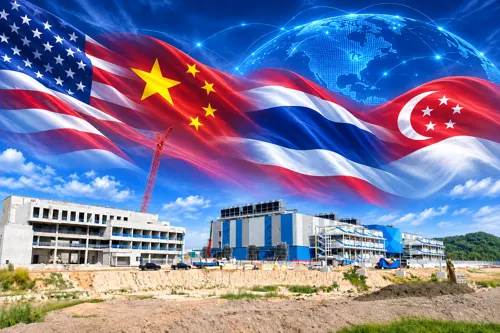
The US Commerce Department (BIS) issued an interim final rule tightening exports and use of advanced AI chips, adding Thailand, Malaysia, Indonesia, Brazil and Singapore as countries where chips could be routed to China. It is not yet enforced, and no start date is confirmed. Thai regulators (EGAT-linked board and BOI) are reviewing it, and data-centre investment requests in Thailand exceed 1 trillion baht. For most SMEs this is background: it matters mainly if you supply, lease from, or build for data-centre operators, where customer-usage logging or parent-company access rules could change contracts. Watch for the Thai government's criteria before committing to data-centre-linked spending.

▾ Hover for summary ▾ Tap for summary
The Agriculture Ministry will sample soil and water on 250 farm plots in the Kok, Sai and Ruak river basins on 23-25 Nov 2026, plus 83 irrigation water points. Results are expected in 1-2 weeks, with samples due at labs by 27 Nov. Plots are colour-coded on Agri-Map: red plots that exceed arsenic or heavy-metal limits may be moved from food crops to non-food crops such as rubber or ornamental trees. Yellow plots become buffer zones. If you farm, sell produce or supply food from these basins, check your plot's status and plan for possible crop changes and buyer questions about product safety.
▾ Hover for summary ▾ Tap for summary
TDRI forecasts Thai GDP growth slowing to 1.8-2.1% in 2027, down from 2.0-2.3% in 2026, citing energy costs from a prolonged war, fading foreign investment, limited government stimulus, household debt reduction and slow tourism recovery. Consumers are prioritising value: buying smaller pack sizes, delaying clothing and travel purchases, but still paying for health and convenience. A Milieu survey of 500 Thai respondents found 75% rank price first. For a business, that suggests offering smaller sizes, showing unit prices clearly, and explaining what the price premium buys. Health, preventive care, wellness tourism and senior-focused services are named as growth areas. KTC expects consumer lending in 2027 to be a year of managing asset quality rather than rapid growth.

▾ Hover for summary ▾ Tap for summary
Google has added Computer Use to the Gemini app on Mac. You type a request in plain language, and Gemini clicks, types and fills in forms across local files, desktop apps and web pages in a background window, so you can keep working. It needs Accessibility and Screen Recording permissions. Google's own help notes warn it can reach logged-in accounts, may read on-screen verification codes, and can be steered by hidden instructions in content (prompt injection). Backups of changes last only 24 hours and some apps cannot be restored. For a small business, the practical step is to limit which apps you allow, avoid "Always Allow" on banking or accounting software, and keep sensitive logins closed while it runs. Nothing here requires action on pricing or costs yet.
 Together GoWeGo! Ferry tickets in Thailand.

▾ Hover for summary ▾ Tap for summary
The SET fell about 1.57% on 20 Nov as global AI-bubble worries and US bond yields above 5% hit markets; Thai stocks dropped about 2%, less than Taiwan, Korea and Japan. SET says the new short-selling rules (effective 16 Nov) are not the cause, and is studying ways to make short selling easier for retail investors. Short selling currently covers only SET100 stocks. For a business owner, this changes nothing today; it only matters if you invest in listed stocks or plan to raise capital through the market.

▾ Hover for summary ▾ Tap for summary
The Thai Red Cross is taking final registrations for private-sector and SME booths at its charity fair, held at Lumpini Park from 18 to 31 January 2027. Registration is open only from 16 to 20 November 2026, and only through www.iredcross.org (or the official bit.ly link given in the notice). Only people who register on that site get the link to the briefing on details. Bookings must go through the Red Cross fundraising office. Be wary of anyone asking for payment outside this official channel.

▾ Hover for summary ▾ Tap for summary
The government says recent lab results from Chiang Rai found no rice contamination above standard. The Cooperatives Ministry plans to buy 2,000 tonnes locally without pushing market prices down, and will buy and destroy produce from any area found contaminated, working with the Interior Ministry and BAAC. It will also test other farm products and zone areas green, yellow or red, with red zones shifted to non-food crops. Tap water in provincial areas is being checked, with use halted where levels exceed standard. If you trade rice, produce or water-dependent goods from northern provinces, check your supplier's test results and origin before buying or selling.
▾ Hover for summary ▾ Tap for summary
Google found malware pre-installed in over 1.3 million Android TV set-top boxes worldwide, linked to manufacturer Videostrong and partners. The malware cannot be removed easily and can turn a home into a proxy for cybercrime or ad fraud. NBTC met on 18 Nov and ordered its office to study rules quickly, including checks on imports and sales of Android TV boxes. For a shop or office, avoid selling or using unbranded "unlocked" boxes, check for unknown apps, and make sure Google Play Protect is on. Rules are not yet in force.