
Archive
August 28, 2026
▾ Hover for summary ▾ Tap for summary
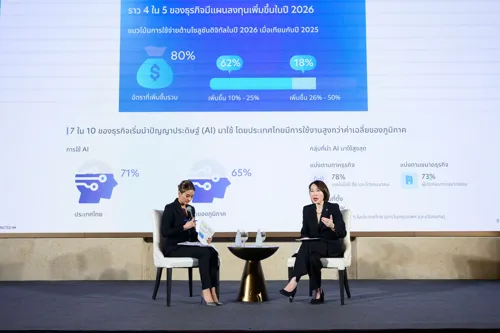
UOB's 2026 Business Outlook survey reveals that while over 60% of Thai entrepreneurs remain confident in business growth, external challenges—geopolitical volatility, trade policy shifts, and supply chain disruptions—are now the primary concerns. The outlook emphasizes that Thai businesses must build resilience through supply chain diversification, AI and digital technology investment, ESG adoption, and market expansion via FTAs. Government agencies (BOI, DITP, depa) are positioning sustainability and digital transformation not as environmental imperatives but as essential competitive factors for attracting investment in a restructured global economy.

▾ Hover for summary ▾ Tap for summary
Chinese billionaires are returning to Singapore as their primary wealth management hub after a period of outflows to Hong Kong, Dubai, and Tokyo. The reversal is driven by China's stricter offshore asset disclosure rules (particularly for trusts and brokerage accounts), geopolitical tensions in the Middle East affecting Dubai's appeal, and Singapore's renewed tax incentives and regulatory flexibility. Singapore's stable rule of law, transparent governance, and comprehensive financial infrastructure now outweigh its earlier reputation for burdensome compliance, making it attractive to high-net-worth individuals seeking geopolitical hedging.

▾ Hover for summary ▾ Tap for summary
A geotechnical engineering professor from Kasetsart University provides detailed analysis of the Tibet-Nepal flash flood and landslide disaster, explaining how glacier lake outburst floods (GLOF) and natural landslide dams can catastrophically fail without warning. The expert identifies 13 key observations showing the water mass behaved like a dam breach, likely triggered by ice-rock avalanches damming a river channel and subsequently rupturing. This "sunny day failure" phenomenon—occurring even without rain—is particularly hazardous in high mountain terrain where detection and mitigation are difficult.

▾ Hover for summary ▾ Tap for summary
ELLE, under ICC, launches "ELLE Recycle Nylon Collection"—handbags made from recycled plastic bottles using regenerated nylon fibers. The line emphasizes lightweight, durable everyday bags in styles like Tote, Mini Hobo, Backpack, and Bucket Bag, combining fashion with environmental responsibility. This positions sustainable luxury as a core brand value for modern Thai women consumers.

 Empower businesses to thrive in the digital age.
▾ Hover for summary ▾ Tap for summary
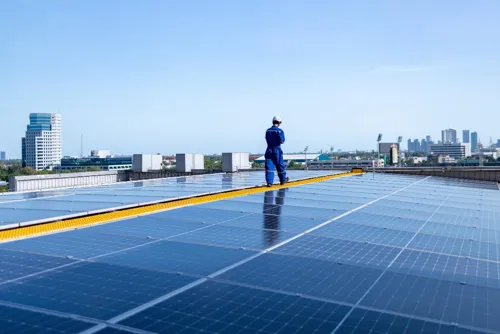
Thailand's "Solar Million Rooftops" programme reduces installation permits from months/years to 7 days and grid-sell approval to 30 days. The scheme offers state-subsidized down payments and 2–4% low-interest on-bill financing through state banks (Kbank, BAHTEC), with typical 5 kW systems generating ~600 units/month and saving ~2,150–2,200 THB/month—enabling payback in 5–7 years. Target is 1 million residential systems (5,000 MW), aiming to lower nationwide electricity rates by ~5 satang/unit and accelerate the prosumer energy model.

▾ Hover for summary ▾ Tap for summary
Japanese investment firm SBI Holdings has backed Indonesian fintech platform Ajaib in a $270m Series C funding round. Ajaib is an equity trading/investment app serving Indonesia's retail market. While this signals strong regional fintech momentum and validates the Indonesia opportunity, Thai SMEs should note this is primarily an Indonesia-focused story—though it illustrates investor appetite for SE Asian fintech and may inform strategy for similar models in Thailand.
▾ Hover for summary ▾ Tap for summary
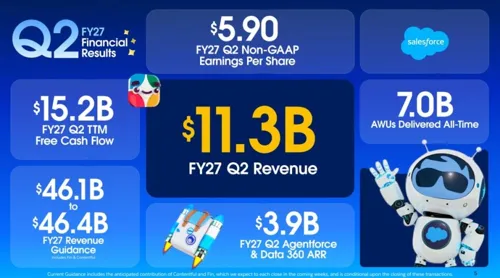
Salesforce posted Q2 FY2027 results with 11% YoY revenue growth to $11.3B and subscription/support revenue up 12% to $10.8B, boosted partly by Informatica contribution. Net income was $3.5B, inflated significantly by a ~$2.6B gain from Anthropic investment holdings. CEO Marc Benioff countered industry skepticism, asserting SaaS remains viable despite AI disruption rhetoric. Stock surged 22% post-earnings. For Thai SMEs evaluating enterprise CRM platforms, this signals Salesforce's continued market dominance and financial health, though note that much profit came from investment gains rather than core operations.

▾ Hover for summary ▾ Tap for summary
CrowdStrike reported Q3 2026 record revenue of $1.47 billion (+26% YoY), driven by strong subscription growth ($1.4B) and ARR reaching $5.84B. CEO George Kurtz attributed the surge to increased market recognition that AI is essential for cybersecurity management, positioning this as the company's best quarter ever. Falcon Flex product demand doubled customer acquisitions with 935+ new clients including top-10 enterprise deals—relevant for Thai enterprises evaluating security infrastructure expansion.
 Your real translator for LINE and Discord.
▾ Hover for summary ▾ Tap for summary
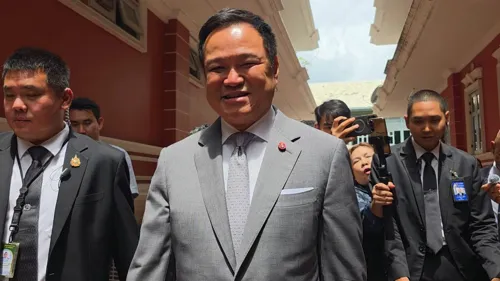
PM Anutin is planning a "roadshow" to meet major Japanese automotive investors to reassure them about manufacturing investments in Thailand and prevent relocation of production bases. Deputy PM Ekniti is coordinating private sector meetings during the PM's trip to UNGA in New York. The Japanese Ambassador will meet the PM today; a September visit to Japan is also being prepared.

▾ Hover for summary ▾ Tap for summary
Thailand's Finance Ministry will not implement gold tax at this time and instead plans to develop a Centralized AML Intelligence Platform in collaboration with gold traders to combat money laundering through small dealers (~7,000 nationwide). The system will connect financial transaction data and risk assessments across traders, addressing current gaps where fraudsters split transactions below the 2M baht reporting threshold. Gold traders oppose any future taxation, arguing it would increase costs, reduce competitiveness, and undermine efforts to position Thailand as a regional gold trading hub.

▾ Hover for summary ▾ Tap for summary
Thailand's Tourism Ministry has begun enforcing new deportation regulations (effective Aug 28) targeting foreign tourists who display aggressive behaviour, disrespect Thai culture, violate laws, or disturb public order. Under a "zero tolerance" policy, offenders face visa revocation, immediate detention, deportation, and permanent blacklisting. This regulatory shift aims to maintain tourism competitiveness while protecting Thai citizens and the tourism sector's reputation.
▾ Hover for summary ▾ Tap for summary
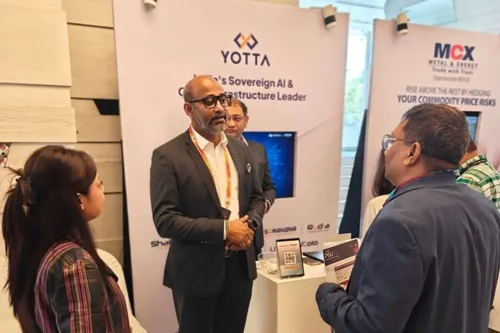
Yotta, an Indian data center operator, is planning a $900 million IPO. This signals growing maturity in India's cloud infrastructure sector and reflects strong capital markets interest in tech infrastructure plays across South Asia—relevant for Thai SMEs exploring regional cloud services and data residency options.

 Want to buy or sell a business?
▾ Hover for summary ▾ Tap for summary
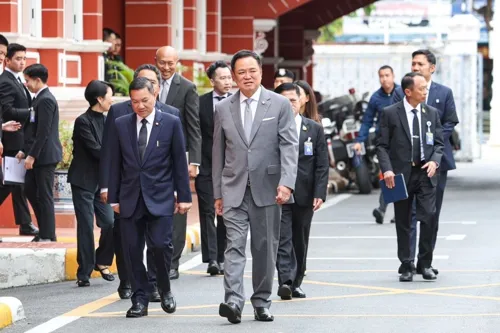
CP Group (via Asia Era One) has requested to terminate its contract for the 3-airport high-speed rail link (Don Mueang–Suvarnabhumi–U-Tapao) with State Railway of Thailand by September 30. PM Anuthín warns contract termination is not straightforward: the terminating party faces blacklist risks, must cover cost differentials if new bids are higher, and faces regulatory penalties under PM's Office procurement rules. This signals government resistance and suggests the EEC will review the matter, though no resolution timeline is clear.

▾ Hover for summary ▾ Tap for summary
Thailand's Government Savings Bank (GSB) has launched a new debt consolidation loan program targeting working individuals with steady income. The scheme allows borrowing up to 200,000 baht (50,000 for off-system debt) with a fixed interest rate starting at 0.75% per month and repayment terms up to 5 years. Aimed at helping SME owners, freelancers, traders, and salaried workers manage multiple debts and improve cash flow amid rising cost of living.

▾ Hover for summary ▾ Tap for summary
Thailand's Deputy PM inaugurated the M82 elevated motorway (25 km, Bangkok-Samut Songkhram) with free toll access through 2026. The project reduces commute time by 40+ minutes, integrates with Ring Road M9, and supports logistics/trade to Southern Thailand. Construction is 98% complete; toll collection system deployment begins 2027, full operations with tolls target 2029.
▾ Hover for summary ▾ Tap for summary
Vietnam is actively recruiting major semiconductor and AI investors (Qualcomm, Samsung) to accelerate domestic tech capacity and manufacturing, signaling regional competition for chipmaking investment.
 Together GoWeGo! Ferry tickets in Thailand.

▾ Hover for summary ▾ Tap for summary
The MAI Association released rankings of the top 10 MAI-listed companies by net profit for H1 2026. PSGC leads with 488 million baht (up 317% YoY), while UKEM posted the highest growth at 1,065% YoY despite lower absolute profit (338 million baht). Of the top 10, seven showed profit growth; three—XO, FSMART, and MEB—saw declines. This snapshot is useful for SMEs tracking mid-cap growth trends, though it reflects a specific cohort rather than broad market conditions.

▾ Hover for summary ▾ Tap for summary
25-year-old entrepreneur Thanaphat (Net), CEO of HPN Group Holdings, has built a billion-baht mattress and bedding business by identifying and closing cost-efficiency gaps that Chinese competitors exploited. Rather than compete on labor or raw material costs, he investigated Chinese manufacturers' cost structures, found the advantage lay in production efficiency (not material sourcing), and invested in local manufacturing to control quality and shipping costs. Key lessons: market gap analysis, supplier/customer relationship leverage during crisis (securing extended trade credit post-factory fire), and owner-operator credibility in B2B sales—actionable playbook for Thai SMEs competing in mature, price-sensitive industries.

▾ Hover for summary ▾ Tap for summary
Thailand's Department of Intellectual Property is actively promoting Geographical Indication (GI) products into foreign markets, with Singapore as a pilot market. Six Thai GI food products—including Phatthalung-origin rice, Nakhon Si Thammarat pomelo, Nan salt, and Prachuap khiri khan durian—were showcased at APAC Food & Beverage Expo 2026 (21–23 August), generating over 5 million baht in sales over three days and estimated business-matching value of 30+ million baht with 15 local importers. The initiative plans to expand digital distribution through Shopee and TikTok, linking trade, tourism, and local community economics to boost rural incomes and GI brand recognition regionally.

▾ Hover for summary ▾ Tap for summary
Educational explainer on how public debt levels affect investment portfolios through interest rates, bond prices, currency stability, and market confidence. Covers the mechanisms (debt-to-GDP ratios, refinancing risk, growth implications) that link sovereign debt to portfolio returns, useful for retail investors but not immediately actionable for Thai SMEs unless they have significant foreign-currency exposure or capital market involvement.

 Stop running your company on Excel.