
Archive
August 29, 2026
▾ Hover for summary ▾ Tap for summary
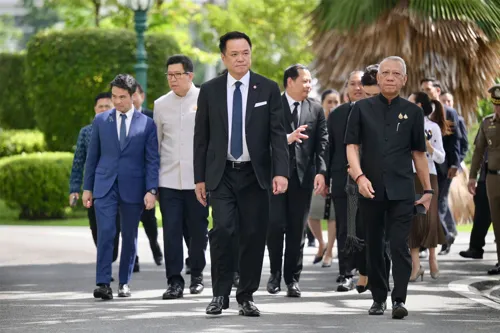
A high-stakes Senate selection fraud case (involving 229 accused individuals, including 21 Bhumjaithai party figures and 12 ministers) is approaching resolution. The opposition has been systematically exposing evidence linking the alleged fraud to core blue-power networks and political dynasties. The Election Commission's seven-member board will soon decide the case's final outcome, with implications for government stability and the PM's position if key coalition figures are implicated.

▾ Hover for summary ▾ Tap for summary
Anthropic has integrated a built-in browser into Claude's desktop application to enable the Cowork feature, allowing Claude to browse the web directly without relying on external browser extensions. This eliminates privacy concerns and limitations of the previous Chrome extension approach while keeping Claude's browsing sessions separate from user data—a meaningful upgrade for AI-assisted workflows.

▾ Hover for summary ▾ Tap for summary
Google released Gemini Omni 1.1 Flash, an upgraded multimodal video generation model offering 360p preview rendering at 1/3 the cost and 60% faster speeds than previous versions. Key improvements include extended 10-second video context continuity, keyframe interpolation for smoother motion, video reference capability, and upscaling to 1080p/4K. Now available via API starting at $0.03/second for 360p clips—a significant cost reduction making enterprise-grade video generation more accessible for Thai SMEs and content creators.

▾ Hover for summary ▾ Tap for summary
Nene Royal, a 16-year-old Thai guitarist from Phuket, has gone viral on America's Got Talent 2026 after winning a Golden Buzzer and amassing 200M+ views. Her success is sparking real business opportunities: the Thai government, Tourism Authority of Thailand, and CPF are positioning her as a tourism ambassador; guitar shops and music schools expect rising demand; and major brands are eyeing endorsement deals. This represents a growing model for Thailand's tourism and cultural economy.

 Empower businesses to thrive in the digital age.

▾ Hover for summary ▾ Tap for summary
Mazda Thailand's CEO outlines a multi-pronged strategy pivoting away from price wars toward total cost of ownership and long-term customer value. The four pillars—multi-solution energy technologies, TCO focus, digital Omotenashi service, and strengthening Thailand's automotive manufacturing base—reflect a pragmatic approach to EVs and hybrid powertrains tailored to local conditions rather than global mandates. This positions Mazda as prioritizing ecosystem stability and SME supply chain development over quarterly metrics.
▾ Hover for summary ▾ Tap for summary
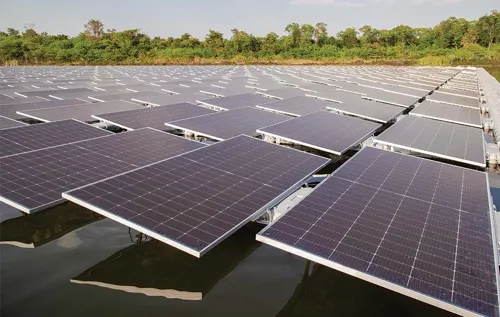
Thailand's government is advancing a major renewable energy transition programme using 400 billion baht in emergency borrowing, with a flagship initiative targeting 1 million household solar cell installations subsidized at 50,000 baht each (50 billion baht total budget). A screening committee has tightened approval criteria for energy transition projects due by September 2027, while private solar panel vendors are rapidly mobilizing to compete for this market. EGAT and PEA are key implementation partners, and projects must now meet stricter governance and domestic-sourcing requirements.
▾ Hover for summary ▾ Tap for summary
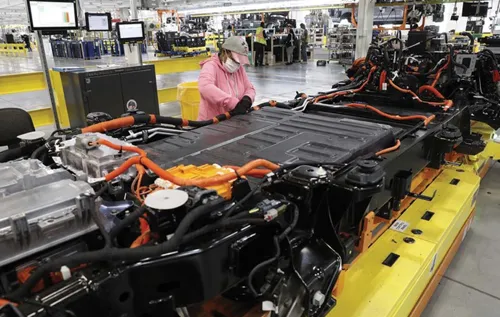
Thailand's Finance Ministry is fast-tracking an excise tax increase on imported EVs (potentially 30–32% from current 10%) to protect domestic car makers against tariff-free Chinese EV imports under China FTA terms. A September 7 EV Board meeting will finalize the new tax structure. Importers and Japanese manufacturers are protesting the imminent timeline, warning of 20% price hikes, consumer cancellations, and supply-chain disruption; some Chinese EV makers are now considering local production to offset costs.
August 28, 2026
▾ Hover for summary ▾ Tap for summary
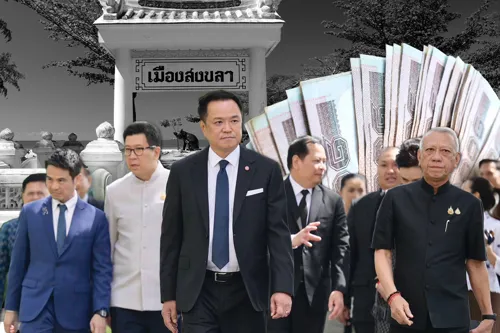
Thailand's cabinet convened an off-site meeting (31 August–1 September) in Songkhla to greenlight 199 projects worth ~57 billion baht across five southern border provinces (Songkhla, Satun, Yala, Pattani, Narathiwat). Projects span infrastructure, tourism, disaster prevention, and economic development. A significant initiative pairs public funds with private-sector insurance to cover disaster relief for ~20 million households, reducing direct government outlay. Relevant for regional supply-chain players and infrastructure vendors targeting southern Thailand.
 Your real translator for LINE and Discord.
▾ Hover for summary ▾ Tap for summary
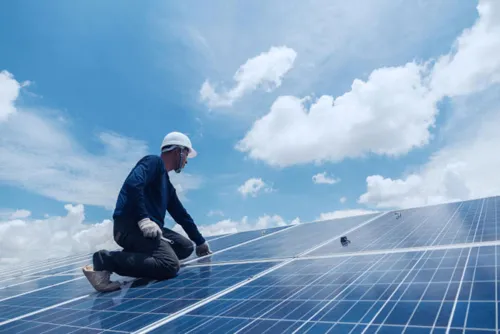
Thailand's government is launching a B200bn energy transition programme focused on rooftop solar installations across government agencies, state enterprises, and households. The initiative aims to reduce the country's reliance on oil and gas through distributed renewable energy generation. Key support includes household subsidies of B50,000 per installation, financing via government banks, development of smart grid infrastructure, and upskilling programmes in clean energy production and EV adoption via the Transport Ministry.
▾ Hover for summary ▾ Tap for summary
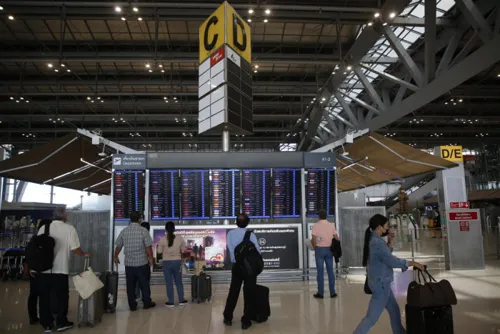
Thailand's Tourism Department plans to reinstate pre-pandemic security deposit requirements for tour operators (raising from 3–15M baht to 10–50M baht for domestic, 30–200M baht for outbound), but the Thai Travel Agents Association argues this burdens licensed SME operators without addressing illegal operators or fraud. The association urges the ministry to focus on cracking down on high-risk operators and illegal players instead, with a public hearing scheduled at the ministry next month on the proposed regulations.
▾ Hover for summary ▾ Tap for summary
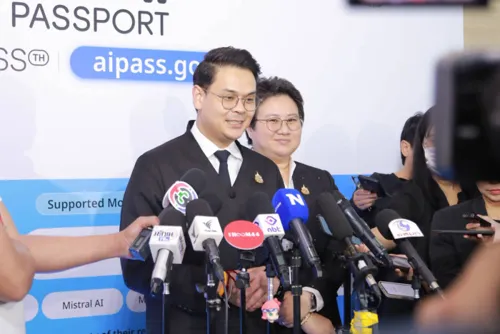
Thailand's DES Ministry launched the TH-AI Passport project to boost AI adoption above global averages. The initiative provides 5 million users access to 30+ AI models and tools from 14+ leading developers, along with skills training on a single platform. Current adoption stands at 12.4% of working-age population (up from 9.1% a year prior). Regional disparities exist—Bangkok leads with 250k registrations vs. 16k in rural Buri Ram. The project aims to remove financial barriers to AI access, positioning it as critical human capital investment for Thailand.
▾ Hover for summary ▾ Tap for summary
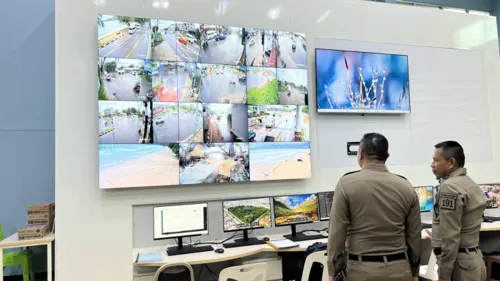
Phuket Provincial Police have deployed an AI-powered surveillance system called 'Phuket Eyes' launched in January to enhance public safety and manage traffic. The network integrates facial recognition cameras, X-ray vehicle scanning, emergency SOS systems, and AI-driven alerts—fully operational as of July. Two pilot Smart Poles are active in Phuket Town and Patong Beach; authorities plan a second phase expansion covering over 100 million baht. The system can automatically detect traffic violations and issue fines. Effectiveness will be assessed after three months.

 Want to buy or sell a business?

▾ Hover for summary ▾ Tap for summary
A major fire erupted at Klongthom Centre, a 30-year-old electronics and tools shopping hub housing ~500 shops in Bangkok's Pomprap district on Friday night. The three-storey steel-structure building partially collapsed after burning for over two hours. No casualties were reported; firefighters contained the blaze by 11:13pm. The incident highlights supply chain disruption risk for electronics retailers and SMEs sourcing from this well-known wholesale hub.

▾ Hover for summary ▾ Tap for summary
A major fire destroyed Klongthom Center, a landmark 30-year-old wholesale electronics and accessories hub with ~500 shops in Bangkok's Pomprap district. The three-storey steel-frame building collapsed partially under extreme heat, with the fire starting on the first floor and contained after 2+ hours. No casualties reported, but this represents significant supply-chain disruption for traders and SMEs relying on this major electronics distribution point.

▾ Hover for summary ▾ Tap for summary
US Federal Reserve Chair Kevin Warsh's Jackson Hole speech signals a historic economic shift from secular stagnation to AI-driven growth, but emphasizes inflation remains a priority concern. The Fed is reforming its forward guidance approach, positioning short-term rates as the primary tool for price stability and full employment, while cautioning that unconventional policies should be minimal in normal times. With inflation metrics persistently above the 2% target and a higher percentage of goods/services seeing 3%+ price increases than pre-pandemic levels, the Fed's near-term focus must remain on bringing core inflation back to target clearly and quickly.
▾ Hover for summary ▾ Tap for summary
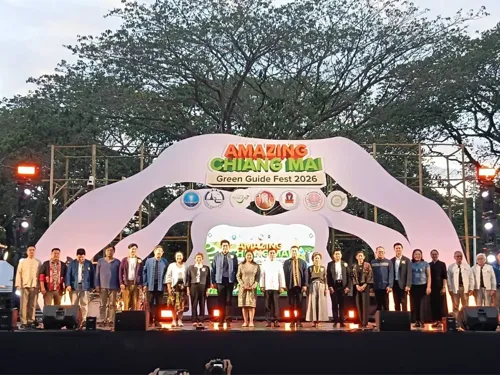
Thailand's Tourism Authority (TAT) launched the "Amazing Chiang Mai Green Guide Fest 2026" (August 28–30) to position Chiang Mai as a Global Green Destination and sustainable tourism model (Chiang Mai Prototype). The event features six activity zones spanning sustainability innovations, local crafts, farm-to-table dining, business networking, cultural performances, and community engagement—with a projected economic impact of 100 million baht. The event is designed as carbon-neutral and demonstrates commitment to reducing environmental impact while leveraging Chiang Mai's creative city identity across arts, culture, wellness, and local wisdom.
 Together GoWeGo! Ferry tickets in Thailand.
▾ Hover for summary ▾ Tap for summary
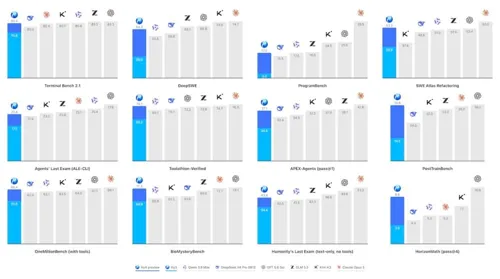
Tencent released Hy4 Preview, a 770B-A49B parameter model offering performance comparable to leading Chinese AI models (DeepSeek V4 Pro, Kimi K3, GLM5.3, Qwen3.8 Max) while maintaining aggressive pricing at $0.834–$2.501 per million tokens—with exceptionally low cache rates ($0.042/M tokens). This makes Hy4 cost-competitive for agentic AI workloads, particularly relevant for SMEs exploring large-scale LLM deployment without prohibitive inference costs.
▾ Hover for summary ▾ Tap for summary
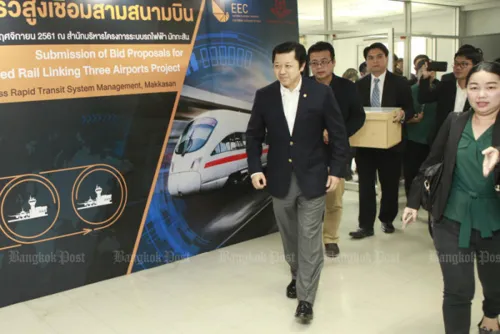
CP Group-led Asia Era One seeks to exit the 220-billion-baht three-airport rail project, but PM Anutin warns contract termination would trigger blacklisting from future government projects. The dormant infrastructure venture, plagued by COVID delays and contractual disputes since 2019, remains critical to Thailand's Eastern Economic Corridor strategy. Government talks with railway agencies are imminent as the Airport Rail Link operating contract expires end-September.
▾ Hover for summary ▾ Tap for summary
Institutional investors are increasing allocations to private credit markets in Asia, signaling growing confidence in regional investment opportunities and potentially expanding financing options for SMEs.
▾ Hover for summary ▾ Tap for summary
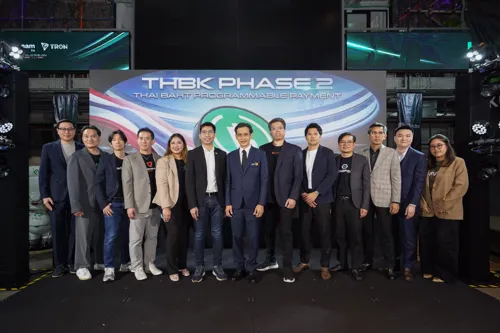
BitCub Blockchain Technology has advanced to Phase 2 of Thailand's Programmable Payment pilot under the Bank of Thailand's Enhanced Regulatory Sandbox, partnering with 15 businesses. The company will develop 4 use cases on KUB Chain: digital asset payments, escrow services (with Villa Market), cross-chain THBK interoperability (including TrueMoney), and payment gateway integration (via Chillpay and InwPay). The initiative aims to validate blockchain infrastructure for efficient, secure financial services applicable to daily commerce. This represents significant progress in bridging DeFi infrastructure with Thai retail and business needs.

 Stop running your company on Excel.