
Archive
September 2, 2026
▾ Hover for summary ▾ Tap for summary
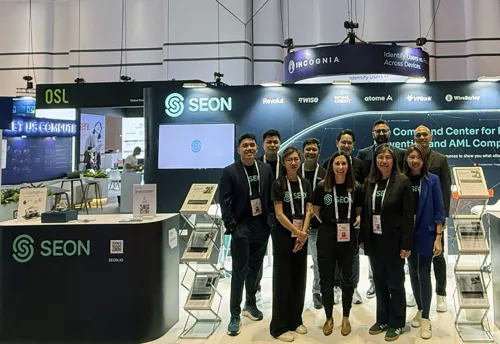
Seon, a global fraud detection and prevention technology provider, is expanding its Southeast Asian operations by partnering with a Philippine-based company. This regional push suggests growing fintech security demand across SEA, including potential opportunities for Thai financial services and e-commerce platforms looking to upgrade fraud protection infrastructure.
▾ Hover for summary ▾ Tap for summary
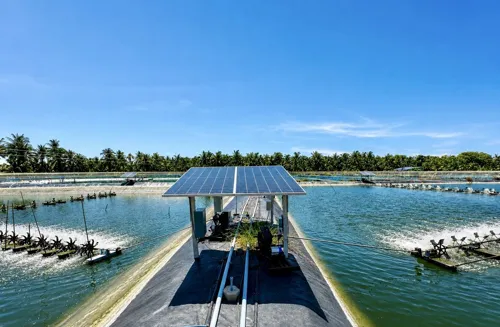
Thailand's Department of Fisheries is launching a subsidy program to help shrimp farmers reduce production costs through solar cell installations and high-efficiency motors. The scheme will cover 1,000 farmers across 36 provinces, with government backing up to 50,000 baht (50% of investment cost). Target savings: at least 10% reduction in electricity costs per production unit. Application period: September 1–October 16, 2026; results announced November 5, 2026. Eligibility requires aquaculture certification (GAP, CoC, ASC, or BAP) and 12 months of prior energy usage data.
▾ Hover for summary ▾ Tap for summary
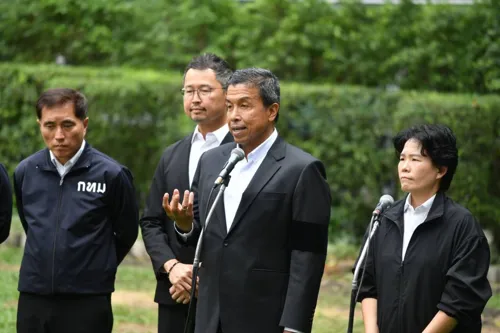
Bangkok's Governor Chatchatchai announced a regulatory freeze on new data center licenses and acknowledged legal loopholes. Of 6 large data centers in Bangkok, 3 have received permits while 3 are under review. The government is fast-tracking a data center board meeting (Sept 4) and revising urban planning codes to establish clear standards on water/electricity consumption and environmental impact, which were previously unregulated as data centers were classified as warehouses.
▾ Hover for summary ▾ Tap for summary
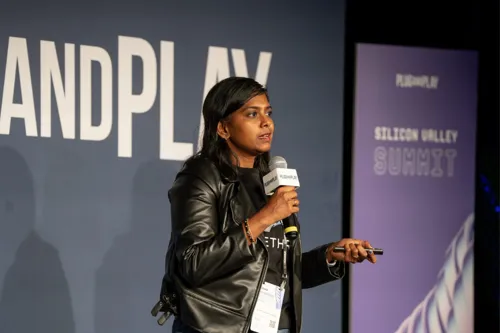
A startup is developing real-time safety guardrails for AI agents—technology designed to monitor and control autonomous AI behavior during execution. This addresses a growing concern in AI deployment around reliability and risk management. Relevant for Thai tech companies exploring AI integration and governance solutions.

 Empower businesses to thrive in the digital age.
▾ Hover for summary ▾ Tap for summary
Indian authorities uncovered a falsification ring targeting major food exporters (PepsiCo, Nestlé) by forging expiry dates and nutrition labels, raising urgent concerns for supply chain integrity and food safety in regional exports.

▾ Hover for summary ▾ Tap for summary
This article argues that in an era of AI-generated content saturation, authentic founder narratives—real challenges overcome, exclusive first-party data, and timely insights—have become more valuable than massive PR budgets. Rather than asking "what will media do for us," founders should ask "what valuable insights can we provide journalists?" The piece emphasizes that sustainable media presence stems from being a credible information source, not paid distribution.

▾ Hover for summary ▾ Tap for summary
Mitsubishi has designated its Laem Chabang plant in Chonburi as the global production hub for the new Gen 5 PAJERO premium SUV, expanding Thailand's role as its largest manufacturing facility worldwide. The vehicle will launch in Thailand on October 19, before rolling out to 100+ countries across Asia, Latin America, and the Middle East. This marks significant confidence in Thailand's manufacturing capabilities and positions the Thai facility as a key export center for the global market.

▾ Hover for summary ▾ Tap for summary
World Labs, founded by Fei-Fei Li, unveiled Atlas, an AI model that generates complete 3D scenes and minute-long 1440p videos from a single photograph. Atlas uses a "world model" approach grounded in spatial reasoning—understanding 3D structure rather than just predicting the next frame—and operates as an omni-model processing text, images, video, and 3D data in one architecture. With $1.23B raised and $5B valuation, Atlas addresses robotics, gaming, design, and VFX needs by outputting usable 3D geometry, requiring only 2–3 input photos for accuracy while managing 100+ images for high precision. This positions it as a significant step forward in novel view synthesis and spatial AI.
 Your real translator for LINE and Discord.
▾ Hover for summary ▾ Tap for summary
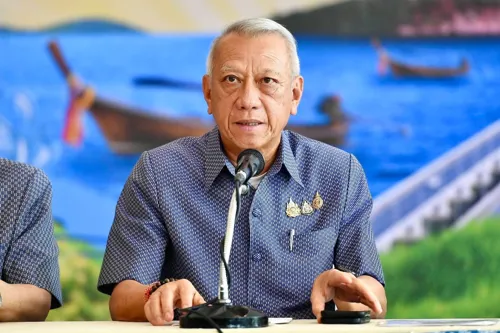
Thailand's Transport Ministry has approved construction of three dual-track railway lines in the South (Chumphon–Surat Thani, Surat Thani–Hat Yai, and Hat Yai–Padang Besarusing 106.8 billion baht total funding) to complete missing logistics links. The project aims to connect southern China via Laos, enabling faster exports of durian and agricultural goods to southern China, and providing Thailand's lowest-cost access to Indian Ocean markets via Malaysian ports for trade to India, the Middle East, and Europe. Implementation spans 2026–2031.
▾ Hover for summary ▾ Tap for summary
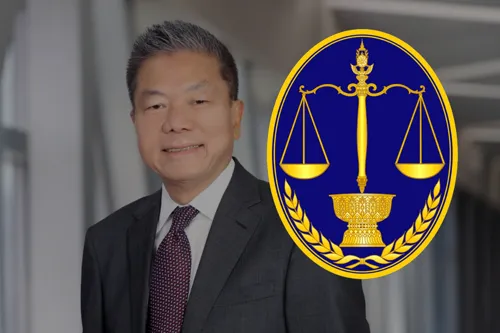
Thailand's Supreme Administrative Court reversed a lower court ruling and accepted an appeal by Dr. Sorn against the selection committee, ruling that the committee lacked authority to determine his disqualification from NBTC leadership. The decision creates procedural uncertainty as both royal decree processing and court proceedings proceed in parallel, leaving NBTC governance in limbo. This affects telecommunications regulation and could impact industry decisions during the leadership vacuum.

▾ Hover for summary ▾ Tap for summary
AWS reports that while AI-driven traffic is surging, publisher paywalls are preventing cloud providers and platforms from monetizing this growth. This highlights a tension between content publishers seeking subscription revenue and tech platforms aiming to capitalize on increased AI-related traffic and usage.
▾ Hover for summary ▾ Tap for summary
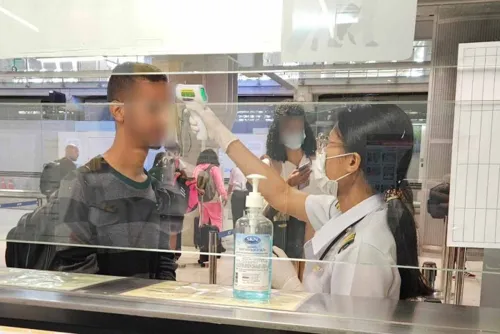
Thailand has recorded 254 Mpox cases (193 Clade Ib, 61 Clade II) and ~99,000 Covid-19 cases from January to late August 2026, with both rising since June. Mpox transmission occurs mainly through sexual contact in Bangkok and tourist areas, while Covid-19 fatality remains low at 0.02% with effective treatment. Public health authorities recommend vaccination, hygiene, and avoiding close contact as preventive measures.

 Want to buy or sell a business?
▾ Hover for summary ▾ Tap for summary
Seven Thai airlines have partnered with the transport and commerce ministries to offer free check-in of up to 10kg of fresh fruit on domestic flights until end of August 2027. The campaign targets 100,000 boxes (~1,000 tonnes) across 20 regional airports to help local farmers distribute produce during peak harvest, boost domestic tourism, and promote Thai fruits nationally. Passengers can use official airport-provided boxes with sealed, moisture-free fruit.
▾ Hover for summary ▾ Tap for summary
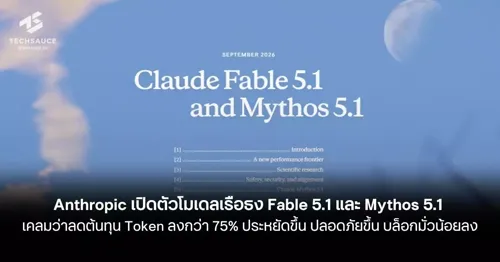
Anthropic released two flagship AI models (Fable & Mythos 5.1) with significant cost and privacy improvements. Prompt caching prices cut 75%, reducing total operational costs for complex workloads. New Zero Data Retention and Enterprise Frontier Safeguards features let organizations run models on their own infrastructure with customizable safety controls, while guaranteeing enterprise data won't be used for model training without explicit permission—a direct response to SME and enterprise concerns about data security and TCO.
▾ Hover for summary ▾ Tap for summary
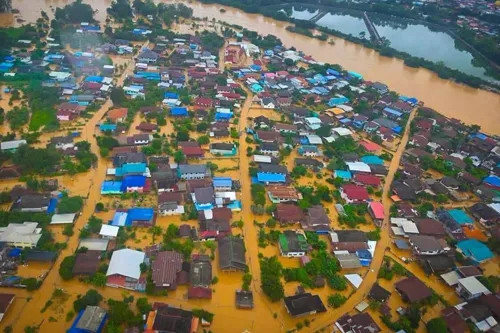
Economist Setha Thavisit argues that Thailand's approach to flood management and compensation is fundamentally flawed. Communities that bear the burden of being designated flood-absorption zones (like Bangbala in Ayutthaya) are treated as disaster victims receiving discretionary aid, rather than as public service providers protecting the nation's economy. The piece proposes a systemic shift to "rights-based compensation"—establishing clear pre-flood agreements specifying which areas will flood, when, for how long, and guaranteed compensation timelines, backed by dedicated funding and real-time data systems rather than ad-hoc disaster budgets. This reform would require coordination across multiple agencies but is essential for breaking Thailand's cycle of repeated flooding and unequal burden-sharing.
▾ Hover for summary ▾ Tap for summary
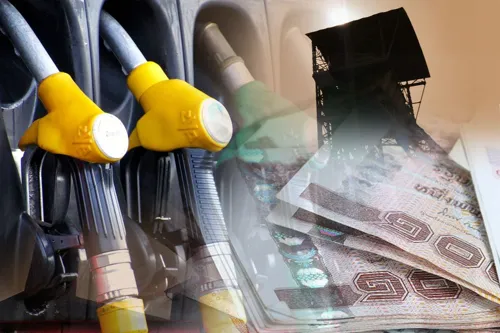
Thailand's Petroleum Fund Committee (กบน.) raised retail fuel prices on 2 September 2026 in response to global oil market pressures: diesel up 0.75 baht/liter (to 39.14 baht) and gasoline/E85 up 0.60 baht/liter, following a spike in Singapore market diesel to $164/barrel and geopolitical tensions between the US and Iran. The fund faces daily compensation burden of ~357 million baht; these adjustments aim to preserve fund liquidity and sustain the fund's price-stabilization role amid volatile global markets.
 Together GoWeGo! Ferry tickets in Thailand.

▾ Hover for summary ▾ Tap for summary
Module 5 of DPU's Super LBA 3 executive curriculum covered intellectual property law and AI strategy, featuring IP experts from Thailand's Department of Intellectual Property. Key topics included trademark design optimization, IP value creation, copyright management, AI applications, and data security. Practical case studies (e.g., Deeni brand's ฿7M extortion attempt in China, Santa Fe and Lao Yuan logo strategies) illustrated how strong branding and early registration protect against infringement and commercial disputes. Thailand's IP laws carry criminal penalties with damages shared back to rightsholders, though enforcement effectiveness remains a critical challenge for IP owners.
▾ Hover for summary ▾ Tap for summary
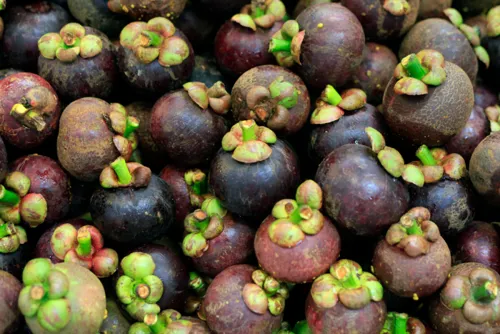
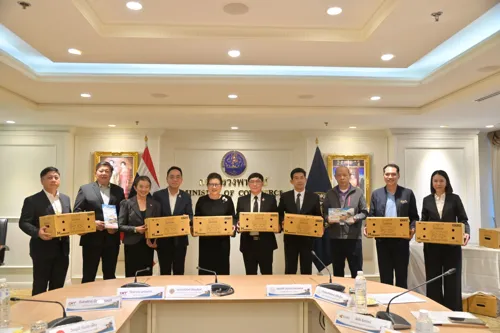
Thailand's Commerce Ministry and Transport Ministry launched a one-year program (September 2026–August 2027) in partnership with seven airlines to allow passengers to check up to 10kg of fresh fruit free-of-charge across 20 provincial airports nationwide. The initiative aims to boost fruit exports (targeting 1,000+ tons through 100,000 standardized boxes), connect agricultural production with tourism, and promote Thai tropical fruits as a travel landmark. Key fruits entering market include mangosteen, longan, salak, and dragon fruit. The program also addresses logistics challenges: mangosteen exports faced recent headwinds due to flooding in the Bo Kaen–Mohan transport corridor through Laos (handling 65% of Thai mangosteen to China), and gateways are exploring alternative rail and Mekong River routes to mitigate delays.

▾ Hover for summary ▾ Tap for summary
Microsoft and AWS are collaborating on multicloud networking infrastructure, signaling industry consolidation around hybrid cloud adoption. This partnership could lower integration barriers for Thai SMEs considering multi-vendor cloud strategies, though real-world local implications remain unclear at announcement stage.
▾ Hover for summary ▾ Tap for summary
Thailand's SEC (ก.ล.ต.) has issued "Travel Rule" guidelines effective February 27, 2027, requiring digital asset operators to collect and verify sender and recipient information on all crypto transfers. Transfers over 30,000 baht require additional KYC data (recipient location, province/city, country, and business ID if applicable); self-hosted wallet transfers above this threshold need ownership verification. Operators must retain transaction records for 5 years and send user data alongside transfer instructions to receiving operators. The rule aligns Thailand with FATF standards to combat money laundering and terrorist financing while not affecting domestic trading or THB withdrawals.

 Stop running your company on Excel.