
Archive
September 3, 2026
▾ Hover for summary ▾ Tap for summary
Cloudflare is developing an AI strategy that addresses bot management, billing models, and data scraping challenges. The story likely covers how the cloud infrastructure provider is positioning itself to handle AI-driven traffic and data usage patterns, relevant for tech infrastructure stakeholders managing AI workloads at scale.

▾ Hover for summary ▾ Tap for summary
A major Bangkok data centre (Damac Digital BKK02) was found storing 200,000 litres of diesel fuel without proper licensing, triggering environmental complaints and legal action. The incident arrives as Thailand establishes new oversight via a Data Centre Policy Committee, signalling tighter regulation including proposed zoning guidelines and fuel storage bans in residential areas. SMEs in the data centre and energy sectors should expect stricter compliance requirements.

▾ Hover for summary ▾ Tap for summary
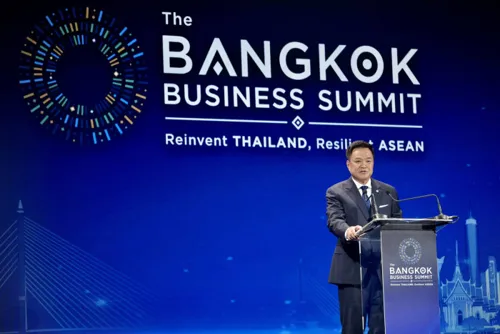
Payong Srivanij, CEO of Krung Thai Bank and chair of the Thai Bankers Association, delivered the keynote at Bangkok Business Summit 2026, emphasizing that Thailand and ASEAN face a critical window to compete for new investment, supply chains, and high-value economic activity amid AI, energy transition, and geopolitical shifts. The core challenge: convert Thailand's structural advantages (industrial capacity, infrastructure, finance) into concrete execution and move SMEs and businesses up global value chains. He outlined a "Whole-of-Society" approach requiring private sector leadership in identifying investment barriers and building new competitive capabilities, while government removes obstacles. This year is pivotal—the World Bank is launching "Building Thailand's Future Today," Bangkok hosts the IMF-World Bank Annual Meetings in October, and Thailand will assume ASEAN presidency in 2027.

▾ Hover for summary ▾ Tap for summary
PM Anutin outlined Thailand's strategy to move beyond manufacturing to become a knowledge and innovation partner for foreign investors. Four global priorities guide the effort: economic cooperation, AI and technology development, climate transition, and aging society solutions. The government is reviewing 7,000+ regulations to streamline investment, targeting quality FDI linked to local supply chain development, SME strengthening, and knowledge creation—positioning Thailand as a regional hub for future industries across automotive, electronics, food, health, and clean energy.

 Empower businesses to thrive in the digital age.

▾ Hover for summary ▾ Tap for summary
The World Bank's latest flagship report identifies a critical gap: Thailand needs 5.4% annual per-capita GDP growth to reach high-income status by 2037, but has only achieved 2.2% (2021–2024). The Bank proposes 10 priority reforms across future industries (data centers, EVs, digital services), SME financing, STEM/AI workforce development, and secondary city growth. These actions could add 2.5% to growth, but require improved governance, fiscal discipline, and institutional capacity—offering SMEs actionable targets for upskilling and export positioning.

▾ Hover for summary ▾ Tap for summary
The article examines "Job Hugging"—a labour market phenomenon where employees stay in current roles not from loyalty but due to economic uncertainty and high living costs. While low turnover appears positive, 75% of staff plan to stay 2+ years reluctantly, with only 20% globally being truly engaged (per Gallup). The real risk: disengaged workers present may drag down productivity, innovation, and eventually drive out top talent. Leaders must shift focus from turnover metrics alone to employee engagement and career visibility. Schneider Electric's Talent Marketplace solution—connecting staff to internal growth opportunities—generated $15M+ in value by making career progression visible and achievable without departure.

▾ Hover for summary ▾ Tap for summary
The World Bank's report "Building Thailand's Future Today" benchmarks Thailand's 35-year economic transformation from lower-middle-income agriculture-based economy to a dynamic regional player. Key achievements include 11 million formal jobs created, GDP per capita more than doubled, and near-elimination of extreme poverty. To reach high-income status by 2037, Thailand must upgrade competitiveness in global supply chains, boost digital and creative industries, enhance workforce skills, and strengthen business-education-government collaboration for innovation and productivity gains.

▾ Hover for summary ▾ Tap for summary
Thailand's Ministry of Defense, AIS, and DGA launched a joint digital defense initiative to build AI and digital literacy among military personnel and civil servants. The program offers online training through DGA's platform (Digital Government Learning Platform) and AIS's "Cyber Assurance: AI Literacy" curriculum, covering content from basic user level to system developers. Roadshows will reach all four military commands. This reflects Thailand's broader pivot toward "Digital Defense" and data-driven governance in the AI era.
 Your real translator for LINE and Discord.

▾ Hover for summary ▾ Tap for summary
The World Bank's flagship report presents Thailand's critical growth challenge: the economy must triple its growth rate from 2.2% to 5.4% annually over the next decade to reach high-income status by 2037. The report identifies five priority sectors (advanced manufacturing, sustainable tourism, digital services, agri-food, and creative industries) and emphasizes that traditional competitive advantages (cost, volume, scale) are exhausted. Key reform areas include skills development, technology transfer tied to data center investments, regional economic decentralization, and closing gender labor gaps—but success depends on simultaneous, sustained reforms across education, innovation, and urban development, not automatic market forces.

▾ Hover for summary ▾ Tap for summary
Thailand's Deputy PM and Finance Minister proposes positioning Thailand as a regional "connector" across ASEAN to address major cross-border challenges: geopolitics, AI, climate change, and aging demographics. Key initiatives include ASEAN Power Grid for energy security, cross-border payment systems (PromptPay-PayNow), and leveraging Thailand's Silver Economy alongside younger economies. Success requires both public policy frameworks and private-sector leadership to build distributed regional resilience rather than isolated national solutions.

▾ Hover for summary ▾ Tap for summary
Thailand's medical sector has acquired Next-Generation Sequencing (NGS) technology that can diagnose rare genetic diseases in under a week—down from 4–10 years—potentially preventing blindness, disability, and death. High-standard labs and medical centers exist nationwide, but experts argue the real bottleneck is lack of integrated infrastructure connecting patients, diagnostics, and treatment. Prof. Vorasak Shotelersathit (Chulalongkorn University) presented data showing rare diseases affect 3.5–5.9% of the global population (300+ million people)—more than 7× the number of people with HIV—yet policy investment remains limited. The case studies highlight how early NGS screening could have saved a Thai girl's eyesight, while a premature infant received diagnosis in five days. System integration, not technology, is now the priority for a national rare-disease policy.
▾ Hover for summary ▾ Tap for summary
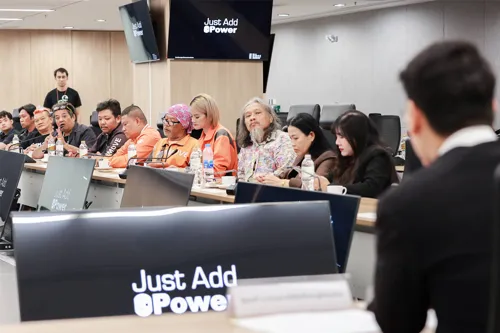
Lalamove riders are in dispute with the platform over delivery fees, claiming rates have dropped from 10-13 baht/km to just 3 baht/km (undercutting their ~3.7 baht cost), with 80% of orders at the lowest rate. The Digital Economy Ministry is mediating, giving 15 days to reconcile conflicting data; ETDA is studying a minimum rate framework. Unlike ride-sharing, on-demand delivery lacks regulatory price controls, though authorities are considering establishing a fair baseline across all platforms.

 Want to buy or sell a business?

▾ Hover for summary ▾ Tap for summary
Google has launched Google Pics, an AI-powered design tool for Workspace users that leverages Gemini and Nano Banana to create and edit images with targeted spot-fixes rather than full regeneration. Key benefit: users can selectively modify text or images with simple prompts without repeatedly regenerating entire designs. Rolling out to Business, Enterprise, and AI Pro subscribers, with Google Drive access coming within weeks. Directly addresses SME workflow needs for rapid content creation without design expertise.

▾ Hover for summary ▾ Tap for summary
Thailand's central bank governor unveiled the "New Horizons" strategy at Bangkok Business Summit 2024, positioning Thailand ahead of hosting the IMF/World Bank annual meetings. The strategy prioritizes digital financial infrastructure and resilience, with the headline achievement being the "Bangkok Blueprint"—a global framework for fraud-resilient financial services. Key metrics show digital payment transactions jumped 2.3x in 4 years (₿21B→₿48B) and digital finance account access grew 67% to 141M accounts, yet fraud losses hit ₿43B+ annually and cyber attacks on Thai banks rose 45% YoY. The BoT is shifting focus from crisis recovery to sustainable growth, emphasizing public-private collaboration and continuous adaptation against evolving digital fraud and cybersecurity threats.

▾ Hover for summary ▾ Tap for summary
Thailand's Deputy PM Ekniti announced a clear 12-year plan to move Thailand to high-income status, with support from the World Bank. After nearly 30 years of low growth and structural problems since the 1997 financial crisis, the government is signaling a major economic overhaul centered on new investment rather than relying on past gains. This represents a strategic shift toward addressing accumulated challenges including household debt, aging population, and fiscal pressures ahead of Thailand's hosting of IMF-World Bank meetings in October.
▾ Hover for summary ▾ Tap for summary
PM Anutin pitched Thailand as a full ecosystem for global investors, not just a manufacturing location, highlighting existing industrial clusters (automotive, electronics, food, healthcare, tourism), skilled workforce, and strategic Southeast Asia positioning. Government plans to streamline 7,000+ regulations and pursue OECD membership to boost investor confidence; also positioning ageing demographics as opportunity through 'longevity economy' in healthcare/wellness/tech.
 Together GoWeGo! Ferry tickets in Thailand.

▾ Hover for summary ▾ Tap for summary
Thai food exporters face tightening international regulations: the EU's PPWR (effective 2028) mandates compostable packaging labels for produce, while the US FDA's Food Traceability Rule requires rapid data retrieval on food movements. Four SPACE-F Batch 7 startups—Zuppar Reborn (pineapple-waste stickers), EmeraldPlast (bio-plastic pellets), VeriPura, and Squizify—are developing solutions for sustainable packaging and traceability systems. Preparing now is critical for SMEs planning European and US market access.
▾ Hover for summary ▾ Tap for summary
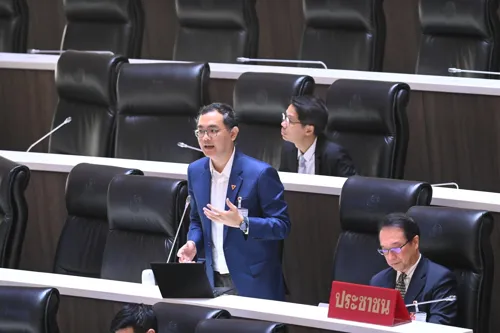
A former tech executive and MP critically examines Thailand's data center debate, arguing they are necessary infrastructure (like modern power plants) but not an economic silver bullet. He warns against inflated expectations of job creation and wealth, notes data centers require robust environmental regulation (which Thailand lacks), and urges Thailand to stop seeking handouts—international operators should compete to offer Thailand genuine benefits instead.

▾ Hover for summary ▾ Tap for summary
The article discusses common misconceptions and strategic mistakes that Southeast Asian startup founders make when attempting to enter and expand in the US market—a critical topic for regional entrepreneurs seeking international growth and capital.

▾ Hover for summary ▾ Tap for summary
Four SPACE-F Batch 7 startups are building AI-powered foodtech solutions addressing personalized nutrition and supply chain complexity. Eatwellconcept (Thailand) connects AI-powered nutrition design with meal delivery for NCD patients; Jola (Thailand) offers customizable pet nutrition; Openfarming (Saudi Arabia) automates multi-channel order aggregation for food distributors; YiXingYuan (Taiwan) develops modular processing units using high-voltage electric fields near production sites. Together they tackle the full chain—from personalized meal planning and pet wellness to backend logistics and post-harvest preservation—representing meaningful venture activity in regional foodtech.

 Stop running your company on Excel.