
Archive
September 5, 2026

▾ Hover for summary ▾ Tap for summary
Thailand has suspended construction of 49 data centers due to concerns over power consumption and grid capacity. This reflects government efforts to manage energy demand amid rapid growth in data center development—a critical infrastructure issue for tech SMEs relying on cloud and data hosting services in the region.

▾ Hover for summary ▾ Tap for summary
Two heirs of former PM Thaksin Shinawatra are aggressively diversifying beyond real estate. Nob-Naphat leads Sansiri Capital's 1-billion-baht, 3-year investment in food, lifestyle, hotels, and education; most notably acquiring Lake Como EDITION (Italy's ultra-luxury 300-room hotel, ~€200M asset) targeting high-return trophy assets. Meanwhile, sister Nub-Chanyada is scaling BEANS Coffee Roaster (from 3 cups sold 5 years ago to 14x growth) with disciplined financial planning. Both exemplify a new generation applying data-driven strategy and ESG thinking to lifestyle and hospitality sectors.

▾ Hover for summary ▾ Tap for summary
Acer is reviving the Packard Bell brand for its 100th anniversary with a new "Tech it easy" concept, launching colorful notebooks (DotBook at €499) and record players (DotLoop at €149) in Q4 2026. The rebrand targets younger consumers in EMEA regions with affordable, design-forward tech across multiple product categories including speakers, feature phones, and audio glasses. This represents a strategic effort to leverage brand heritage while repositioning for the contemporary market.

▾ Hover for summary ▾ Tap for summary
Anthropic, a leading AI safety startup, is reportedly planning an IPO launch in mid-October. This signals growing maturity in the AI sector and indicates investor confidence in AI company valuations. For Thai tech entrepreneurs and investors, this represents a benchmark for AI startup momentum globally, though direct local impact may be limited unless Anthropic has specific Thailand partnerships or hiring plans.

 Empower businesses to thrive in the digital age.

▾ Hover for summary ▾ Tap for summary
Mitsubishi Motors launches the all-new Pajero (Gen 5) SUV, with Thailand designated as its primary global production and export hub for the first time. The company targets 10,000 units in the fiscal year ending March 2570 (2027), launching first in Thailand on October 19, 2569 (2026), followed by Australia, Japan, and over 100 countries globally. This marks a major vote of confidence in Thailand's auto manufacturing base and positions the country as a key production center for Mitsubishi's global SUV strategy.

▾ Hover for summary ▾ Tap for summary
Global bond yields spiked across major economies (US 10-year at 4.79%, UK at 5.23%, Germany at 3.35%) following renewed US military operations against Iran in late August/early September 2026. Rising oil prices and geopolitical tensions are compounding inflation concerns and reducing investor confidence in sovereign debt. Structural issues—ballooning US public debt ($40 trillion), persistent budget deficits ($1.8 trillion), and unclear Fed policy—mean the surge is likely sustained rather than temporary, despite Treasury buyback operations yielding only short-term relief.

▾ Hover for summary ▾ Tap for summary
New Fed Chair Kevin Warsh's hawkish Jackson Hole speech triggered market repricing of rate-hike odds, but analysis reveals the true intent is "jawboning"—using forward guidance and strong rhetoric to tighten financial conditions without actual rate moves. Key implication for Thailand: widening US-Thai yield spreads and stronger dollar will pressure baht depreciation and emerging-market asset valuations in the near term. The case shows how precise communication can substitute for actual policy tightening—a potential tool for Bank of Thailand amid ongoing recovery challenges.

▾ Hover for summary ▾ Tap for summary
Thailand's government has established a formal Data Center Policy Board to regulate rapid growth in data center infrastructure, freezing 167 proposed projects pending new unified standards. PM Anuthon chairs board oversight; four specialized sub-committees covering economics, infrastructure, site/building safety, and environmental standards will set minimum criteria within one month. The framework aims to balance digital economy competitiveness with resource management (electricity, water, land) and cybersecurity—all new operators must align with national strategy. Bangkok is reviewing existing and new licenses under these new rules. This signals stricter regulatory control over Thailand's data center boom.
 Your real translator for LINE and Discord.
September 4, 2026

▾ Hover for summary ▾ Tap for summary
Mynt, the parent company of the Philippines-based fintech platform GCash, has received approval to proceed with a $1.47 billion IPO. This is significant for regional fintech growth and demonstrates investor appetite for Southeast Asian financial technology companies, though the direct impact on Thai SMEs depends on competitive implications and potential regional expansion.

▾ Hover for summary ▾ Tap for summary
Thailand's Big Data Institute Director outlines a practical framework for national AI resilience: breaking down data silos across government agencies without centralizing databases. The approach emphasizes high-quality, interconnected datasets as the foundation before AI deployment, distinguishing between three AI types (Analytic, Generative, and Agentic) and their governance implications. Key insight: data quality directly affects AI output—garbage in equals garbage out.

▾ Hover for summary ▾ Tap for summary
Deputy PM Akanutkit unveiled a "Thailand Transition" policy framework addressing stagnant growth and K-Shape inequality through three pillars: stabilizing vulnerable groups (Thai Help Thai Plus), accelerating digital/AI transformation of SMEs, and attracting high-tech foreign investment. Investment in AI and smart electronics topped 250 billion baht; government also announced coordinated action by financial institutions to block shadow capital flows. Key opportunity: SMEs gaining 500–600% revenue increases through AI-assisted digital commerce.

▾ Hover for summary ▾ Tap for summary
Nivea celebrates its centennial in Thailand with strong market performance: the moisture care segment (Blue segment) has grown 5–6× faster than the overall body care market despite post-COVID slowdown. The brand is leveraging this momentum to launch products across 6 new skincare categories, addressing emerging consumer concerns around dry skin (32% of consumers) and tailored formulations for younger generations seeking lightweight textures. This demonstrates how heritage brands can adapt to shifting preferences while maintaining core product equity.

 Want to buy or sell a business?

▾ Hover for summary ▾ Tap for summary
Thailand's Net Zero 2050 target requires immediate action across production, technology, supply chains, and forest management. Low-carbon industrial gases and hydrogen are ready but cost-prohibitive without government support. Success demands systemic change: integrating emissions reduction into daily operations, aligning supply-chain partners, preserving existing forests (91% coverage achieved at Doi Tung), and monetizing carbon credits. Technology alone is insufficient; execution requires ecosystem-wide coordination and financial mechanisms.
▾ Hover for summary ▾ Tap for summary
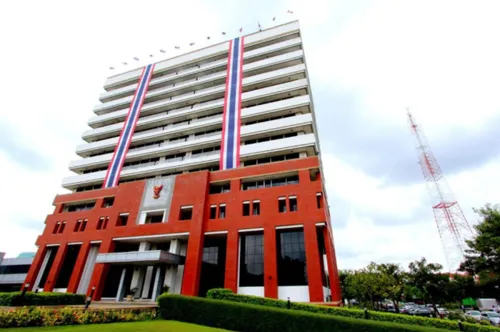
The Administrative Court office warned Thailand's National Broadcasting and Telecommunications Commission (NBTC) for misrepresenting court proceedings in a press release. The NBTC published only partial information from a Supreme Administrative Court order and incorrectly presented plaintiff arguments as facts, risking public misunderstanding of the ruling and potentially violating law. This concerns governance and regulatory accountability in telecom oversight.

▾ Hover for summary ▾ Tap for summary
Central Pattana (CPN) aims to grow Central Park mall visitors by 10% in year two after attracting 25+ million visitors (including 10 million foreigners) in its first year. The mixed-use development is driving retail momentum through new office tenancy, residential completion, and direct pedestrian connections to the Silom MRT. CPN is positioning Central Park as a global cultural destination and launching hub for international brands entering Bangkok.
▾ Hover for summary ▾ Tap for summary
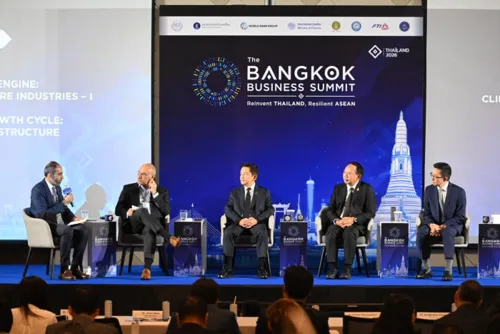
Thailand's path to becoming a regional digital and industrial hub depends on urgent progress in energy reliability, decarbonisation, and investment frameworks. Key initiatives include deploying small modular reactors (SMRs) for clean power, expanding renewable energy and carbon capture/storage technology, and establishing consistent policy frameworks. Tech companies see strong investment opportunities if Thailand can offer stable energy, data centre infrastructure, and clear governance—positioning the country competitively as advanced technologies and AI scale.
 Together GoWeGo! Ferry tickets in Thailand.
▾ Hover for summary ▾ Tap for summary
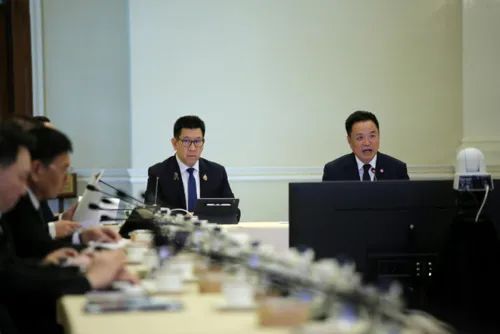
Thailand's Deputy PM has tasked a new National Data Centre Policy Committee with drafting nationwide regulations within one month to govern power, water, urban planning, and environmental standards for data centres. The policy aims to balance attracting investment with protecting public interests. Currently 35 data centres operate in Thailand with only 11 having Board of Investment promotion status, while 49 are under construction and 117 more are proposed. The new framework will establish minimum standards covering economic, social, environmental, building, water, electricity, digital security, and safety requirements.

▾ Hover for summary ▾ Tap for summary
Acer announces the Swift Blade 14, a 14-inch notebook weighing only 799g with magnesium-aluminum and carbon fiber construction. The device features Intel Core 7 350 CPU, 12GB LPDDR5 RAM, up to 1TB storage, and a 3K OLED display. A larger Swift Air 16 variant (1.5kg, 16GB RAM) is also announced. Both models will arrive in December 2026, reflecting the latest in portable computing design for professionals and mobile workers.
▾ Hover for summary ▾ Tap for summary
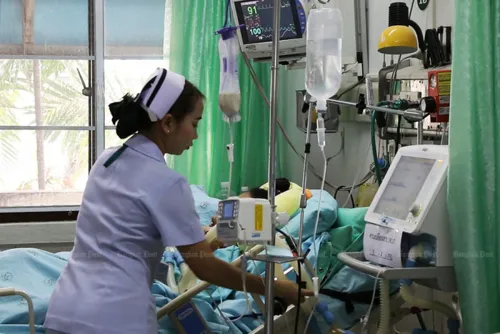
The Thai Finance Ministry is exploring privatization of civil service health coverage by purchasing insurance from private insurers instead of direct government spending. The government is building a comprehensive medical data database from public hospitals to enable insurers to design appropriate coverage products, with the goal of reducing fiscal burden (4.9 million civil servants currently cost ~12,000 baht per capita annually) while improving service access. This represents a significant policy shift that could reshape Thailand's healthcare financing model and create substantial insurance market opportunities.
▾ Hover for summary ▾ Tap for summary
Global food commodity prices have risen to their highest level since 2022, driven by mounting supply chain risks—a significant concern for Thailand's food importers and SMEs in the agriculture and food-processing sectors.

 Stop running your company on Excel.