
Archive
September 7, 2026

▾ Hover for summary ▾ Tap for summary
The article examines the growing gap between university education and workplace reality for first-time jobbers entering the AI era. Key insights include: problem-framing (not just problem-solving), outcome-focused communication, and the increasing importance of soft skills as careers progress. Deputy PM and Higher Education Minister Prof. Dr. Yotchanan emphasizes that degrees alone are insufficient; lifelong learning requires continuous upskilling and reskilling. Universities should transform into business incubators, enabling students to gain practical experience with startups and deep-tech ventures, thereby creating entrepreneurs and better preparing the next generation for dynamic career paths beyond traditional trajectories.

▾ Hover for summary ▾ Tap for summary
Coding Thailand 2026 hosts a National Coding & AI Competition bringing together 210 teams from 167 schools across 59 provinces. The initiative, backed by Thailand's Digital Economy Promotion Office (DEPA), aims to shift youth from technology consumers to innovation creators through structured learning and mentorship. Winners receive scholarships and grants totalling over 27 million baht, with standout projects like SUN Kids' AI-powered duck farm demonstrating practical problem-solving via coding and IoT technology.

▾ Hover for summary ▾ Tap for summary
GULF Development (GULF) disputes a cabinet resolution authorizing Thailand's DE ministry to pursue legal action against GULF and THCOM over incomplete asset handover from a 30-year satellite concession ending Sept 2021, with claims of B1.25B in penalties. GULF clarifies that THCOM fully transferred concession assets on 11 Sept 2564 and that GULF became party to the contract through its Apr 2568 merger with INTUCH, pledging to defend its rights through arbitration and legal proceedings.

▾ Hover for summary ▾ Tap for summary
BitCub Blockchain Technology and TrueMonney advance to Phase 2 testing of Thailand's THB Programmable Payment initiative under the Bank of Thailand's regulatory sandbox. The two major fintech players are now connecting their blockchain ecosystems (Base Chain and KUB Chain) to enable cross-platform THB stablecoin transactions. Phase 1 results showed strong traction with 1,527 participants, 6,020+ transactions, and ~3 million baht in circulation with zero downtime. Phase 2 targets 15 partners and four use cases including digital asset settlement and escrow services, positioning Thailand alongside Singapore and Japan in the regional stablecoin ecosystem.

 Empower businesses to thrive in the digital age.
▾ Hover for summary ▾ Tap for summary
Taiwan is leveraging its semiconductor dominance in AI supply chains as a diplomatic tool, facing allied pressure to distribute chip wealth more broadly.

▾ Hover for summary ▾ Tap for summary
Thailand faces an industrial crisis in automotive manufacturing due to a 20-year-old FTA negotiation error that classified Chinese electric vehicles at 0% tariff—mistakenly treating them like golf carts when EV was negligible. Combined with Thailand's 2% excise tax incentive for EVs, Chinese manufacturers gained massive competitive advantage while Japanese producers pay 13-50% excise tax. This threatens Thailand's 30-year automotive supply chain ecosystem as component makers, employment, and investment may relocate to Indonesia, which is aggressively poaching manufacturing bases.

▾ Hover for summary ▾ Tap for summary
Earthology Studio (backed by Thai Taffeta) is reframing ESG from CSR optics into scalable circular economy models for Thailand's textile sector. The studio unveiled trACE, an AI-powered platform that matches textile waste streams with upcycling solutions, and demonstrated proof-of-concept through ReNylon x ReSilk hybrid fabric co-developed with SCGC Nets Up and Jim Thompson. The model targets B2B clients (uniforms, packaging, lifestyle goods) with end-to-end traceability and carbon footprint reduction, positioning ESG as market opportunity rather than compliance cost.
▾ Hover for summary ▾ Tap for summary
The Thai Stock Exchange has opened subscription for the second round of government savings bonds (OMPPlus 2/2026) from 7–9 September, offering 2 billion baht in debt securities with low entry barriers (1,000 baht minimum). Investors can choose between a 3-year bond at 1.8% fixed annual interest or a 10-year bond at 2.8%, with quarterly interest payouts. Allocations use a "Small Lot First" method to prioritize retail investors. Available through 24 banks and securities firms nationwide.
 Your real translator for LINE and Discord.
▾ Hover for summary ▾ Tap for summary
Crude oil prices (WTI: $91.48/barrel, Brent: $96.28/barrel as of 4 September 2026) are rising due to prolonged US-Iran tensions in the Middle East, with recent escalations including new US military operations against Iran. Analysts forecast potential spike to $95 USD/barrel for Brent if geopolitical risk premium persists. Shipping through Strait of Hormuz remains below 10-day average at 15 vessels, though supply disruptions have not yet significantly impacted Middle Eastern crude output. US crude production increased 2 rigs to 449 rigs week-over-week.
▾ Hover for summary ▾ Tap for summary
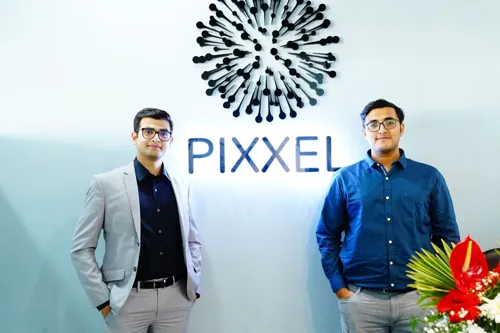
Temasek, Singapore's sovereign wealth fund, is co-leading a $100M Series C funding round for Pixxel, an Indian Earth observation satellite company. The funding signals strong regional interest in space tech and deeptech, though direct Thailand SME impact is limited—relevant primarily for tracking strategic investment trends and potential partnerships in emerging technologies.

▾ Hover for summary ▾ Tap for summary
AI data centers are consuming electricity at explosive rates—50% growth in 2025 alone versus 17% for general data centers—forcing energy infrastructure to become the new AI investment frontier. A single ChatGPT query uses 15x more power than a Google search; US data center electricity demand is forecast to grow 15% annually through 2030, doubling its share of total national consumption. Beyond AI, electrification trends (EVs, heat pumps, industrial conversion) are amplifying demand, with global electricity growth projected to expand 6x faster than overall energy growth 2023–2035—equivalent to Japan's annual consumption added yearly. This convergence of AI power hunger, climate transition requirements, and energy security concerns (fossil fuel volatility, geopolitical risk) is reshaping investment priorities away from semiconductors/software toward renewable energy infrastructure, grid modernization, and power generation technologies.
▾ Hover for summary ▾ Tap for summary
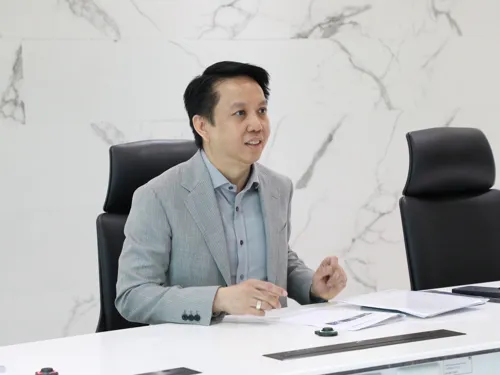
Thailand's State Enterprises Policy Committee (SOPC) is advancing restructuring plans for state-owned enterprises, targeting 3 priority cases for revival including the Bangkok Mass Transit Authority (BMTA) EV bus rollout (1,520 of 3,000 planned units, reducing fuel and maintenance costs by 45%) and Thai Railways (focusing on commercial land use and open-access models). Eight other SOEs are under review for potential mergers or restructuring. Policy direction emphasizes revenue optimization and FTA-readiness, though timelines remain fluid pending cabinet-level ministry approval later in September.

 Want to buy or sell a business?

▾ Hover for summary ▾ Tap for summary
Research from global institutions confirms that diverse networks—spanning age, industry, gender, education, and perspective—drive professional growth, better decision-making, higher employee satisfaction, and organizational productivity. The article warns against "Homophily" (clustering with similar people) and recommends SMEs and employees actively build diverse connections through cross-industry events, informal engagement (e.g., coffee chats), and open questioning to gain competitive advantage and build sustainable growth in modern business.
▾ Hover for summary ▾ Tap for summary
Asian tech stocks are gaining strength while other sectors remain cautious amid rising oil prices.

▾ Hover for summary ▾ Tap for summary
SEA-based healthtech startups are finding sustainable business models and longer runways by pivoting to B2B (enterprise/corporate clients) rather than direct consumer plays. This shift reflects market realities in emerging markets where B2C monetization is challenging, and highlights a key strategic insight for regional founders targeting longevity over rapid consumer scale.
▾ Hover for summary ▾ Tap for summary
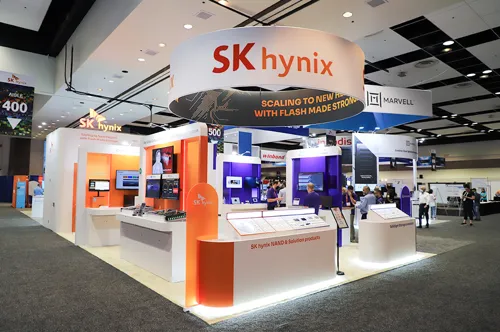
SK hynix is scaling DRAM production to capitalize on the AI memory boom, targeting record Q2 profit. This signals strong global demand for AI infrastructure components. For Thai SMEs in tech supply chains or those building AI solutions, this indicates tight semiconductor availability and continued premium pricing for memory products.
 Together GoWeGo! Ferry tickets in Thailand.
September 6, 2026
▾ Hover for summary ▾ Tap for summary
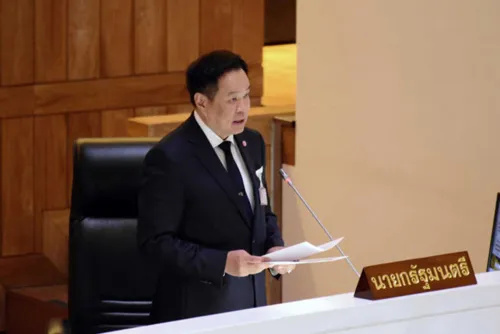
Thailand's 3.78 trillion baht 2027 budget faces an 11.162 billion baht cut ahead of parliamentary debate. Five ministries face cuts, with the Environment and Natural Resources ministry hardest hit (14.3 billion baht reduction). Opposition centers on a proposed cut to a 12-billion-baht allocation for economic and social measures, which MPs argue overlaps with a separate 200-billion-baht energy transition loan. Parliamentary debate on the full budget runs Monday through Wednesday across 27 sections.
▾ Hover for summary ▾ Tap for summary
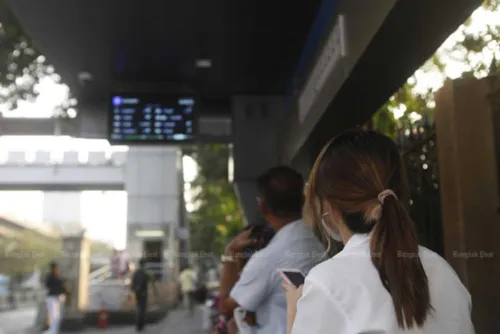
Bangkok's fast-paced lifestyle and traffic congestion are driving depression and suicide risks among young people, with ages 15-24 showing highest vulnerability at 21.25% depression prevalence. The Bangkok Metropolitan Administration is launching proactive screening in 100 secondary schools starting October 1st, and highlighting the need to restrict lethal means (firearms) while improving access to mental health support, peer networks, and digital resources in schools.
▾ Hover for summary ▾ Tap for summary
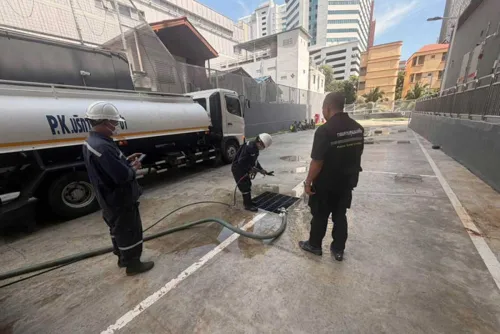
An oil contamination incident at MADAMI Digital Thailand (a Bangkok data centre) has triggered regulatory inspection and environmental cleanup efforts after polluted wastewater entered drainage systems. The operator hired environmental contractors to contain and treat the waste before it reaches Rama IX Canal. The incident has prompted senate calls for stricter fuel-storage regulations at Thai data centres, which can currently store up to 400,000 litres of backup fuel—comparable to petrol stations but under weaker oversight than similar infrastructure.

▾ Hover for summary ▾ Tap for summary
Thailand's major banks—KTB, KBank, and BBL—are pivoting beyond traditional lending to drive growth amid economic transition. Strategies include supporting the government's "Thailand Reinvent" initiative for emerging industries, pursuing light-asset and regional expansion models, and building household wealth. Banks aim to help SMEs and businesses adapt to technology-driven structural changes while maintaining loan growth targets of 2–3% this year, positioning themselves as catalysts for inclusive economic growth and middle-income trap escape.

 Stop running your company on Excel.