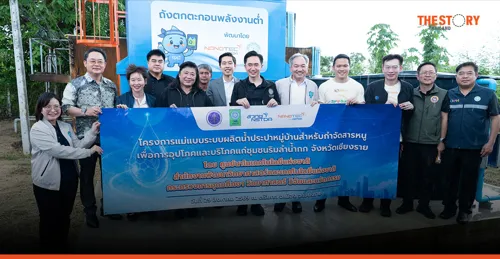
The Chiang Rai water crisis—triggered by 2567 floods that damaged community water systems and contaminated groundwater with high iron and arsenic levels—is being addressed through a collaborative nanotechnology-led initiative by Thailand's National Science and Technology Development Agency (NSTDA), the National Nanotechnology Center, and local authorities. The pilot project spans 700+ households across two pilot communities, focusing on low-cost system upgrades (capped at 25% of new-build costs: ~50,000–80,000 baht per m³ capacity) using locally sourced materials and empowering residents to monitor and maintain water quality independently—demonstrating a scalable model for rural SMEs and local governance.
← Back to all articles