
Archive
September 25, 2026

▾ Hover for summary ▾ Tap for summary
Myanmar's military leader Min Aung Hlaing seeks to rehabilitate his image and restore US relations through a first-ever TIME interview, aiming to counter Chinese influence and lift Western economic sanctions. Despite controlling less than half the country amid a 5-year civil war with 100,000+ deaths and 3.6M displaced persons, he is leveraging geopolitical tensions and hiring Trump-era lobbyists to negotiate relief. Myanmar's economy has collapsed post-coup (GDP down 13%, FDI down 90%, currency down 60%) and the military's business empire is threatened—making sanctions relief a critical survival strategy.

▾ Hover for summary ▾ Tap for summary
Thai Prime Minister Anutin Charnvirakul is actively monitoring heavy rainfall across multiple regions, particularly in Bangkok and central provinces, while directing government agencies to prepare contingency plans, evacuation procedures, pumping equipment, and personnel for sudden flooding. Despite being abroad attending the UN General Assembly and investment missions, he continues coordinating disaster response measures and public welfare operations across the country through regular directives to relevant ministries.

▾ Hover for summary ▾ Tap for summary
Meta has released Horizon Create, a mobile app, and Horizon Studio, a browser-based tool, both enabling users to create games via AI prompts on its Horizon social gaming platform. The apps allow game data transfer between platforms for testing and are currently available in Early Access via waitlist. This is relevant for Thai SMEs exploring AI-powered game development and no-code game creation tools.

▾ Hover for summary ▾ Tap for summary
Vietnamese low-cost carrier Vietjet signed an agreement with Starlink to become Vietnam's first airline offering free satellite internet on its aircraft. The initial rollout covers 120 aircraft (Airbus A321/Boeing 737 and Airbus A330 variants) and signals expansion opportunities for Starlink beyond aviation into enterprise, remote communities, shipping, energy, agriculture, healthcare, and education sectors. The deal reflects broader tech-infrastructure momentum in Vietnam and competition with Amazon's emerging satellite internet presence.

 Empower businesses to thrive in the digital age.

▾ Hover for summary ▾ Tap for summary
Over 90 lawsuits have been filed in U.S. courts against Novo Nordisk and Eli Lilly, alleging their GLP-1 drugs (Ozempic, Wegovy, Zepbound, Mounjaro) cause sudden vision loss (NAION). While some patients report severe permanent blindness after 6–18 months of use, scientific evidence remains contradictory—ranging from no increased risk to 8-fold elevation—and the companies maintain insufficient causality proof. The EU already mandates warnings; the U.S. FDA has not. For Thai SMEs and health-tech firms, this signals potential regulatory tightening globally and litigation exposure for any stakeholders in the GLP-1 supply chain.
▾ Hover for summary ▾ Tap for summary
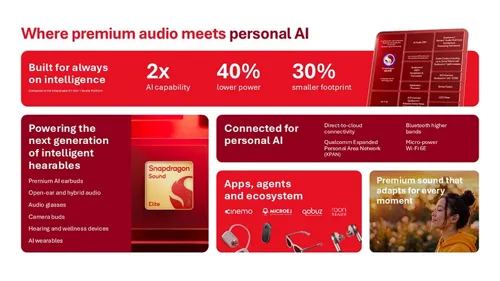
Qualcomm has unveiled the Snapdragon Sound Elite Gen 2, a specialized chip for wireless earbuds, smart glasses, and hearing aids with on-device AI voice interaction. The chip combines advanced audio technologies (aptX Lossless, Gen 5 ANC, cVc noise cancellation) with an AI accelerator (eNPU with 128 GOPS Qualcomm Kymera), Cortex-M55 processor, and Wi-Fi 6E connectivity. This targets the emerging wearable AI device segment, enabling voice commands and local AI processing without cloud dependency.

▾ Hover for summary ▾ Tap for summary
Thailand's ride-hailing platforms (Bolt, Grab) are intensifying efforts to register drivers with public riding licenses before the Sept 30 deadline, offering significant incentives including cash bonuses and commission discounts. Bolt has invested over 30 million baht to streamline the registration process and cut the time from days to a single day. Registration applications have nearly tripled post-cooperation (191.6% for cars, 255.4% for motorcycles), with 162,310 car and 183,415 motorcycle licenses issued. Platforms are blocking driver accounts temporarily to enforce compliance, and new drivers must have public licenses before joining the app.

▾ Hover for summary ▾ Tap for summary
HER HYNESS, a Thai skincare brand, built market dominance in face masks and toner pads by pursuing a niche strategy rather than chasing large categories. Starting in 2563 (2020), the brand identified unmet consumer pain points—demanding mask sheet technology innovations, better adhesion, and visible results—then developed Black Mask using Binchotan charcoal and Nano Platinum with proprietary High Pressure Nano Jet Water manufacturing. The product achieved 4 consecutive years of #1 sales on multiple e-commerce platforms with 27 million units sold, proving that smaller markets can generate significant revenue if pain points are solved better than existing alternatives.
 Your real translator for LINE and Discord.
▾ Hover for summary ▾ Tap for summary
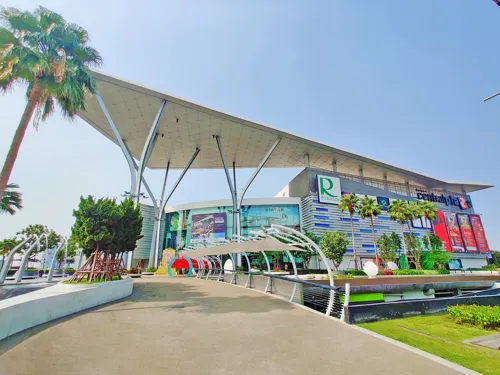
Central Pattana (Thailand's major shopping mall operator) is opening free parking at 4 mall branches in flood-prone areas (Ayutthaya, Nakhon Ratchasima, Chonburi, Siracha) to help residents relocate vehicles safely during flooding. The initiative requires registration with ID and vehicle documentation for overnight parking; conditions and contact numbers vary by location. This signals how major retail anchors are repurposing assets for community resilience during natural disasters.
▾ Hover for summary ▾ Tap for summary
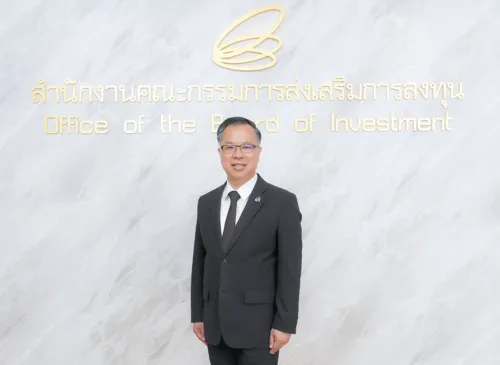
German semiconductor leader Infineon is formally opening a new 48-billion-baht manufacturing facility in Samut Prakan on 1 October, marking Thailand's third global Power Module production hub alongside Germany and China. The investment includes advanced manufacturing, semiconductor testing, and the country's first large-scale semiconductor R&D center, with mandatory conditions requiring training of 600+ Thai technologists (including 130 abroad), development of 14+ local suppliers, 60+ university partnerships, and 2.8+ billion baht in annual R&D spending. This validates Thailand's national semiconductor strategy targeting 500+ billion baht in first-phase FDI.

▾ Hover for summary ▾ Tap for summary
With Thailand's Social Security Board (SSB) election set for 27 September 2026, academic Sassathram Thammabusadee clarifies ballot procedures for voters confused by candidate disqualifications and number changes (candidate 45 replaced by 38). He emphasizes that inflation-eroding fund security stems more from corruption, poor investment practices, and conflicts of interest than demographic aging alone. To address this, he calls for reforms across three dimensions: benefit adjustment, serious anti-fraud measures, and efficient investment management. The "Progressive Social Security Team" urges both employers and insured workers to turn out and vote to prevent "appointed voices" from dominating the board's direction.

▾ Hover for summary ▾ Tap for summary
Thailand's Education Loan Fund (กยศ.) faces liquidity challenges and a growing default crisis (2.6 million delinquent borrowers vs. 1 million current payers). Deputy PM is coordinating with Finance Ministry to review lending criteria, potentially allocate 1.2 billion baht in emergency funds, and improve debt collection efficiency. Key concern: preventing low-income students from dropping out due to loan unavailability. Expect policy adjustments on borrower eligibility and interest rates in coming weeks.

 Want to buy or sell a business?
▾ Hover for summary ▾ Tap for summary
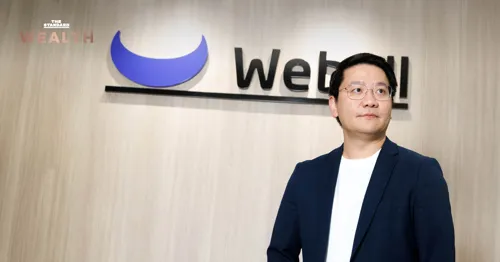
Webull, a US-based trading platform, acquired Pi Securities for 3.2 billion baht in August 2025 to combine digital technology with 50+ years of local brokerage expertise. The deal aims to scale combined assets under management to 200 billion baht, positioning Thai retail investors for international markets—particularly US stocks and options—via enhanced tools (Nasdaq TotalView, real-time data, unique portfolio-splitting feature) and high-net-worth services unavailable from competitors locally.
▾ Hover for summary ▾ Tap for summary
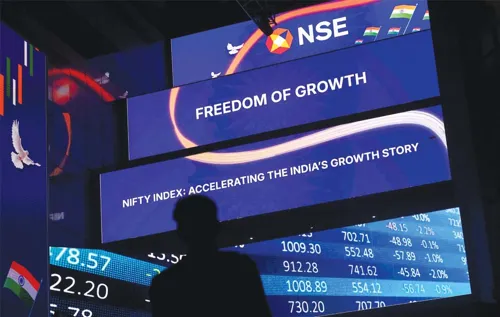
Foreign investors have withdrawn ~$26 billion from Indian equities in 2026, the highest on record, as large-cap indices like Nifty 50 underperform (-10% YTD) despite India's robust 7.8% Q2 GDP growth. Brokers warn that India's largest companies are investing in legacy businesses rather than high-growth sectors like EVs and semiconductors, while innovative mid-caps and small-caps—where real growth momentum lies—lack sufficient liquidity and analyst coverage to attract institutional capital. Unless India's corporate titans pivot toward AI and emerging technologies, foreign capital repatriation is unlikely even if global conditions improve.
▾ Hover for summary ▾ Tap for summary
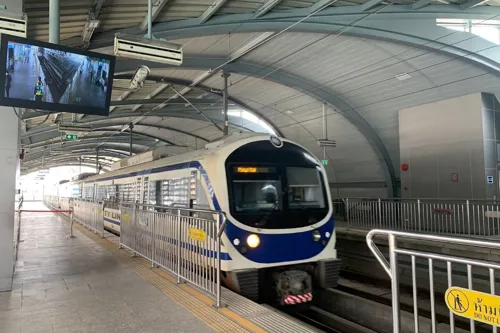
Thailand's State Railway (SRT) and CP subsidiary Asia Era One will sign a new MOU on September 28 to extend Airport Link operations for 4 months (October 2026–January 2027), with no wage increases or renegotiation of terms. The agreement retains existing revenue-minus-cost conditions, with a 533-million-baht deposit required. After the extension, SRT's subsidiary company will take over permanent operations while CP's staff will transition to the new operator by February 2027.
▾ Hover for summary ▾ Tap for summary
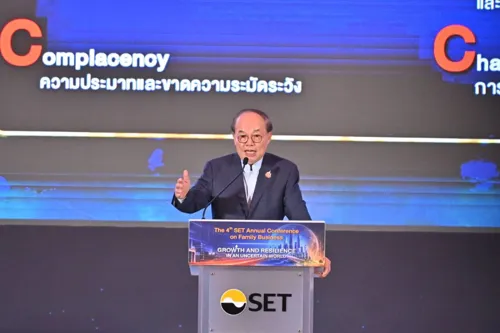
Thailand's Stock Exchange Chairman indicates recovery in IPO activity over 1-2 years through three drivers: renewed foreign investor interest in Thai equities, preparation of family businesses for capital market entry, and improved corporate governance. The Exchange will deploy a dedicated task force to counsel family business owners on market readiness, prioritizing quality over quantity of new listings. Foreign capital roadshows and rising founder engagement signals suggest mid-term opportunity for both new IPO entrants and M&A among listed companies acquiring family-run operations.
 Together GoWeGo! Ferry tickets in Thailand.
▾ Hover for summary ▾ Tap for summary
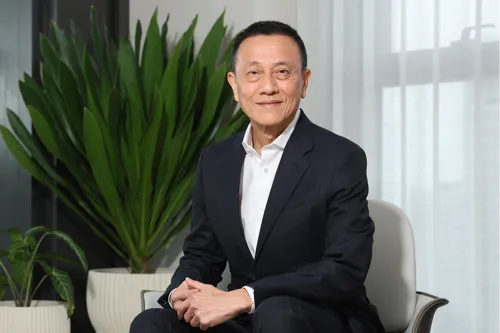
Scope Thonglor, an ultra-luxury 32-floor condo with only 18 penthouses, just closed a 600 million baht sale to a foreign billionaire despite weak overall real estate market conditions. The developer's CEO explains that ultra-luxury properties in prime locations (BTS-adjacent, near malls) targeting 200+ million baht segment still perform well if product quality and location justify pricing. Scope has 3 projects currently on sale worth 14.15 billion baht total, with expectations to close sales through 2026 and beyond.

▾ Hover for summary ▾ Tap for summary
Xi Jinping's recent visit to the US and third meeting with Trump creates both cooperation and competition opportunities. While energy and agriculture deals are mutually beneficial, AI and chip technology remain off-limits as both nations hold different strategic cards. Three actionable investment themes emerge for Thai investors: (1) Chinese direct investment in the US (focus on CATL and Haier), (2) benefiting from yuan strength via China EV/battery plays, and (3) dividend plays from China's dual-track policy. The key risk is US political backlash on sensitive sector investments.
▾ Hover for summary ▾ Tap for summary
Thailand's government is implementing a two-phase flood relief system: through end-of-year, the state funds immediate assistance via central budget; from October 1, 2026 onward, a new insurance-based model covers approximately 30 million households nationwide with 155 billion baht in total coverage. Households receive 10,000 baht emergency aid within 7 days of flood declaration, followed by damage assessment and up to 90,000 baht in additional payouts. Agriculture remains under the Ministry of Agriculture's existing disaster relief framework.

▾ Hover for summary ▾ Tap for summary
Thailand logged its 11th consecutive monthly trade deficit in August 2026, with imports growing 25.1% and outpacing export growth of 19.5%. Electronics remain a bright spot, supported by global AI-driven digital investment and US tax exemptions covering 60% of Thai exports to America; however, rising geopolitical tensions, higher shipping costs, and front-loading dynamics pose ongoing risks. The Commerce Ministry now expects full-year 2026 exports to reach up to 15%, but predicts 2027 growth could turn negative due to high base effects and softer global demand.

 Stop running your company on Excel.