Archive
November 5, 2026

▾ Hover for summary ▾ Tap for summary
Robinson plans two new mall formats. Ploen is a community mall with a Tops supermarket, 200+ food stores and 24-hour dining; its first site, Ploen Rangsit, opens Q3 2027 with a 70-shop Community Mall phase. Riva is a lifestyle destination; its first site, Riva Ramkhamhaeng, opens Q1 2028. Robinson expects to add three Ploen sites a year in 2028-2029 (seven in total by 2029) and one Riva a year in 2029-2030. For a small business, this means new leasing space and local-brand tenant openings in these areas over the next few years, and possibly more local-supplier and food-vendor opportunities. Nothing needs action now; watch for leasing calls in the Rangsit and Ramkhamhaeng catchments.
▾ Hover for summary ▾ Tap for summary
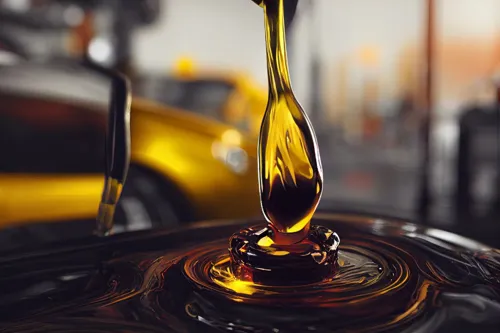
The Oil Fund committee (กบน.) approved retail price cuts effective 6 November: diesel B7 down 0.75 baht/litre to about 41.79 baht, and the benzine group down 1 baht. Gasohol 95 is now about 39.84 baht and E20 about 31.80 baht. B20 is unchanged at its retail price. The cut follows lower world prices (diesel about 155 USD/bbl, benzine about 105 USD/bbl on 5 Nov 2026) as Middle East tensions eased. Fleet and delivery operators should update their fuel budgets and quotes now. Prices can move again with world markets, so avoid locking in long fixed-price contracts on the assumption that the lower price will hold.

▾ Hover for summary ▾ Tap for summary
The Land Transport Federation submitted a full policy proposal to government and the Energy Ministry. It argues Thai fuel prices are benchmarked to Singapore import costs even though Thailand refines domestically, adding freight, insurance and loss charges that are not real. It asks for a refinery-gate price cut (diesel about 7.26 baht/litre, benzine 5.88 baht) and a refining margin cap of US$7/barrel. The energy ministry's 28 October resolution only partly cut these items (0.09–0.35 baht/litre). The oil fund is deeply in deficit (105,452 million baht). This is a proposal, not yet law: keep your fuel and transport cost budgets as they are, but watch for a decision from the Energy Policy Committee, since a cut would lower diesel costs for trucking and delivery businesses.
▾ Hover for summary ▾ Tap for summary
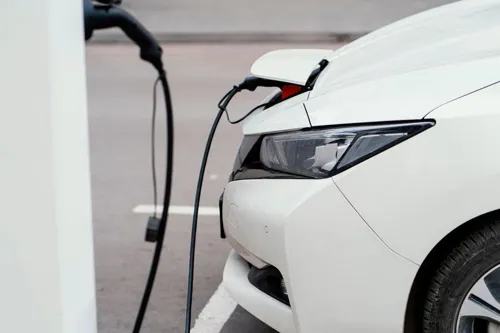
The Excise Department is restructuring excise tax on imported BEVs and REEVs. Today imported EVs pay 35% unless they use Thai-made strategic parts, which gets a 2% rate with strict conditions, especially locally made batteries. A further tier at around 10% is being considered, with looser conditions (motors, inverters, reduction gears made locally instead of batteries). The department expects a 1–2 year transition for makers deciding on Thai factories, and says the measure will not cause a sudden surge in EV production. Dealers importing now should price and forecast demand carefully; suppliers of motors, inverters and gears may find new local demand. The MIT local-content formula is still being finalised with the FTI.


▾ Hover for summary ▾ Tap for summary
The Permanent Secretary for Finance says a trade-in scheme for old cars in exchange for new pickups has been proposed but has not yet gone to the committee that vets the 400-billion-baht loan decree spending. Eligible new pickups must be able to run on B20 and E20 fuel, in line with government biofuel policy. He says Thailand can handle about 10,000 scrapped vehicles a year. For an SME, this is not yet a decision: if you run pickups or sell vehicles or parts, wait for the final terms before changing fleet plans, but note that future eligible models will need B20/E20 compatibility.
▾ Hover for summary ▾ Tap for summary
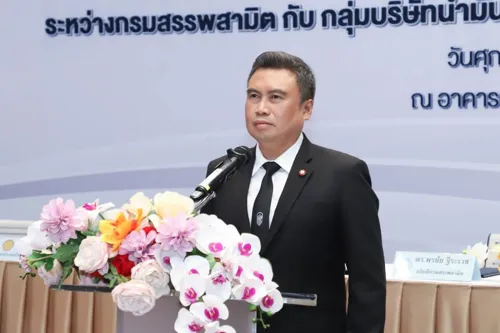
The Excise Department has proposed 12,000 million baht from the 400,000-million-baht energy transition loan decree for two schemes: trade-in of old cars for new pickups (6,000 million baht, 40,000 baht per car for 150,000 cars, plus possible manufacturer top-ups and state lender financing) and subsidies for electric motorcycles (about 6,000 million baht). A sub-committee is expected to review it within one to two weeks, then the cabinet. New vehicles must be electric or support B20 biodiesel, and old cars must be deregistered and scrapped. If you sell pickups, motorcycles or EV-related parts, or run a car-repair or scrap business, plan for possible demand and new eligibility rules; the details are not final.

▾ Hover for summary ▾ Tap for summary
Microsoft has disclosed CVE-2026-83844, a high-severity (8.1) flaw in Windows Paint. An attacker could take control of a computer when a crafted image file is opened. The fixed version, 11.2605.91.0, is not yet available in the Microsoft Store, where the latest release is 11.2605.81.0, so no patch is confirmed yet. Until one is released, the advice is to uninstall Microsoft Paint. For your shop or office PCs, avoid opening image files from unknown senders, and check Windows Update and the Store for the fixed version.

▾ Hover for summary ▾ Tap for summary
The BOI reports record investment application requests of 1.7 trillion baht in the first nine months of 2026, and says Thailand must turn this into local jobs and supply chains. Priorities named: semiconductors (photonics, power electronics, sensors) and EVs, with a push for local content and tax measures on imported cars. For a Thai SME, the opening is supplier work: PCB and data-centre projects need thousands of technicians and local parts makers, and the EV local-content matching events are a route in. No new deadline or rule is announced in this speech.
 Your real translator for LINE and Discord.

▾ Hover for summary ▾ Tap for summary
Gulf Development's Q3 2026 net profit was 9,289 million baht, up 28% year on year, driven by gas and renewable power plants and its share of AIS profit. Revenue rose 75% to 52,809 million baht. Gulf keeps its 2026 revenue and EBITDA growth guidance at 12-15% and plans to bring more than 600 MW of new plants online in 2027. For a small business this is background only: higher power demand from data centres and a lower Ft rate are the signals to note, but no direct action follows.

▾ Hover for summary ▾ Tap for summary
The BoT governor says about 48% of GDP is informal, including 2.5 million businesses not registered as companies or taxpayers. Its goal is to bring informal activity into the formal financial system to lower credit costs. Of SME borrowing, 66% comes from formal lenders and 34% from informal sources such as friends and family, trade lenders, pawn shops and loan sharks. The BoT says its SME credit guarantee scheme has lent over 80,000 million baht and that banks have cut 19 fees and rates. For a small business still relying on informal credit, registering and building a formal financial record is the route to cheaper loans. No new deadline or rule was announced.
▾ Hover for summary ▾ Tap for summary
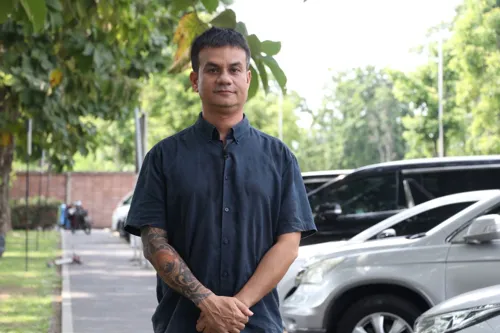
Interview with Bright Future migrant worker leader Wira Saengthong. Myanmar's CI registration system charges about 2% tax and requires 25% of wages to be remitted home via a state system, and the all-in cost per worker is claimed at about 30,000 baht. He warns that if workers refuse or leave, factories in manufacturing, fishing and shrimp processing could stall. Thai employers relying on Myanmar workers should check which workers are in the CI process, budget for possible turnover or wage pressure, and confirm documentation status now. The article is an advocacy interview with claims that are not independently verified here.
▾ Hover for summary ▾ Tap for summary
The Office of Insurance Commission says home disaster insurance, live since 1 October (2026), has over 1,000 claims. Insurers are paying gradually. In declared flood zones, insured homeowners can get a 10,000 baht advance without waiting for a full survey, with a target of 15 days. Damage above that advance goes through the normal assessment. Insurers are also moving to AI photo assessment, so keep clear photos of premises and fixed fittings and send them through the insurer's app after a flood, once it is safe. Check whether your shop or home is covered.

▾ Hover for summary ▾ Tap for summary
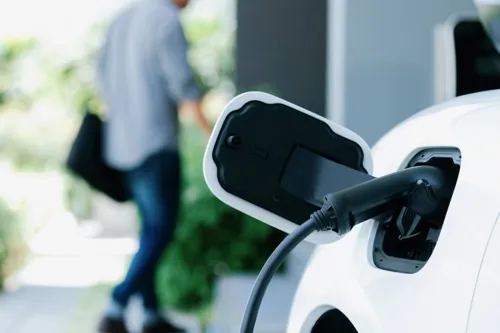
Cabinet approved on 3 Nov raising excise tax on imported BEVs and REEVs to 35% (from 10% and 15%), effective 1 Jan 2027. The Excise Department is designing an MIT rule: plants already operating keep 10% if they meet Local Content, while others may face 15-20%, with the Local Content threshold still undecided. Phased tax rates for locally made EVs are expected around 2030. For SMEs in auto parts, components like seats, doors, glass and tyres may need to be specifically traceable as local content. Importers and dealers should revisit EV pricing and stock plans now.
▾ Hover for summary ▾ Tap for summary
Thai police and the DSI are investigating Shuffle.com, a crypto-only gambling platform that took over 100 million baht in crypto from 49 Bitkub customers. Regulators may now clarify who is responsible for screening transactions at digital asset providers. For a small business, the practical point is that if you accept or pay out in crypto, expect tighter checks on where funds come from. The probe is ongoing and no new rules have been announced yet.
▾ Hover for summary ▾ Tap for summary
S&P Global Ratings affirmed Thailand's sovereign rating at BBB+ with a stable outlook on 4 November, and expects GDP growth of 2.3% this year. Moody's (April) and Fitch (September) also moved to stable outlooks. The agency says growth still lags regional peers and that political stability is the key risk. For a small business, this is background: no immediate change to borrowing costs, tax or fees. Keep an eye on the growth outlook when planning sales and hiring over the next 12-24 months.

▾ Hover for summary ▾ Tap for summary
Bank of Thailand data as of Aug 2026 show SME loans have a 9.9% NPL ratio, versus 3.5% overall and 1.2% for large corporates, meaning roughly 100,000 baht of bad debt per 1 million baht lent. KBank says Thai SMEs make up 99.5% of firms and 69% of jobs but only 35% of GDP. Its advice: raise productivity, adopt digital and AI tools, diversify markets, and manage cash flow and risks such as oil prices, imported inputs, shipping and tariffs. For a business carrying SME loans, this is a signal to tighten cash-flow planning and watch repayment capacity, and it is background rather than a deadline.
 Together GoWeGo! Ferry tickets in Thailand.
▾ Hover for summary ▾ Tap for summary
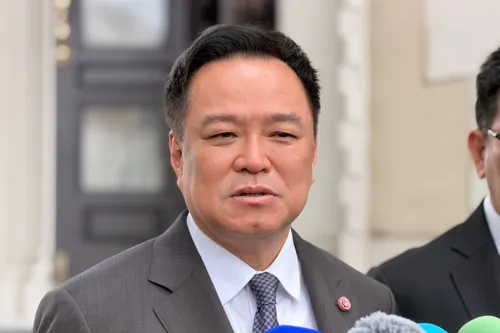
Village headmen (กำนัน) in the South and Isan are mobilising and calling on the government to cut fuel prices. PM Anutin says they have the right to protest but must follow the law and the constitution and avoid disrupting the public. For a small business, the signal is that fuel-price pressure is politically live, so protests could bring road disruption in some provinces and the government may face pressure to act on fuel costs. The article gives no policy change, figures or deadline, so no action is needed yet beyond watching diesel and fuel prices in your area.
▾ Hover for summary ▾ Tap for summary
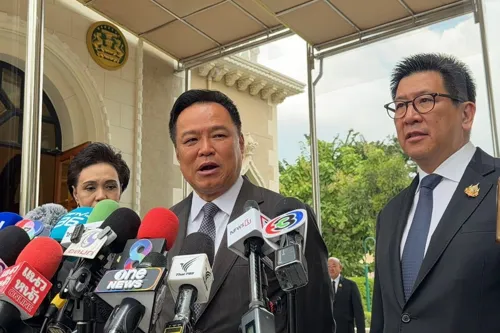
The PM and Commerce Ministry say Thailand has enough food and consumer goods, and people should not stockpile after the Disaster Prevention department advised a 72-hour emergency bag. Commerce will coordinate producers, wholesalers, retailers and distribution centres, and add transport trips to flood-hit areas if demand rises. For a small business, plan for possible demand spikes and transport delays in affected provinces, and check with local suppliers about stock. The article gives no specific dates or measures for businesses beyond this.

▾ Hover for summary ▾ Tap for summary
Deputy PM Supapee Sutthammapan says prices for rice, rubber, cassava and corn are currently at good levels. The ministry will try to keep rice prices steady through the main-crop harvest and look for more export markets. Rubber is at its best level in decades. Cassava is around 3-4 baht, with disease the main supply issue. Corn is above 9 baht. E20 and B20 excise cuts are expected to lift demand for palm, sugar cane and cassava. A joint briefing with the energy and industry ministries on prices and volumes is planned. Owners who buy these crops or sell into rural households should plan for firmer farm incomes, while feed and meat costs may rise.
▾ Hover for summary ▾ Tap for summary
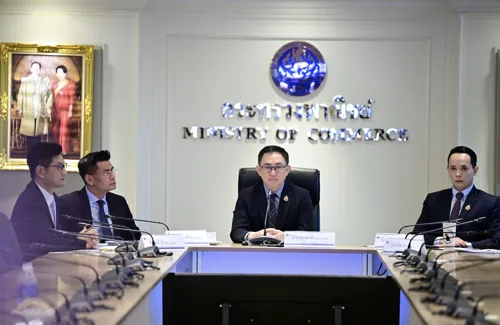
The Commerce Ministry is rolling out short-term rice measures for the 2026/27 crop: loans to delay paddy sales, loans to collect and add value to rice, interest subsidies for traders who hold rice stock, and a paddy absorption scheme. Long-term, it is pushing premium rice (organic, health, identity varieties) and says Big Data and AI will guide production toward market demand. Rice millers, traders and rice-based food makers should check whether they qualify for the loan and interest-subsidy schemes once the details are published. The article gives no dates, amounts or eligibility rules, so treat it as a direction, not a deadline. Thai export prices for 5% white rice were about 21% above India's and 12% above Vietnam's and Pakistan's in October, so price competitiveness remains a pressure.