Archive
November 10, 2026
▾ Hover for summary ▾ Tap for summary
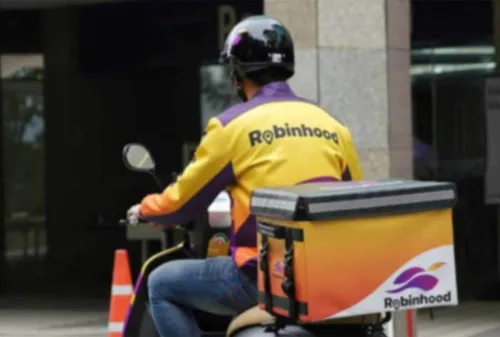
SKY ICT and Thoresen Thai Agencies are taking over Robinhood's software, brand and IP in a 100-million-baht deal, with SCB holding 10%. Operations are expected to restart in December after a November signing. The new owners plan to cap the GP commission at 5-10.5%, versus about 30% at foreign platforms, but merchants accepting that rate must guarantee price parity with walk-in menus. Robinhood has 100,000 registered merchants but only tens of thousands active. If your shop sells through delivery apps, compare total cost per order and check the parity clause before signing up or switching. The platform still targets break-even within three years and is not yet proven.

▾ Hover for summary ▾ Tap for summary
The Thai Investors Association (TIA) has overhauled its AGM quality checklist, to be used from 2027. Listed companies that do not answer shareholder questions within 7 days lose points immediately. Online AGMs must meet ETDA standards, and the audit committee chair must attend and report in person. Minority shareholders holding over 10% combined can veto related-party or significant transactions if the FA or audit committee objects. This mainly affects listed companies and their governance teams. A small business owner only needs to act if they hold shares in, supply to, or deal with a listed company.
▾ Hover for summary ▾ Tap for summary
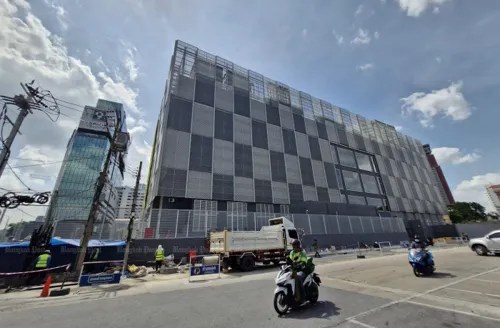
The cabinet approved new data centre rules: a one-stop approval centre under the Digital Economy ministry, and a screening committee to weed out speculators who reserve power and water. Facilities under 20MW may run in commercial zones with codes of practice (generator noise capped at 70 dB at boundaries, nearby temperature rise capped at 1-2°C); 20MW and above must sit in industrial zones. Projects with construction permits or BoI promotion before Aug 14 get about one year to comply. Relevant mainly if you supply, build, host or rent space near data centres; detailed requirements still await public consultation.

▾ Hover for summary ▾ Tap for summary
Krungsri Research says the 3 November US midterms leave Democrats with control of both chambers, which may limit Trump's ability to push big new policy. Existing tariffs are likely to stay, while any new tariff increases may face more scrutiny, so the trade risk eases somewhat but tension continues. For Thai exporters tied to AI and data-centre supply chains, a slowdown in US AI investment could weaken global demand, though diversified production may attract new investment. No immediate action is required; keep export pricing and tariff exposure under review through the next budget cycle.


▾ Hover for summary ▾ Tap for summary
The SEC has imposed civil penalties totalling 77.87 million baht on 14 linked individuals for coordinating orders to push up YONG (Siam Yong Concrete) shares before the market opened on its first trading day, 2 Aug 2022. They are barred from trading securities for 8.5 months and from serving as directors or executives for 17 months. If they refuse to comply, the SEC will ask prosecutors to take the case to the civil court. For a Thai SME, this is background on market manipulation enforcement; no action is needed unless you hold or trade listed shares.

▾ Hover for summary ▾ Tap for summary
Airline booking data from several Asian carriers, including Thai Airways (60,529 records), may have been accessed through a vulnerability at Amadeus, a global travel-tech provider. The breach was not a direct hack of the airlines. Amadeus says it fixed the flaw, and no payment or financial data has been found accessed. The company has not disclosed the attack path, start date or full list of affected firms. For a Thai SME, the lesson is practical: if you sell travel or use a shared booking platform, ask your provider what customer data it holds, how it is protected, and whether it will notify you of incidents.

▾ Hover for summary ▾ Tap for summary
Cabinet approved on 9 November (2026) new duty rates on e-commerce imports via Express, eWTP and international post, capped at 30%, taking effect 15 days after royal gazette publication. Items like imitation jewellery, phone accessories, earphones, sunglasses and plastic/steel goods rise from 0-20% to the 30% cap; some tools are capped at 25%. Platforms will add duty into prices, so expect higher shelf prices on those items. If you import single parcels online, recalculate costs by HS code. Container or wholesale imports under normal customs procedures keep existing rates and FTA benefits, so review which channel you use.

▾ Hover for summary ▾ Tap for summary
Chiang Mai's Yi Peng festival runs 23–25 November 2026, with the province expecting visitors from over 100 countries and foreign advance hotel bookings up 80–90%. Officials estimate more than 1 billion baht circulating in the province over the 2–3 main event days. Hotels, restaurants and local shops in Chiang Mai city should plan staffing, stock and pricing for this window. Expect road closures and traffic around the Tha Phae gate and Ratchadamnoen route, and the lantern-release events run across 19 districts. The figures are official province estimates, not audited results.
 Your real translator for LINE and Discord.

▾ Hover for summary ▾ Tap for summary
A True Digital Security vendor says Thai organisations face about 3,200 cyberattacks per organisation per week, 164% above the global average, and Thailand was in the global top 10 for ransomware in Q1 2026. Manufacturing accounts for about 37% of Thai ransomware targets, often because machines and OT equipment go unpatched. SMEs can be used as a stepping stone into larger firms' systems. Practical steps: enable multi-factor login, tightly control vendor and remote access, keep at least one offline backup and test restoring it, and train staff. The article is a vendor pitch, so treat its figures as indicative.
▾ Hover for summary ▾ Tap for summary
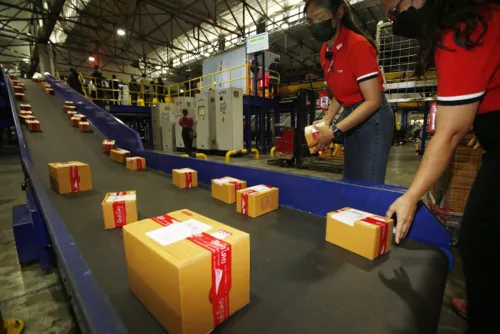
The cabinet has approved import duties of up to 30% on goods bought through e-commerce platforms and arriving by express or international post, expected to start early next year. Duties revert to standard category rates: plastic products 20% to 30%, headphones 10% to 30%, handbags 20% to 30%, fitness equipment 10% to 30%, jewellery 0% to 30%, sunglasses 5% to 30%. If you import small goods or buy stock from overseas platforms, re-price your margins and check your supplier costs now. If you sell similar products locally, expect less price pressure from cheap imports. The government estimates 6.3 billion baht in extra revenue.

▾ Hover for summary ▾ Tap for summary
The cabinet approved rules on 10 November requiring data centres drawing 20 MW or more to locate in industrial estates. Smaller ones (under 20 MW) can stay in commercial zones. Projects started before 14 August get a one-year window to meet standards. Data centres must keep noise at the boundary under 70 dB(A) and use closed-loop cooling. For most SME owners this changes little directly, but if you supply power-hungry construction, electrical or logistics work near industrial estates, expect demand shifts. Watch the forthcoming power-allocation announcement for detail.
▾ Hover for summary ▾ Tap for summary
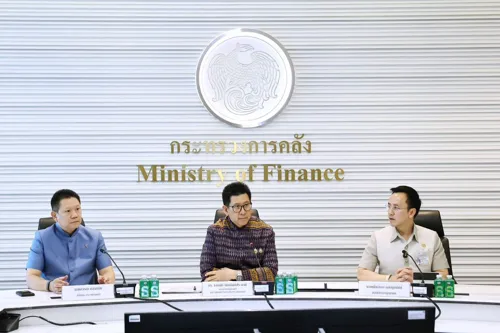
Cabinet approved raising import duty on goods shipped straight to consumers via fast-track, eWTP free-zone and international post channels, capped at 30% of the tariff rate. It takes effect 15 days after royal gazette publication. The Customs Department says it is not a rate hike but removes the general reduction; the ministry expects about 6.3 billion baht more in duty for 2027. Products such as plastics, costume jewellery, bags, sports equipment and some tools move from 0-10% to 30%. Thai SMEs that sell or source these items should re-check landed costs and pricing against imported online competitors, and review whether sourcing from Thai makers becomes more competitive.


▾ Hover for summary ▾ Tap for summary
Cabinet has approved a draft Finance Ministry notice setting import duty on low-value express (online) parcels at around 30%. The government says this should help Thai businesses compete with cheaper imported goods. The article gives no effective date or final rate, so the exact rate and timing still need confirming. If you sell or source low-value goods from abroad, check the final notice before pricing or restocking. Also note the government's push to boost biofuel (E20/B20) demand, which supports sugar, cassava and palm prices for agricultural suppliers.

▾ Hover for summary ▾ Tap for summary
The Department of Fisheries is moving its invasive Tilapia (Sarotherodon) response from province-level to per-water-body management across 200+ water sources, split into green (not found), yellow (newly found) and red (widespread) zones. Roughly 40% of sites have no fish, 30% have few, and 30% are heavily infested. Goals: halve red-zone area, and keep green zones clear. Removal is encouraged, and fish may be used for fishmeal, fertiliser or fermented liquid, but the department will not promote farming the fish as a commercial species. Farms in or near infested water should watch for movement controls and removal drives.

▾ Hover for summary ▾ Tap for summary
The SEC is consulting on rules requiring ICO portals to give investors a knowledge test before they subscribe to digital tokens. The test must cover six topics: token rights, blockchain, wallets, researching projects, investment risks, and primary versus secondary markets. Comments are open until 25 Nov 2026. This matters mainly if your business sells or raises funds through digital tokens, or if you deal with customers who invest in them.
▾ Hover for summary ▾ Tap for summary
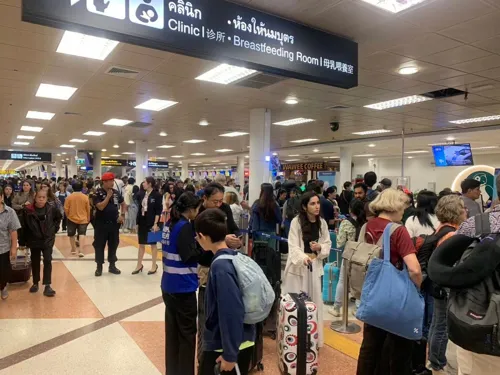
Chiang Mai airport expects 92,047 passengers from 23-25 November 2026 (up 3% from 89,367 in 2025), with peak day 25 November at about 33,560. Flights rise to about 591 (230 a day, peaking at 260 on 26 November). Airport limousines go to 120 vehicles, shuttle buses to 20, and RTC City Bus runs 4 buses every 15 minutes to the old city and Nimman. If you run tours, transport, car rental or shops near the airport, staff and stock for the peak days now. Expect the busiest counters and queues on 25-26 November.
 Together GoWeGo! Ferry tickets in Thailand.

▾ Hover for summary ▾ Tap for summary
The Education Ministry asked LINE to close OpenChat groups that students used to publicly shame, dox and sexually harass classmates, across several provinces. Offenders can face defamation or Child Protection Act charges, and parents may be held responsible if violations are found. For a business owner this is mainly a family and staffing matter: if you employ young people or run a school-age service, check that staff and children know these groups exist and that your own messaging channels are not being used this way. Schools can set their own phone and social media rules under ministry policy.

▾ Hover for summary ▾ Tap for summary
Chiang Mai has declared Yi Peng a "World Event" and is tightening lantern enforcement for the 24–25 Nov festival. Red Zone (Toffy Zone) covering 6 districts and 39 sub-districts allows zero lantern releases. Yellow Zone (8 districts) needs advance permission. Sky lanterns are allowed 19:00–01:00 on both nights; smoke lanterns only on 24 Nov, 10:00–12:00. Unpermitted release or release in a no-fly area risks up to 5 years jail or a 200,000 baht fine. If you run a lantern, event, hotel or food stall business in the affected areas, check your zone and permit status now and plan for high tourist demand and stricter enforcement.
▾ Hover for summary ▾ Tap for summary
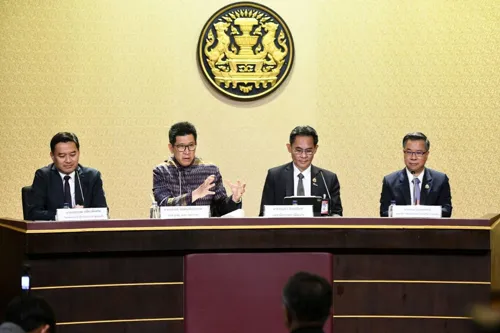
Cabinet approved new data center rules covering projects from 0.5 MW up, split into 7 tiers, with a one-stop OSS center under the Digital Economy Ministry. Projects 20 MW and up must sit in industrial estates; under 20 MW can go in commercial zones and must follow a Code of Practice (noise, heat, cooling water), but generally no full EIA. Rules for public consultation are still to come. For most small Thai businesses this changes nothing directly; it matters if you supply power, land, construction or water-related services to data center developers, or if you plan to lease land near one.
▾ Hover for summary ▾ Tap for summary
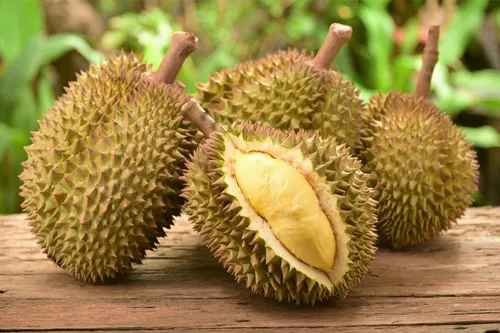
Thailand's cabinet approved a phytosanitary protocol with China's GACC for fresh durian and salak exports. Growers and exporters must follow GAP and IPM, run packhouse management rules, keep traceability records from orchard to packing, and obtain a Phytosanitary Certificate. Salak shipments also need an added declaration on the certificate confirming protocol compliance and freedom from China-priority pests. The article gives no effective date, so check with the Department of Agriculture before the next shipment.