
Archive
September 3, 2026

▾ Hover for summary ▾ Tap for summary
Thailand's wellness economy is valued at 1.4 trillion baht and grew 28% in 2022–2023, the fastest globally. Wellness tourism (up 36.4%, ranking #3 worldwide) is the key growth driver. With an aging society approaching 28% seniors by 2030 and rising non-communicable diseases, BDMS executives argue wellness and preventive healthcare can transform demographic challenges into an economic engine. Thailand aims to enter the global top 5 wellness markets by leveraging cultural heritage, Thai traditional medicine, medical tourism, and hospitality strengths.

▾ Hover for summary ▾ Tap for summary
BEANS Coffee Roaster grew from 3 cups sold on day one to 38 locations by implementing location-specific blends and accessible specialty coffee pricing. CEO Chananyada Tueesint highlighted their differentiation model—letting customers select coffee beans and brewing methods—plus a "One Blend One Change" campaign that channels monthly revenue to customer-selected nonprofits. Long-term strategy focuses on quality control, employee development (baristas becoming area managers in 2–3 years), and adding value to Thai coffee through a Chiang Mai learning center that helps farmers increase cherry prices from 25–30 baht/kg to 260–300 baht/kg post-processing.

▾ Hover for summary ▾ Tap for summary
A senior Thai-Summit executive warns that Thailand's automotive supply-chain advantage—once the industry's backbone—is being neglected despite recent policy focus on EV and foreign investment. BOI data shows Thai private enterprises' investment share fell from 41% to 25%, while foreign direct investment rose to 57%. SME automotive companies faced a 93% collapse in promotion applications (14 projects in 2024 vs. 1 in 2025). The speaker urges the state to stop letting competition from Vietnam and Indonesia erode Thailand's core strength: its established parts-manufacturing ecosystem and supply-chain infrastructure.

▾ Hover for summary ▾ Tap for summary
Thailand's central bank is rolling out major regulatory measures in Q4 to control the booming BNPL (Buy Now Pay Later) sector, which has grown 10-fold in 4 years to 6 million users. All BNPL providers (~6 active) must now obtain a personal loan license and comply with age, loan limit, and interest rate caps (15-20%). Simultaneously, the BoT is tightening oversight of 3,624 non-bank lenders (representing 55% of lending volume) and implementing enhanced anti-money-laundering controls: cash withdrawal reporting thresholds at ฿5M+, gold trading restrictions (฿10M+ or 2kg), and USDT surveillance. Early results show 52% decline in large cash withdrawals and 70% drop in suspicious gold trading.

 Empower businesses to thrive in the digital age.

▾ Hover for summary ▾ Tap for summary
Siam Global House (listed company, 101+ branches) is implementing AI and ESG-integrated business transformation to compete in construction materials retail. CEO shared 30-year journey from small store to modern trade model, highlighting tech adoption (POS, WMS, Auto Storage, HR systems, AI chat) to improve operational efficiency and reduce manual work. With 10 years of data accumulated, the company is positioning AI as core competitive advantage while maintaining cash flow focus amid weak consumer demand. Key advice to SMEs: understand true gross margins before going online, as marketplace fees (25%+) can wipe out thin profits.

▾ Hover for summary ▾ Tap for summary
Microsoft is restructuring its financial reporting from three business segments to two, effective FY2027, to better reflect AI-driven transformation. The new structure—Agents and Infra (cloud, Microsoft 365, GitHub on Azure) and Devices and Consumer (Search, Xbox, Windows, advertising)—consolidates AI agents, infrastructure, and consumer offerings. CEO Satya Nadella cited AI as fundamentally reshaping business boundaries; the two groups had combined FY2026 revenue of ~$335 billion, signaling Microsoft's pivot toward enterprise AI and integrated cloud services as core growth drivers.

▾ Hover for summary ▾ Tap for summary
Thailand's state-run electric utility presented Small Modular Reactor (SMR) technology as a potential energy solution at an ESG conference, citing the USS Abraham Lincoln—docked in Thailand—as a real-world example. The ship's dual nuclear reactors power a 100,000-ton carrier for 25+ years without refueling and support 5,600 crew and 90 aircraft. Thailand is evaluating SMR adoption within IAEA frameworks, though geopolitical factors (China and Russia lead current SMR deployments) will influence technology selection.
▾ Hover for summary ▾ Tap for summary
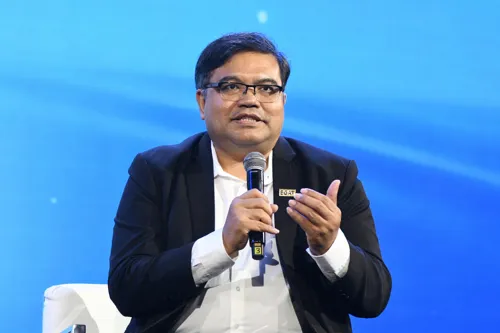
Thai electricity authority EGAT is preparing power grid infrastructure to support renewable energy targets set under the Power Development Plan (PDP), aiming for renewable energy to exceed 70% by 2026 while maintaining system stability. EGAT is exploring multiple technologies including battery storage systems, pumped hydro, demand response management, and Small Modular Reactors (SMR) as clean energy options. Key focus areas include grid flexibility improvements, ongoing battery trials in high solar-potential regions (Lopburi, Chaiyaphum), and comprehensive study of SMR technology before committing—evaluating regulatory frameworks, safety, nuclear waste management, and public acceptance in line with IAEA guidelines.
 Your real translator for LINE and Discord.
▾ Hover for summary ▾ Tap for summary
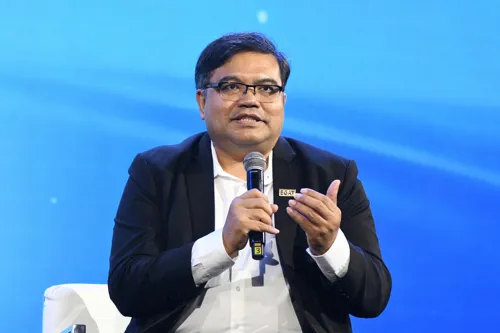
Thailand's state utility EGAT is overhauling its power grid infrastructure to accommodate 70%+ renewable energy under the PDP 2026 strategy. Key measures include grid flexibility upgrades, battery storage pilots (Lopburi, Chaiyaphum), demand response systems, and ongoing evaluation of Small Modular Reactors (SMR) as a stable, carbon-free baseload option. While SMR remains under technical and regulatory study—following IAEA guidelines on safety, waste management, and public acceptance—it is positioned alongside hydrogen and carbon capture as a long-term clean energy hedge. This is strategically relevant for SMEs in energy, manufacturing, and grid-tech sectors seeking to align with Thailand's Net Zero 2050 trajectory.

▾ Hover for summary ▾ Tap for summary
Bank of Thailand Governor Vithay Ratkakul highlights that Thailand's main economic challenge is sluggish growth—currently forecast at 2.3% versus estimated potential of 2.7%. The central bank maintains the current policy rate at 1% as appropriate, claims financial system is strong with capital ratios near 20%, and asserts tools remain available for emergencies. However, SME lending remains weak due to high business costs, while large corporate borrowing grows. Monetary policy transmission takes 8–12 months to show results; fiscal policy is needed for targeted support.

▾ Hover for summary ▾ Tap for summary
Southeast Asian blockchain sector attracted $6.2 billion in funding according to reports. This signals strong investor interest in crypto and Web3 technologies across the region, though market volatility remains a concern. For Thai SMEs, this indicates growing opportunities in blockchain development, fintech services, and digital asset infrastructure—but requires careful risk assessment.

▾ Hover for summary ▾ Tap for summary
Deputy PM Ekniti chairs a new Data Center Policy Board holding its inaugural meeting on Sept 4 to establish regulatory framework and close legal loopholes. The initiative aims to capture data center benefits for Thailand's economy while mitigating environmental and social impacts. Currently, BOI has halted new approvals since April, but unauthorized operators continue, prompting government to review and strengthen oversight across energy, urban planning, and local authorities.

 Want to buy or sell a business?
▾ Hover for summary ▾ Tap for summary
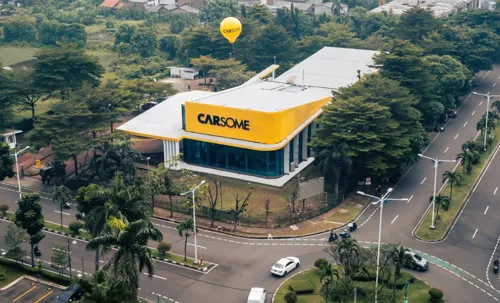
Carsome, a Southeast Asian used-car marketplace platform, achieved record Q2 EBITDA of $8.2m, signaling strong operational profitability. This milestone is relevant to Thailand's automotive and e-commerce tech ecosystem as a comparable regional success story in logistics-heavy marketplace models.

▾ Hover for summary ▾ Tap for summary
Uber is cutting 10% of its workforce as part of a major corporate restructuring. While significant for the global rideshare and delivery sector, the direct impact on Thai SMEs is limited unless they operate in ride-hailing or delivery logistics. Relevant for tracking gig economy trends but not immediately actionable for most Thailand-based tech businesses.
▾ Hover for summary ▾ Tap for summary
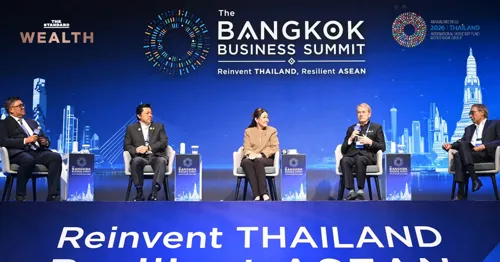
B.Grimm's CEO Harald Link argues that Thailand's high electricity costs are fundamentally driven by elevated natural gas prices, not the electricity market itself. He recommends the government accelerate negotiations with Myanmar to secure additional natural gas supplies—reducing reliance on volatile LNG imports and cutting energy costs by ~25%. The firm estimates a 3–5 year timeline for survey, drilling, and long-term contracts. Stable, affordable energy is critical for attracting advanced tech industries (semiconductors, AI, data centers), making this relevant for SMEs and policy planning.
▾ Hover for summary ▾ Tap for summary
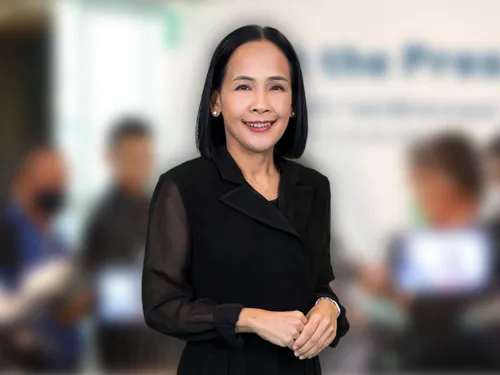
Thailand's Securities and Exchange Commission (SEC) has approved stricter oversight of stablecoin transactions, implementing a daily transfer cap of 5 million baht per person per operator and requiring all wallets to be verified as belonging to the transacting customer. The measure aims to prevent money laundering, cybercrime, and cross-border money evasion, while enforcing Travel Rule compliance and customer risk screening. Transfers between Thai digital asset operators are exempt from the cap. Public consultation is open through September 2026.
 Together GoWeGo! Ferry tickets in Thailand.

▾ Hover for summary ▾ Tap for summary
The Thai Prime Minister will chair the first meeting of the Data Center Policy Board on 4 September to address unauthorized data center installations in multiple areas that have sparked public concern. The government has established the committee to develop oversight guidelines, though specific actions remain to be announced after the meeting. This signals intent to regulate the data center sector more closely following growing complaints about uncontrolled deployment.

▾ Hover for summary ▾ Tap for summary
500 Global, a prominent venture capital fund, has publicly clarified that it is not exiting or reducing its operations in Southeast Asia. This matters for SMEs and startups in the region that depend on VC funding, as it signals continued investment appetite and support for tech ecosystems in Thailand and neighboring markets despite broader economic headwinds.
▾ Hover for summary ▾ Tap for summary
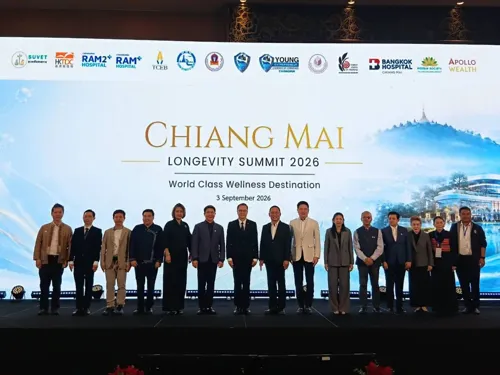
Former Tourism Minister Veerasak Kov-Suratna unveiled a national Wellness Economy strategy positioning Thailand—particularly Chiang Mai—as a premium health and longevity hub. The global wellness market is worth $6.8 trillion (2024, growing to ~$9 trillion by 2029), while Thailand's wellness sector is valued at $42.7 billion with significant expansion potential. The strategy proposes a 5-tier cascade model linking local farming communities, tourism, visitor experiences, creative industries, and high-value services; aims to grow visitor economy revenue from 3 trillion to 6 trillion baht by 2035; and piloting a Sandbox model in secondary cities across the north to distribute economic benefits broadly. This signals structural economic reorientation toward preventive healthcare, wellness tourism, and experience-based services—relevant for SMEs in hospitality, wellness services, and regional development.

▾ Hover for summary ▾ Tap for summary
MEA and the Royal Thai Navy inaugurated a 758.40 kWp rooftop solar system at the Navy's Wang Nantaya headquarters. Under a 20-year O&M partnership, the installation is projected to reduce Navy electricity costs by ~690,000 baht annually, cut fossil fuel consumption by ~955 MWh/year, and eliminate ~420 tonnes of CO₂ annually. This project aligns with Thailand's 20-year energy conservation policy targeting 20% reductions in government energy use and demonstrates MEA's expanding role in supporting clean energy adoption across public sector clients—currently managing over 25 MWp of rooftop solar installations.

 Stop running your company on Excel.