
Archive
September 5, 2026

▾ Hover for summary ▾ Tap for summary
Indonesian fires driven by El Niño conditions and peatland drainage are generating severe transnational air pollution affecting Thailand and Southeast Asia. Over 300,000 hectares have burned, releasing 23+ million tonnes of carbon emissions; schools across multiple countries have closed and 5+ million people face direct health risks from persistent haze. Thai SMEs in healthcare, logistics, and agriculture should prepare for continued air quality impacts and supply chain disruptions.

▾ Hover for summary ▾ Tap for summary
A Bangkok Post opinion piece critiques Thailand's AI adoption skepticism, citing Ipsos data showing 72% of Thais believe AI has changed their lives, yet only 10% are willing to grant AI default control over financial decisions. The author argues this hesitation, while presented as a business challenge, reflects legitimate concerns—Thailand's youth face documented risks from tech-enabled scams, online bullying, and gambling addiction, with cyber crimes now exceeding half of Criminal Court cases. The piece questions whether rapid AI deployment is prudent when the country is still grappling with harms from earlier digital disruptions.

▾ Hover for summary ▾ Tap for summary
Xi Jinping is reportedly planning to visit the US on September 24 with a high-level delegation of major Chinese business executives—a rare move given US-China tensions over investment screening and technology restrictions. This signals potential Chinese willingness to pursue trade and investment cooperation with Washington, though recent US protectionist measures (100% EV tariffs, TikTok restrictions, tech company sanctions) pose significant headwinds. The last comparable delegation visit was in 2015, which yielded major deals including a $38 billion Boeing aircraft order.

▾ Hover for summary ▾ Tap for summary
Thailand's state power producer (EGAT) is restructuring the national grid to ensure stability as renewable energy scales up. Key initiatives include retrofitting plants for faster power adjustment, deploying pumped hydro and battery storage systems, and introducing Grid-forming Inverters to address voltage inertia issues. SMR (Small Modular Reactors) feature as planned baseload clean technology. PDP 2026 will significantly increase renewable capacity, making grid flexibility and storage architecture critical for energy security and business continuity.

 Empower businesses to thrive in the digital age.

▾ Hover for summary ▾ Tap for summary
Thailand's economy shows a stark K-shaped recovery, with digital and AI sectors thriving while seven traditional industries (automotive, petrochemicals, construction materials, etc.) face severe competition from foreign goods. Thai SMEs in these sectors have cut output 8% over five years while foreign firms dropped 19%. The private sector council (JPEC) urges the government to upgrade economic data systems and implement targeted relief measures. Meanwhile, rising oil prices (to $95/barrel from $84) and diesel export restrictions are adding pressure on refineries and inflation risks.

▾ Hover for summary ▾ Tap for summary
Google released an urgent Chrome update (v152.0.7977.82/.83) patching CVE-2026-85046, a high-severity Type confusion vulnerability in V8 engine with active exploits reported. The update also addresses 11 additional security flaws (9 high, 2 medium severity). Immediate update recommended for all Chrome users on Windows, macOS, and Linux to prevent active exploitation.

▾ Hover for summary ▾ Tap for summary
OpenAI has rapidly rolled out GPT-6 Astra, its new advanced AI model, to all paid tiers (Plus, Pro, Business, Enterprise) and API users. Originally planned as a limited release, the company expanded availability within 24 hours. The model includes cybersecurity capabilities and is accessible via Work and Codex interfaces. This accelerated rollout signals OpenAI's confidence in the model's readiness and could impact SME adoption of enterprise AI tools.

▾ Hover for summary ▾ Tap for summary
Thailand's economy is growing in a "K-Shape" pattern—tech and digital sectors thriving while traditional industries and SMEs struggle under foreign competition and weakening domestic demand. The article argues this widening inequality is unsustainable and warns that without decisive policy intervention beyond populist hand-outs, household debt will become a systemic trap. Government must enforce corporate social responsibility on high-margin sectors and build sustainable income for lower-income groups to prevent economic and social deterioration.
 Your real translator for LINE and Discord.

▾ Hover for summary ▾ Tap for summary
Middle Eastern nations are expanding data center infrastructure despite geopolitical tensions. This signals growing regional AI and compute capacity ambitions, with potential implications for tech supply chains and semiconductor demand. However, the article content was inaccessible, limiting full context.

▾ Hover for summary ▾ Tap for summary
Thailand's Office of the Prime Minister has published a new regulation on digital data sharing, effective immediately, requiring state agencies to connect their information systems and share data through a centralized platform within 90 days of request. The regulation balances data accessibility with safeguards for national security, classified information, and personal data. This standardization of government data sharing will improve administrative efficiency and support Thailand's digital economy agenda.

▾ Hover for summary ▾ Tap for summary
Chipflation—driven by surging AI demand and data center memory production—is forcing chip and memory costs up 70–83% for mobile memory (Q2 2025), squeezing margins across smartphones, PCs, TVs, and automotive. Southeast Asian smartphone prices rose 21% YoY to $375; shipments fell 15% with budget phones (sub-$150) hit hardest (–38%). PC, automotive, and IoT devices face similar pressure, forcing manufacturers to choose between price hikes, spec downgrades, or margin-focused segmentation. Further price increases likely if chip costs stay elevated.

▾ Hover for summary ▾ Tap for summary
Lululemon's stock dropped ~20% after missing Q2 2026 earnings targets, revealing vulnerabilities in its premium positioning. The article dissects three systemic challenges: failed product innovation (Breezethrough recall), "Dupe Culture" on social platforms where budget alternatives capture 80–90% functionality at 3–5x lower cost, and brand fatigue as mass adoption erodes exclusivity—with newer competitors like Alo Yoga and Vuori poaching premium segments. For SMEs and tech entrepreneurs, the case illustrates how supply-chain transparency, social-driven consumption, and community-building now trump logo-based premiumization.

 Want to buy or sell a business?
▾ Hover for summary ▾ Tap for summary
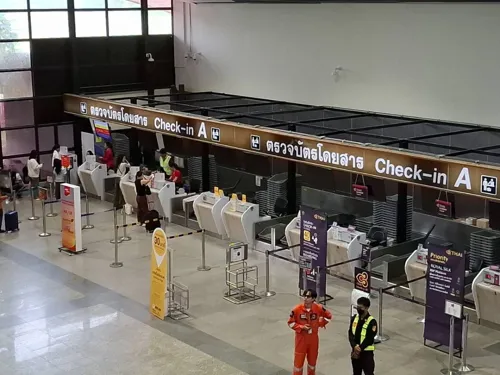
Udon Thani Airport has launched its first direct international flight service (Kunming–Udon Thani–Kunming) in partnership with Lucky Air, operating twice weekly with 189-seat Boeing 737-800 aircraft. The development supports the Government's push to upgrade the airport to full international hub status ahead of the World Horticultural Expo (November 2026–March 2027). Infrastructure upgrades include expanded terminal capacity (3.4M passengers/year), One Transport shuttle integration (40 daily trips), and community/OTOP retail zones, positioning the airport as a regional economic gateway for Northeast Thailand.

▾ Hover for summary ▾ Tap for summary
CP Extras (CPAXT) completed acquisition of 100% stake in The Food Purveyor for 1.6 billion Malaysian Ringgit (~13.1 billion baht), combining premium supermarket chains Village Grocer, B.I.G., BSC Fine Foods and OTK. This merger gives CPAXT over 120 retail branches across Malaysia, strengthening its premium segment reach and competitive position in ASEAN. Analysts view the deal neutrally, with valuation at 28x PE (below Malaysian retail average of 32x) and expected significant earnings contribution from 2026 onwards.

▾ Hover for summary ▾ Tap for summary
Deputy PM Pakorngpol Nillahapand outlined a government efficiency overhaul focused on rebranding rather than traditional reform, targeting 20-30% faster public services. Key strategies include workforce optimization (aided by AI adoption like China's model), streamlining redundant processes, shifting from 20% to 30% of budget toward development, and transitioning to a Digital/Open Government framework via data integration and AI analytics. He noted prior reform efforts failed due to lack of execution; current constraints include aging population costs and competing regional economies already advancing their public sector models.
▾ Hover for summary ▾ Tap for summary
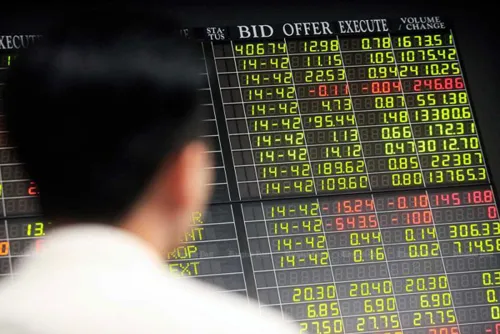
Regional equity markets rebounded Friday as US Fed officials signaled reduced likelihood of interest rate hikes, easing dollar pressure and bond yield concerns. The Thai SET Index rose with strong foreign inflows (net buyers of 3.3B baht), supported by stable inflation and currency strength. Article also covers broader regional developments including South Korea's semiconductor export surge, Japan's bond yields reaching 3% (first time since 1996), and Thailand's World Bank recommendation to accelerate economic growth by 2027 to achieve higher-income status—directly relevant for Thai SME planning and macro outlook.
 Together GoWeGo! Ferry tickets in Thailand.

▾ Hover for summary ▾ Tap for summary
Acer announced the Predator Atlas 7, a smaller 7-inch portable gaming PC following the Atlas 8 launch. Equipped with Intel Arc G3 (or Arc G3 Extreme) GPUs, it offers FHD 120Hz display, up to 24GB RAM, 1TB storage, Hall-effect joysticks, and fingerprint authentication. Product launches Q4 2026 with no pricing yet—relevant for gaming-focused SMEs and tech retailers tracking portable gaming trends and Intel's GPU ecosystem expansion.

▾ Hover for summary ▾ Tap for summary
Thailand's Election Commission subcommittee No. 36 voted 5-2 on September 14, 2025 to dismiss allegations against 229 Senate candidates involved in alleged vote-buying. The majority vote to dismiss contrasts with an initial investigation committee that recommended prosecuting all 229 accused individuals. The decision sets up conflicting positions for the full 7-member Election Commission to resolve, likely determining whether the case proceeds to the Supreme Court's election division.

▾ Hover for summary ▾ Tap for summary
True Corporation, a founding member of Thailand's Global Compact Network, is positioning itself as a leader in leveraging AI and digital innovation for sustainable development. At GCNT EXPO 2026, True emphasizes "Responsible AI" governance—comparing AI to a supercar requiring careful oversight—and showcases initiatives including digital security services (True CyberSafe), e-waste recycling, educational programs (True Plouk Panya), and a "Future Classroom" model promoting quality, equitable learning. The company argues that both business and government must urgently develop Responsible AI frameworks and sandbox environments to keep pace with rapid technological advancement while addressing SDG goals.

▾ Hover for summary ▾ Tap for summary
A complex Thai political case involving alleged Senate election manipulation has escalated into dual legal battles. The People's Party (PP) deputy leader Parit Wacharusahasakul has publicly released evidence of alleged coordination—including phone records and voting lists—to challenge the ruling Bhumjaithai (BJT)-dominated Senate's legitimacy. While the PP seeks to undermine the current power structure, the case hinges on whether prosecutors can prove collusion and illegal benefit-exchange beyond circumstantial evidence. A critical vulnerability: the opposition's aggressive disclosure of materials risks crossing legal boundaries, potentially exposing them to defamation suits and providing BJT with a counter-narrative.

 Stop running your company on Excel.