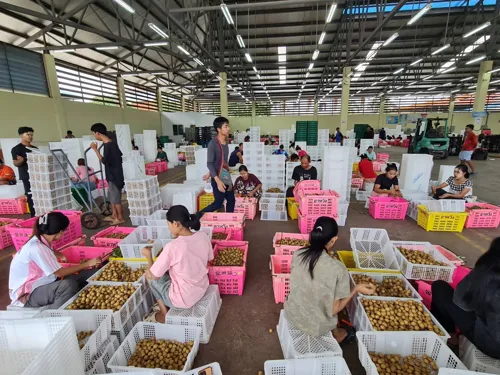
China's customs (GACC) now tests longan for pesticide residues on the skin as well as the flesh, not just the flesh. Some Thai longan is being rejected at import, and Chinese demand is also slowing. Some buyers in Chiang Mai, Lamphun and Chanthaburi have paused purchases, and prices are under pressure. The Department of Agriculture expects the impact to last until the end of the production season. Longan growers and traders should check residue levels on skins before shipping, plan for lower farm-gate prices, and look at alternatives: the Thai Chuay Thai and Thong Fah low-cost programmes, and packaging support from the provincial commerce offices.

 Your real translator for LINE and Discord.